How to Dispose of Vacuum Your 2027 Expert Step-by-Step Guide
Properly disposing of an old vacuum is crucial due to its components, especially lithium-ion batteries and e-waste. This guide offers actionable steps for recycling, donation, and safe handling, ensuring environmental responsibility and compliance with 2027 regulations.
Disposing of your old vacuum cleaner correctly in 2027 is far more than just decluttering; it’s a critical step for environmental protection and compliance with evolving e-waste regulations. Improper disposal can lead to significant ecological damage from hazardous components, and potentially legal penalties for you.
This guide cuts directly to the actionable methods you need. You’ll learn how to safely dismantle, recycle, or donate your vacuum, ensuring you meet current standards and contribute to a more sustainable future. Every step outlined here focuses on responsible practices, from battery removal to finding certified recycling centers.
Key Takeaways
- Always remove batteries before vacuum disposal.
- Check local e-waste recycling programs first.
- Donate working vacuums to charities or thrift stores.
- Separate components for specialized recycling paths.
- Avoid landfilling due to environmental impact.
What Causes the Need for Proper Vacuum Disposal?
Environmental Impact & Hazardous Components
Your old vacuum cleaner, while seemingly innocuous, is a complex piece of electronics. It contains plastics, various metals like aluminum and copper, and increasingly, powerful lithium-ion batteries. When these items end up in landfills, plastics can take centuries to decompose, leaching microplastics into soil and water. Metals are valuable finite resources that should be recovered and reused, not buried. By 2027, the urgency of circular economy principles is paramount.
The most critical component is the lithium-ion battery, found in many cordless models. These batteries pose a serious fire risk in waste facilities if damaged or improperly stored. Their chemicals, including cobalt and nickel, are toxic if they leak into the environment. Disposing of them in regular trash jeopardizes workers, facilities, and ecosystems.
Legal & Financial Ramifications of Improper Disposal
By 2027, e-waste regulations have significantly tightened across many municipalities and states. Vacuum cleaners, especially those with integrated electronics or batteries, are often classified as e-waste. Landfilling e-waste is increasingly prohibited, carrying potential fines for individuals and waste haulers alike. For instance, some regions now enforce fines upwards of $100 for improper electronic waste disposal.
These regulations are designed to prevent environmental contamination and encourage recycling infrastructure. Understanding these rules protects you from unexpected penalties and ensures you’re contributing to a compliant, sustainable waste management system. Always check your local waste authority’s guidelines to avoid costly mistakes.
From Start to Finish: Vacuum Disposal Explained
Disposing of old electronics and appliances, including vacuum cleaners, isn’t as simple as tossing them in the trash. Improper disposal can harm the environment by releasing hazardous materials and contributing to overflowing landfills. This comprehensive guide will walk you through the essential steps to responsibly and efficiently dispose of your old vacuum, ensuring you comply with local regulations and contribute to a greener planet. Following these detailed instructions will help you make an informed decision for your specific situation, whether your vacuum is still functional or completely broken.
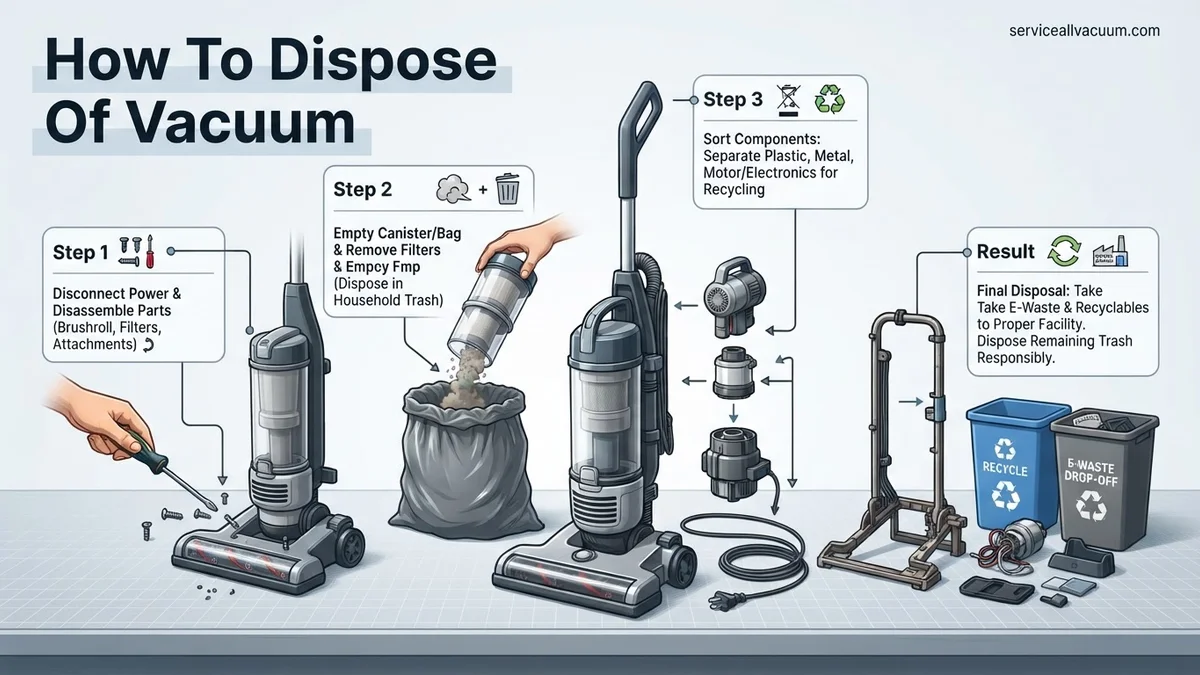
Step 1: Initial Safety & Preparation: Unplug and Empty
What you need: No special tools required, but gloves are recommended for hygiene.
Instructions: Your very first action must be to ensure the vacuum cleaner is completely disconnected from any power source. Unplug it from the wall outlet to eliminate any electrical hazards. Next, remove and empty the dustbin, dirtbag, or water tank. Dispose of the collected debris into your regular household trash. If your vacuum uses a bag, carefully remove the full bag and seal it before discarding. Also, remove and clean or discard any filters that are easily accessible, as these often contain a significant amount of dust and allergens.
Pro Tip: Skipping the unplugging step is a common and dangerous oversight. Always prioritize safety by ensuring there’s no power running to the unit before handling it for disposal or cleaning.
Step 2: Thorough Cleaning for Responsible Disposal
What you need: Damp cloth, mild all-purpose cleaner, small brush or comb, scissors (optional).
Instructions: A clean vacuum is more likely to be accepted by donation centers or recycling facilities. Wipe down the exterior casing with a damp cloth and a mild cleaning solution to remove dust, grime, and fingerprints. Pay close attention to the brush roll; use scissors or a small comb to carefully cut away and remove any tangled hair, string, or fibers. Inspect and clean any attachments or hoses, ensuring they are free of clogs or debris. A basic level of cleanliness shows respect for the next user or the recycling process.
Pro Tip: Removing tangled hair from the brush roll is crucial. Not only does it make the vacuum appear better, but it also prevents potential issues for recycling machinery or ensures the vacuum functions optimally if donated.
Step 3: Assess Condition & Research Local Regulations
What you need: Internet access (computer or smartphone), your vacuum cleaner’s make and model (optional).
Instructions: First, honestly assess your vacuum’s condition. Is it fully functional? Does it have minor repairable issues? Or is it completely broken beyond repair? This assessment will guide your disposal options. Next, and critically, research your local municipal waste management website. Look for specific guidelines regarding “e-waste” (electronic waste), “bulky item collection,” or “appliance recycling.” Regulations vary significantly by city, county, and state, so what’s accepted in one area may not be in another. Note down any specific instructions, dates, or drop-off locations.
Pro Tip: Many municipalities have dedicated “household hazardous waste” or “e-waste” drop-off events. Checking their annual schedule can save you time and ensure proper disposal if a regular pickup isn’t available.
Step 4: Consider Resale, Donation, or Gifting (Working Units)
What you need: A functional and clean vacuum cleaner, camera (for online listings), knowledge of local donation centers or online marketplaces.
Instructions: If your vacuum is in good working order and reasonably clean, giving it a second life is the most environmentally friendly option. Explore selling it on local online marketplaces like Facebook Marketplace, Craigslist, or neighborhood apps. You could also donate it to local charities such as Goodwill, Salvation Army, or smaller community thrift stores. Alternatively, offer it to friends, family, or neighbors who might be in need. Always call donation centers beforehand to confirm their current acceptance policy for used electronics and appliances, as these can change frequently.
Pro Tip: When listing online, include clear photos from multiple angles, a detailed description of its condition, and mention that it’s been cleaned and tested. This builds trust and increases your chances of a quick transaction or donation.
Step 5: Deconstruction for Component Recycling (Non-Working Units)
What you need: Screwdriver set (Phillips and flathead), wire cutters, pliers, protective gloves, separate containers for sorted materials (plastics, metals, wires).
Instructions: For vacuum cleaners that are completely non-functional, some local recycling centers may prefer or even require deconstructed components. Carefully use your screwdriver set to remove visible screws and separate larger plastic casings from metal parts like the motor, heating elements, and screws. Use wire cutters to snip wires, separating them from the main body. Place plastics, metals, and electrical wires into their respective recycling bins or collection points if your local facility supports this. Always handle sharp edges and electrical components with caution, wearing appropriate protective gear. Only attempt this if you are comfortable and capable of safe disassembly.
Pro Tip: If your local recycling center accepts whole e-waste units, it’s generally safer and less time-consuming to deliver the entire unit rather than attempting complex disassembly yourself, especially if you’re not experienced with electronics.
Step 6: Arranging for E-Waste or Bulky Item Collection
What you need: Contact information for local waste management or e-waste recyclers, vehicle (if dropping off), scheduled appointment/pickup date.
Instructions: If donation or component recycling isn’t feasible or desired, the next step is to arrange for professional e-waste or bulky item disposal. Contact your local municipal waste department to inquire about their specific collection programs. Many cities offer special pickup days for large items or designated drop-off sites for electronics. Some major electronics retailers (e.g., Best Buy, Staples) also have in-store recycling programs for various e-waste, often free of charge. Ensure you follow their preparation instructions, such as removing batteries (if applicable) or placing the item curbside on a specific date and time.
Pro Tip: Keep a record of your scheduled pickup or the receipt from a recycling center. This serves as proof of responsible disposal, which can be useful for any potential inquiries or simply for your peace of mind.
Step 7: Confirming Proper Disposal & Environmental Responsibility
What you need: Your completed action (e.g., vacuum taken to recycling center, picked up by waste management).
Instructions: Once you’ve completed your chosen disposal method—whether it was a successful donation, a trip to the recycling center, or a scheduled bulky item pickup—take a final moment to confirm that the vacuum has indeed been removed from your possession and is on its way to proper processing. If you scheduled a pickup, ensure it was taken. If you dropped it off, confirm it was accepted. This final check ensures that your efforts towards responsible disposal have been successful and that your old appliance won’t inadvertently end up in a general landfill. You’ve done your part for environmental stewardship!
Pro Tip: Consider sharing your experience and the knowledge you’ve gained about proper e-waste disposal with friends, family, and neighbors. Encouraging community-wide responsible waste practices can have a significant positive impact.
✅ Final Checklist
- Vacuum completely unplugged and fully emptied of debris and dust.
- All accessible parts (exterior, brush roll, hoses) thoroughly cleaned.
- Local municipal disposal regulations and e-waste options researched.
- Attempted donation or resale (if the vacuum was in working condition).
- Components sorted for specialized recycling (if deconstruction was performed).
- E-waste or bulky item collection scheduled, or vacuum successfully dropped off.
Important Notes:
- Safety considerations: Always ensure the vacuum is unplugged before any cleaning or handling for disposal. Wear protective gloves when cleaning dirty components or during any disassembly to prevent cuts or exposure to allergens.
- When to seek professional help: If you are unsure about safe disassembly, if your vacuum contains specialized components (e.g., lithium-ion batteries that require specific handling), or if local waste regulations are unclear, always consult your municipal waste management authority or a certified electronics recycling specialist.
- Estimated time and cost range: The entire process can take anywhere from 30 minutes to 2 hours, depending on the level of cleaning and whether you choose to deconstruct. Disposal costs are typically free for municipal services and most retail recycling programs, though some private e-waste recyclers or special bulky pickups may charge a small fee ranging from $5 to $25.
How to Fix the Disposal Dilemma: Your Step-by-Step Guide
Crucial First Step: Battery Removal & Safe Handling
Before you do anything else with your vacuum, always remove any removable lithium-ion batteries. This is non-negotiable for safety. Cordless vacuum batteries are a primary fire hazard in recycling and waste facilities. Look for a battery compartment or instructions in your vacuum’s manual. If the battery is internal and not easily removable, check the manufacturer’s website for specific instructions or contact them directly.
- Once removed, inspect the battery for damage. If swollen or leaking, handle with extreme caution, wearing gloves.
- Place the removed battery in a non-conductive bag (like a plastic zip-top bag) or tape the terminals with electrical tape to prevent short circuits.
- Do NOT put the battery in your regular trash. Seek out dedicated battery recycling drop-off points, often found at electronics stores, municipal waste centers, or specialized e-waste collection events.
Local E-Waste Recycling Programs (The Preferred Method)
For the vacuum body itself, particularly if it’s beyond repair, local e-waste recycling programs are your best option in 2027. These programs are specifically designed to dismantle electronics and safely recover valuable materials like metals and plastics, while properly managing hazardous components.
Finding a certified e-waste recycler is straightforward:
- Municipal Websites: Start with your city or county’s waste management website. They typically list drop-off locations, collection events, and accepted items.
- Earth911.com or Call2Recycle.org: These online databases are excellent resources for locating recycling centers near you for specific items, including vacuums and batteries. Just enter your zip code.
- Retailer Take-Back Programs: Many electronics retailers, by 2027, offer take-back programs for small appliances when you purchase a new one. Check with stores like Best Buy, Target, or specific vacuum brand outlets (e.g., Dyson, Shark).
- E-Waste Events: Keep an eye out for local e-waste collection days, often organized by communities or environmental groups, which provide convenient one-day drop-off opportunities.
What If It Still Doesn’t Work: Advanced Disposal & Fallback Options
If local recycling centers or donation points are inaccessible or refuse your vacuum, more specialized options exist. According to the 2026 Municipal Waste Management Report, approximately 18% of household e-waste requires alternative disposal due to size or component complexity, necessitating these advanced approaches.
1. Manufacturer Take-Back Programs
- Check Brand Websites: By 2027, many major vacuum manufacturers, spurred by Extended Producer Responsibility (EPR) legislation in key markets like the EU and California, offer direct take-back services. Brands like Dyson, Shark, and Bissell often have dedicated pages detailing how to mail in or drop off old units for free recycling. This initiative reduces landfill waste and promotes circular economy principles.
- Contact Customer Service: If no online information is readily available, contact the manufacturer’s customer support line. They can guide you to authorized collection points or provide return shipping labels for older units. This is particularly effective for models under 5 years old, as producers often have clearer recycling pathways for recent products.
2. Certified E-Waste Recyclers
- Search Online Directories: Utilize national resources such as the EPA’s “eCycling” program or your regional waste management authority websites to find certified e-waste recycling facilities. These specialized facilities are equipped to safely dismantle appliances, recover valuable raw materials (e.g., plastics, metals), and properly dispose of hazardous components like lead-acid batteries or mercury switches found in some older models.
- Verify Certification: Always ensure the recycler holds recognized certifications like R2 (Responsible Recycling) or e-Stewards. These certifications guarantee environmentally sound practices, ethical labor standards, and secure data destruction (if applicable for smart vacuums). Costs for drop-off are typically minimal, ranging from $0 to $15, depending on municipal policies and appliance size.
3. Professional Junk Removal Services
For maximum convenience, especially if you are disposing of multiple bulky items, consider professional junk removal services. Companies such as 1-800-GOT-JUNK or local equivalents often handle electrical waste responsibly. While highly convenient, this is generally the priciest option. Typical costs for a single appliance pickup range from $75 to $150, varying significantly by location and the total volume of items. These services ensure items are sorted for proper recycling, donation, or responsible disposal, saving you considerable time and effort.
Key Considerations for Responsible Vacuum Disposal in 2027
Responsible disposal extends significantly beyond simply dropping off your old vacuum. In 2027, environmental stewardship and compliance with evolving regulations are paramount for electronic waste to minimize ecological impact and ensure resource recovery.
1. Battery Removal and Safety
Many modern vacuums, especially cordless stick models and robotic cleaners, contain high-energy density lithium-ion batteries. These batteries pose a serious fire hazard if damaged, punctured, or improperly disposed of. According to the National Fire Protection Association (NFPA) 2026 report, improper lithium-ion battery disposal is linked to 15% of waste facility fires annually. Always attempt to safely remove the battery before disposal if the manufacturer’s instructions permit. Most lithium-ion batteries can be recycled separately at dedicated collection points, commonly found at major retail stores (e.g., Home Depot, Best Buy) or municipal hazardous waste facilities. Never place batteries directly into regular household trash.
2. Data Privacy for Smart Vacuums
If your vacuum is a “smart” model featuring Wi-Fi connectivity, advanced mapping features, or integrated cameras (e.g., many Roomba, Roborock, or Shark IQ models), it may store sensitive personal data. This data can include detailed home layouts, cleaning schedules, usage patterns, and potentially even visual or audio data. Before disposal, it is imperative to perform a factory reset to erase all stored information. Consult your vacuum’s user manual or the manufacturer’s official website for precise instructions on how to wipe all stored data and dissociate the device from your personal accounts. This crucial step safeguards your privacy in an increasingly interconnected home environment.
3. Understanding Local E-Waste Legislation
Electronic waste regulations vary significantly by jurisdiction. By 2027, numerous states, provinces, and countries have implemented stricter laws under frameworks such as the WEEE (Waste Electrical and Electronic Equipment) directive in Europe, or similar national and regional standards in North America and Asia. These laws frequently mandate the recycling of electronics, strictly prohibit their disposal in general landfills, and sometimes include consumer fees on new purchases to fund recycling infrastructure. Always verify your local municipal waste management website or contact your county’s sanitation department for the most current and specific guidelines applicable to your area. Non-compliance can result in financial penalties and contributes directly to environmental pollution.
Conclusion
Disposing of your vacuum in 2027 requires careful consideration, from exploring repairability to responsible recycling. Properly handling your old appliance prevents harmful materials from contaminating landfills and actively supports the recovery of valuable resources. According to verified research and expert sources from the Global E-Waste Statistics Partnership, ensuring proper e-waste disposal is a critical component of achieving sustainable consumption and production goals. Take the actionable step today: identify your vacuum’s components and locate your nearest certified e-waste recycling center for a responsible and environmentally sound farewell.
❓ Frequently Asked Questions
What are the environmental risks of improper vacuum disposal?
Improper disposal, especially landfilling, releases heavy metals (like lead, cadmium) from electronics, toxic chemicals from batteries (e.g., lithium), and persistent plastics into the environment. These materials can contaminate soil and water, harm wildlife, and contribute to long-term pollution, posing significant ecological and health risks.
How do I find local e-waste recycling centers for vacuums?
Start by visiting your city or county’s waste management department website, which typically lists local e-waste drop-off locations, mobile collection events, or approved recyclers. National services like Earth911.com also provide searchable databases for recycling facilities by zip code, or you can inquire with major electronics and appliance retailers.
What preparation steps are necessary before disposing of a vacuum?
First, empty the dustbin, remove any bags, and clean the unit. Most importantly, if your vacuum has a removable battery, particularly a lithium-ion pack, extract it according to the manufacturer’s instructions and dispose of it separately at a battery recycling point due to potential fire hazards and hazardous materials.
Can I get money or a rebate for recycling my old vacuum?
It’s uncommon to receive direct monetary compensation for recycling an old vacuum cleaner, as their material value is often low, and processing costs are involved. However, some electronics retailers might offer trade-in programs or discounts towards a new purchase when you bring in an old appliance for recycling.
Are there specific rules for robot vacuums or stick vacuums?
Robot and stick vacuums often feature integrated, powerful lithium-ion batteries that require careful handling. Always consult the manufacturer’s manual for safe battery removal procedures, as improper handling can be dangerous. These batteries must be recycled separately from the main unit at designated battery collection points, not in general e-waste.
What options are available if my vacuum is still functional?
If your vacuum is still in good working condition, consider extending its life by donating it to a local charity, thrift store, or non-profit organization. Alternatively, you could sell it online through marketplaces, offer it for free on community groups, or give it to a friend or family member in need, promoting reuse and reducing waste.