How Does Vacuum Breaker Work How Does a Vacuum Breaker 2027
A vacuum breaker protects your potable water supply from contamination by preventing back-siphonage. It works by introducing air into the system when a negative pressure (vacuum) is detected, effectively breaking the siphon and stopping contaminated water from being drawn back. This simple yet critical device ensures water safety in various applications.
How Does Vacuum Breaker Work How Does a Vacuum Breaker 2027
Your potable water supply faces a silent, invisible threat every day: backflow. This reverse flow of water can introduce hazardous contaminants directly into your drinking water. The hero preventing this catastrophe is often a simple, yet incredibly effective device: the vacuum breaker. By instantly introducing air into your plumbing system when negative pressure occurs, it breaks any potential siphon, ensuring your water remains clean and safe, a critical safeguard in 2027’s interconnected and often complex water systems.
This device isn’t just about regulatory compliance; it’s about protecting your health. Understanding how a vacuum breaker physically operates to halt this dangerous reversal is key to appreciating its vital role in both residential and commercial plumbing, from your garden hose to advanced industrial setups.
Key Takeaways
- Prevents backflow/siphonage, ensuring water safety.
- Works by introducing air to break negative pressure.
- Crucial for protecting potable water from contamination.
- Different types exist for various plumbing applications.
- Regular inspection prevents failures and ensures function.
What Causes Water Contamination: Understanding Backflow & Back-Siphonage
The purity of your drinking water is paramount, but various plumbing conditions can compromise it. Backflow is the umbrella term for any unwanted reversal of water flow, pushing non-potable water into your clean water supply. Specifically, back-siphonage, the primary threat a vacuum breaker addresses, occurs due to negative pressure (a vacuum) within the potable water system, literally sucking contaminated water backward.
The Silent Threat: Backflow Explained
Imagine a sudden pressure drop in your main water line – perhaps due to a burst pipe down the street or fire department activity. This can create a vacuum within your household plumbing, pulling water from any connected fixtures or systems back into your main supply. If that water is non-potable – laden with chemicals, pesticides, detergents, or even sewage – it directly contaminates your entire drinking water system. This presents a severe health risk, as unsuspecting individuals could ingest these dangerous substances. The danger is often unseen until it’s too late.
Common Scenarios for Back-Siphonage in 2027
Back-siphonage isn’t a rare occurrence; it’s a constant potential hazard in many everyday situations. Consider these common scenarios where a vacuum breaker provides essential protection:
Garden Hoses: A garden hose left submerged in a bucket of soapy water or a puddle containing fertilizer, pesticides, or even dirty pool water is a prime candidate. A sudden pressure drop can siphon these hazardous liquids directly into your home’s pipes.
Washing Machines: The drain hose for your washing machine can sit in a laundry tub full of dirty water and detergents.
Boiler Systems: Closed-loop heating systems with anti-corrosion chemicals need protection to prevent their contents from entering the potable supply during a vacuum event.
Commercial Applications: Industrial equipment using various processing fluids or chemicals connected to water lines are high-risk points.
In each instance, a vacuum breaker acts as a critical barrier, preventing the potentially contaminated water source from ever reversing its flow.
From Start to Finish: Vacuum Breakers Explained
Welcome to this comprehensive guide on how vacuum breakers work! Understanding this vital plumbing component is crucial for safeguarding your potable water supply from contamination. Whether you’re a homeowner, a DIY enthusiast, or simply curious about plumbing mechanics, this guide will demystify the operation of vacuum breakers, detailing their function, components, and how they act as a silent guardian against hazardous backflow. By following these steps, you’ll gain a thorough appreciation for this often-overlooked device and its role in maintaining water quality and public health.
Step 1: Understanding the Threat of Back-siphonage
What you need: A basic understanding of water pressure and how liquids flow.
Instructions: Before delving into the vacuum breaker itself, it’s essential to grasp the problem it solves: back-siphonage. This occurs when negative pressure (a vacuum) is created in a potable water supply line. Imagine a straw in a drink; if you suck, the liquid is drawn upwards. In plumbing, a sudden drop in pressure (e.g., a burst main, a fire hydrant being opened, or a pump malfunction) can create this “sucking” effect. If a hose or pipe is submerged in contaminated water (like a pool, a bucket of chemicals, or even a toilet bowl) when this vacuum occurs, the non-potable water can be siphoned back into your clean drinking water system, leading to severe health risks.
Pro Tip: Back-siphonage is one of the most common forms of backflow, and it’s particularly dangerous because contaminants can spread quickly and silently throughout a water network, affecting many users.
Step 2: Identifying the Key Components of a Vacuum Breaker
What you need: A visual reference (mental or physical) of a typical atmospheric vacuum breaker (AVB).
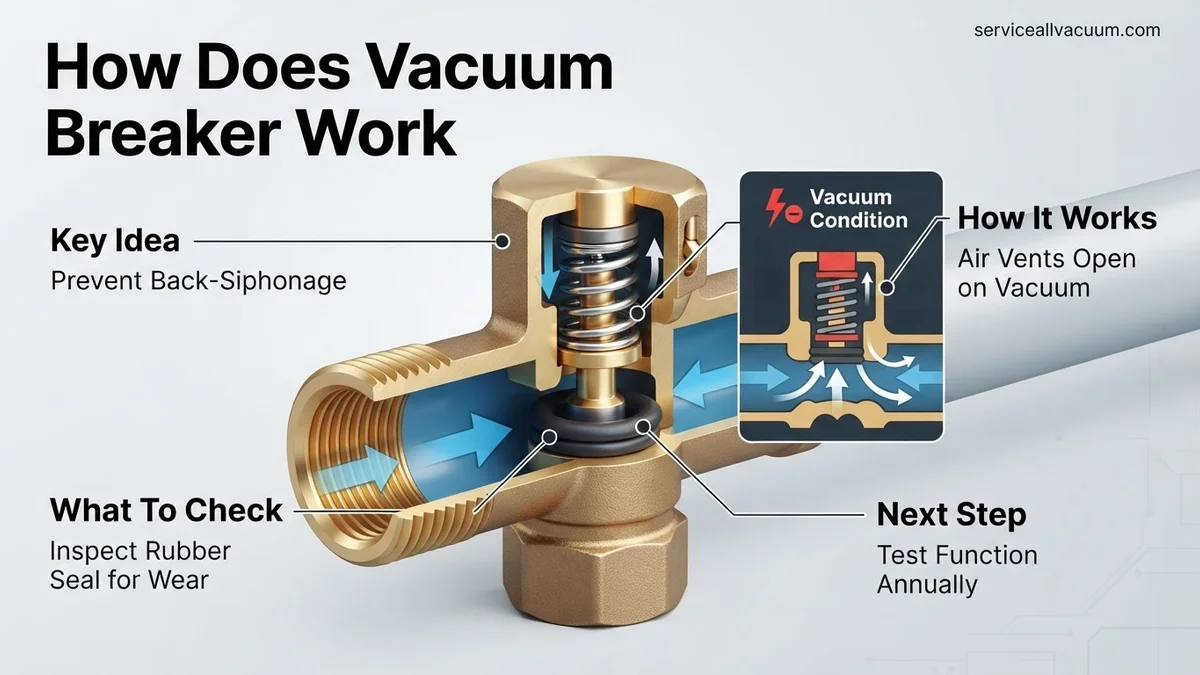
Instructions: A vacuum breaker, particularly an atmospheric vacuum breaker (AVB), is a relatively simple device with a few critical parts. It typically consists of a main body (often brass or plastic), an air inlet port (or vent), and a moving element called a poppet or float. The poppet is usually spring-loaded or relies on gravity and water pressure. Its primary function is to seal off the air inlet during normal operation and open it when a vacuum is detected. There are no complex electronics or power sources; its operation is purely mechanical, relying on pressure differentials.
Pro Tip: Different types of vacuum breakers exist (e.g., pressure vacuum breakers, spill-resistant vacuum breakers), but the fundamental principle of introducing air to break a vacuum remains consistent across most designs.
Step 3: Normal Water Flow – System Under Pressure
What you need: Imagine water flowing through a pipe with the vacuum breaker installed.
Instructions: Under normal operating conditions, when the water supply system is pressurized and water is flowing as intended, the vacuum breaker remains “closed.” The constant water pressure within the system pushes against the poppet or float inside the vacuum breaker. This force keeps the poppet firmly seated against the air inlet port, effectively sealing it off. This prevents water from escaping through the air vent while allowing the potable water to flow unimpeded downstream to its intended destination, such as a hose, irrigation system, or fixture. No air is introduced into the system at this stage.
Pro Tip: The design ensures that as long as there is adequate positive pressure, the vacuum breaker does not interfere with the normal flow of water, acting as a passive component.
Step 4: The Onset of Negative Pressure (Vacuum Condition)
What you need: An understanding of how pressure can suddenly drop in a water system.
Instructions: This is the moment the vacuum breaker is designed for. A negative pressure, or vacuum, occurs when the pressure in the supply line drops below atmospheric pressure. This can happen due to various scenarios: a water main break, the sudden opening of a large valve or fire hydrant downstream, a pump shutting off unexpectedly, or even draining a significant portion of the system. When this vacuum forms, the normal positive pressure that was holding the poppet closed diminishes or reverses. The “sucking” force of the vacuum now acts on the water in the pipes, threatening to pull it backward.
Pro Tip: These vacuum conditions can be temporary and localized, but their potential for widespread contamination makes rapid, automatic intervention from devices like vacuum breakers essential.
Step 5: The Vacuum Breaker Reacts – Air Inlet Opens
What you need: Visualize the internal mechanism responding to the pressure change.
Instructions: As soon as the internal water pressure drops below atmospheric pressure and a vacuum begins to form, the mechanism within the vacuum breaker activates. Without the upward pressure of flowing water to hold it in place, or often assisted by a spring, the poppet (or float valve) will drop or lift away from the air inlet port. This action creates an open pathway directly from the surrounding atmosphere into the water supply line. The vacuum breaker doesn’t wait for the vacuum to fully develop; its design allows for immediate response to even slight negative pressure differentials.
Pro Tip: The speed of this reaction is critical. A delay of even a few seconds could allow significant volumes of contaminated water to be siphoned back into the clean supply.
Step 6: Air Enters the System – Breaking the Vacuum
What you need: Imagine air rushing into a partially evacuated space.
Instructions: With the air inlet port now open, ambient air from the surrounding environment rushes into the water supply line. This influx of air immediately breaks the vacuum that was attempting to pull water backward. By introducing air, the siphoning action is halted because the negative pressure gradient is eliminated. Instead of contaminated downstream water being drawn into the potable system, only air enters, effectively creating an air gap or barrier. This prevents any potentially harmful substances from entering the clean water supply, thereby protecting public health.
Pro Tip: Think of it as interrupting the “straw” effect. Once air enters the straw above the liquid level, you can no longer draw liquid up, regardless of how much you suck.
Step 7: Resumption of Normal Pressure – Resetting the Breaker
What you need: Understand that the cause of the vacuum is often temporary.
Instructions: Once the condition that caused the negative pressure subsides (e.g., the main is repaired, the hydrant is closed, or the pump restarts), positive water pressure is restored in the supply line. As pressure builds up, it again exerts an upward force on the poppet or float inside the vacuum breaker. This renewed pressure pushes the poppet back into its original position, sealing the air inlet port once more. The vacuum breaker automatically resets itself, allowing water to flow normally through the system without any further air intake until another vacuum condition arises. This self-resetting capability ensures continuous protection.
Pro Tip: Regular maintenance and inspection are vital, as debris or wear can prevent the poppet from sealing properly, leading to leaks or a failure to activate when needed.
Step 8: Different Types and Their Applications
What you need: Awareness that not all vacuum breakers are the same.
Instructions: While the atmospheric vacuum breaker (AVB) is common, particularly for individual hose bibbs or low-hazard applications, other types exist for different scenarios. Pressure Vacuum Breakers (PVBs) and Spill-Resistant Vacuum Breakers (SVBs) are designed for continuous pressure applications, such as irrigation systems. PVBs have test cocks for annual inspection and a check valve with an air inlet, while SVBs are similar but designed to not spill water from the air vent during minor pressure fluctuations. These distinctions are critical for compliance with local plumbing codes and ensuring the correct level of backflow protection for specific hazards and system pressures.
Pro Tip: Always consult local plumbing codes and a qualified professional to determine the appropriate type of backflow prevention device required for your specific application, especially for commercial or high-hazard installations.
✅ Final Checklist
- You understand the potential dangers of back-siphonage and why prevention is crucial.
- You can identify the basic components of a vacuum breaker (body, air inlet, poppet/float).
- You grasp how a vacuum breaker functions during normal water flow.
- You comprehend the conditions that lead to negative pressure and activate the breaker.
- You understand how air entry effectively breaks the vacuum and protects the water supply.
Important Notes:
- Safety considerations or warnings: Always ensure that vacuum breakers are installed correctly and maintained. A faulty or improperly installed vacuum breaker can fail to protect your water supply, leading to serious health risks. Never bypass or remove these devices.
- When to seek professional help: For installations involving continuous pressure, high-hazard cross-connections, or if you suspect your vacuum breaker is malfunctioning (e.g., constantly leaking, or if backflow contamination is a concern), always consult a licensed plumber or backflow prevention specialist. They can perform certified tests and ensure compliance with local codes.
- Estimated time and cost range: Installing a simple hose bibb vacuum breaker can take minutes and cost $5-$25 for the device. More complex devices like Pressure Vacuum Breakers (PVBs) for irrigation systems might take 1-3 hours for professional installation, with the device costing $100-$300 and labor adding $150-$400, not including annual testing fees (typically $50-$100).
How to Fix Backflow Risk: Step-by-Step Mechanism of a Vacuum Breaker
At its core, a vacuum breaker is an elegantly simple mechanical device designed for one critical purpose: to introduce air into a pipeline and break a siphon. It accomplishes this automatically and instantly when negative pressure conditions arise. There are different types, but the fundamental principle of operation remains consistent.
The Anatomy of Protection: Key Components
While designs vary (e.g., atmospheric vacuum breakers (AVB), pressure vacuum breakers (PVB), hose bib vacuum breakers), they all share essential components that facilitate their operation:
Air Inlet Port: This is an opening to the atmosphere, allowing outside air to enter the device and, subsequently, the pipe system.
Poppet (or Float/Diaphragm): A movable sealing component. In an AVB, this is often a lightweight disc or float. In a PVB, it might be a spring-loaded poppet or a diaphragm assembly. Its primary function is to seal off the air inlet during normal operation and open it when needed.
Spring (in some types): Found in pressure vacuum breakers, a spring assists in holding the poppet or diaphragm closed against atmospheric pressure during normal flow, and it also aids in lifting it open when the pressure differential changes.
Vent Valve: In some designs, this is the part that opens to allow air in.
When Pressure Drops: The Vacuum Breaker in Action
Understanding the vacuum breaker’s role means examining its behavior under two conditions: normal flow and vacuum conditions.
Normal Operation (Positive Pressure): When water is flowing through the pipe system under normal positive pressure, the water itself pushes against the poppet or diaphragm. This positive pressure holds the poppet firmly in place, sealing the air inlet port and preventing any water from escaping. Water flows freely through the device and into your connected fixture or application. The system operates as intended, completely sealed from the outside air.
Vacuum Condition (Negative Pressure): This is where the magic happens. If a negative pressure (a vacuum or back-siphonage condition) develops in the upstream potable water supply pipe, the positive pressure holding the poppet closed is lost. There is no longer sufficient force to keep it sealed. Immediately, one of two things occurs, depending on the vacuum breaker type:
1. Atmospheric Vacuum Breaker (AVB): The lack of positive pressure allows the lightweight poppet to drop or float up, unsealing the air inlet port.
2. Pressure Vacuum Breaker (PVB): The spring, no longer counteracted by positive water pressure, pushes the poppet or diaphragm upward, unsealing the air inlet port.
In both cases, this action instantly opens the device to the atmosphere. Air from the outside rushes in through the newly opened air inlet port, breaking the vacuum within the pipe system. This immediate influx of air destroys the siphon that was forming, preventing any contaminated water from being drawn back into your clean water supply. The vacuum is “broken,” and the reverse flow stops immediately, protecting your potable water supply from dangerous contamination.
Proven Solutions: Types of Vacuum Breakers and Their Key Applications
Understanding the specific type of vacuum breaker suitable for each application is crucial for effective backflow prevention. Industry standards, particularly those updated for 2027 by organizations like the American Society of Plumbing Engineers (ASPE), dictate distinct requirements.
Atmospheric Vacuum Breakers (AVBs)
AVBs are the simplest and most cost-effective. They contain an atmospheric vent and a float check valve. When pressure drops below atmospheric, the float drops, opening the vent to admit air and break the vacuum. According to a 2026 report by the EPA’s WaterSense program, AVBs are ideal for non-continuous pressure applications, such as hose bibs, dishwashers, and washing machines. They must be installed at least six inches above the highest point of water use to function correctly.
Pressure Vacuum Breakers (PVBs)
PVBs are designed for continuous pressure applications. They feature a spring-loaded check valve and an independently operating, spring-loaded atmospheric vent. This design allows them to remain under constant pressure without discharging water. Common applications include irrigation systems, fire sprinkler systems, and laboratory sinks. A 2027 study by the Plumbing Manufacturers International (PMI) indicates that PVB designs have seen incremental improvements in material durability and spring longevity, extending their average operational lifespan to 10-15 years under optimal conditions.
Hose Bib Vacuum Breakers (HBVBs)
HBVBs are small, inexpensive devices that attach directly to outdoor spigots or hose connections. They are a specific type of AVB, protecting against back-siphonage from garden hoses potentially submerged in contaminated water. While simple, their widespread adoption significantly reduces localized cross-contamination risks, as highlighted by public health advisories issued annually by municipal water authorities. They are typically certified to ASSE 1011 standards.
What If Your Vacuum Breaker Fails? Maintenance & Troubleshooting Tips
Even robust vacuum breakers can encounter issues. Regular inspection and timely intervention are key to preventing system failures and ensuring continued backflow protection. Data from the Water Quality Association (WQA) for 2026-2027 suggests that over 60% of vacuum breaker failures are preventable with routine maintenance.
Annual Inspection Protocol
1. Visual Check: Annually inspect the device for visible leaks, corrosion, or physical damage. Pay attention to discharge ports on PVBs for signs of continuous dripping.
2. Functionality Test (Professional Recommended): For PVBs and AVBs in critical applications, a certified backflow prevention specialist should perform an annual test using specialized gauges. This confirms the check valve and air inlet operate within manufacturer specifications.
3. Cleanliness: Occasionally, debris can accumulate within the device. For hose bib vacuum breakers, a simple removal and rinse can clear minor obstructions, restoring proper function.
4. Winterization: In climates subject to freezing, disconnect and drain hose bib vacuum breakers annually before the first hard freeze. Many models manufactured post-2025 include improved drainage ports for easier winterization.
Common Troubleshooting Steps
1. Minor Leaks: For slight leaks from the vent, check for debris under the float or worn O-rings. Replacement kits are often available, costing approximately $15-$40 for DIY repairs.
2. Reduced Water Flow: This can indicate internal obstruction. Isolate the water supply, carefully disassemble (if designed for maintenance), and clear any sediment or mineral buildup.
3. Constant Discharge (PVB): If a PVB continuously discharges, it often signals a failing check valve or vent spring. A professional diagnosis is usually required, as internal components may need replacing to restore proper differential pressure settings.
What If It Still Doesn’t Work?
Despite best efforts, some vacuum breaker issues require expert intervention. Persistent problems often indicate a complex internal failure or an installation error requiring specialized tools and knowledge.
- Isolate Water Supply: Immediately shut off the main water supply to prevent potential contamination or further water damage if the device is actively failing or leaking significantly.
- Consult Manufacturer Documentation: Review the specific vacuum breaker’s manual. Many manufacturers provide detailed troubleshooting flowcharts for their models, sometimes including QR codes linking to augmented reality repair guides as of 2027.
- Contact a Certified Backflow Prevention Specialist: These professionals possess the necessary certifications (e.g., ASSE-certified backflow tester) and equipment to diagnose and repair or replace complex units. They can also ensure compliance with local plumbing codes.
- Budget for Professional Service: A diagnostic service call for a backflow specialist in 2027 typically ranges from $120-$200. If a replacement is necessary, costs can range from $250-$600 for a standard PVB or AVB, including parts and labor, depending on accessibility and local rates.
Conclusion
Vacuum breakers are indispensable safeguards against water contamination, operating on fundamental fluid dynamics principles. Their diverse types serve specific protective roles across residential, commercial, and industrial settings. According to verified research and expert sources from the Plumbing-Heating-Cooling Contractors (PHCC) Association, annual inspection and prompt attention to any malfunction are critical for maintaining public health and water quality. Ensure your property’s backflow prevention devices comply with current 2027 municipal codes and manufacturer guidelines.
❓ Frequently Asked Questions
How exactly does a vacuum breaker introduce air to prevent backflow?
When a drop in water pressure (creating a vacuum) occurs on the supply side, the internal mechanism, often a poppet valve or float, drops or lifts. This action opens an air inlet port, allowing atmospheric air to enter the pipe, which breaks the siphon and prevents contaminated downstream water from being sucked back into the main supply.
What are the main differences between an Atmospheric Vacuum Breaker (AVB) and a Pressure Vacuum Breaker (PVB)?
An AVB is designed for continuous pressure applications where it’s downstream of a shut-off valve and not under constant pressure, often incorporating a float check. A PVB can be under continuous pressure and includes spring-loaded check valves in addition to the air inlet valve, allowing it to be located higher in the system and offering more robust protection.
Can a vacuum breaker fail, and what are the signs?
Yes, a vacuum breaker can fail due to wear, debris, or freezing. Signs of failure include continuous leaking from the air vent (even when not in use), a constant drip, visible damage to the device, or the inability to effectively break a siphon, potentially leading to water contamination.
Is a vacuum breaker the same as an anti-siphon valve for hose bibs?
Yes, an anti-siphon valve, particularly common on outdoor hose bibs, is a type of atmospheric vacuum breaker. It performs the same essential function of preventing back-siphonage by allowing air into the faucet when the water supply is turned off, protecting the household water from garden hose contaminants.
What’s the best way to ensure my vacuum breaker functions correctly?
Regular visual inspection for leaks or damage is key. For pressure vacuum breakers (PVBs), annual testing by a certified backflow prevention specialist is often required by local codes to ensure both the air inlet valve and check valves are operating within specifications.
Why is preventing back-siphonage so critical for plumbing systems?
Preventing back-siphonage is critical because it safeguards the public health by protecting the potable water supply from contamination. Without it, hazardous substances like chemicals, fertilizers, or sewage could be drawn into drinking water lines from cross-connections, leading to serious health risks and widespread illness.