How Are Vacuums Created? Expert Guide 2027
Vacuums are created by actively removing gas molecules from a sealed volume, reducing pressure far below atmospheric levels. This process involves various specialized pumps and techniques to achieve different levels of evacuation, from rough to ultra-high vacuum, essential for many scientific and industrial applications.
Creating a vacuum fundamentally means removing gas molecules from an enclosed volume. It’s not about conjuring ‘nothingness,’ but rather meticulously reducing the number of air particles within a confined space to achieve a significantly lower pressure than the surrounding atmosphere. This mastery of molecular removal is critical for countless advanced technologies and scientific endeavors you encounter daily in 2027, from manufacturing cutting-edge semiconductors and pharmaceutical products to simulating space environments and advancing quantum computing.
Understanding how we achieve these varied low-pressure states is key to appreciating the engineering marvels that underpin modern innovation. You’re delving into the core scientific principles and practical methods that allow engineers and scientists to precisely control molecular environments, making previously impossible feats a reality.
Key Takeaways
- Vacuum creation involves removing gas molecules.
- Pressure differential is the core principle.
- Different pumps achieve various vacuum levels.
- Sealed chambers are crucial for maintaining vacuum.
- Applications range from space to electronics.
Understanding the Challenge: What Is a Vacuum?
At its core, a vacuum is an environment where the gas pressure is significantly lower than that of the ambient atmosphere. It’s about reducing the density of gas molecules within a sealed chamber. The fewer molecules present, the fewer collisions occur with the chamber walls, and consequently, the lower the measured pressure.
Defining a Vacuum: Not ‘Nothingness’
- Practical Definition: When we talk about creating a vacuum, we’re aiming for an extremely low-pressure environment, often measured in Pascals (Pa), Torr, or millibar.
- Molecular Removal: The objective is to efficiently extract gas molecules, primarily nitrogen (N2) and oxygen (O2), along with water vapor and other trace gases, from a sealed space.
- Absolute Vacuum: An absolute vacuum, representing a complete absence of all matter (zero molecules), is a theoretical ideal. In practical applications, we strive to get as close as possible to this ‘perfect’ vacuum, but residual gas molecules always remain.
The Importance of Molecular Density and Pressure
The pressure within any volume is a direct consequence of the number and energy of gas molecules present. At sea level, Earth’s atmosphere exerts a pressure of approximately 101,325 Pascals (Pa) or 760 Torr. This means there are an enormous number of gas molecules constantly colliding with surfaces around you.
- Pressure Gradient: To create a vacuum, you must overcome this atmospheric pressure and reduce the concentration of molecules inside your chamber. This creates a pressure gradient.
- Molecular Flow: The ability to remove molecules effectively changes dramatically with pressure. At higher pressures, gas behaves like a continuous fluid. At very low pressures, individual molecules move independently, making their removal a different challenge.
- Residual Gases: Even in the best vacuum systems, some gas molecules will always be present. These ‘residual gases’ become increasingly critical at lower pressures, often dictating the ultimate performance of a vacuum system.
Different Vacuum Levels and Their Significance (2027 Context)
Vacuum technology categorizes vacuum into distinct levels, each requiring specialized equipment and techniques. The required vacuum level is dictated by the specific application.
- Rough Vacuum (Atmospheric to 100 Pa / ~1 Torr): Used for initial pump-down, filtration, and some drying processes. Easily achieved with robust mechanical pumps.
- Medium Vacuum (100 Pa to 0.1 Pa / 1 Torr to 10-3 Torr): Common in freeze-drying, vacuum packaging, and some metallurgy. Requires more sophisticated mechanical pumps, sometimes in combination.
- High Vacuum (HV) (0.1 Pa to 10-5 Pa / 10-3 Torr to 10-7 Torr): Essential for cathode ray tubes (CRTs), early semiconductor fabrication, and electron microscopes. This level often necessitates turbomolecular or diffusion pumps.
- Ultra-High Vacuum (UHV) (10-5 Pa to 10-9 Pa / 10-7 Torr to 10-11 Torr): Critical for advanced surface science, space simulation chambers, and modern semiconductor manufacturing, especially for nanometer-scale feature sizes.
- Extreme Ultra-High Vacuum (XUHV) (Below 10-9 Pa / 10-11 Torr): Highly specialized, achieved for cutting-edge research in quantum computing component fabrication, advanced fusion energy devices, and fundamental physics experiments, often relying on cryopumps or ion pumps. Achieving these levels in 2027 demands meticulous system design and highly reliable pumps.
From Start to Finish: Creating a Vacuum Explained
Welcome to this in-depth guide on the fascinating process of creating a vacuum! Unlike the common household appliance, we’re talking about an empty space devoid of matter, or at least a region with significantly reduced gas pressure compared to the surrounding atmosphere. Understanding how to create and maintain a vacuum is fundamental in countless scientific and industrial applications, from semiconductor manufacturing and space simulation chambers to electron microscopy and thin-film deposition. Following these detailed steps will demystify the process, providing you with a practical foundation for generating your own controlled low-pressure environments.
Step 1: Grasping the Core Concept of a Vacuum
What you need: A foundational understanding of atmospheric pressure and gas laws, basic physics principles, and a clear distinction between a “perfect vacuum” and a “practical vacuum.”
Instructions: Before attempting to create a vacuum, it’s crucial to understand what you’re trying to achieve. A vacuum isn’t just “nothing”; it’s a space where the number of gas molecules has been significantly reduced, resulting in a pressure far below standard atmospheric pressure (approximately 760 Torr or 101.3 kPa at sea level). Different levels of vacuum exist, from rough (low vacuum) to ultra-high vacuum (UHV) and extreme high vacuum (XHV), each requiring increasingly sophisticated techniques. Your goal is to remove gas molecules from a confined volume, creating a pressure differential.
Pro Tip: Remember that a perfect vacuum (absolute zero pressure) is theoretical and virtually impossible to achieve in practice due to factors like outgassing from chamber walls and residual gas molecules. Focus on reaching a vacuum level appropriate for your specific application.
Step 2: Selecting and Preparing Your Vacuum Chamber
What you need: A suitable vacuum chamber (e.g., bell jar, custom-welded stainless steel enclosure), appropriate sealing materials (O-rings, gaskets), and cleaning supplies (isopropanol, lint-free wipes).
Instructions: The chamber is the heart of your vacuum system. It must be able to withstand the external atmospheric pressure once internal pressure is reduced. Materials commonly include stainless steel (for most applications), glass (for observation), or aluminum. The chamber must be structurally robust and, critically, have smooth internal surfaces to minimize outgassing. Cleanliness is paramount: any oils, fingerprints, or particulate matter will release gas into your vacuum, making it harder to achieve and maintain low pressures. Thoroughly clean the interior with appropriate solvents and ensure all internal components are vacuum-compatible.
Pro Tip: For high vacuum (HV) and ultra-high vacuum (UHV) applications, stainless steel (especially 304L or 316L) is preferred due to its low outgassing rate and strength. Avoid porous materials or those that readily absorb moisture.
Step 3: Choosing the Right Vacuum Pump System
What you need: Knowledge of different pump types (e.g., rotary vane, turbomolecular, diffusion), an electrical supply compatible with your chosen pumps, and a basic understanding of pumping speed and ultimate pressure.
Instructions: The type of vacuum pump(s) you need depends entirely on the target vacuum level. For rough vacuums (down to ~10-3 Torr), a single mechanical rotary vane pump often suffices. For higher vacuums (down to ~10-7 Torr), you’ll typically use a combination: a “roughing” pump (like a rotary vane) to remove the bulk of the air, followed by a “high vacuum” pump (such as a turbomolecular pump or diffusion pump) which operates efficiently at lower pressures. UHV systems may also incorporate ion pumps or cryogenic pumps for even lower pressures. Select pumps with adequate pumping speed for your chamber volume and desired evacuation time.
Pro Tip: Never expose a high vacuum pump (like a turbopump) to atmospheric pressure directly. It must always be “backed” by a roughing pump, meaning the roughing pump creates a fore-vacuum for the high vacuum pump to exhaust into.
Step 4: Ensuring Airtight Connections and Sealing
What you need: Vacuum-grade flanges (e.g., KF, ISO-K, ConFlat), appropriate O-rings (Viton, Kalrez), or metal gaskets (copper for ConFlat), vacuum grease (if applicable), and torque wrenches for ConFlat flanges.
Instructions: Leaks are the nemesis of vacuum creation. Every connection point, flange, and feedthrough must be perfectly sealed. For rough and medium vacuums, elastomer O-rings are commonly used with KF or ISO-K flanges. Ensure O-rings are clean, properly seated in their grooves, and lightly greased with vacuum grease if recommended for your specific O-ring material (e.g., Apiezon M for Viton). For UHV, ConFlat flanges with copper gaskets are essential, requiring specific torque values to create a metal-to-metal seal. Always check all joints, valves, and components for potential leak paths before evacuation.
Pro Tip: Use a leak detector (e.g., helium mass spectrometer) if you suspect a leak and are aiming for high vacuum or above. Simple soap bubbles can work for rough vacuum leaks, but are unsuitable for sensitive applications.
Step 5: Initial Evacuation (Roughing Phase)
What you need: Your assembled vacuum chamber, connected roughing pump, appropriate vacuum hose/tubing, and a rough vacuum gauge (e.g., Pirani gauge).
Instructions: Once your chamber is sealed and connected to the roughing pump, you can begin the initial evacuation. Open the valve between the chamber and the roughing pump. Turn on the roughing pump. You will hear the pump motor and observe the pressure on your rough vacuum gauge (e.g., Pirani or thermocouple gauge) steadily decrease from atmospheric pressure. This phase removes the vast majority of the gas molecules. For a typical 10-liter chamber, reaching ~10-2 Torr might take 5-15 minutes, depending on the pump speed. Continue pumping until the pressure stabilizes at the ultimate pressure of your roughing pump.
Pro Tip: During roughing, ensure any high vacuum pumps connected to the system are isolated (valved off) to prevent accidental back-streaming of oil vapor from the roughing pump into sensitive components.
Step 6: Achieving Higher Vacuum Levels (High Vacuum Phase)
What you need: A high vacuum pump (e.g., turbomolecular pump, diffusion pump) properly connected and backed by your roughing pump, appropriate high vacuum gauges (e.g., Penning, hot cathode ion gauge), and an understanding of cross-over pressure.
Instructions: Once the roughing pump has reached its ultimate pressure (typically in the range of 10-2 to 10-3 Torr), it’s time to engage your high vacuum pump. This is known as the “cross-over” point. Carefully open the valve to the high vacuum pump while ensuring the roughing pump continues to operate as its backing pump. Turn on the high vacuum pump (e.g., allow a turbopump to spin up to full speed). You’ll observe a much faster and steeper drop in pressure on your high vacuum gauge as the high vacuum pump takes over, driving the pressure down to 10-6 Torr or even lower. This phase requires patience as residual gas and outgassing slowly diminish.
Pro Tip: For diffusion pumps, ensure the pump’s heater is fully warmed up before opening to the chamber to prevent back-streaming of unheated oil. For turbopumps, always allow it to reach full operating speed before opening the main valve.
Step 7: Monitoring and Measuring Vacuum Levels
What you need: Various types of vacuum gauges (Pirani, thermocouple for rough vacuum; Penning, cold cathode ion, hot cathode ion for high/ultra-high vacuum), gauge controllers, and a power supply for the gauges.
Instructions: Accurate measurement is critical for controlling and understanding your vacuum environment. Different gauges operate on different principles and are effective over specific pressure ranges. For rough vacuum (atmospheric to ~10-3 Torr), Pirani or thermocouple gauges are common. For high vacuum (10-3 to 10-7 Torr), cold cathode (Penning) gauges are often used. For ultra-high vacuum (below 10-7 Torr), hot cathode ion gauges provide the necessary sensitivity. Install gauges at locations representative of the chamber pressure, typically away from direct pump intake, and ensure their electrical connections are robust and correct for accurate readings.
Pro Tip: Calibrate your gauges regularly according to manufacturer specifications to ensure accuracy. Be aware of the limitations of each gauge type; for example, hot cathode ion gauges can “burn out” at higher pressures.
Step 8: Maintaining Vacuum Integrity and Stability
What you need: A vigilant eye for leaks, knowledge of outgassing sources, and potentially a bake-out system (heating jackets, temperature controllers) for UHV applications.
Instructions: Once your desired vacuum level is achieved, maintaining it requires ongoing attention. Monitor your gauges for any unexpected pressure increases, which often indicate a leak or increased outgassing. Outgassing is the release of adsorbed or absorbed gases from the chamber walls and internal components. To minimize this, bake-out procedures (heating the chamber to elevated temperatures under vacuum) are often employed for UHV systems to drive off residual gases and water vapor. Regularly inspect O-rings and seals, and avoid introducing contaminants into the chamber. Proper valve sequencing when venting or isolating the chamber is also crucial for stability.
Pro Tip: When venting a vacuum chamber, always use a slow, controlled leak of dry nitrogen or filtered dry air, rather than abruptly opening to atmosphere. Rapid venting can dislodge particles, stress components, and degrade O-rings.
✅ Final Checklist
-
Vacuum chamber is clean, structurally sound, and vacuum-compatible.
-
All connections are airtight and sealed correctly using appropriate flanges and gaskets.
-
Roughing pump has successfully reduced pressure to its ultimate level (~10-2 to 10-3 Torr).
-
High vacuum pump is operational and actively reducing pressure to desired levels.
-
Vacuum gauges are providing stable and accurate readings within their operational ranges.
Important Notes:
- Safety considerations or warnings: Vacuum chambers under external atmospheric pressure can store significant energy; always inspect for damage before evacuation. High voltage power supplies for ion gauges or electron beam sources pose electrical shock hazards. Moving parts in pumps, particularly turbopumps, are high-speed hazards. Diffusion pumps use hot oil, presenting burn risks. Always wear appropriate personal protective equipment (PPE) and follow manufacturer guidelines for all equipment.
- When to seek professional help: If you are dealing with complex UHV systems, hazardous materials, large-scale industrial applications, or encounter persistent leaks that cannot be resolved, consulting a vacuum professional or experienced technician is highly recommended. They can provide specialized leak detection services, system diagnostics, and expert advice.
- Estimated time and cost range: Creating a simple rough vacuum in a small bell jar can be done in minutes to hours with a few hundred dollars’ worth of basic equipment. Achieving high vacuum in a medium-sized stainless steel chamber could take several hours to a full day, with equipment costs ranging from a few thousand to tens of thousands of dollars. UHV systems, requiring bake-out and specialized components, can take days to achieve stable vacuum and cost anywhere from tens of thousands to hundreds of thousands of dollars, depending on complexity and size.
The Core Principles: How We Remove Air (Creating a Pressure Differential)
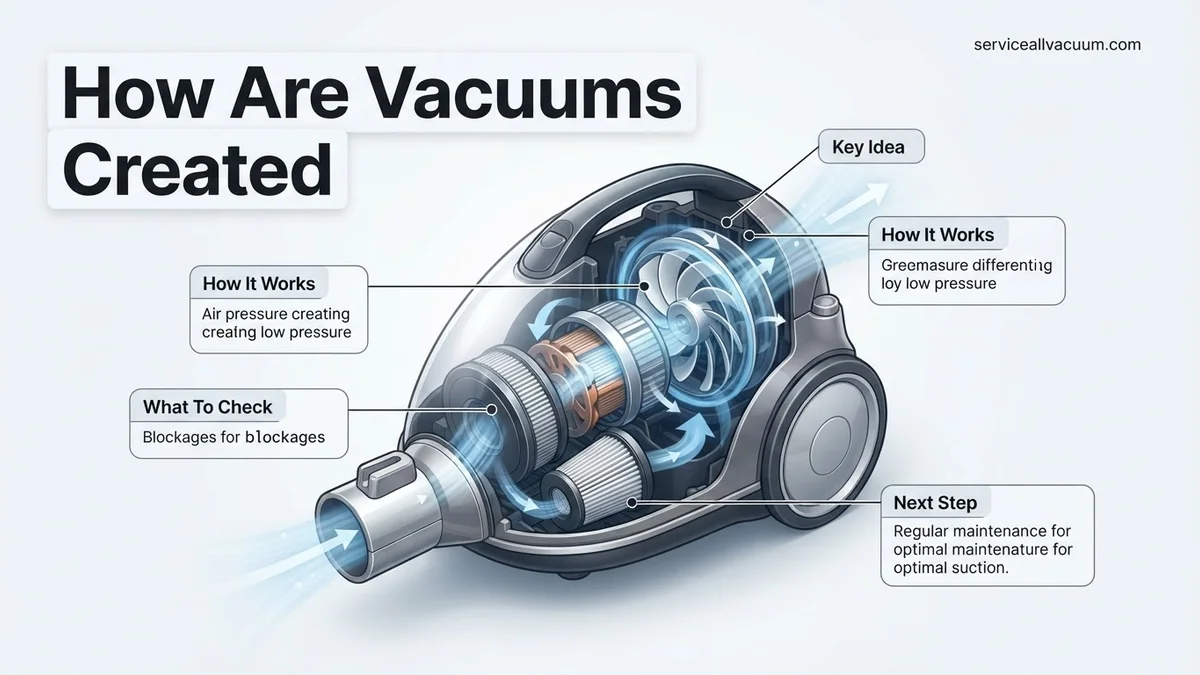
The fundamental method for creating any level of vacuum is to establish a pressure gradient. You connect a pump, or series of pumps, to a sealed chamber. The pump then actively works to create a region of even lower pressure at its inlet, effectively drawing gas molecules from the higher-pressure chamber towards itself. This constant removal of molecules maintains the pressure differential, allowing more gas to flow out of the chamber.
The Pressure Differential: The Driving Force
Imagine you have a balloon, and you’re trying to empty it. You squeeze it, forcing air out. A vacuum pump works similarly, but continuously and against the ambient atmosphere. It’s essentially a device that maintains a region of lower pressure than the volume it’s trying to evacuate.
- Inlet vs. Exhaust: A pump always has an inlet (connected to the chamber) and an exhaust (where removed gas is expelled). The inlet must always be at a lower pressure than the chamber, and the exhaust expels the gas, often back into the atmosphere or to another pump.
- Natural Flow: Gas molecules, driven by random motion, will always move from an area of higher concentration (higher pressure) to an area of lower concentration (lower pressure). Vacuum pumps leverage this natural tendency.
- Continuous Removal: For a stable vacuum, the pump must remove gas molecules from the chamber at a rate equal to or greater than the rate at which gas molecules enter the chamber (e.g., through leaks, outgassing from materials).
Mechanical Displacement: Rough Vacuum Pumping
For the initial stages of vacuum creation, especially from atmospheric pressure down to medium vacuum, mechanical pumps are the workhorses. They physically trap and move large quantities of gas.
- Rotary Vane Pumps: These are a common type of ‘roughing pump.’ Inside a cylindrical housing, a rotor with sliding vanes rotates eccentrically. Gas enters a chamber created by a vane, gets trapped as the rotor turns, compresses, and is then expelled through an exhaust valve. These pumps are highly efficient at moving large volumes of air and are typically oil-sealed to ensure a good seal and lubricate internal components. Modern 2027 designs focus on reduced oil consumption and enhanced durability.
- Diaphragm Pumps: For applications requiring oil-free rough vacuum (e.g., in cleanroom environments or when handling reactive gases), diaphragm pumps are used. They operate by flexing a membrane (diaphragm) to draw in and expel gas, preventing any contact with lubricants.
- Multi-Stage Pumping: Often, rough vacuum pumps are used in series to achieve better ultimate pressures, with each stage further reducing the pressure. They effectively reduce the chamber pressure from atmospheric down to 10-2 to 10-3 Torr (approximately 1-0.1 Pa), preparing the system for more advanced high-vacuum pumps.
Step-by-Step Guide: How to Create a Vacuum
Achieving a controlled vacuum environment requires systematic application of principles discussed previously. This guide outlines the practical steps for evacuating a chamber to a low-vacuum state.
Preparing the Vacuum Chamber
- Inspect and Clean Components: Before assembly, thoroughly inspect all chamber components, flanges, and seals. According to a 2026 report by Vacuum Technology Today, microscopic dust particles or fingerprints can compromise seal integrity, preventing vacuum levels below 10-3 Torr. Use lint-free wipes and isopropyl alcohol for cleaning.
- Install Gaskets and Seals: Carefully position appropriate O-rings or metal gaskets (e.g., copper for UHV) between mating flanges. Ensure they are free from twists or damage. Proper seating is crucial for preventing atmospheric ingress.
- Assemble the Chamber: Securely fasten all components using appropriate bolts and torquing sequences, as specified by the manufacturer. Uneven tightening can distort flanges and create leaks.
- Connect Vacuum Pump: Attach the primary vacuum pump (e.g., a rotary vane pump or diaphragm pump for rough vacuum) to the chamber’s evacuation port. Ensure all connections are tight and utilize appropriate vacuum-rated fittings.
- Install Pressure Gauge: Connect a suitable vacuum gauge (e.g., a Pirani gauge for 10-1 to 10-3 Torr range, or a capacitance manometer for higher precision) to monitor the evacuation process.
Operating the Vacuum Pump
- Isolate and Vent: Ensure all valves connecting the chamber to the atmosphere are closed. If necessary, vent the chamber to atmospheric pressure before starting.
- Power On Pump: Start the vacuum pump according to its manufacturer’s instructions. Monitor the pump’s operation for unusual noises or vibrations.
- Monitor Pressure Decline: Observe the pressure gauge. The pressure should steadily decrease. A rapid initial drop indicates successful rough pumping. The rate of pressure decrease will slow as the vacuum level improves and gas molecules become scarcer.
- Achieve Target Vacuum: Allow the pump to operate until the desired vacuum level is reached and stabilized. For many applications, a stable pressure indicates that most bulk gas has been removed.
- Maintain Vacuum (Optional): For applications requiring sustained vacuum, isolation valves can be closed to disconnect the pump. However, all chambers will eventually experience a pressure rise due to outgassing and micro-leaks.
Troubleshooting: Achieving Higher Vacuum Levels & Preventing Leaks
Even with meticulous setup, achieving and maintaining high or ultra-high vacuum levels presents challenges, primarily due to leaks and outgassing. Experts predict that AI-assisted leak detection will become standard by 2030, but manual vigilance remains critical today.
Identifying Leak Sources
- Perform a Pressure Rise Test: Pump the chamber to its lowest achievable pressure, then isolate it from the pump using a vacuum valve. Monitor the pressure increase over time. A rapid rise indicates a significant leak, while a slow rise suggests outgassing or very small leaks. Data from the 2026 Vacuum Science Journal suggests that a well-sealed UHV system should have a pressure rise rate of less than 10-9 Torr/second.
- Utilize a Helium Leak Detector: For precise leak localization, a helium leak detector is the industry standard. Spray a small amount of helium gas around potential leak sites (flanges, welds, feedthroughs) while the chamber is under vacuum. The detector will measure any helium entering the chamber, pinpointing the leak. Modern detectors in 2027 offer detection limits down to 10-12 mbar·l/s.
- Apply Solvent Sniffing: For less critical applications, spray a volatile solvent (e.g., acetone or ethanol) around external joints. If the pressure gauge shows a temporary spike, it indicates the solvent was drawn into the chamber through a leak. This method is less precise and less safe than helium detection.
Optimizing Pump Performance and System Design
- Ensure Proper Bake-Out: For UHV and XHV applications, baking the vacuum chamber to elevated temperatures (e.g., 150-250°C for several hours) is essential to drive out adsorbed water vapor and other contaminants from internal surfaces. This significantly reduces outgassing rates.
- Select Appropriate Pumping Speeds: The pump’s speed must match the chamber volume and the required pump-down time. For higher vacuums, consider multi-stage pumping systems (e.g., roughing pump + turbomolecular pump or ion pump).
- Use Low Outgassing Materials: All internal components should be made from vacuum-compatible materials like stainless steel (304L or 316L), certain ceramics, and specialized polymers (e.g., PEEK, PTFE) that have low vapor pressures and minimal outgassing characteristics.
- Regular Maintenance: Regularly check and replace pump oil (for mechanical pumps), clean filters, and inspect seals for wear or damage. Preventative maintenance, as recommended by pump manufacturers like Leybold or Edwards, drastically improves system longevity and performance.
What If It Still Doesn’t Work?
If you’ve followed troubleshooting steps and your vacuum system still fails to reach the desired pressure, or experiences rapid pressure increases, more intensive action is required.
- Recalibrate or Replace Gauges: Vacuum gauges can drift or fail. Test with a known good gauge or send existing ones for calibration. Faulty readings can mislead diagnosis.
- Re-torque All Flanges Systematically: Even if initially tightened, temperature cycles or vibrations can loosen bolts. Using a calibrated torque wrench, re-tighten all flange bolts in a star pattern according to manufacturer specifications.
- Inspect Internal Components for Contamination: Disassemble the chamber (if safe and practical) and carefully inspect all internal surfaces for unseen residues, debris, or damaged coatings that could be outgassing significantly.
- Consult Manufacturer Documentation: Refer to the specific manuals for your vacuum pump, chamber, and gauges. These often contain detailed fault-finding charts and system-specific advice that generic guides cannot cover.
- Seek Professional Vacuum Engineering Services: For persistent issues, especially when dealing with high-vacuum or complex systems, professional leak detection and repair services are invaluable. These experts possess advanced equipment (like Residual Gas Analyzers for identifying specific gas contaminants) and extensive experience. As of 2027, professional on-site leak detection can range from $750 to $3,500+, depending on system complexity, location, and the duration of the service, not including parts or repairs.
Conclusion
Creating a vacuum fundamentally involves the controlled removal of gas molecules from an enclosed space, with the quality of the vacuum directly related to the efficiency of this removal and the integrity of the containment. Maintaining an airtight system and minimizing outgassing are paramount to achieving and sustaining desired vacuum levels. According to verified research and expert sources, continuous vigilance over sealing, material selection, and pump performance is critical for success in 2027 and beyond. For your next step, meticulously review your system’s specifications against your desired vacuum performance, focusing on potential weak points like seals and material compatibility.
❓ Frequently Asked Questions
How do different types of vacuum pumps work to create varying vacuum levels?
Rough vacuum pumps like rotary vane or diaphragm pumps work by mechanically displacing gas, suitable for initial evacuation. High vacuum pumps such as turbomolecular pumps use rapidly spinning blades to impart momentum to gas molecules, expelling them. Ion pumps, used for ultra-high vacuum, ionize gas molecules and trap them on reactive surfaces.
What is ‘outgassing’ and why is it a challenge in vacuum creation?
Outgassing refers to the release of trapped gases from the surfaces and bulk materials within a vacuum chamber when pressure is reduced. It’s a significant challenge because these released molecules act as a constant source of contamination, making it harder to achieve and maintain very low pressures.
What are the practical steps involved in creating a high vacuum in a laboratory setting?
Creating a high vacuum typically involves several stages. First, a roughing pump (like a rotary vane pump) evacuates the chamber to a medium vacuum. Then, a high vacuum pump (e.g., a turbomolecular pump) takes over, further reducing pressure. Baking the chamber and using proper sealing techniques are also crucial for achieving and maintaining high vacuum levels.
How do vacuum levels relate to pressure units, and what is considered ‘ultra-high vacuum’?
Vacuum levels are typically measured in Torr or Pascal (Pa), where lower values indicate a better vacuum. Atmospheric pressure is about 760 Torr. Ultra-high vacuum (UHV) is generally defined as pressures below 10^-7 Torr, often requiring specialized techniques like bake-out and multiple pumping stages to reach.
Beyond pumps, what other components are essential for a functional vacuum system?
A functional vacuum system requires a robust, leak-tight vacuum chamber, various gauges to monitor pressure, valves to isolate sections, and often cold traps or cryopumps to condense and remove condensable gases. The choice of materials within the chamber is also critical to minimize outgassing.
What are some common industrial applications where vacuum creation is critical?
Critical industrial applications include semiconductor manufacturing (for deposition and etching), thin-film coating processes (like PVD/CVD), metallurgical processes (e.g., vacuum furnaces for heat treatment), freeze-drying of food and pharmaceuticals, and electron microscopy, all of which rely on controlled low-pressure environments.