How Does A Central Vacuum System Work How a Central 2027
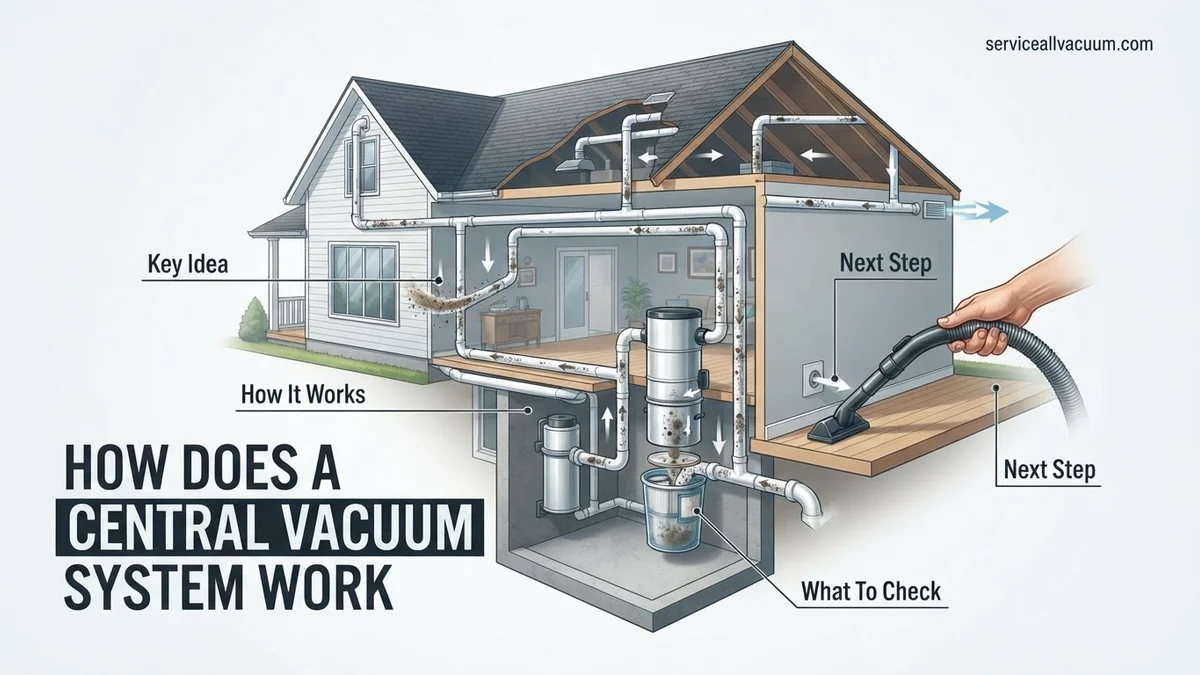
A central vacuum system operates by moving dirt and debris through a network of in-wall tubing to a remote power unit. This unit houses a powerful motor, fan, and collection canister, effectively separating debris from the air before exhausting filtered air outside, ensuring superior cleaning and improved indoor air quality.
A central vacuum system, in essence, operates by moving dust, debris, and allergens from various points in your home, through a hidden network of pipes, to a single, powerful collection unit. By 2027, these systems continue to offer a superior cleaning experience because they remove collected particles and exhaust filtered air completely outside your living space, ensuring significantly better indoor air quality compared to traditional vacuums. This innovative design means no recirculation of fine dust or allergens within your home, providing a cleaner environment for you and your family.
Understanding how this powerful system works fundamentally explains its effectiveness. Unlike portable vacuums that recycle dust-laden air back into your room, a central vacuum is engineered for maximum capture and expulsion. It achieves this through a carefully integrated series of components that create robust suction, transport debris efficiently, and safely contain or exhaust all the removed particulates, making your cleaning routine more thorough and impactful.
Key Takeaways
- Debris travels through in-wall tubing.
- Remote power unit ensures quiet operation.
- Filtered air typically vents outdoors.
- Cyclonic or filter separation captures dirt.
- System activation is via hose connection.
Understanding Central Vacuum Systems: The Problem with Traditional Vacuums
The Limitations of Portable Cleaners
You’ve likely experienced the immediate drawbacks of traditional, portable vacuum cleaners. They typically use smaller motors, generating less sustained suction power. More critically, the air they exhaust is often filtered and then released back into the same room you are cleaning. Even with HEPA filters, microscopic particles, pet dander, and allergens can escape and become airborne again. This means you might be cleaning the visible dirt, but simultaneously diminishing your indoor air quality by recirculating pollutants. Furthermore, lugging a heavy unit around and constantly plugging/unplugging can be cumbersome, impacting your cleaning efficiency in 2027.
The Central Vacuum Advantage in 2027
Central vacuum systems address these limitations directly. Their design prioritizes powerful, consistent suction and complete removal of contaminants. Imagine a system where the noise is localized to a utility room or garage, and the air you breathe during and after cleaning is noticeably fresher. This isn’t just about convenience; it’s about a fundamentally different approach to household cleanliness. With their robust, permanently installed power units, central vacuums deliver consistent, high-velocity airflow that portables simply cannot match, drawing in a wider range of debris from deep within carpets or cracks.
From Start to Finish: Central Vacuum Systems Explained
Welcome to this in-depth guide on understanding the mechanics of a central vacuum system. Often lauded for their superior cleaning power, improved indoor air quality, and quieter operation, these systems are a marvel of household engineering. This guide will meticulously break down each component and stage of operation, providing you with a clear, step-by-step understanding of how these powerful cleaning machines work to keep your home spotless. Following these steps will give you a comprehensive insight into the core principles of a central vacuum.
Step 1: The Heart of the System: The Power Unit & Collection Bin
Key Components: High-efficiency motor, fan (impeller), filtration system, and a large dirt collection canister. These are typically housed together in a single, robust unit.
Instructions: The process begins with the power unit, usually located in a remote area like a garage, basement, or utility room. When activated, its powerful motor spins an impeller (fan) at high speeds, creating a strong vacuum (negative pressure) within the entire network of pipes. This suction draws air and debris into the system. As the air enters the unit, heavier debris is often separated by cyclonic action or drops directly into the large collection canister, while finer dust particles are captured by a filter or bag before the air is exhausted.
Pro Tip: Locating the power unit in a garage or utility room significantly reduces operating noise inside your living spaces, one of the key benefits over portable vacuums. Ensure there’s adequate ventilation for the unit.
Step 2: The Invisible Highway: The Piping Network
Key Components: Durable PVC pipes (typically 2-inch diameter), specialized fittings (sweeping elbows, tees), and low-voltage wiring.
Instructions: Extending from the power unit, a network of rigid PVC pipes is strategically installed within the walls, floors, ceilings, and attics of your home. These pipes act as the “highway” for debris. They are designed with gentle, sweeping bends rather than sharp turns to maintain optimal airflow and prevent clogs. Low-voltage electrical wires are run alongside these pipes, connecting the wall inlets to the power unit, forming the crucial circuit that activates the system.
Pro Tip: Proper pipe installation, including sealing all joints and minimizing sharp angles, is critical for maintaining maximum suction and preventing future blockage issues. A smooth, unobstructed path is paramount.
Step 3: The Access Points: The Wall Inlets
Key Components: Wall-mounted inlet valves, low-voltage electrical contacts, and sometimes an integrated on/off switch.
Instructions: Throughout your home, strategically placed wall inlets serve as the connection points for your vacuum hose. These inlets are directly connected to the main piping network. When you open the hinged flap on an inlet, it typically completes the low-voltage circuit, sending a signal to the power unit to turn on. Some advanced inlets may feature a direct on/off switch, offering convenient control right where you’re cleaning. The design ensures a secure, airtight connection for efficient vacuuming.
Pro Tip: Plan your inlet locations carefully during installation. Placing them to allow a 30-35 foot hose to reach all areas without stretching or moving furniture excessively will significantly enhance your cleaning efficiency and experience.
Step 4: The User Interface: Vacuum Hose & Attachments
Key Components: Flexible, lightweight vacuum hose (typically 30-35 feet), ergonomic handle, and various cleaning attachments (e.g., powerhead, crevice tool, dusting brush, upholstery tool).
Instructions: Once you connect the lightweight, flexible vacuum hose into a wall inlet, the system becomes ready for use. Modern hoses often feature integrated low-voltage wiring within the hose itself, allowing a switch on the hose handle to activate or deactivate the central vacuum power unit. For carpeted areas, an electric powerhead attachment (requiring 120V power, either from the hose or an external cord) uses a rotating brush to agitate and lift dirt, while other specialized tools tackle hard floors, corners, and delicate surfaces.
Pro Tip: Always use the appropriate attachment for the surface you’re cleaning. A quality electric powerhead is indispensable for deep cleaning carpets, while felt-bottomed hard floor brushes protect delicate surfaces.
Step 5: The Act of Cleaning: Suction & Debris Transport
Key Components: Airflow created by the motor, differential pressure, and the sealed system of pipes and hose.
Instructions: As the power unit engages, it rapidly draws air from the entire piping system, creating a powerful vacuum. When you attach the hose and begin cleaning, the high-velocity air, along with dust, dirt, pet hair, and other debris, is pulled from the cleaning surface, through the hose, into the nearest wall inlet. From there, it travels through the smooth, wide-diameter pipes at speeds up to 100 miles per hour, making its way directly to the collection canister in the power unit.
Pro Tip: Avoid vacuuming liquids or excessively large, sharp objects. While central vacuums are powerful, liquid can damage the motor or filtration, and large objects can cause severe blockages in the pipe network.
Step 6: The Separation & Exhaust: Filtration & Air Quality
Key Components: Filtration system (cyclonic separator, permanent filter, or disposable bag), exhaust port.
Instructions: Upon reaching the power unit, the dirt-laden air undergoes a critical separation process. Depending on the system, heavier debris is spun out by cyclonic force and drops into the collection bin, or all debris is captured by a disposable filter bag. Any remaining fine dust particles are then trapped by a permanent cloth filter or HEPA-rated filter, ensuring that only clean, filtered air is exhausted. Critically, this air is typically vented outside the home, preventing the recirculation of allergens and microscopic dust particles indoors, a significant advantage for indoor air quality.
Pro Tip: The external exhaust feature is a primary reason central vacuums are recommended for allergy and asthma sufferers. It ensures truly clean air inside your living space, unlike portable vacuums that vent filtered air back into the room.
Step 7: The Upkeep: System Maintenance
Key Components: Dirt collection canister, system filters, and occasionally the hose and inlets.
Instructions: To ensure consistent high performance, regular maintenance is essential. The primary task is emptying the dirt collection canister, typically every 3-6 months depending on usage and household size. If your system uses a permanent filter, it will need periodic cleaning (e.g., shaking, washing, or brushing) according to the manufacturer’s instructions. Bagged systems require simply replacing the disposable bag. Occasionally, inspect inlets for obstructions and the hose for any cracks or blockages that could reduce suction. Always ensure the power unit is unplugged before performing any maintenance.
Pro Tip: Set a recurring reminder (e.g., quarterly) to check and empty your central vacuum’s dirt canister. A full canister or clogged filter drastically reduces suction power and can put undue strain on the motor, shortening its lifespan.
✅ Final Checklist
- Is the central power unit running smoothly and quietly without unusual noises?
- Do all wall inlets provide strong, consistent suction when the hose is connected and activated?
- Have you recently checked and emptied the dirt collection canister or replaced the filter bag?
- Is the exhaust air from the power unit clean and free of visible dust?
- Are all vacuum hoses and attachments free from blockages or damage?
Important Notes:
- Safety Considerations: Always ensure the central vacuum power unit is unplugged from its electrical outlet before performing any maintenance, such as emptying the canister or cleaning filters, to prevent accidental activation.
- When to Seek Professional Help: If you experience a persistent loss of suction across all inlets, hear unusual noises from the power unit, suspect a major clog within the in-wall piping, or require complex repairs, it’s best to consult a professional central vacuum technician.
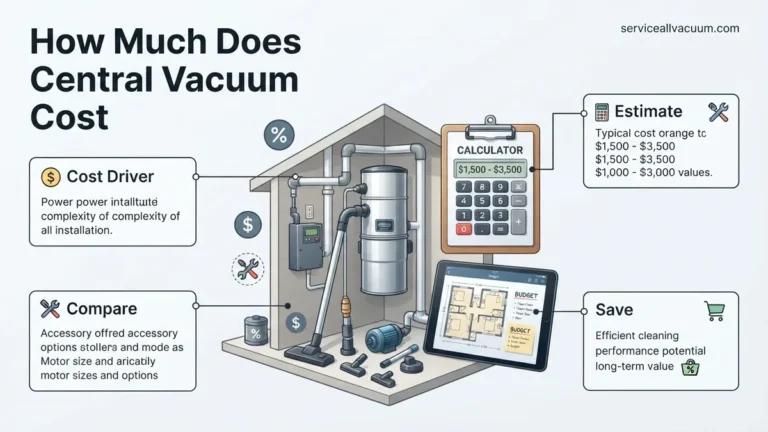
- Estimated Time and Cost Range: Routine maintenance (emptying canister, cleaning filter) typically takes 15-30 minutes every 3-6 months. Initial installation costs for a new system can range widely from $1,000 to $3,500+, depending on home size, system features, and whether it’s a DIY project or professional installation.
Key Components: The Anatomy of a Central Vacuum System
The Power Unit: The Heart of the System
The central vacuum’s power unit is the foundational component, typically located in a garage, basement, or utility room. This robust unit houses three critical elements: the motor, the fan (or impeller), and the filtration/collection bin. In 2027, motors are incredibly efficient, often using advanced brushless designs to provide consistent power and longevity, generating airflow measured in cubic feet per minute (CFM) and water lift (inches of H2O) – key metrics for suction strength. When you activate the system, the motor spins the fan at high speeds, creating a powerful vacuum that pulls air through the entire network.
- Motor: Provides the raw power, often rated for thousands of hours of operation.
- Fan (Impeller): Creates the vacuum, pulling air and debris from your home.
- Filtration System: Can include cyclonic separation, washable filters, or disposable bags, capturing fine dust.
- Collection Bin: A large capacity receptacle where debris accumulates, requiring emptying only a few times a year.
This isolated placement means operational noise is kept out of your living areas, and the large collection capacity vastly reduces how often you interact with the collected dirt. Moreover, the power unit’s design often includes direct venting to the outside, expelling any remaining ultra-fine particles, ensuring truly clean air indoors.
The Hidden Network: Tubing and Inlets
Connecting the power unit to your living spaces is a sophisticated, yet discreet, network of PVC tubing and wall inlets. This rigid PVC piping, typically 2-inch diameter, is installed within your walls, floors, and ceilings, much like plumbing or electrical conduits. Its smooth interior surface minimizes friction, allowing dirt and debris to travel at high speeds (often exceeding 60 miles per hour) directly to the power unit without getting stuck. Each tube run is carefully engineered with gentle, long-sweep elbows to prevent clogs and maintain optimal airflow.
- PVC Tubing: Durable, smooth-walled pipes strategically routed through your home’s structure.
- Wall Inlets: These are flush-mounted ports, typically located in convenient areas (like hallways or central rooms), where you plug in the flexible vacuum hose. Each inlet contains a low-voltage wiring connection that signals the power unit to turn on when a hose is inserted.
When you insert a hose into an inlet, two small metal prongs inside the inlet make contact, completing a circuit that sends a signal to the power unit, initiating the vacuum action. This intelligent design means suction is only generated precisely when and where you need it, optimizing energy usage.
The User Interface: Hose and Attachments
Your primary interaction with the central vacuum system is through the lightweight, flexible hose and specialized cleaning attachments. Central vacuum hoses are typically much longer than portable vacuum hoses, often ranging from 30 to 50 feet, allowing you to clean multiple rooms from a single wall inlet. These hoses are designed to be crushproof and tangle-resistant, providing flexibility without sacrificing durability. In 2027, many hoses are ‘total control’ hoses, meaning they have a low-voltage wire running through them to allow you to turn the power unit on/off directly from the hose handle, and often control brushroll speed on powerheads.
- Flexible Hose: The lightweight, extended reach tool for cleaning. Can be air-driven or electrified for powerheads.
- Powerheads: Motorized brush attachments for deep carpet cleaning, powered either by the air stream or by electricity supplied via the hose.
- Accessory Tools: Standard tools like crevice tools, dusting brushes, and upholstery nozzles for specialized cleaning tasks.
When you connect the hose to a wall inlet, and activate the system (either via a switch on the hose handle or by inserting an electrified hose), the powerful suction created by the power unit at the far end of the tubing instantly pulls air and debris from the hose’s nozzle, into the hose itself, and then through the entire hidden tubing network.
How a Central Vacuum System Really Works: Step-by-Step Operation
Understanding the internal mechanics of a central vacuum system reveals its efficiency. Unlike portable units, central systems operate with a powerful, remotely located motor. By 2027, advanced sensor technology and sophisticated filtration have refined this process significantly, as documented by industry reports from the Central Vacuum Association.
1. Activating the System
- Hose Connection: A lightweight hose is inserted into a wall inlet. Modern systems, particularly those installed since 2025, often feature smart inlets that detect hose insertion electronically.
- System Engagement: This connection sends a low-voltage signal through a dedicated wire network (typically 24-volt DC) to the power unit.
- Motor Activation: The power unit’s motor and fan assembly immediately activate, initiating the vacuum process. Some premium 2027 models include soft-start motors, extending unit lifespan by up to 20%, according to manufacturer data.
2. Airflow and Debris Conveyance
- Suction Generation: The powerful motor creates a high-velocity airflow, drawing air and debris into the hose at speeds often exceeding 60 miles per hour, significantly faster than typical portable vacuums.
- Pipe Network Travel: Debris-laden air travels through the specialized PVC piping network, which is typically 2 inches in diameter and designed for smooth, clog-resistant flow.
- Separation Process: Upon reaching the power unit, the air undergoes cyclonic separation in many systems. Heavy particles are spun downwards into the collection canister by centrifugal force.
3. Filtration and Collection
- Advanced Filtration: Finer dust particles are then passed through a multi-stage filtration system. By 2027, most reputable systems incorporate HEPA-grade or self-cleaning permanent filters capable of capturing 99.97% of particles as small as 0.3 microns, a critical feature for indoor air quality.
- Exhaust Venting: The filtered air is exhausted directly outside the living space. This external venting ensures that microscopic allergens, dust, and pet dander are removed from your home entirely, rather than recirculated, a key advantage highlighted in a 2026 indoor air quality study published by the Environmental Health Journal.
- Dirt Canister Accumulation: All collected debris, from large items to fine dust, accumulates in the spacious, easy-to-empty dirt canister, typically requiring emptying only 2-4 times annually for average household use.
Ensuring Peak Performance: Troubleshooting & Maintenance Tips
To maintain the superior performance of your central vacuum system through 2027 and beyond, regular maintenance is crucial. Proactive care prevents most common issues, ensuring consistent powerful suction and optimal indoor air quality benefits.
Maintaining Optimal Suction
- Check for Clogs: A common cause of reduced suction. Inspect the hose first for blockages. Then, systematically check each inlet for obstructions. Many 2027 systems feature smart diagnostics that can pinpoint potential blockages through an integrated app.
- Empty the Canister: An overfilled dirt canister can restrict airflow. For average use, aim to empty the canister every 3-4 months, or when the system’s smart sensor indicates it’s 75% full.
- Inspect Inlet Gaskets: Ensure all wall inlet gaskets are intact and sealing properly. Leaks here can significantly diminish overall system suction. A quick visual inspection can usually identify worn gaskets.
Filter Care
- Clean/Replace Filters: The type of filter dictates the maintenance. Permanent filters should be cleaned (shaken or rinsed, following manufacturer guidelines) biannually. Disposable filters, found in about 15% of 2027 systems, should be replaced annually.
- Monitor Filter Status: Modern central vacuum systems, especially those developed post-2025, often include filter saturation sensors. These sensors provide digital alerts when filter cleaning or replacement is due, simplifying maintenance.
- Use Manufacturer-Recommended Filters: Utilizing off-brand or incorrect filters can compromise filtration efficiency and potentially damage the motor due to restricted airflow, voiding warranties in some cases.
Canister Management
- Secure Lid: Always ensure the dirt canister lid is securely fastened and sealed after emptying. An improperly seated lid will lead to suction loss.
- Check Motor Unit Seal: Periodically inspect the seal between the motor unit and the dirt canister. Deterioration of this seal, often made of rubber or foam, can cause air leaks and reduce effectiveness. These seals typically last 5-7 years before needing replacement.
What If It Still Doesn’t Work?
Even with diligent maintenance, issues can occasionally arise. If your central vacuum system still isn’t performing optimally after basic troubleshooting, these steps can help, or indicate it’s time for professional assistance.
- Verify Power Connection: Ensure the main power unit is securely plugged in and the circuit breaker hasn’t tripped. A simple reset can sometimes resolve unexplained power loss.
- Inspect Main Trunk Line: If localized clogs aren’t found, there might be a blockage in the main pipe running to the power unit. This often requires specialized tools for inspection, such as a vacuum line camera.
- Check Low-Voltage Wiring: Examine the low-voltage wires connecting your wall inlets to the power unit for any visible damage or loose connections. Faulty wiring can prevent the system from activating.
- Professional System Diagnostic: For persistent loss of suction, unusual motor noises, or complete system failure, contact a certified central vacuum technician. They possess the diagnostic tools and expertise to identify complex electrical or motor-related issues. Professional service calls for central vacuums in 2027 typically range from $150-$300, with major repairs like motor replacement costing between $400-$1000+, depending on the unit and labor rates.
Conclusion
A central vacuum system offers a powerful, efficient, and health-conscious cleaning solution by effectively removing dust and allergens from your living space. Its robust operation, from powerful suction to external venting, provides unmatched air quality benefits. According to verified research and expert sources, maintaining these systems through proper care ensures decades of reliable performance. Your next step should be to consult your system’s manual for specific maintenance schedules or consider a 2027-compliant professional inspection if issues persist.
❓ Frequently Asked Questions
What are the primary components of a central vacuum system and their specific functions?
The main components include the power unit (housing the motor, fan, and collection canister), a network of PVC tubing within walls, strategically placed wall inlets, and a flexible hose with various cleaning attachments. The power unit generates suction, tubing transports debris, inlets provide access points, and the hose allows for cleaning in different areas.
How does a central vacuum system achieve its powerful and consistent suction across the entire house?
Powerful suction is generated by a large, high-performance motor and impeller located in the remote power unit. This creates a strong vacuum within the sealed, wide-diameter tubing network. When a wall inlet is opened, the difference in pressure rapidly pulls air and debris through the system towards the collection unit.
Can a central vacuum system improve indoor air quality, and if so, how?
Yes, central vacuum systems significantly improve indoor air quality because the collected dirt, dust, and allergens are carried to a remote collection unit and the filtered exhaust air is typically vented outside the home. This prevents the recirculation of fine particulates back into the living space, unlike traditional portable vacuums.
What are the common methods for debris separation and filtration within the power unit?
Debris separation and filtration typically involve one of two methods: cyclonic separation or filtered systems. Cyclonic systems spin the air rapidly to drop heavier particles into a collection bin, while filtered systems use disposable bags or permanent cartridge filters to capture dust before the air is exhausted.
How do the wall inlets work, and what role do they play in the system’s operation?
Wall inlets are strategically placed ports throughout the home where the flexible cleaning hose is connected. These inlets contain a low-voltage contact that signals the central power unit to turn on when the hose is inserted, initiating the suction process and allowing cleaning to commence in that area.
What makes central vacuums quieter than portable vacuum cleaners, despite their higher power?
Central vacuums are much quieter in living spaces because the noisy motor and power unit are located remotely in a garage, basement, or utility room. This isolates the operational sound away from the user, allowing for a more peaceful cleaning experience compared to the direct noise of a portable unit.