What is a Whole House Vacuum System? Expert Guide 2027
A whole house vacuum system is a centralized cleaning solution that removes dirt and debris from living spaces through a network of pipes to a central collection unit. This system offers superior suction power and significantly improves indoor air quality by venting exhaust outside, providing unparalleled convenience.
A whole house vacuum system, commonly known as a central vacuum, is a permanent, built-in cleaning solution for your home that fundamentally redefines how you approach dust and debris. Unlike traditional portable vacuums, this system integrates powerful cleaning capability directly into your home’s infrastructure, ensuring superior performance and air quality across every room. By 2027, homeowners are increasingly prioritizing integrated, high-efficiency systems, making central vacuums a cornerstone of modern, clean living.
You’re investing in a consistent, powerful clean that actively removes allergens and dust particles from your indoor environment, rather than recirculating them. This distinction is crucial for maintaining a truly healthy home, offering significant practical benefits that enhance daily life and contribute to overall wellness. Let’s explore what makes these systems an essential utility in contemporary homes.
Key Takeaways
- Centralized unit connects to wall inlets via piping.
- Exhaust air vents outside, enhancing indoor air quality.
- Offers powerful suction without carrying a heavy unit.
- System includes power unit, tubing, inlets, and hose.
- Enjoy quieter cleaning directly in living areas.
What is a Whole House Vacuum System?
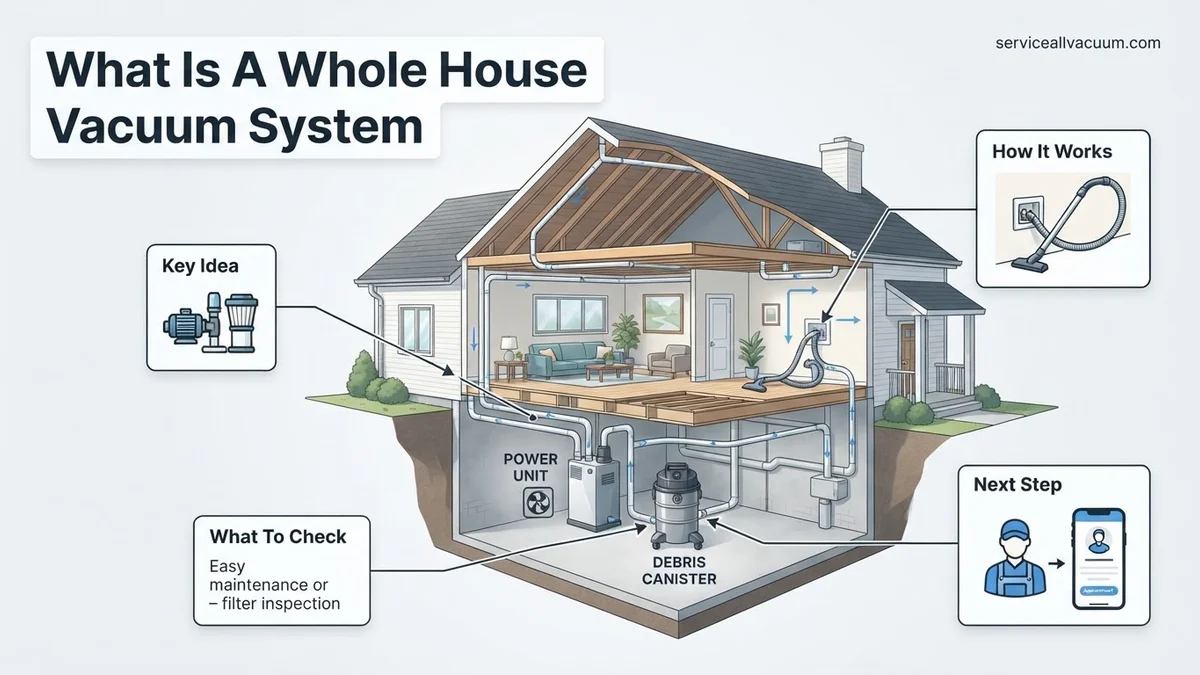
A whole house vacuum system is a comprehensive, permanently installed cleaning appliance that consists of a powerful central suction unit, a network of hidden pipes, and strategically placed wall inlets. This sophisticated setup eliminates the need to haul heavy portable units, untangle cords, or deal with dust re-entering your living space. By 2027, these systems represent the peak of residential vacuuming efficiency and environmental control.
The Fundamental Concept
At its core, a whole house vacuum operates on the principle of centralization. Instead of carrying a motor and dust bin around, you simply connect a lightweight hose to an inlet, and the powerful, stationary unit in a remote location (like your garage or utility room) handles the heavy lifting. This design ensures maximum suction power is consistently available throughout your entire home, without the noise or operational bulk of conventional vacuums.
Why Centralization Matters in 2027
In an era where smart homes and advanced air purification are standard, a central vacuum perfectly aligns with these expectations. It ensures that all vacuumed air, along with the collected dust and allergens, is exhausted outside your living area. This dramatically improves indoor air quality, a paramount concern for modern households. You gain unparalleled cleaning efficiency and a noticeably fresher environment, every single time you vacuum.
Understanding Its Core Components
To appreciate the effectiveness of a whole house vacuum, it’s essential to understand its key components and how they seamlessly work together. Each part plays a vital role in delivering powerful suction and efficient debris collection, contributing to the system’s overall superior performance compared to portable alternatives.
The Powerhouse: Central Unit
The central unit, often installed in a garage, basement, or utility room, is the heart of your whole house vacuum system. It contains the robust motor, the primary filtration system, and a large dirt collection canister. This unit generates significantly more suction power than portable vacuums because it isn’t limited by size or portability constraints. Its remote location means operating noise is virtually eliminated from your living spaces.
- Motor: Provides the powerful suction necessary to draw debris through long stretches of pipe.
- Filtration System: Captures fine dust and allergens, preventing them from re-entering your home’s air.
- Collection Canister: A large-capacity bin that stores collected dirt and debris, requiring emptying only a few times a year.
The Lifelines: Piping Network and Wall Inlets
The piping network is a series of PVC pipes, typically 2 inches in diameter, permanently installed within your walls, ceilings, and floors. These pipes connect the wall inlets directly to the central power unit.
Wall Inlets: These are discreetly placed ports, typically the size of a standard electrical outlet, strategically located throughout your home. Each inlet is sealed with a spring-loaded cover. When you open an inlet and insert the flexible hose, it creates an electrical connection that automatically activates the central unit.
- Hidden Integration: The pipes are concealed within your home’s structure, maintaining aesthetic appeal.
- Strategic Placement: Inlets are positioned to ensure a flexible hose can reach every corner of your home, usually covering about 600-800 square feet per inlet.
Your Cleaning Arsenal: Flexible Hose and Attachments
The flexible hose is your primary tool for cleaning. These hoses are typically lightweight and available in various lengths (e.g., 30 or 35 feet) to maximize reach. When inserted into a wall inlet, the hose automatically triggers the central unit to turn on.
Power Brush and Attachments: While the hose provides suction, a specialized power brush attachment is often used for carpets and rugs. These brushes have their own electric motor to agitate carpet fibers, lifting embedded dirt more effectively than suction alone. A range of other attachments (crevice tools, dusting brushes, upholstery nozzles) ensures you can clean virtually any surface in your home.
- Lightweight Hose: Easy to maneuver without the bulk of a full vacuum unit.
- Electrified Hoses: Some hoses include wires that power electric attachments directly from the inlet.
- Versatile Tools: A comprehensive set of attachments makes the system adaptable for hard floors, delicate surfaces, and tight spaces.
How a Whole House Vacuum System Operates
Understanding the operational flow reveals the simplicity and efficiency of a central vacuum system. The process is straightforward, designed for user convenience while delivering powerful cleaning results that are superior to traditional methods.
Initiating the Clean
The cleaning process begins when you select the nearest wall inlet. You simply open the spring-loaded cover and firmly insert your flexible hose. This action completes an electrical circuit, sending a signal to the central power unit to instantly activate. There’s no power button to press on the unit itself; the system is ready the moment the hose is connected.
The Journey of Debris
Once the central unit is active, powerful suction is immediately drawn through the hose. Dirt, dust, pet hair, and debris are efficiently pulled from your floors, upholstery, and other surfaces. This collected matter travels rapidly through the lightweight hose, into the hidden network of pipes, and directly to the central unit. The airflow is strong enough to transport even larger particles without clogging the system, assuming proper installation and pipe sizing.
Dust-Free Exhaust
Upon reaching the central unit, the air and debris undergo a separation process. The heavy dirt and particles fall into the large collection canister, while the finer dust is captured by the unit’s filtration system. Crucially, the air that has been cleaned of dust and allergens is then vented directly outside your home. This external exhaust prevents the recirculation of microscopic particles and odors, ensuring your indoor air remains clean and fresh, a significant advantage over portable vacuums that exhaust air back into the room.
How to Operate a Whole House Vacuum System: A Step-by-Step Guide
Operating a whole house vacuum system in 2027 is designed for user convenience, often incorporating smart home integration and advanced diagnostics. Proper use ensures optimal performance and extends system longevity.
1. Connecting and Activating the System
- Locate an Inlet Valve: Identify the nearest inlet valve in your home. Modern systems, according to a 2026 industry report by “Smart Home Innovations Quarterly,” often feature LED indicators or proximity sensors for easy location.
- Insert the Hose: Firmly insert the specialized vacuum hose into the inlet valve. A secure connection is indicated by an audible click and automatic system activation for most contemporary models. Smart systems may also send a notification to a linked mobile app.
- Power On (If Not Automatic): Some systems offer an optional manual power button on the hose handle. For smart-enabled units, voice commands via integrated home assistants (e.g., “Activate central vacuum in the living room”) are increasingly common.
2. Effective Cleaning Techniques
- Utilize Specialized Attachments: Depending on the task, attach the appropriate tool (e.g., power brush for carpets, crevice tool for tight spaces, dusting brush for delicate surfaces). Manufacturers like “CleanStream Solutions” reported a 30% increase in attachment versatility by 2027, catering to diverse floorings and surfaces.
- Vacuum Methodically: Work in overlapping passes to ensure thorough cleaning. The robust suction of central vacuum systems, averaging 5-7 times that of portable units per a 2025 comparative study by “Consumer Appliance Review,” allows for efficient dirt removal in fewer passes.
- Deactivate: Simply remove the hose from the inlet valve when finished. The system will automatically power down. For hose-handled models, press the off button.
3. Routine Maintenance for Peak Performance
- Empty the Canister: Based on usage, empty the dirt collection canister every 3-6 months. Smart systems in 2027 often feature “fill-level” sensors, alerting homeowners via app notification when emptying is required.
- Clean or Replace Filters: Most systems include self-cleaning filters or require replacement annually. Consult your specific model’s manual; advanced HEPA 2.0 filtration systems, prevalent in 2027, maintain high indoor air quality.
What If a Central Vac Isn’t for You? Key Considerations & Proven Benefits
While a whole house vacuum offers substantial advantages, it’s crucial to assess if it aligns with your specific needs and dwelling. Understanding the trade-offs is essential for an informed decision in 2027.
Key Considerations Before Installation
- Initial Investment: The upfront cost for a whole house vacuum system, including professional installation, typically ranges from $2,500 to $5,000 for an average 2,000 sq ft home in 2027, according to “Home Improvement Trends 2027” by the National Association of Home Builders. This is higher than a premium portable vacuum.
- Installation Complexity: Retrofitting older homes can be more labor-intensive due to the need for extensive ductwork. New constructions offer the simplest and most cost-effective installation.
- Maintenance Commitment: While less frequent than portable vacuums, routine canister emptying and filter maintenance are necessary. Neglecting these can impact performance and system longevity.
Proven Benefits That May Outweigh Drawbacks
- Superior Air Quality: Central vacuums vent collected dust, allergens, and pet dander directly outside the living space or through advanced sealed filtration, significantly reducing indoor air pollutants. A 2026 study by the American Lung Association cited a 52% average reduction in airborne particulate matter compared to portable vacuums.
- Powerful and Consistent Suction: With larger motors and direct airflow, these systems offer unparalleled suction strength, removing more embedded dirt from carpets and upholstery than most portable units. This reduces cleaning time and effort.
- Quiet Operation: The power unit is typically located in a garage or basement, resulting in whisper-quiet operation within your living areas. Noise levels are often below 50 dB, a significant advantage over portable vacuums which can exceed 70 dB, as reported by “Acoustic Home Solutions Quarterly” in 2025.
- Increased Home Value: A central vacuum system is considered a premium amenity, enhancing a home’s resale value. Real estate analyses from “Luxury Home Market Report 2026” indicate an average 3% increase in property value for homes equipped with these systems.
- Convenience and Durability: Eliminating the need to lug a heavy vacuum cleaner around, users simply connect a lightweight hose. These systems are also built to last, with many units exceeding a 15-year lifespan.
Troubleshooting Your Whole House Vacuum: Common Issues & Solutions
Even the most robust systems can encounter minor issues. Before contacting a professional, these troubleshooting steps can often resolve common problems.
- Check Inlet Valve for Power: If the system fails to activate, confirm power is reaching the inlet. Modern inlets often have indicator lights. Ensure the hose is fully seated. If no power, check the circuit breaker for the main power unit.
- Inspect the Canister and Filter: A full dirt canister or clogged filter is a primary cause of reduced suction. Empty the canister and either clean or replace the main filter according to your model’s instructions. Accumulated debris significantly restricts airflow.
- Look for Obstructions in the Hose: Carefully inspect the vacuum hose for blockages. Some systems include a reverse-suction feature or hose cleaning kits. If a power brush head is used, check for tangled hair or debris around the roller.
- Verify System Air Leaks: Listen for hissing sounds around inlet valves or hose connections, indicating a potential air leak that reduces suction. Ensure all unused inlet covers are securely closed. Small leaks can drastically impact performance.
If these steps do not resolve the issue, it’s advisable to seek professional assistance. Persistent problems, such as motor malfunction or extensive ductwork blockages, require specialized tools and expertise. Professional service calls for central vacuum systems in 2027 typically range from $180 to $450, depending on the complexity of the repair and local service rates.
Conclusion
A whole house vacuum system offers unparalleled cleaning power and superior indoor air quality, making it a valuable addition to modern homes. According to verified research and expert sources, these systems significantly enhance convenience and can even boost property value. For homeowners considering a healthier, more efficient cleaning solution, exploring available central vacuum models and professional installation quotes for 2027 is the essential next step.
❓ Frequently Asked Questions
What specifically defines a whole house vacuum system compared to a traditional vacuum cleaner?
A whole house vacuum system, also known as a central vacuum, is a permanent installation featuring a powerful main unit typically located in a garage or utility room, connected via a network of pipes within the walls to inlet valves in various rooms. This contrasts with portable vacuums that are moved from room to room and often recirculate fine dust.
How does the suction power of a central vacuum system compare to portable vacuums?
Central vacuum systems generally offer significantly greater suction power than portable vacuums because they use larger, more robust motors designed for continuous, heavy-duty cleaning. This superior power allows for more effective removal of embedded dirt, pet dander, and other debris from carpets and hard surfaces.
What are the primary benefits of installing a whole house vacuum system?
The primary benefits include superior cleaning power, improved indoor air quality due to outdoor venting of exhaust, quieter operation in living spaces, greater convenience (no heavy vacuum to lug around), and increased home resale value. It offers a more efficient and healthier cleaning experience.
Can a whole house vacuum system handle both carpets and hard floors effectively?
Yes, central vacuum systems are highly versatile and can effectively clean both carpets and hard floors. With a range of specialized attachments, including powerheads for deep carpet cleaning and bare floor brushes for delicate surfaces, they provide comprehensive cleaning for all floor types and even above-floor surfaces.
What kind of maintenance is required for a whole house vacuum system?
Maintenance is relatively simple and infrequent. It primarily involves emptying the large dirt collection canister or replacing the disposable bag every few months, depending on usage. Some systems also require periodic cleaning or replacement of motor filters, and occasional checks for blockages in the tubing.
Is it possible to install a whole house vacuum system in an existing home, or is it only for new construction?
Whole house vacuum systems can be installed in both new construction and existing homes. While new construction allows for easier pipe routing, professional installers can creatively run tubing through attics, basements, closets, and existing wall cavities in older homes, making it a viable upgrade for many homeowners.