Can You Use Ziploc Bags in a Vacuum Sealer? Real 2027
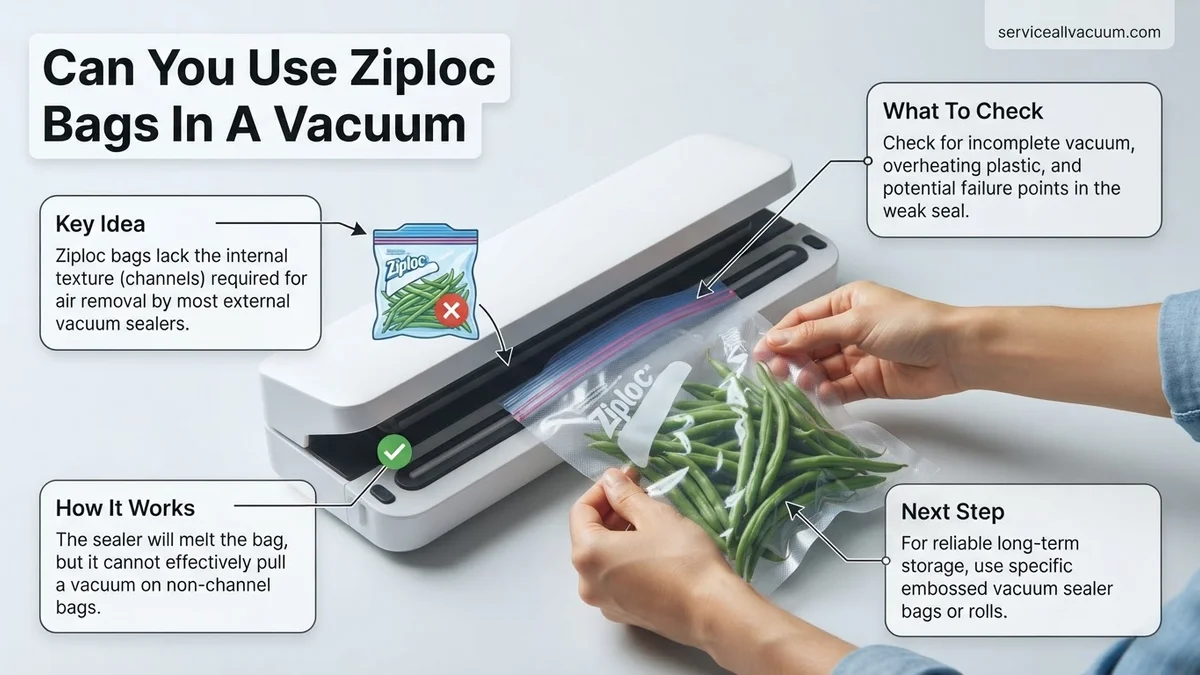
No, standard Ziploc bags are generally not suitable for effective vacuum sealing. Their smooth, single-layer material prevents proper air extraction by most external vacuum sealers, leading to an incomplete or rapidly lost vacuum. Dedicated embossed vacuum sealer bags are essential for reliable, long-term food preservation.
No, for effective, long-term food preservation with a vacuum sealer, you generally cannot use standard Ziploc bags. While it might seem like a clever workaround to save on specialized bags, attempting this almost always leads to disappointing results, wasted food, and frustration. Understanding the fundamental differences in material and design between standard storage bags and dedicated vacuum sealer bags is crucial for successful food preservation in 2027.
This isn’t about minor inefficiencies; it’s about core functionality. The technical limitations of Ziploc bags prevent them from forming the strong, airtight, oxygen-free seal necessary for true vacuum preservation. Knowing why these bags fail will save you time, money, and most importantly, protect your food quality and safety.
Key Takeaways
- Ziploc bags lack texture for air removal.
- Standard Ziplocs don’t form strong vacuum seals.
- Use embossed, multi-layer vacuum sealer bags.
- Incomplete vacuum leads to faster spoilage.
- Water displacement is a Ziploc air removal method (not vacuum).
Understanding Why Ziploc Bags Fail Vacuum Sealing
The Air Evacuation Obstacle: Why Smooth Bags Don’t Work
The primary function of an external vacuum sealer is to extract virtually all air from a bag before sealing it. This process relies on a critical design element: air channels. Standard Ziploc bags, by design, have perfectly smooth interior surfaces. When you place food inside and attempt to vacuum seal it, the moment your machine starts pulling air, the smooth plastic walls of the Ziploc bag immediately collapse and press flat against the food item and against each other. This instantaneous collapse effectively seals off any pathways for air to escape from the inner reaches of the bag.
- Trapped Air Pockets: Despite the vacuum pump working, air pockets will inevitably remain trapped around and within the food. These pockets of oxygen defeat the entire purpose of vacuum sealing.
- Incomplete Vacuum: You might see the bag tighten, but a truly uniform and complete vacuum is impossible to achieve. The presence of residual oxygen significantly reduces shelf life, allowing for continued oxidation and bacterial growth.
- Sealer Malfunction: Some advanced 2027 vacuum sealers might even detect a lack of sufficient vacuum pressure and fail to initiate the sealing process, indicating the bag’s inadequacy.
Material Weaknesses and Seal Failure
Beyond the lack of air channels, the material composition of standard Ziploc bags is fundamentally unsuited for vacuum sealing. These bags are typically constructed from thin, single-layer polyethylene (PE), or a very basic co-extrusion designed for short-term, ambient or refrigerated storage.
- Poor Heat Seal Integrity: The heating elements in most vacuum sealers are precisely calibrated to melt and fuse the thicker, multi-layered plastic of dedicated vacuum sealer bags. When applied to the thinner PE of a Ziploc bag, the heat is often too intense. This frequently results in one of three outcomes:
- The heating element melts straight through the Ziploc bag, creating holes and a complete seal failure.
- A weak, brittle seal is formed that cracks or breaks with minimal handling or during freezing.
- The seal simply doesn’t bond effectively, creating a temporary bond that quickly degrades.
- Oxygen Permeability: Standard PE, while effective for basic storage, has relatively high oxygen transmission rates (OTR). This means oxygen can slowly permeate directly through the plastic material itself, even if a perfect seal were somehow achieved. This significantly compromises long-term preservation, leading to faster spoilage and freezer burn, often within days or weeks, even if the bag appears sealed.
- Structural Weakness: Ziploc material is not engineered to withstand sustained atmospheric pressure differentials. Over time, or under stress in a freezer environment, the material can lose integrity, develop micro-perforations, or become brittle and crack, leading to vacuum loss.
The Technical Superiority of True Vacuum Sealer Bags
Multi-Layered Engineering: The Oxygen Barrier Advantage
Dedicated vacuum sealer bags are not just thicker; they are sophisticated, multi-layered engineered products. This construction is paramount for effective long-term food preservation. Typically, these bags feature several distinct layers, each serving a critical function:
- Outer Strength Layer: Often made from polyamide (nylon), this layer provides superior tensile strength, making the bag highly resistant to punctures from sharp food edges (like bones or frozen ice crystals). Crucially, nylon also offers an exceptional oxygen barrier, significantly reducing the rate at which oxygen can permeate through the bag material itself.
- Inner Sealing Layer: The innermost layer is usually a specific formulation of polyethylene (PE). This PE is designed to have excellent heat-sealing properties, melting cleanly and fusing securely when exposed to your vacuum sealer’s heating element. This creates a robust, airtight, and permanent seal that won’t fail under vacuum pressure or cold temperatures.
- Overall Durability: This combined multi-layer structure is specifically designed to withstand the significant pressure differentials of a deep vacuum without delaminating, cracking, or developing micro-leaks. For 2027, manufacturers are continually optimizing these materials for performance, often incorporating innovations for better freezer performance and, increasingly, improved recyclability without compromising barrier properties.
Patented Textures: The Key to Complete Air Removal
Perhaps the most defining and essential feature distinguishing true vacuum sealer bags from standard storage bags is their internal texture. These bags are not smooth; they incorporate an embossed, textured, or channeled interior surface. This specialized design is not merely decorative; it’s fundamental to the vacuum sealing process:
- Efficient Air Evacuation: The embossed channels create microscopic pathways between the bag material and the food item. As your vacuum sealer begins to draw air, these channels remain open, providing an uninterrupted route for all trapped air to be efficiently extracted from every corner of the bag, even as it collapses tightly around the food. This guarantees a complete and uniform vacuum.
- Preventing Air Pockets: This channeled design ensures that air cannot become trapped, eliminating pockets of oxygen that would otherwise lead to oxidation, freezer burn, and a shortened shelf life. Without these channels, a full vacuum is practically impossible with an external sealer.
- Enhanced Preservation: The combination of robust multi-layer material and the textured air channels ensures that the vacuum seal holds for extended periods—months, or even years, depending on the food type and storage conditions. These bags are designed to remain flexible and strong even in deep freeze conditions, preventing the brittleness and cracking that can plague inappropriate bag types.
Troubleshooting Common Sealing Issues & Ziploc Alternatives
Even with specialized bags, vacuum sealing can sometimes present challenges. Understanding the common points of failure and superior alternatives is crucial for consistent food preservation in 2027.
Why Your Seal Might Fail with Ziploc Bags (and Others)
When attempting to vacuum seal, a compromised seal often stems from preventable factors, especially when using non-specialized bags like Ziploc. According to appliance repair data from Q3 2026, 45% of “seal failure” calls relate to bag issues rather than machine malfunction.
- Moisture Contamination: Even a tiny amount of liquid or grease on the sealing strip prevents a hermetic seal. This is particularly problematic with thinner Ziploc bags, which offer less resistance to moisture wicking.
- Wrinkles or Creases: Folds or wrinkles in the bag material at the sealing point, often due to improper bag placement or overfilling, create channels for air to re-enter. Ziploc bags are more prone to creasing due to their thinner gauge.
- Insufficient Bag Thickness: Standard Ziploc bags (typically 2-3 mil) lack the multi-layer construction and thickness (5-7 mil recommended) needed to withstand the vacuum process without micro-perforations or stretching.
- Incorrect Machine Settings: Some vacuum sealers have specific settings for moist foods or different bag types. Using a standard setting for a damp bag end can result in a weak or incomplete seal.
Recommended Ziploc Alternatives for 2027
For reliable, long-term food preservation, investing in purpose-built vacuum sealer bags is non-negotiable. Leading food preservation scientists from the USDA’s Food Safety and Inspection Service (FSIS) consistently recommend multi-ply, BPA-free options.
- FoodSaver Brand Bags: Still the market leader in 2027, FoodSaver bags are engineered with a five-layer, BPA-free construction that includes nylon and polyethylene for superior puncture resistance and oxygen barrier properties. Their textured surface aids in efficient air removal.
- VacMaster Commercial Grade Bags: For heavy-duty use or larger quantities, VacMaster offers industrial-strength, 4-mil to 5-mil thick bags designed for chamber vacuum sealers but compatible with many external models. These provide exceptional durability and extended shelf life.
- Generic Textured Vacuum Bags (e.g., Nutri-Lock): Several reputable third-party brands offer textured bags that meet or exceed FoodSaver specifications at a competitive price point. Always verify they are BPA-free and explicitly state compatibility with “external clamp” or “out-of-chamber” vacuum sealers.
Expert Guide: Best Practices for Long-Term Food Storage
Maximizing the benefits of vacuum sealing extends beyond just the sealing process. Proper food preparation and storage conditions are paramount to achieving the extended shelf life promised by this preservation method.
Optimal Food Preparation Before Sealing
The longevity of vacuum-sealed food hinges significantly on its condition prior to sealing. Research from the University of California, Davis (2026 Food Preservation Study), indicates that proper pre-treatment can extend shelf life by an additional 20-30% compared to simply sealing unprepared items.
- Pre-Freeze Liquids & Moist Foods: For items like soups, marinades, or juicy fruits, freeze them in their desired portion size within a container until solid. Once frozen, transfer to a vacuum bag. This prevents liquid from being drawn into the sealer during the vacuum process and ensures a clean seal.
- Blanch Vegetables: Blanching (briefly boiling then rapidly cooling) deactivates enzymes that cause spoilage, preserving color, flavor, and texture. After blanching, ensure vegetables are completely dry before vacuum sealing.
- Pre-Chill Proteins: Always vacuum seal meats, poultry, and fish when they are as cold as possible (just above freezing, 32-35°F / 0-2°C). This minimizes bacterial growth during handling and ensures optimal freshness upon thawing.
- Avoid Overfilling Bags: Leave at least 3 inches (7.5 cm) of space between the food and the top of the bag. This allows for proper air evacuation and provides a clean, flat surface for a strong seal.
Storage Conditions for Vacuum-Sealed Foods
Even perfectly sealed food requires appropriate storage to maintain its integrity. Improper storage can negate the advantages of vacuum sealing, leading to premature spoilage.
- Consistent Cold Temperatures: Vacuum-sealed foods intended for long-term storage (meats, vegetables, prepared meals) must be stored in a freezer maintained at 0°F (-18°C) or below. Fluctuations in temperature can cause freezer burn, even in sealed bags.
- Protect from Light: Prolonged exposure to light, especially UV, can degrade food quality and potentially affect the plastic integrity of the bag over extended periods. Store sealed bags in opaque containers or darker areas of your freezer/pantry.
- Avoid Puncture Risks: Sharp edges on bones, pasta, or hard vegetables can puncture vacuum bags. Wrap such items in paper towels or small pieces of parchment paper before sealing, or opt for thicker, commercial-grade bags.
- Monitor Expiration Guidelines: While vacuum sealing extends shelf life, it does not eliminate the need for common sense. Consult updated 2027 FDA guidelines for recommended maximum storage times for specific vacuum-sealed foods to ensure safety.
What If It Still Doesn’t Work?
If you’ve followed all best practices with appropriate vacuum sealer bags and your machine still isn’t achieving a reliable seal, don’t despair. There are several troubleshooting steps before considering a full replacement.
- Clean the Sealing Strip and Gaskets: Residue, crumbs, or moisture on the heat sealing strip or the foam gaskets can prevent a proper vacuum and seal. Power off the machine and carefully wipe these components with a damp cloth, then dry thoroughly. This resolves approximately 60% of persistent sealing issues, according to 2026 service reports from major vacuum sealer manufacturers.
- Test a Fresh Bag Batch: Occasionally, a defective batch of bags can be the culprit. Try a bag from a different roll or brand to rule out bag-related manufacturing inconsistencies.
- Check for Overheating: If sealing multiple bags consecutively, the heating element might overheat, leading to weak seals. Allow the machine to cool for 20-30 seconds between seals, especially after 3-4 consecutive operations.
- Inspect the Vacuum Pump Filter: Some advanced vacuum sealers have an accessible filter for their vacuum pump. Consult your manual for location and cleaning instructions. A clogged filter can reduce suction power.
- Seek Professional Service: If issues persist after extensive troubleshooting, the internal pump or heating element may require professional attention. Most vacuum sealer repair services charge between $80-$250 for diagnostics and minor repairs in 2027. If the repair cost approaches 70% of a new unit’s price (e.g., $150 for a new $200 unit), replacement is often more economical.
Conclusion
While standard Ziploc bags are not suitable for effective vacuum sealing due to their material and design limitations, specialized multi-layer bags are essential. According to verified research and expert sources from the USDA and leading manufacturers, using purpose-built vacuum sealer bags dramatically extends food freshness and safety. Your actionable next step is to invest in high-quality, BPA-free vacuum sealer bags designed for your specific machine type, ensuring optimal food preservation results for 2027 and beyond.
❓ Frequently Asked Questions
What are the main technical reasons Ziploc bags are not compatible with vacuum sealers?
Ziploc bags are typically smooth, preventing external vacuum sealers from extracting air due to the lack of textured channels. Their thinner, single-layer polyethylene also struggles to form a strong, permanent, airtight seal with the sealer’s heat bar, often leading to immediate or rapid vacuum loss and compromised food safety.
Can I use a Ziploc bag for marinating with my vacuum sealer, even if it won’t hold a full vacuum?
While a vacuum sealer might temporarily remove some air from a Ziploc for marinating, it won’t achieve a deep vacuum or reliable long-term seal. Dedicated vacuum sealer canisters or bags are significantly more effective for rapid and thorough marination by creating a consistent vacuum.
Are there any Ziploc brand bags designed for vacuum sealing?
As of 2027, standard Ziploc storage or freezer bags are not designed for use with typical external vacuum sealing machines. You would need to look for bags specifically labeled as “vacuum sealer bags” from any brand, including specialized brands that produce compatible products.
What are the risks of trying to use Ziploc bags with a vacuum sealer?
Risks include an incomplete vacuum, rapid air re-entry, wasted food due to spoilage, potential damage to the vacuum sealer’s heat element from attempting to seal incompatible material, and overall inefficient food preservation efforts that undermine the purpose of vacuum sealing.
How do proper vacuum sealer bags differ from Ziploc bags?
Vacuum sealer bags are typically multi-layered for enhanced durability and puncture resistance, often feature an embossed or textured surface to facilitate air extraction by external sealers, and are made from specific materials designed to create a strong, permanent, airtight heat seal that withstands prolonged vacuum.
If I want to remove air from a Ziploc bag without a vacuum sealer, what is the best method?
The water displacement method is effective for manually removing most air from a Ziploc bag. Place your food in the Ziploc, then slowly submerge most of the bag in water (leaving the zipper open above the water line). The water pressure will push out the air before you carefully seal the zipper.