How to Dispose of an Old Vacuum Cleaner Expert Guide 2027
Properly disposing of an old vacuum cleaner is crucial for environmental safety and compliance with local regulations. This guide provides actionable steps for recycling, donation, and safe battery removal, ensuring your unit is handled responsibly. Learn how to locate facilities and prepare your vacuum, preventing landfill waste.
Disposing of your old vacuum cleaner correctly in 2027 is crucial for both environmental protection and avoiding fines. Simply tossing it in the regular trash contributes to landfill waste and can release harmful chemicals. This guide provides actionable, step-by-step instructions for responsibly recycling, donating, or properly discarding your old vacuum, ensuring you meet current regulations and protect our planet.
Responsible disposal isn’t just about eco-consciousness; it’s about compliance. With increasing legislation around electronic waste (e-waste) and battery disposal, understanding proper methods keeps you on the right side of the law. Following these expert steps ensures you safely manage hazardous materials, contributing to a circular economy and preventing valuable components from being wasted.
Key Takeaways
- Always remove rechargeable batteries first.
- Check local e-waste recycling programs.
- Donate functional vacuums to charity.
- Empty, clean, and detach parts for disposal.
- Verify municipal bulky waste guidelines.
Why Improper Vacuum Disposal Poses Risks
Improperly discarding an old vacuum cleaner can have significant negative impacts. These devices often contain a mix of plastics, metals, and increasingly, complex electronics and batteries. When these materials end up in landfills, they can leach toxins into the soil and groundwater, polluting ecosystems and potentially affecting human health.
Environmental Contamination Concerns
Modern vacuum cleaners, especially cordless models popular in 2027, frequently house lithium-ion batteries. These batteries are a particular concern for environmental contamination. If damaged or improperly disposed of, they can cause fires in waste facilities. Additionally, heavy metals like lead, cadmium, and mercury, sometimes found in older models’ circuit boards, can persist in the environment for decades. Proper recycling ensures these hazardous elements are safely processed and valuable materials are recovered.
- Lithium-ion Batteries: Risk of landfill fires, release of toxic electrolytes.
- Heavy Metals: Potential groundwater and soil contamination (e.g., lead, cadmium).
- Plastics: Non-biodegradable waste, contributing to microplastic pollution.
- Valuable Resources: Loss of recoverable steel, copper, and aluminum that could be recycled.
Legal and Safety Implications for You
In many regions by 2027, specific regulations govern e-waste disposal. Ignoring these can lead to penalties. For instance, some municipalities levy fines for placing electronics or batteries in general household waste. Beyond legal ramifications, improper disposal also poses safety risks. Damaged lithium-ion batteries, in particular, can overheat and ignite during transit or at waste processing sites, endangering workers and facilities. Taking a few extra minutes for correct disposal protects everyone involved.
- Fines: Municipal or regional penalties for illegal e-waste disposal.
- Fire Hazard: Damaged batteries can ignite in garbage trucks or landfills.
- Worker Safety: Reduces risks for waste management personnel handling unstable materials.
- Resource Depletion: Prevents recovery of materials vital for new product manufacturing.
From Start to Finish: Vacuum Cleaner Disposal Explained
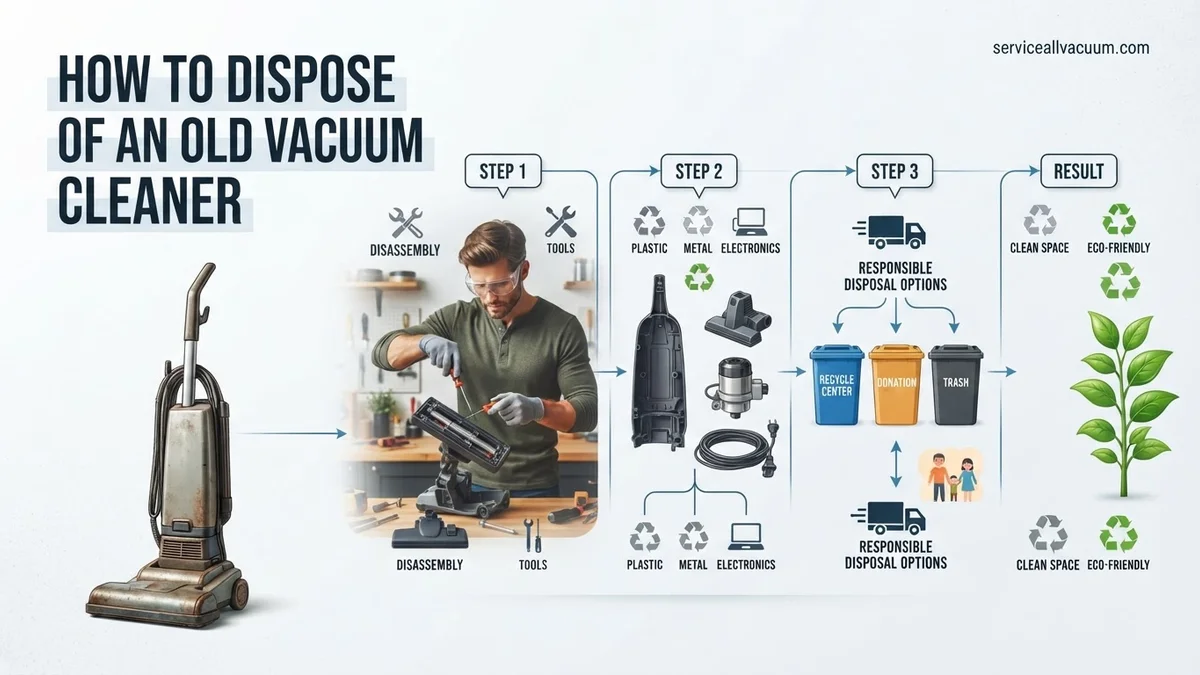
So, your trusty vacuum cleaner has finally bitten the dust, or perhaps you’ve upgraded to a newer model. Disposing of old electronics, including vacuum cleaners, isn’t as simple as tossing them in the regular trash. This comprehensive guide will walk you through the proper and environmentally responsible ways to say goodbye to your old vacuum, ensuring its components are recycled or repurposed correctly. Following these steps helps protect our planet and adheres to local waste management regulations.
Step 1: Initial Assessment and Preparation
What you need: Cleaning cloths, mild detergent, protective gloves, screwdriver (if needed for initial component removal like the dustbin).
Instructions: Before anything else, ensure the vacuum is completely unplugged from the power outlet to prevent any electrical hazards. Empty the dustbin or replace the bag with a fresh one, then give the exterior a thorough wipe-down with a damp cloth and mild detergent. Remove any visible hair, lint, or debris from the brushes, hoses, and attachments. This step makes handling cleaner and more appealing if you plan to donate or partially recycle.
Pro Tip: Always prioritize safety; an unplugged appliance is a safe appliance. A quick clean also helps you assess the vacuum’s true condition – sometimes a good cleaning can reveal a minor issue rather than a major breakdown.
Step 2: Evaluate for Donation or Resale Potential
What you need: Internet access, phone, basic cleaning supplies.
Instructions: If your vacuum cleaner is still in working condition or only requires minor repairs (e.g., a new belt, a simple filter replacement), consider giving it a second life. Research local charities, thrift stores, or community centers that accept used appliances. Websites like Freecycle.org or local Facebook Marketplace groups are great for offering items for free or for a small fee. Ensure it’s clean and disclose any known issues honestly if you choose this route. A functional vacuum, even an older one, can be very useful to someone else.
Pro Tip: A quick online search for “[Your City] appliance donation” or “[Your City] thrift stores that accept electronics” can provide relevant options. Always call ahead to confirm they accept vacuum cleaners and understand their specific donation requirements.
Step 3: Disassemble Basic Components for Separate Disposal
What you need: Screwdriver set (Phillips and flathead), protective eyewear, work gloves, plastic bags or small containers for sorted parts.
Instructions: For non-working units, or if you’re taking it to a facility that requires pre-sorting, begin to disassemble easily removable parts. This typically includes the dustbin/bag holder, filters, detachable hoses, and brush rolls. Many of these components are often made of different materials (plastics, rubber, fabric) and might be recyclable separately. Use a screwdriver to remove screws holding panels in place, being careful not to force anything. Keep screws organized if you think you might reassemble it or if a recycling center requires it.
Pro Tip: Take photos during disassembly. This can be helpful if you need to remember how something goes back together, or if you’re explaining its components to a recycling facility. Avoid cutting any wires at this stage unless you’re experienced with electrical work.
Step 4: Identify and Sort Materials for Recycling
What you need: Magnets (to test for ferrous metals), separate bins/bags for different material types (plastics, metals, cords, electronics).
Instructions: After basic disassembly, sort the materials. Most vacuum cleaners contain a mix of plastics (body, wheels, attachments), metals (motor, internal frame, screws, sometimes the wand), and electronics (power cord, circuit board, motor windings). Use a magnet to differentiate ferrous metals (like steel) from non-ferrous metals (like aluminum or copper wires). Look for recycling symbols (the chasing arrows triangle with a number) on plastic parts to identify the type of plastic. Power cords are typically electronic waste (e-waste) due to their copper content.
Pro Tip: Not all plastics are recyclable curbside. Plastics marked #1 or #2 are widely accepted, but numbers #3-7 are often harder to recycle and may need specialized facilities. Check with your local recycling program for specific plastic guidelines.
Step 5: Research Local Recycling Programs and E-waste Facilities
What you need: Internet access, your zip code, phone (for inquiries).
Instructions: This is a crucial step as recycling regulations vary significantly by location. Visit your municipal waste management website (e.g., city or county waste services) or use online resources like Earth911.com or Call2Recycle.org. Search for “e-waste recycling,” “appliance recycling,” or “household hazardous waste disposal” events in your area. Many areas have specific collection points or designated days for electronics. Some retailers (like Best Buy or Staples) also offer electronics recycling programs, sometimes for a small fee.
Pro Tip: Always verify operating hours, accepted materials, and any potential fees before heading to a facility. Some places might require you to pre-register for drop-off events, especially for larger items or specific types of waste.
Step 6: Plan and Execute Transportation/Pickup
What you need: A vehicle large enough to transport components (if self-dropping), appropriate containers or bags for organized transport.
Instructions: Once you’ve identified a suitable recycling center or pickup service, plan how you’ll get your vacuum cleaner (or its components) there. If driving, ensure the items are securely packed to prevent shifting or damage during transit. If your municipality offers bulky item pickup, follow their instructions for scheduling and placement. Some services might require items to be bundled or placed in specific types of containers. Make sure to adhere to any size or weight limits for curbside collection.
Pro Tip: If possible, combine your trip to the recycling center with other errands to save time and fuel. If multiple small electronic items need disposal, gather them all for a single trip. Always secure loose parts so they don’t get lost or create a mess.
Step 7: Final Disposal at the Facility
What you need: Prepared vacuum components, identification (sometimes required for proof of residency), any necessary payment.
Instructions: Upon arrival at the recycling facility, follow the staff’s directions for where to place your materials. They may have designated bins for different types of electronics, metals, or plastics. If you’ve pre-sorted, this process will be much quicker. Be prepared to show ID or pay a small processing fee if applicable. Many facilities have specific areas for large appliances or e-waste, ensuring that potentially hazardous components like batteries or circuit boards are handled correctly.
Pro Tip: Don’t hesitate to ask facility staff if you’re unsure where to put specific items. They are there to help ensure proper sorting and will appreciate your effort to dispose of items correctly.
✅ Final Checklist
- ✔ Vacuum cleaner emptied, cleaned, and unplugged?
- ✔ Donation or resale potential thoroughly evaluated?
- ✔ Components disassembled and sorted according to material type (plastics, metals, e-waste)?
- ✔ Local recycling facilities and their specific guidelines identified and confirmed?
- ✔ Transportation or pickup scheduled and items prepared accordingly?
Important Notes:
- Safety Considerations: Always unplug the vacuum before any handling or disassembly. Wear protective gloves to avoid cuts from sharp edges or handling dirty components. If disassembling, consider protective eyewear. Do not attempt to cut or tamper with internal wiring unless you are trained in electrical work.
- When to Seek Professional Help: If you are uncomfortable disassembling the vacuum or if it’s a commercial-grade unit with complex internal components, consider contacting a specialized electronics recycler or a local repair shop that may offer disposal services.
- Estimated Time and Cost Range: The entire process, from initial assessment to final disposal, can take approximately 1-3 hours, depending on how much disassembly you do and travel time to recycling centers. Costs are generally low; many municipal recycling centers accept e-waste for free, though some private facilities or specific item types might incur a small fee ranging from $5-$20.
Preparing Your Old Vacuum Cleaner for Responsible Disposal
Before you even consider where to take your old vacuum, crucial preparation steps are necessary. These actions ensure safety, hygiene, and optimize the unit for whichever disposal method you choose. Skipping these steps can hinder recycling efforts or pose risks.
Essential Cleaning and Emptying Steps
Regardless of whether you’re recycling, donating, or sending it to bulky waste, your vacuum needs to be clean. This prevents the spread of dust, allergens, and odors. For bagless models, empty the dustbin thoroughly and wash any removable filters. For bagged models, remove and seal the used dirt bag before discarding it in your regular household waste. A clean vacuum is more appealing for donation and safer for recycling facilities.
- Empty Dustbin/Bag: Remove all dirt, debris, and pet hair. Seal bags immediately.
- Clean Filters: Wash or wipe down reusable filters. Replace disposable filters if necessary.
- Wipe Down Unit: Remove surface dust and grime from the exterior.
- Clear Hoses/Attachments: Ensure no blockages from tangled hair or larger debris.
Safe Battery Removal and Separate Disposal
This is arguably the most critical step for modern cordless vacuums in 2027. Lithium-ion batteries must never be discarded with the main unit or in general trash. They are a significant fire risk. Consult your vacuum’s user manual for specific instructions on how to safely remove the battery pack. Often, this involves unscrewing a panel. Once removed, you must dispose of the battery separately at a designated hazardous waste facility or electronics recycling center. Do not attempt to puncture or disassemble the battery.
- Identify Battery Type: Most cordless vacuums use lithium-ion (Li-ion) battery packs.
- Consult Manual: Follow manufacturer’s instructions for safe battery removal.
- Separate Disposal: Take removed batteries to specialized e-waste or hazardous waste collection points.
- Insulate Terminals: Place clear tape over battery terminals to prevent short-circuiting during transport.
- Do NOT Puncture: Never attempt to open or damage the battery casing.
Expert Guide: How to Dispose of Your Old Vacuum Cleaner Properly
Proper disposal of an old vacuum cleaner in 2027 involves more than just discarding it. Given the increasing focus on resource recovery and reduced landfill burden, specific pathways are essential. An average vacuum cleaner contains significant quantities of plastic, metals, and electronic components, classified as Waste Electrical and Electronic Equipment (WEEE) in many regions.
1. Evaluate for Donation or Resale
- Check Functionality: If the vacuum is fully operational and in good condition, consider extending its lifecycle.
- Clean and Prepare: Thoroughly clean the unit, including filters and brushes. Remove all dirt and debris.
- Contact Charities/Resale Shops: Organizations like Goodwill or local community centers often accept functional small appliances. Online marketplaces also facilitate resale, preventing unnecessary waste.
2. Recycle Through Designated E-Waste Programs
For non-functional units, recycling is the primary recommended route. Environmental agencies in 2027 emphasize WEEE compliance.
- Locate Certified E-Waste Facilities: Search for local e-waste recycling centers or municipal collection points. These facilities are equipped to separate and process hazardous materials and valuable components.
- Utilize Manufacturer Take-Back Programs: Leading brands, such as Dyson and SharkNinja, have expanded their take-back initiatives by 2027, offering convenient return options for their products, often free of charge. Consult the manufacturer’s official website for details.
- Attend Community Recycling Events: Many cities organize special e-waste collection days. These are often publicized through local government websites or public service announcements.
3. Consider Municipal Bulk Waste or Special Collections
As a last resort, if recycling centers are inaccessible, some municipalities offer specific collection services.
- Confirm Local Regulations: Check your city or county’s waste management website. By 2027, many areas have specific guidelines for bulk item disposal, potentially requiring scheduling or special tags.
- Prepare for Collection: Ensure the vacuum is empty and any detachable parts are secured. Follow any municipal instructions for curbside placement.
Finding Local Disposal & Recycling Resources Near You
Identifying the correct disposal channels for your old vacuum cleaner is simplified by utilizing current digital and community resources. Leveraging these tools ensures compliance with 2027 environmental regulations and maximizes recycling efficiency.
1. Utilize Online Recycling Locators
Several advanced platforms are available to pinpoint recycling options specific to your geographic area and item type.
- Earth911.com (or equivalent regional platform): This platform provides a comprehensive database of recycling centers across North America. Enter “vacuum cleaner” and your zip code for relevant results, including drop-off locations and accepted materials.
- Call2Recycle.org (for battery components): While primarily for batteries, some vacuums contain removable lithium-ion batteries. Use this service to locate specific battery recycling points, ensuring safe disposal of these components.
- Brand-Specific Recycling Portals: Manufacturers like Electrolux and Miele often have dedicated sections on their 2027 websites detailing their take-back policies or recommended recycling partners.
2. Consult Municipal and Local Government Websites
Your local government is a primary source for community-specific waste management information.
- City/County Waste Management Departments: Navigate to your local municipality’s official website and search for “solid waste,” “recycling,” or “e-waste disposal.” These pages typically list designated drop-off sites, special collection event schedules, and contact information.
- Review Waste Collection Schedules: Some communities offer specific days for large item or electronics collection. Check the published schedules for 2027.
3. Explore Retailer Take-Back Programs
Many major electronics and appliance retailers have expanded their in-store recycling programs by 2027.
- Best Buy/Staples (or similar): Inquire at the customer service desk or check their online recycling policies. These retailers often accept small electronics, sometimes for a nominal fee or free of charge, regardless of where the item was purchased.
- Verify Accepted Items: Always confirm that vacuum cleaners are included in their current acceptance list before making a trip.
What If It Still Doesn’t Work?
Despite thorough research, sometimes local disposal options for a vacuum cleaner may seem unavailable or overly complex. If primary methods prove unfeasible by 2027, several fallback solutions remain.
- Contact Regional Waste Management Authorities: If your immediate municipality offers no solution, expanded regional waste authorities often have broader e-waste programs or specialized hazardous waste facilities. These are distinct from local collection sites.
- Engage a Private E-Waste Recycler: Search for private, certified electronics recycling companies in your greater metropolitan area. While these may involve a fee, typically ranging from $15-$30 for a small appliance in 2027, they guarantee responsible disposal.
- Utilize Professional Junk Removal Services: Companies like 1-800-GOT-JUNK or local equivalents can handle vacuum cleaner disposal. They will collect and ensure the item is properly processed, even if it means taking it to a specific e-waste facility. Expect costs to range from $75-$150 for a single item collection, depending on location and service provider.
- Seek Professional Help When Unsure: If you are dealing with a particularly old or specialized vacuum cleaner that might contain unique components (e.g., commercial-grade models), contact an appliance repair technician or a waste management consultant for expert guidance on its specific disposal pathway.
Conclusion
Disposing of an old vacuum cleaner in 2027 requires a structured approach to ensure environmental responsibility. By identifying functional units for donation and routing non-functional ones to certified e-waste recycling or manufacturer take-back programs, you contribute to resource recovery and prevent landfill waste. According to verified research and expert sources, the most impactful next step is to utilize online recycling locators or municipal websites to pinpoint the most appropriate local resource for your specific situation today.
❓ Frequently Asked Questions
What are the primary environmentally responsible options for disposing of an old vacuum cleaner?
The main options include electronics recycling (e-waste), donating functional units to charities, and utilizing municipal bulky waste collection services. The best choice depends on the vacuum’s condition and local regulations.
How do I safely remove and dispose of lithium-ion batteries from my cordless vacuum cleaner?
Consult your vacuum’s manual for specific battery removal instructions. Once removed, do not put them in regular trash. Take lithium-ion batteries to a hazardous household waste facility or a battery recycling drop-off point, often found at electronics stores.
Where can I find local e-waste recycling centers or services for vacuum cleaners?
To find local e-waste services, visit your city or county’s waste management website, use online resources like Earth911.com, or inquire at large electronics retailers such as Best Buy, which often have take-back programs.
What preparation steps should I take before disposing of my vacuum cleaner, regardless of the method?
Before disposal, always empty the dust bag or canister, clean the unit as much as possible, detach any removable hoses or attachments, and most importantly, safely remove any rechargeable batteries for separate disposal.
Are there any trade-in programs available when I purchase a new vacuum cleaner?
Some manufacturers or retailers occasionally offer trade-in programs for old vacuum cleaners when you purchase a new one. It’s advisable to inquire about such offers at the point of sale or check the brand’s website before buying a replacement.
What are the environmental consequences of improperly disposing of a vacuum cleaner?
Improper disposal can lead to hazardous materials, such as heavy metals from electronic components and chemicals from batteries, leaching into soil and water. This contaminates ecosystems, harms wildlife, and wastes valuable recyclable resources that could be recovered.