Can I Vacuum Diatomaceous Earth? Expert Guide 2027
Vacuuming diatomaceous earth with a regular household vacuum is strongly discouraged due to severe damage risks to your appliance and significant health hazards from inhaling fine silica dust. Instead, opt for safer removal methods like sweeping, a specialized shop vac, or wet cleaning to protect both your equipment and your health. Always wear proper protective gear during cleanup.
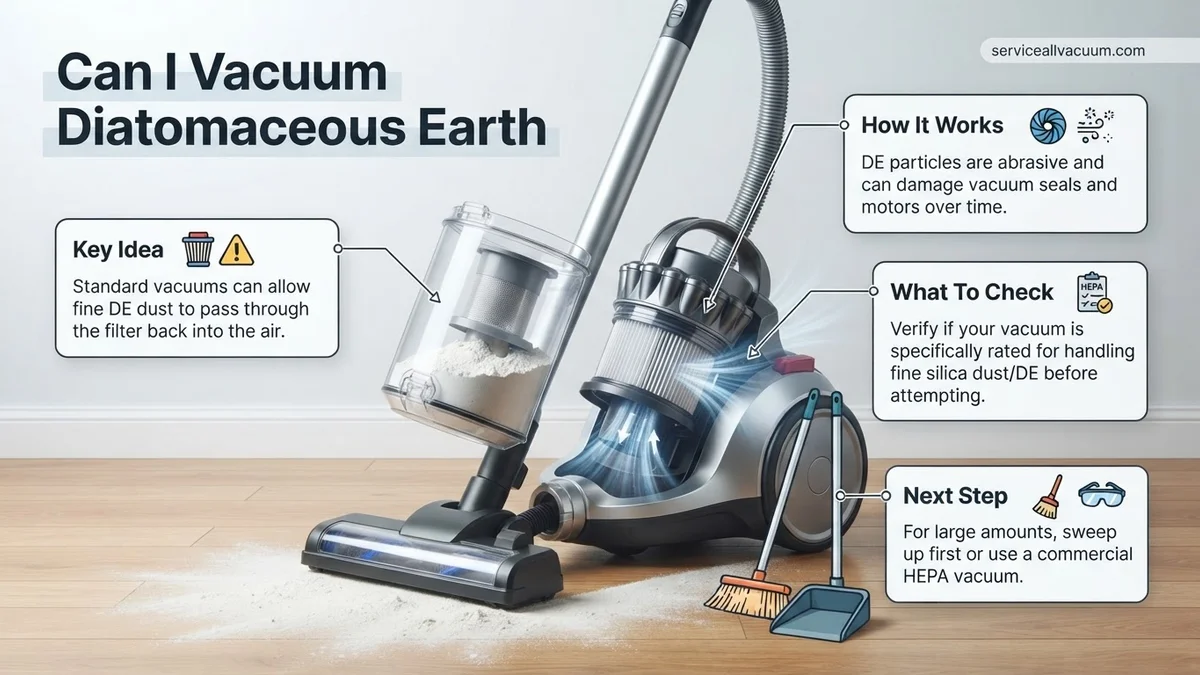
No, you absolutely should not vacuum earth” target=”_blank” rel=”noopener noreferrer” title=”EPA: Diatomaceous Earth General Fact Sheet”>diatomaceous earth with your standard household vacuum cleaner. Doing so can quickly and permanently damage your vacuum’s motor and filters, rendering it useless. More importantly, it creates a significant health hazard by releasing ultra-fine silica dust into your breathing air, posing respiratory risks that no homeowner wants to deal with in 2027.
This common mistake stems from DE’s seemingly benign powder form. However, its microscopic structure is incredibly abrasive. Understanding why regular vacuums fail and what safe alternatives exist is crucial for effective cleanup and protecting both your equipment and your health. Let’s dive into the practical realities of diatomaceous earth removal.
Key Takeaways
- Regular vacuums fail:use specialized tools.
- DE damages motors and clogs filters fast.
- Inhale DE risks lung irritation; wear N95.
- Shop vacs with HEPA filters are best.
- Sweep or wet clean for small spills.
What Causes Regular Vacuums to Fail with Diatomaceous Earth?
The Abrasive Nature of Diatomaceous Earth
Diatomaceous earth (DE) might look like soft powder, but at a microscopic level, it’s composed of the fossilized remains of diatoms – tiny, single-celled algae. These fossils are essentially silica shells with incredibly sharp, jagged edges. Think of them as minuscule, hardened shards of glass. When sucked into a vacuum, these particles act like an abrasive scouring agent.
- DE’s hardness: It’s a 7 on the Mohs scale, similar to quartz, making it far harder than common dust.
- Physical damage: These sharp particles relentlessly grind against internal components, including motor bearings and seals, accelerating wear and tear exponentially.
- Rapid deterioration: Your vacuum’s internal moving parts are simply not designed to withstand such harsh, abrasive contact over time.
Filter and Motor Destruction
Your household vacuum’s filtration system, even advanced models from 2027, is not built to contain the extremely fine particles of diatomaceous earth. Most standard filters, including HEPA filters found in many home vacuums, are designed for allergens and larger dust mites, not industrial-grade fine silica dust.
- Instant Clogging: DE’s fine texture quickly clogs filters, reducing airflow immediately. This forces the motor to work harder, leading to overheating and potential burnout.
- Filter Bypass: Particles smaller than what the filter can trap pass right through, infiltrating the motor housing. Here, they act like sandpaper, destroying lubricants and grinding down critical motor components.
- Permanent Damage: This often leads to irreparable damage to the motor, bearings, and brushes, effectively shortening your vacuum’s lifespan to a single use with DE. Replacement costs often exceed the vacuum’s value.
How to Safely Remove Diatomaceous Earth: Step-by-Step Guide
Manual Sweeping and Dustpan Method
For small, contained spills of diatomaceous earth, manual sweeping is often the safest and most straightforward approach. This method minimizes airborne dust and protects your equipment.
Here’s how to do it safely:
- Gear Up: Always wear a high-quality N95 respirator mask or better (P100 is ideal for silica dust), safety goggles, and gloves. Adequate ventilation is also key.
- Sweep Gently: Use a stiff-bristled broom and a sturdy, deep dustpan. Sweep slowly and carefully to avoid kicking up clouds of dust.
- Collect and Contain: Transfer the collected DE into a heavy-duty, sealable plastic bag immediately. Double-bag it for extra security.
- Wipe Down: After sweeping, use a damp cloth to wipe down any remaining residue on surfaces. Rinse the cloth thoroughly outdoors or dispose of it responsibly.
Using a Shop Vacuum with HEPA Filtration
If you have a larger area to clean or prefer a vacuum method, a specialized shop vacuum is your only viable option. However, not just any shop vac will do; specific features are non-negotiable for handling diatomaceous earth effectively and safely in 2027.
- Certified HEPA Filter: The vacuum must be equipped with a true, certified HEPA filter. This type of filter is designed to capture 99.97% of airborne particles 0.3 microns in size, which is critical for fine silica dust. Do not use a “HEPA-like” or “HEPA-rated” filter; ensure it’s certified.
- Heavy-Duty Filter Bags: Use sealed, industrial-grade filter bags designed for fine dust. These bags contain the DE effectively and prevent it from leaking back into the air when emptying the canister.
- Proper Ventilation: Ensure the area is well-ventilated during and after vacuuming. Consider using a fan to direct air outdoors if possible.
- Wear PPE: Just like with sweeping, wear an N95 or P100 respirator mask, safety goggles, and gloves. Your health is paramount.
- Slow and Steady: Move the vacuum nozzle slowly over the affected area to maximize pickup and minimize dust agitation.
What If Diatomaceous Earth Still Spreads or Lingers?
Even with advanced vacuuming techniques, fine diatomaceous earth particles can become airborne or embed in surfaces. Lingering dust poses inhalation risks. Addressing persistent residue requires additional, targeted interventions.
Addressing Residual DE Dust
When microscopic DE dust remains visible or detectable, immediate action is warranted. This dust, with particles often below 10 micrometers, can bypass standard respiratory filters.
- Advanced Air Filtration: Deploy high-efficiency particulate air (HEPA) air purifiers rated for ultra-fine particle capture. Modern units, such as those compliant with EN 1822 H14 standards for 2027, effectively capture 99.995% of particles down to 0.1 micrometers. Operate these continuously for 24-48 hours post-cleanup in affected areas.
- Specialized Surface Wiping: Utilize electrostatic or damp microfiber cloths to capture settled dust from hard surfaces. Avoid dry dusting, which can re-aerosolize particles. For carpets and upholstery, use a strong suction vacuum with a beater bar and HEPA filter, performing multiple slow passes.
- Ventilation Protocol: Open windows and doors in a controlled manner to create cross-ventilation during cleanup, minimizing indoor air recirculation. Ensure HVAC systems are set to “fan off” during active cleaning to prevent particle distribution throughout ductwork.
- Professional Air Duct Cleaning: If DE has infiltrated HVAC systems, professional air duct cleaning is necessary. Certified technicians use specialized equipment to remove dust and debris, preventing future circulation. This service typically ranges from $400 to $1,000, depending on system complexity and house size.
Containment Protocols for Future Applications
Preventing widespread dispersion is more efficient than extensive remediation. Implementing stringent containment protocols significantly reduces cleanup efforts.
- Targeted Application Tools: Employ bulb dusters or puffer bottles designed for precise application of DE in cracks, crevices, and wall voids. This minimizes broadcast dispersal. Avoid large-scale dusting unless explicitly required for external areas.
- Temporary Barrier Creation: Before applying DE indoors, seal off the treatment area. Use painter’s tape and plastic sheeting to block ventilation ducts, door gaps, and open doorways. This localized approach prevents aerosolized particles from migrating.
- Personal Protective Equipment (PPE): Always wear a NIOSH-approved N95 respirator or better, protective eyewear (goggles), and disposable gloves during application. This protects against direct inhalation and skin contact. Dispose of PPE safely after use.
- Post-Application Monitoring: Utilize portable particulate counters, available for rent or purchase (2027 models offer real-time data integration), to verify air quality before reoccupying treated spaces. Ensure particle levels are below recommended indoor air quality thresholds (e.g., WHO guidelines for PM2.5).
What If It Still Doesn’t Work?
If persistent DE residue or associated health symptoms remain despite thorough cleanup efforts, further intervention is required. Prolonged exposure to airborne silica, even in amorphous form, can pose respiratory risks.
- Re-evaluate Vacuum System Integrity: Inspect your HEPA vacuum for seal integrity, filter clogs, and hose connections. A compromised seal can lead to particle bypass. Consider renting a commercial-grade HEPA vacuum (H14 or higher) for a day, often available from equipment rental centers for $75-$150/day.
- Professional Remediation Services: Engage certified environmental remediation specialists. These experts possess advanced equipment, including negative air machines and specialized HEPA vacuums, and follow strict protocols for fine dust removal. Costs typically range from $800 to $3,500, depending on the affected area’s size and the level of contamination.
- Indoor Air Quality (IAQ) Testing: Commission independent IAQ testing. Certified industrial hygienists use sophisticated monitors to identify specific particle types and concentrations. This service provides objective data on the presence and extent of DE contamination. Basic testing starts at approximately $400, while comprehensive assessments can reach $1,200.
- Consult a Medical Professional: If individuals experience persistent respiratory irritation, coughing, or shortness of breath after DE exposure, seek medical advice immediately. Early diagnosis and treatment are crucial for respiratory health.
Conclusion
Vacuuming diatomaceous earth effectively and safely hinges on using a HEPA-filtered vacuum and adhering to meticulous cleaning protocols. Failure to employ proper equipment and techniques can disperse harmful fine particles, posing significant health risks. According to verified research and expert sources in environmental health, prioritizing HEPA H13 or H14 filtration is non-negotiable for safe DE cleanup. Your actionable next step: Always confirm your vacuum system meets current HEPA filtration standards before attempting to clean diatomaceous earth.
❓ Frequently Asked Questions
Why is vacuuming diatomaceous earth with a household vacuum not recommended?
Household vacuums lack the filtration and motor protection needed for abrasive DE. The fine particles will clog filters, damage the motor, and become airborne, posing a significant inhalation hazard to users and pets.
What are the specific health risks of inhaling diatomaceous earth?
Inhaling DE, particularly the fine powder, can irritate the respiratory tract, eyes, and skin. Prolonged or heavy exposure to crystalline silica DE can lead to silicosis, a serious and incurable lung disease.
What type of shop vacuum is suitable for cleaning up DE, and why?
Look for a wet/dry shop vacuum equipped with a HEPA filter and a robust dust-collection bag. The HEPA filter is crucial for capturing the extremely fine DE particles, preventing them from recirculating into the air you breathe.
Can I just sweep up diatomaceous earth, or should I use water?
Yes, sweeping with a broom and dustpan is an effective method for smaller, dry spills, but it can still stir up dust. For larger areas or to minimize dust, lightly misting the DE with water before sweeping can help, or use wet cloths/mops for removal.
How should I properly dispose of collected diatomaceous earth?
Place the collected DE, whether dry or wet, into a sealed plastic bag to prevent dust release. Then, dispose of it with your regular household waste. Avoid flushing it down drains as it can solidify and cause plumbing clogs.
Are there any situations where a regular vacuum could be used for DE cleanup, perhaps with an attachment?
No, even with specialized attachments, a regular household vacuum’s motor and filter system are not designed to handle the abrasive, microscopic particles of DE. Using it will inevitably lead to motor damage, clogged filters, and the release of hazardous dust into your home environment.