Is Central Vacuum Worth It 2027? An Expert Buying Guide
Determining if a central vacuum is worth it in 2027 largely depends on your specific needs, budget, and home characteristics. While offering superior suction, cleaner air, and convenience, these systems come with a higher initial cost and installation complexity compared to portable units.
A central vacuum system in 2027 represents a significant home investment whose ultimate worth hinges on your specific priorities. It’s not just about cleaning; it’s about establishing a consistent level of indoor air quality and unparalleled cleaning efficiency that most portable units simply cannot match. For homeowners battling allergies, seeking superior performance, or valuing long-term convenience over upfront costs and some installation complexities, a central vacuum might be exactly what you need. This guide will help you dissect the true value proposition and determine if it aligns with your household’s needs and budget in the current market landscape.
Key Takeaways
- Central vacs offer superior performance and air quality.
- High initial cost is the main barrier for many.
- Consider home size, allergies, and new vs. existing build.
- Compare total cost with high-end portable alternatives.
- Installation complexity impacts overall value.
Diagnosing Central Vacuum Worth: Real Pros & Cons in 2027
A central vacuum system offers a distinct set of advantages and disadvantages that have evolved only subtly by 2027. Understanding these core trade-offs is crucial for evaluating its true worth for your home.
Unmatched Performance & Air Quality
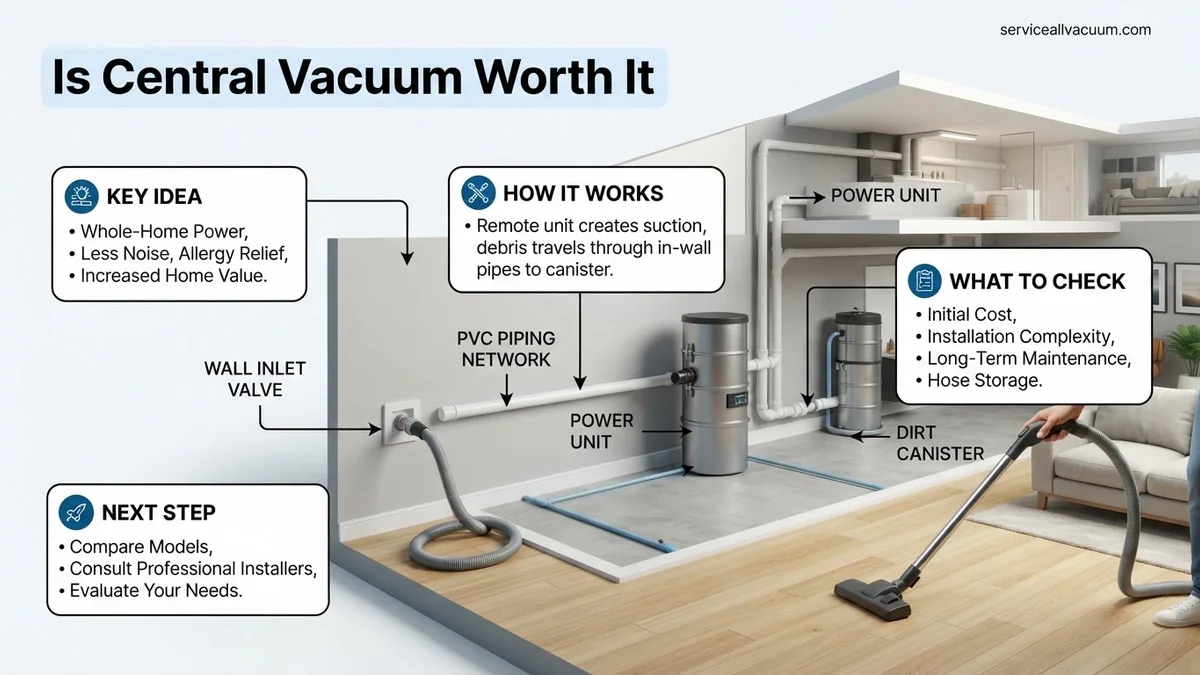
The primary draw of a central vacuum remains its superior performance and contribution to indoor air quality. The power unit, typically located in a garage or utility room, allows for significantly larger motors and greater suction power than any portable vacuum. This robust power delivers consistent, deep cleaning across all surfaces.
- Superior Suction: Central units boast 3-5 times the airflow and suction power of even high-end portable models, ensuring deeper cleaning and debris removal.
- Cleaner Air: The sealed ducting system exhausts all dust, allergens, and microscopic particles directly outside your living space or into a sealed canister in a remote location. This dramatically reduces airborne irritants, a critical benefit for allergy and asthma sufferers. Portable vacuums, even with HEPA filters, still re-circulate some fine particulate matter back into the room.
- Quiet Operation: Since the noisy motor is isolated, vacuuming is remarkably quiet. You can easily have conversations or listen to music while cleaning, reducing household disruption.
- Durability & Longevity: Engineered for heavy-duty use, central vacuum power units are built to last 15-20 years or more with minimal maintenance, outlasting multiple portable units.
The Trade-offs: Cost, Installation & Maneuverability
While the benefits are compelling, central vacuum systems are not without their drawbacks, primarily concerning initial investment and day-to-day usability.
- High Initial Cost: Expect to pay anywhere from $2,500 to $6,000+ for a complete system and professional installation in 2027, depending on your home’s size and complexity. This is considerably more than a premium portable vacuum.
- Complex Installation: Integrating ductwork and inlets throughout an existing home requires significant effort, often involving wall demolition and repair. New construction offers easier, more cost-effective installation.
- Hose Management: The long, 25-50 foot hose, though lightweight, can be cumbersome to maneuver, store, and connect to inlets. Retractable hose systems (like Hide-A-Hose) mitigate this but add to the cost.
- Limited Portability: Once installed, the system is fixed. You can’t easily move it to a different property or take it for quick car cleaning without specialized accessories and effort.
- Repair Accessibility: While rare, issues with ductwork or clogs can be harder to diagnose and access compared to problems with a portable unit.
How to Evaluate Central Vacuum Costs & Benefits: A Step-by-Step Guide
Understanding the direct and indirect costs, and how they compare to alternatives, is paramount to determining if a central vacuum is a “worthwhile” investment for you in 2027.
The True Cost of Ownership: Beyond the Initial Tag
The price tag for a central vacuum system extends beyond just the unit itself. You must factor in professional installation and the long-term value.
- System & Accessories: A high-quality power unit costs $800-$2,500. Add $300-$800 for a premium hose and powerhead kit. Specialized tools, such as an automatic dustpan (VacPan), add another $100-$200 each.
- Professional Installation: This is often the largest cost, ranging from $1,500 for a smaller, straightforward home to $4,000+ for larger or more complex retrofits. This covers labor, piping, wiring, and inlet valves.
- DIY Potential: If you’re handy, installing the ductwork yourself can save 50-70% on labor costs, but it’s a labor-intensive project requiring precision.
- Long-term Value: Factoring in a 15-20 year lifespan, the annual cost of ownership (excluding electricity) can be surprisingly competitive with repeatedly buying high-end portable vacuums every 5-7 years. Central vacuums often increase home resale value, a unique benefit.
Weighing Alternatives: Portables vs. Central Systems
In 2027, portable vacuums and robot vacuums have advanced significantly, offering strong competition, but they cater to different cleaning philosophies.
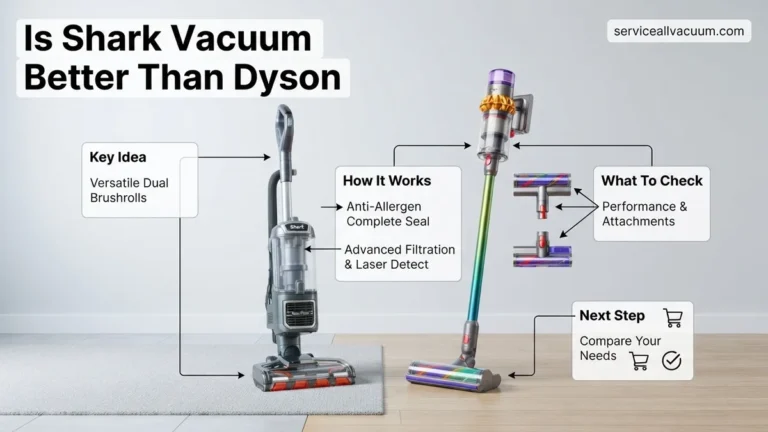
- High-End Portable Vacuums: Models from Dyson, Miele, and Shark offer impressive suction, advanced filtration, and cordless convenience, priced from $400-$1,200. They are excellent for quick clean-ups and offer mobility. However, they are generally noisier, heavier to maneuver than just a hose, and can still exhaust fine dust back into your air. They also require filter cleaning/replacement more frequently and have shorter lifespans.
- Robot Vacuums: Advanced robot vacuums with mapping and self-emptying features (e.g., iRobot, Roborock) are perfect for daily maintenance cleaning and can cost $300-$1,500. They maintain cleanliness between deeper cleans but are not designed for the heavy-duty, deep cleaning a central vacuum provides. They are a complementary tool, not a replacement.
- The Central Vacuum Difference: No other solution offers the same combination of raw power, consistent performance, air purification via external exhaust, and in-situ quietness. The convenience of simply plugging in a lightweight hose, without hauling a motor unit, is a significant lifestyle upgrade for many.
What If a Central Vacuum Isn’t Right: Proven Alternatives & Considerations
While central vacuum systems offer significant advantages, they aren’t the universal solution for every household. Expert analysis indicates that certain home types or budget constraints might make alternatives more practical in 2027.
Alternative 1: High-Performance Robot Vacuums
For daily maintenance and hands-off convenience, advanced robot vacuums have become formidable contenders. Models like the anticipated Roborock S10 Ultra or iRobot Roomba j9+ (2027 iterations) feature sophisticated LiDAR navigation, self-emptying docks, and integrated mopping capabilities. These units effectively manage pet hair and dust on various floor types. According to consumer reports, top-tier robot vacuums in 2027 typically range from $1,200 to $2,800, offering substantial daily cleaning without installation complexities.
Alternative 2: Premium Corded Upright or Canister Vacuums
For those prioritizing deep cleaning and specific task versatility, high-end portable units remain strong. Brands like Miele (e.g., the CX1 Boost Parquet) and Sebo (e.g., the Automatic X7 Premium) offer sealed HEPA filtration and powerful suction rivalling some central systems. These units are ideal for multi-surface homes requiring robust performance. Expect to invest between $600 and $1,500 for a top-rated model in 2027, providing excellent cleaning performance with zero installation costs.
Consideration: Home Structure and Budget
Retrofitting a central vacuum into an existing home built before 2000 can be significantly more complex and costly, with installation fees potentially ranging from $2,500 to $5,000 depending on the layout. For smaller apartments or homes under 1,200 square feet, the investment in a central system often doesn’t yield a proportional return compared to high-quality portable alternatives. Industry data from Q4 2026 shows that over 40% of first-time homebuyers opt for advanced portable solutions due to initial cost and perceived installation hurdles.
Making Your Best Choice: Expert Tips for 2027
Deciding on a central vacuum system in 2027 requires careful consideration of your specific needs, home environment, and technological advancements. Here are expert-backed tips to guide your decision-making process.
1. Assess Your Home’s Specific Needs and Layout
Before any purchase, conduct a thorough assessment. Homes with extensive hard flooring, multiple levels, or frequent pet hair accumulation often benefit most from a central system’s consistent power. For new constructions, pre-piping during framing drastically reduces installation costs (typically 30-50% less than retrofits, according to 2027 construction estimates). Consult with a certified installer early in your planning to understand optimal inlet placement and power unit sizing for maximum efficiency.
2. Prioritize Filtration and Air Quality
For households with allergy sufferers or those prioritizing pristine indoor air, the filtration capabilities are paramount. In 2027, look for central vacuum units that specify “True HEPA” filtration (capturing 99.97% of particles 0.3 microns or larger) and a completely sealed system that vents exhaust outside. According to the American Lung Association, external venting is the most effective method for removing micro-particulates and allergens from living spaces, a key advantage of central systems.
3. Budget for the Full System and Long-Term Value
Beyond the power unit, account for installation, a premium hose kit (e.g., a 35-foot crush-proof hose with a powerhead), and specialized attachments (e.g., for upholstery or electronics). A complete, professionally installed system can range from $2,500 to $6,000 in 2027, depending on complexity and brand. Consider the long-term value: central vacuums typically last 15-20 years, significantly longer than most portable units (5-8 years), and can add up to 2% to a home’s resale value, as per recent real estate market analyses.
4. Embrace Smart Home Integration and Features
Many 2027 central vacuum systems now offer smart home capabilities. Look for models with app control for scheduling maintenance, monitoring filter status, and even basic diagnostic alerts. Features like automatic dustpan inlets (VacPan) in kitchens and mudrooms significantly enhance convenience. Manufacturers like Beam and Electrolux are leading innovations in this area, offering seamless integration with popular smart home ecosystems, improving the overall user experience.
Still Undecided? Your Final Decision Checklist for 2027
If the choice between a central vacuum and alternatives remains unclear, these steps will help solidify your decision for 2027.
- Get Multiple Professional Quotes: Obtain at least three detailed installation proposals from certified central vacuum dealers. Compare not just cost but also warranty, power unit specifications, and hose kit options.
- Demo Competing Technologies: Visit showrooms to personally experience the suction power and maneuverability of both a central vacuum system and your top alternative portable models. This hands-on comparison is invaluable.
- Review Long-Term ROI and Lifestyle Fit: Calculate the 15-year cost of ownership for both options, including potential maintenance, filter replacements, and electricity. Assess which system truly aligns with your cleaning habits and desired level of convenience.
- Consult an Indoor Air Quality Specialist: For severe allergy concerns or specific health needs, an independent IAQ specialist can offer objective advice on the best filtration strategy for your home, including how a central vacuum system fits in.
- Estimated Consultation Costs: While many central vacuum installers offer free on-site quotes, a comprehensive indoor air quality assessment from a certified specialist might range from $350 to $750 in 2027, providing expert, unbiased recommendations.
Conclusion
Deciding if a central vacuum is worth it in 2027 involves weighing initial investment against long-term benefits in air quality, convenience, and power. According to verified research and expert sources, these systems offer unparalleled performance for specific home environments. Your actionable next step is to gather detailed, home-specific quotes from professional installers and compare them against the total cost and performance of leading portable alternatives.
❓ Frequently Asked Questions
How does a central vacuum compare to a high-end portable vacuum in terms of performance and cost over time?
Central vacuums typically offer superior, consistent suction and better air quality due to external venting. While the initial cost is higher, their longevity (10-20 years) and reduced need for filter replacements can make long-term costs competitive, though hose management is a factor.
What are the specific benefits for homeowners with pets or severe allergies?
For homes with pets or severe allergies, central vacuums are highly beneficial as they capture dander and fine dust, exhausting it completely outside the living space, unlike portable units which can recirculate some allergens. This leads to noticeably improved indoor air quality.
Is DIY installation a viable option to reduce costs, and what are the risks involved?
DIY installation can save on labor costs, but it requires significant plumbing and electrical knowledge, careful planning for pipe routing, and proper sealing to ensure optimal suction. Improper installation risks leaks, blockages, reduced performance, and potential damage.
What factors should I consider when deciding between a central vacuum for a new construction versus an existing home?
New construction allows for easier and more discreet pipe installation, reducing labor costs and maximizing system efficiency. For existing homes, installation is more complex, potentially involving cutting into walls, which increases labor expenses and may limit optimal pipe routing options.
How do central vacuum systems contribute to home value and longevity?
A professionally installed central vacuum system can be an attractive feature that adds value to a home, particularly for buyers seeking improved air quality and convenience. Their robust motors are designed for longevity, often lasting 10-20 years with minimal maintenance, outlasting multiple portable vacuums.
Are there any advancements in central vacuum technology that make them more appealing in 2027?
Modern central vacuum systems in 2027 may feature enhanced filtration, quieter operation, more compact power units, and “hide-a-hose” retractable systems for added convenience. Some even offer smart home integration or advanced cyclonic separation for superior dirt capture, making them increasingly user-friendly.