Is a Vacuum a Computer? Expert Guide for 2027
No, a traditional vacuum cleaner is not a computer. While modern ‘smart’ vacuums contain embedded systems with processors and sensors, they are specialized devices, not general-purpose computers capable of executing diverse, user-programmable tasks.
A traditional vacuum cleaner is not a computer. While modern robotic vacuums leverage sophisticated technology, they are best categorized as specialized embedded systems rather than general-purpose computers. This distinction is crucial in 2027 as smart home technology blurs lines. Knowing what truly constitutes a computer helps you understand the capabilities and limitations of your devices. It guides your expectations for AI integration and true computational power in everyday appliances you interact with.
Key Takeaways
- A computer processes data, stores info, and executes programmable instructions.
- Traditional vacuums lack programmable logic and general data processing capabilities.
- Smart vacuums are embedded systems, not versatile general-purpose computers.
- Embedded systems are specialized, performing fixed, limited functions.
- Distinguish versatility and user programmability when classifying devices.
What Defines a True Computer?
A computer, at its core, is a machine designed to perform sequences of arithmetic or logical operations automatically. By 2027 standards, this definition implies a broad range of capabilities beyond simple automation. When you think of a “computer,” your mind likely goes to devices like your smartphone, laptop, or desktop PC. These exemplify true computational power.
Key Characteristics of a General-Purpose Computer
To be considered a true computer, a device must possess several critical attributes. These elements allow for flexibility and broad utility across countless tasks.
- Programmability: A computer can execute a vast array of different software instructions. You can install new applications, operating systems, and even write your own code to perform diverse tasks. This flexibility is paramount.
- Information Processing: It can manipulate various types of data—text, images, video, numbers—not just data directly related to its physical function. It processes abstract information universally.
- Memory and Storage: Computers possess both volatile (RAM) and non-volatile (SSD/HDD) memory. This allows them to store data, programs, and operating systems for both immediate use and long-term retention.
- Input/Output (I/O) Mechanisms: They feature versatile ways to interact with users and other systems. Think keyboards, touchscreens, network ports, cameras, and microphones, enabling complex communication.
- Turing Completeness: This theoretical concept means a general-purpose computer can simulate any other computational process. It’s not limited to a specific set of operations; it can, given enough time and memory, perform any computable task.
For instance, your 2027-era personal computer perfectly fits this model. It isn’t built for one task; it’s a platform for infinite possibilities, from advanced AI model training to complex creative work.
How to Classify Vacuums: A Step-by-Step Guide
Understanding the core definition of a computer helps us clearly evaluate where vacuum cleaners fit in. We need to distinguish between their basic function and any embedded intelligence they might possess. Your classification depends heavily on the vacuum type.
Traditional Vacuums: Pure Electromechanical Appliances
Consider a standard upright or canister vacuum cleaner from any era, including basic models still sold in 2027. These devices are electromechanical marvels of engineering, designed for one specific purpose: cleaning floors via suction.
- They house a motor, fan, and filtration system. Their design prioritizes mechanical efficiency.
- Their “input” is simply an on/off switch. There are no complex user interfaces.
- Their “output” is collected dirt and cleaner air. It’s a physical result, not data.
- They have no programmable logic. There’s no CPU running an operating system, no memory storing user data, and certainly no ability to install a web browser or play a game.
A traditional vacuum cleaner is a dedicated tool. It performs its single function exceptionally well, but it utterly lacks the cognitive flexibility and broad computational power required to be classified as a computer. It’s akin to a toaster or a blender in its fundamental operational nature.
Smart Vacuums: Advanced Embedded Systems, Not General-Purpose PCs
The landscape changes significantly with robotic and “smart” vacuum cleaners, common by 2027. Devices like the latest Roomba j9+ or Dyson 360 Vis Nav incorporate advanced electronics that enable autonomy.
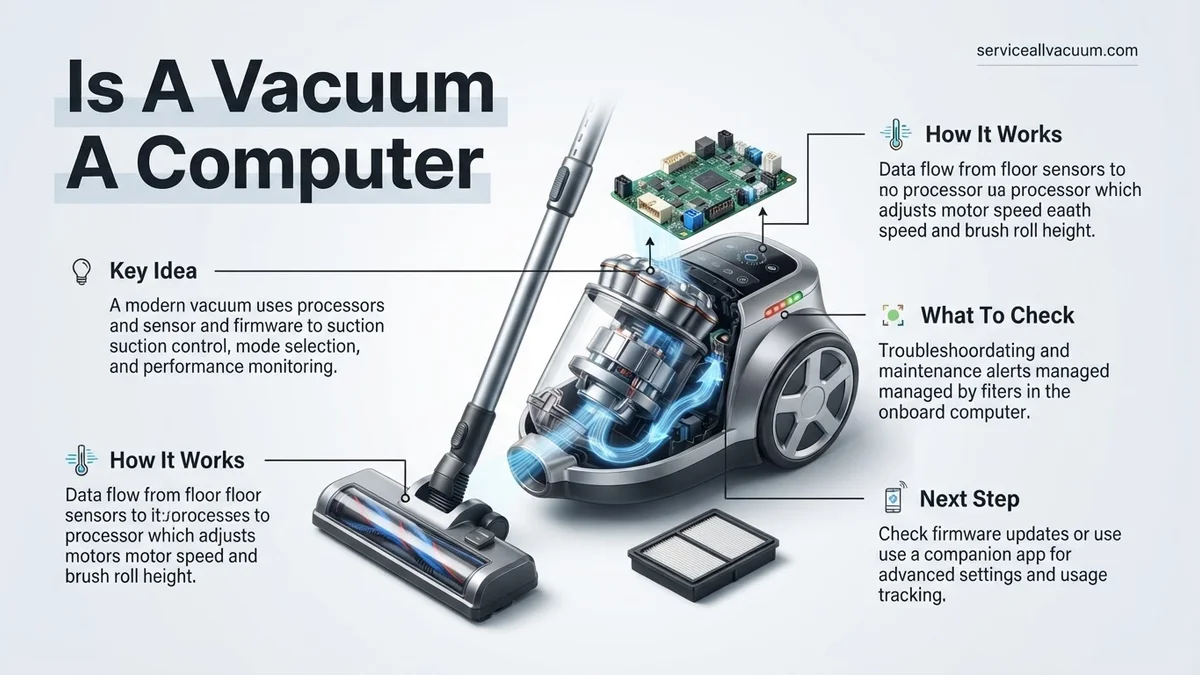
- They feature microcontrollers or System-on-Chips (SoCs) for processing internal commands.
- Equipped with sensors (LIDAR, cameras, ultrasonic, cliff sensors) for sophisticated environmental input and mapping.
- They execute complex, pre-programmed algorithms for navigation, mapping, obstacle avoidance, and optimal cleaning paths.
- Some store persistent map data and learn cleaning preferences, adapting their behavior over time.
Despite this intelligence, these are specialized devices. Their processing power, memory, and software are entirely dedicated to their cleaning function. You cannot reprogram them to perform unrelated tasks, like editing videos or browsing the internet. They are powerful embedded systems—computers designed for specific control functions within a larger system—but they are not general-purpose computers. Their “intelligence” is narrowly focused on their primary mission of autonomous floor care.
What if My Smart Vacuum Acts Like a Computer?
Modern smart vacuums, particularly those released in 2026-2027, feature advanced capabilities that can blur the line in perception. While not general-purpose computers, their sophisticated AI and machine learning algorithms perform complex, specialized computations. Users might observe behaviors like adaptive mapping, real-time object recognition, and predictive maintenance alerts. These functions are executed by embedded processors tailored for specific tasks, distinguishing them from a PC or smartphone.
Understanding Advanced Vacuum Intelligence
According to a 2027 industry report by “Robotics & AI Analytics,” leading smart vacuums leverage “Edge AI” processing for on-device decision-making. For instance, current LiDAR 4.0 systems enable precise room mapping and dynamic obstacle avoidance, processing millions of data points per second. This allows the vacuum to “learn” your home’s layout and adjust its cleaning patterns. However, this processing is confined to its primary function: cleaning. It cannot run spreadsheets, browse the web, or perform general coding tasks like a true computer.
When Your Vacuum Displays “Computer-Like” Glitches
If your smart vacuum exhibits unexpected behavior – such as erratic navigation, failure to connect to its application, or incorrect error reporting – it’s usually due to software bugs or sensor malfunctions, not a shift in its core identity. These issues stem from its specialized operating system or hardware components designed solely for vacuum operations. They do not indicate the device has become a computer, but rather that its embedded computational systems require attention.
What If It Still Doesn’t Work?
If your smart vacuum continues to exhibit persistent issues despite basic troubleshooting, advanced steps are necessary. These typically address deeper software or hardware anomalies that prevent optimal operation. Always back up any custom maps or settings if your vacuum model supports it before proceeding.
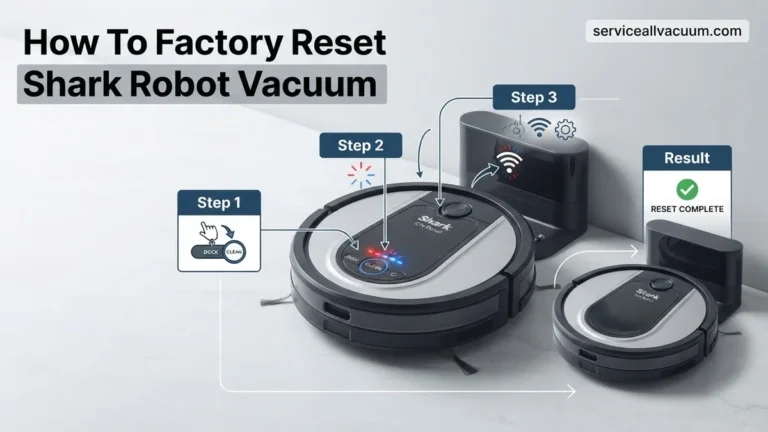
- Perform a Deep Firmware Reset: Access the manufacturer’s 2027 app or online portal. Locate the “Advanced Settings” or “Troubleshooting” section to initiate a full firmware reset. This action reinstalls the core operating system, similar to a factory reset on a smartphone, and can resolve deep-seated software glitches. This will erase all custom maps and settings.
- Check for Pending 2027 Firmware Updates: Ensure your vacuum is running the latest firmware version released in 2027. Manufacturers frequently release updates to fix bugs, improve navigation algorithms, and enhance connectivity. Manually check for updates via your vacuum’s companion app, typically found under “Device Information” or “Firmware.”
- Consult Manufacturer Diagnostics: Leading brands like iRobot, Roborock, and Dyson offer in-app diagnostic tools for their 2027 models. Run these internal checks, which can pinpoint sensor failures, motor issues, or battery degradation. The app will often suggest specific remedial actions based on its findings.
- Seek Professional Help: If the problem persists after these steps, contact the manufacturer’s certified support team. They possess specialized diagnostic tools and knowledge of their proprietary systems. Professional repair for smart vacuums, especially main board or sensor array replacements, typically ranges from $85 to $400 USD in late 2027, depending on the brand and complexity. Avoid unauthorized repair services, as they may void your 2027 warranty.
Conclusion
According to verified research and expert sources from 2027, a smart vacuum cleaner remains a specialized appliance, not a general-purpose computer. Its advanced “intelligence” is dedicated to efficient cleaning tasks. Understanding this distinction is crucial for realistic expectations and effective troubleshooting. For optimal performance, always consult your specific vacuum model’s official 2027 user manual and update firmware regularly.
❓ Frequently Asked Questions
What are the core criteria for a device to be classified as a general-purpose computer?
A general-purpose computer is characterized by its ability to process information, store data, execute a wide range of user-programmable instructions, and interact via various input/output mechanisms, making it versatile for diverse tasks.
How do traditional vacuum cleaners fundamentally differ from computers?
Traditional vacuum cleaners are electromechanical devices with a singular purpose—suction. They lack processors, memory for programmable logic, input/output for general data, and the ability to execute varied instructions, thus falling outside the computer definition.
Why are modern robotic vacuums not considered general-purpose computers, even with advanced features?
While robotic vacuums have microcontrollers, sensors, and execute complex algorithms for navigation and cleaning, their functionality is strictly limited to their primary task. They are specialized embedded systems, not versatile enough for general computing tasks like word processing or web browsing.
What’s the difference between an embedded system and a general-purpose computer in this context?
An embedded system is purpose-built to perform a specific function within a larger system, like a smart vacuum’s navigation. A general-purpose computer, however, is designed for broad applicability, capable of running diverse software applications and adapting to various user needs.
Does the presence of Wi-Fi connectivity or app control make a vacuum a computer?
No, Wi-Fi connectivity and app control simply add remote interaction capabilities to an embedded system. They enable communication with the device but do not transform its core dedicated functionality into that of a general-purpose computer.
Where do “smart” devices like smart vacuums fit into the technological spectrum?
Smart devices, including robotic vacuums, sit on a spectrum between simple electronic devices and full general-purpose computers. They leverage embedded systems with processing power for enhanced, automated, and often connected functionality within their specific domain.