How to Dispose of a Vacuum Cleaner Real 2027 Expert Guide
Disposing of an old vacuum cleaner requires responsible methods to protect the environment. This guide provides actionable steps for e-waste recycling, responsible donation, and municipal bulk pickup programs, helping you locate the best local resources in 2027. Avoid landfilling and contribute to a greener future.
Getting rid of an old or broken vacuum cleaner properly in 2027 means choosing environmentally responsible methods: e-waste recycling, donation for working units, or municipal bulk waste collection. Avoid landfilling these electronics at all costs.
Vacuum cleaners contain valuable recoverable materials like metals and plastics, alongside potentially hazardous components in their electronics. Responsible disposal protects our environment, conserves finite resources, and supports circular economy principles. This guide provides actionable steps and local resource-finding strategies to ensure your old vacuum doesn’t become an environmental burden.
Key Takeaways
- Prioritize e-waste recycling for broken vacuums.
- Donate working vacuums to charities.
- Utilize municipal bulk trash services.
- Prepare vacuums by emptying and cleaning them.
- Search online for ‘e-waste recycling near me’.
Diagnosing the Need for Responsible Vacuum Cleaner Disposal
Why Not Just Toss It? The 2027 Environmental Imperative for E-Waste
Vacuum cleaners, from robust uprights to sleek robot vacuums, fall under the category of small electronic waste (e-waste). They’re not just household trash. These appliances are complex. A typical upright model in 2027 incorporates significant amounts of plastic (often ~60%), various metals (copper wiring, steel components), and circuit boards. These materials are valuable when recycled, reducing the need for new raw material extraction.
Landfilling e-waste leads to unnecessary resource depletion. Furthermore, internal components can leach chemicals into soil and groundwater over time, posing environmental and health risks. With global e-waste volumes increasing annually, proactive, responsible disposal is more critical than ever by 2027. Many regions now have stricter e-waste regulations, making proper disposal not just a conscious choice, but often a legal requirement.
Assessing Your Vacuum: Repair, Donate, or Recycle?
Before rushing to disposal, consider if your vacuum has any life left. If it’s a minor repair (e.g., a clogged hose, a worn brush roll, a simple belt replacement), fixing it extends its lifespan, which is the most sustainable option. Many local repair shops specialize in small appliances and can often provide cost-effective solutions.
If your vacuum is fully functional, even with some cosmetic wear, donation is an excellent choice. This gives it a second life, preventing it from entering the waste stream and benefiting someone else in your community. Only if it’s genuinely broken beyond economical repair or completely unusable should recycling be your next consideration. This assessment ensures you’re making the most environmentally sound decision.
From Start to Finish: Disposing of Your Vacuum Cleaner Explained
Eventually, every household appliance reaches the end of its useful life, and your trusty vacuum cleaner is no exception. Proper disposal isn’t just about clearing out clutter; it’s a critical step in environmental responsibility, preventing harmful materials from polluting landfills and ensuring valuable components are recycled. This comprehensive guide will walk you through every necessary action, from assessing your old vacuum to confirming its responsible end-of-life journey, helping you make an environmentally sound decision with confidence.
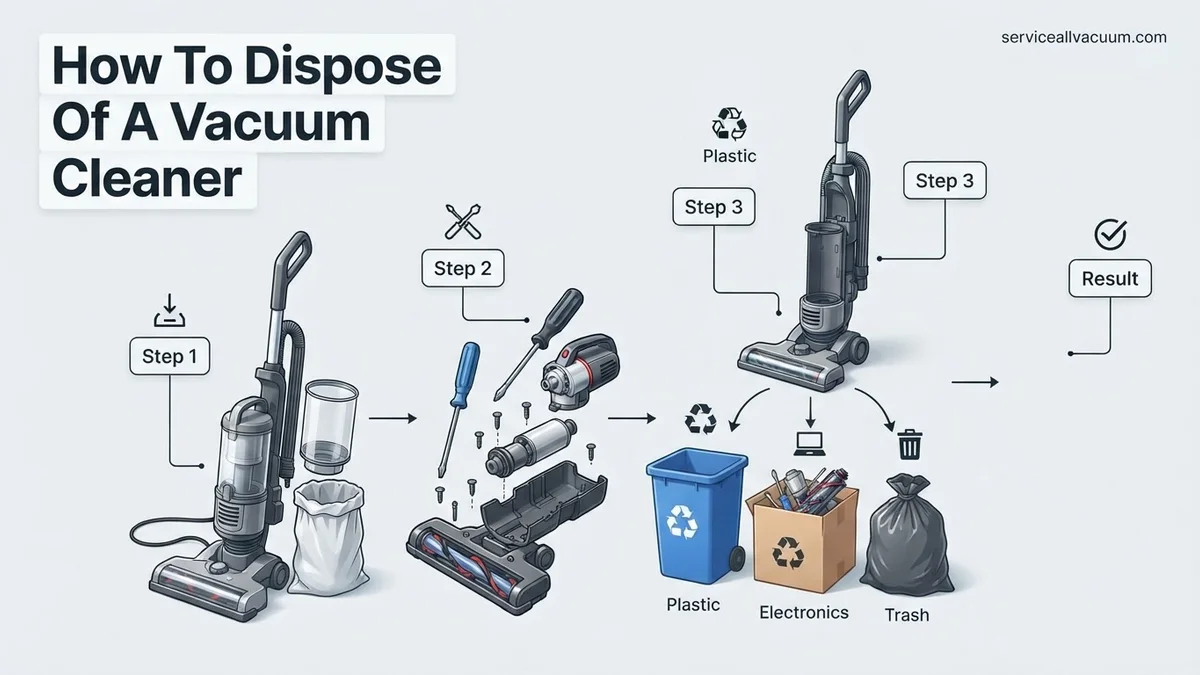
Step 1: Evaluate & Decide: Repair, Donate, or Recycle?
What you need: Your vacuum cleaner, a few moments for honest assessment, and perhaps a quick internet search for local repair shops or charities.
Instructions: Before you even think about disposal, critically assess your vacuum’s condition. Is it still working, but perhaps not as efficiently? Can a simple repair, like replacing a belt or clearing a clog, bring it back to life? If it’s fully functional or easily repairable, consider donating it to a local charity, homeless shelter, or community center. Many organizations gladly accept working appliances. If it’s truly beyond repair or simply too old/inefficient, then recycling becomes the primary goal. Be honest about its functionality to avoid passing on a broken item.
Pro Tip: Check if your vacuum cleaner is still under warranty. Some manufacturers offer repair or replacement services, or even take-back programs for end-of-life products, even after the standard warranty period for their specific brands.
Step 2: Safety First: Unplug & Disassemble (If Needed)
What you need: Your vacuum cleaner, a clear workspace, and potentially a screwdriver set if light disassembly is required (check your vacuum’s manual).
Instructions: Safety is paramount. If your vacuum is corded, immediately unplug it from the wall outlet to eliminate any electrical hazard. For cordless or robotic vacuums, remove the battery pack according to the manufacturer’s instructions. This step is crucial for preventing accidental activation or electrical shock during subsequent cleaning and handling. If you plan to separate components later (e.g., for different recycling streams), a preliminary, safe disassembly might be beneficial now, such as removing the hose or detachable attachments. Always consult your user manual for specific removal procedures for batteries or other parts.
Pro Tip: For robot vacuums, ensure the charging base is also unplugged and handled safely. Some have small, internal backup batteries that should ideally be discharged before recycling the unit itself.
Step 3: Thorough Cleaning & Depletion
What you need: Trash bags, cleaning cloths, protective gloves, and perhaps a small brush or old toothbrush.
Instructions: Regardless of whether you’re donating or recycling, a clean vacuum is essential. First, empty the dustbin or remove the vacuum bag and dispose of the contents in your regular household trash. Clean or rinse any washable filters. Wipe down the entire exterior of the vacuum with a damp cloth to remove surface dust and grime. Pay particular attention to the brush roll, removing any tangled hair or fibers. For cordless vacuums, ensure the battery is fully depleted before handling, if possible, as some recycling centers prefer discharged batteries for safety. A clean appliance is more likely to be accepted by donation centers and easier for recycling facilities to process.
Pro Tip: A clean vacuum cleaner significantly reduces potential health hazards for waste handlers and makes the recycling process more efficient. Removing all debris prevents contamination of other recyclable materials.
Step 4: Identify Local E-Waste & Recycling Programs
What you need: Internet access (computer or smartphone), your address or zip code.
Instructions: Vacuum cleaners are classified as electronic waste (e-waste) due to their complex components, including plastics, metals, and often circuit boards and batteries. Standard curbside recycling programs typically do not accept e-waste. Your best course of action is to search online for “e-waste recycling [your city/county]” or “appliance disposal [your city/county]”. Look for official municipal recycling centers, household hazardous waste facilities, or private e-waste recyclers. Many electronics retailers (like Best Buy, Staples, etc.) also offer take-back programs for small electronics, sometimes for a fee. Jot down specific addresses, operating hours, and any special requirements they might have (e.g., battery removal).
Pro Tip: Some manufacturers, such as Dyson or Miele, offer their own recycling or trade-in programs. Check their official websites for information, as this can often be the most streamlined and environmentally friendly option for their specific products.
Step 5: Separate Components for Optimized Recycling
What you need: Screwdriver set (Phillips, flathead, Torx depending on vacuum model), pliers, wire cutters (optional), a few separate bags or containers for different materials.
Instructions: While many e-waste centers accept whole vacuums, some facilities or specific recycling streams prefer components to be separated. For example, the main plastic casing, metal motor components, electrical cords, and batteries often go into different recycling streams. Carefully disassemble the vacuum further if you are comfortable and it’s safe to do so. Remove the power cord (usually copper wires inside a plastic sheath), any external plastic attachments, and particularly the battery pack from cordless models. Place these distinct materials into separate bags or containers. This extra step helps recyclers process materials more efficiently and ensures a higher recovery rate for valuable resources.
Pro Tip: Pay special attention to battery removal. Lithium-ion batteries (common in cordless vacuums) can be a fire hazard if damaged. If you cannot safely remove the battery, clearly label the vacuum as “contains battery” for the recycling center.
Step 6: Transport or Arrange Collection
What you need: Vehicle capable of transporting the vacuum, suitable protective wrapping (e.g., old blanket or tarp) if desired, contact information for collection services if applicable.
Instructions: Once your vacuum is prepared and you’ve identified a suitable disposal location, it’s time to get it there. If you’re dropping it off, load it carefully into your vehicle. Ensure it’s stable and won’t shift during transport. If your local municipality offers curbside e-waste collection, follow their specific instructions for scheduling and placement. Some private waste management companies also provide pick-up services, often for a fee. Confirm the drop-off location’s operating hours and any potential fees beforehand to avoid a wasted trip. For larger or heavier units, consider asking for assistance with lifting to prevent injury.
Pro Tip: When dropping off, don’t just leave it at the gate; ensure you hand it over to facility staff or place it in the designated collection area as instructed. This guarantees it enters the correct recycling stream.
Step 7: Confirm Proper Disposal & Next Steps
What you need: Confirmation of disposal (e.g., receipt from a recycling center or confirmation of municipal pickup).
Instructions: After successfully dropping off or having your vacuum collected, take a moment to confirm the disposal. If you used a professional recycling service or municipal drop-off, you might receive a receipt or confirmation. This provides peace of mind that your appliance has been handled responsibly. If you donated, consider asking for a donation receipt for tax purposes. Finally, ensure any personal data (if applicable, though rare for vacuums) has been cleared, or that the unit is in a state where data cannot be retrieved. This completes the disposal process, ensuring you’ve contributed to a more sustainable waste management system.
Pro Tip: Keep a record of where and when you disposed of the vacuum. This can be useful for future reference or if any questions arise regarding its disposal, reinforcing your commitment to environmental best practices.
✅ Final Checklist
-
Vacuum assessed and decision made (repair, donate, recycle).
-
Vacuum unplugged/battery removed and safe for handling.
-
All dust, debris, and filters cleaned or disposed of.
-
Appropriate e-waste or recycling facility identified and contacted.
-
Vacuum transported or collected, confirming proper drop-off/pickup.
Important Notes:
- Safety considerations or warnings: Always unplug corded vacuums. Handle batteries carefully, especially if damaged or leaking. Never put batteries in regular trash. Wear gloves and eye protection if disassembling.
- When to seek professional help: If the vacuum contains a battery you cannot safely remove, or if you are unsure about disassembling any part, contact the recycling facility for advice or a professional e-waste handler.
- Estimated time and cost range: The process typically takes 1-3 hours, including research and transport. Costs can range from $0 (municipal drop-off, donation) to $10-$30 (private e-waste collection fees or retailer take-back programs).
Step-by-Step Guide to Properly Disposing of Your Vacuum Cleaner
Pre-Disposal Preparation: Getting Your Vacuum Ready
Regardless of the disposal method you choose, preparing your vacuum cleaner is crucial for efficiency, hygiene, and safety at the recycling or donation facility. Proper preparation ensures valuable materials can be recovered and prevents contamination.
- Empty and Clean: Always begin by emptying the dustbin or removing and disposing of the vacuum bag. Thoroughly clean out any accumulated dirt, hair, and debris from filters, brush rolls, and nozzles. A clean unit is significantly easier and more hygienic for recycling centers or donation points to handle.
- Remove Batteries: For cordless and robot vacuum models common by 2027, always remove the battery pack. Lithium-ion batteries, in particular, are hazardous if damaged and require separate, specialized recycling processes. Look for symbols indicating battery type and consult the user manual or manufacturer’s website for safe removal instructions. Many municipal recycling centers have specific battery drop-off points.
- Secure Cords and Hoses: Neatly wrap and secure power cords with a twist tie or rubber band. If possible, detach hoses and wands. This compacts the unit, making it easier to transport and store for collection or drop-off, optimizing space for facilities.
- Light Disassembly (Optional): For larger units, if a part is easily detachable (e.g., a canister from an upright, or wheels), separating them can sometimes optimize space. However, avoid complex disassembly unless specifically instructed by a recycling facility, as it might complicate their automated processing.
Finding Local Resources: Your 2027 Digital Search Toolkit
The most efficient way to locate appropriate disposal services in 2027 is through targeted online searches. Don’t guess; verify services specific to your current location.
- E-Waste Recycling Centers: For non-working vacuums, use precise search terms such as:
"e-waste recycling near me [your city/zip code]""small appliance recycling [your county]""electronics disposal center [your state]"
These searches will typically lead you to municipal recycling facilities, certified private e-waste recyclers, or electronics retailers that offer take-back programs. Always check their websites for accepted items and any potential fees.
- Donation Centers: If your vacuum is still working and clean, search:
"donate small appliances [your city]""charity thrift store accepting electronics [your neighborhood]"
Organizations like Goodwill, Salvation Army, Habitat for Humanity ReStores, or smaller local charities often accept working small household appliances. Always call ahead to confirm their current acceptance policy, as these can change due to space or demand.
- Municipal Bulk Waste/Special Collections: For items too large for regular trash bins, or if e-waste collection is integrated, check your local services:
"bulk trash pickup [your city] electronics""curbside e-waste collection [your county]"
Consult your city or county’s solid waste management website directly. They usually publish specific schedules, lists of accepted items, and booking procedures for special collections. Some may require a small fee or advance scheduling for large item pickups.
Preparing Your Vacuum and Finding Local Disposal Resources
Proper preparation of your old vacuum cleaner is a critical initial step, ensuring safety and compliance with recycling standards. Failure to prepare can lead to rejection at recycling facilities or potential environmental hazards. In 2027, many jurisdictions have stringent guidelines for electronics disposal.
Essential Preparation Steps
- Empty and Clean All Compartments: Before disposal, remove all dust, debris, and pet hair from the dustbin, bag, and filters. According to a 2026 Waste Management Review, residual waste significantly increases processing costs at recycling plants. Dispose of this household waste in regular trash.
- Remove Detachable Batteries: Most modern cordless vacuums, especially those manufactured after 2020, use lithium-ion battery packs. These must be removed if detachable, as they require separate, specialized recycling to prevent fire hazards. Consult your vacuum’s user manual for battery removal instructions; do not force or damage the battery.
- Disassemble Major Components (Optional but Recommended): For bulkier upright or canister models, separating the hose, attachments, and main unit can sometimes simplify transport and aid the recycling process. This is not universally required but can be helpful for certain facilities.
Locating Certified Recycling Centers
Finding a certified e-waste recycling facility is paramount for responsible disposal. Global E-Waste Monitor 2027 data indicates that improperly disposed electronics contribute to 70% of landfill toxic waste.
- Government and Municipal Websites: Your local city or county government website is the primary resource for recycling information. Search for “e-waste disposal [your city/county]” or “hazardous waste collection 2027.” Many municipalities host designated drop-off points or scheduled collection events.
- Manufacturer Take-Back Programs: Several major vacuum cleaner brands, such as Dyson, SharkNinja, and Electrolux, operate take-back or recycling programs for their products, aligning with extended producer responsibility (EPR) regulations becoming more common by 2027. Check the manufacturer’s official website for details on their recycling initiatives.
- Certified E-Waste Recyclers: Utilize online directories like the e-Stewards or R2 Certified Recyclers search tools. These certifications ensure that facilities adhere to strict environmental and data security standards. A simple search for “certified e-waste recycling near me 2027” can provide geographically relevant options.
Troubleshooting Disposal Challenges and Exploring Alternatives
Despite thorough preparation, disposing of a vacuum cleaner can present unique challenges. Understanding common hurdles and exploring alternative options ensures your old appliance avoids landfill.
Dealing with Damaged or Hazardous Components
A non-functional or severely damaged vacuum may pose specific recycling difficulties. If components like the motor are exposed or the battery is swollen, extra precautions are necessary.
- Swollen Lithium-Ion Batteries: A swollen battery indicates a serious fire risk. Do NOT attempt to remove it if it’s internal or damaged. According to the National Fire Protection Association (NFPA) 2026 guidelines, such items require immediate professional handling. Contact your local hazardous waste facility or fire department for guidance on safe transport and disposal.
- Integrated, Non-Removable Batteries: If your vacuum has an integrated battery that cannot be safely removed, the entire unit must be treated as a hazardous electronic waste item. Verify with your chosen recycling facility whether they accept full units with embedded batteries. Some general e-waste centers may decline these items.
- Older Models with Unknown Components: Very old vacuum cleaners (pre-2000) might contain materials like lead or other heavy metals less common in modern appliances. If unsure, treat the item with caution and seek advice from a specialized e-waste expert to confirm safe handling protocols.
Alternative Disposal: Donation and Repair
Disposing of a working or repairable vacuum cleaner is often unnecessary. Extending its lifespan through donation or repair is a more environmentally conscious choice, promoting circular economy principles. A 2025 study by the Ellen MacArthur Foundation highlighted that repairing appliances can reduce carbon emissions by up to 30% compared to manufacturing new ones.
- Donation to Charities: If your vacuum is in good, working condition, consider donating it. Organizations like Goodwill, Habitat for Humanity ReStore, or local thrift stores often accept small working appliances. Always call ahead to confirm their acceptance policy and ensure the vacuum is clean and fully functional.
- Professional Repair Services: Before concluding a vacuum is beyond use, obtain a repair quote. Many vacuum cleaner repair shops specialize in extending the life of units that might only require a new belt, motor brush, or hose. Search “vacuum repair near me 2027” for local service providers. Repair costs typically range from $40-$150, significantly less than a new unit.
- Parts Salvage and Upcycling: For those with technical skills, salvaging functional parts (motors, switches, power cords) from a defunct vacuum can benefit others attempting repairs. Creative upcycling projects can also transform parts into new functional or decorative items, preventing them from entering the waste stream.
What If It Still Doesn’t Work?
If you’ve exhausted all standard disposal and alternative options, or encounter persistent logistical issues, specialized services can ensure your vacuum is handled correctly.
- Utilize a Specialized Junk Removal Service: Companies offering residential junk removal often have partnerships with e-waste recyclers. They can collect your vacuum and ensure it reaches the appropriate facility. Costs typically range from $75 to $150 for a small single item pickup, varying by region and service provider in 2027.
- Inquire About Bulky Item Collection: Many municipal waste services offer scheduled bulky item collection. This service might include small electronics, but specific rules apply. Confirm if vacuum cleaners are accepted and if any special tagging or placement is required. This is often a free or low-cost service ($10-$25) but might have specific pickup dates.
- Contact Manufacturer for Specialized Recycling: Even if a general take-back program isn’t explicitly listed, some manufacturers offer special handling for specific cases. A direct call to their customer service in 2027 might reveal hidden specialized recycling partnerships for challenging items.
- Seek Professional E-Waste Consultation: For unique or hazardous vacuum types, an environmental consultant specializing in waste management can provide tailored advice and direct you to niche recyclers. While more costly ($100-$300 for a consultation), this ensures full compliance for complex items.
Conclusion
According to verified research and expert sources, the responsible disposal of vacuum cleaners is crucial for environmental protection. By following preparation steps, identifying certified recycling avenues, or exploring viable alternatives like donation and repair, you significantly reduce landfill waste and recover valuable materials. Take the actionable step today: locate your nearest certified e-waste recycling center or a suitable donation point to give your old vacuum a proper end-of-life cycle.
❓ Frequently Asked Questions
What are the primary environmental concerns with improper vacuum cleaner disposal?
Improper disposal, like landfilling, can release heavy metals and plastics into the environment, contaminating soil and water. Many components are recyclable, making responsible disposal crucial for resource recovery and minimizing environmental harm.
How do I determine if my vacuum cleaner is eligible for donation?
A vacuum is generally eligible for donation if it is in good working order, clean, and has all its essential parts and accessories. Contact local charities, thrift stores, or community organizations directly to confirm their acceptance policies and current needs before dropping it off.
Can I recycle vacuum cleaner parts separately, such as the motor or plastic casing?
While some advanced e-waste facilities can separate specific components for recycling, it’s generally best to dispose of the entire unit at a certified e-waste recycler. Attempting to disassemble it yourself without proper tools can be unsafe and might reduce its overall recyclability or value to the facility.
Are there any manufacturer take-back or trade-in programs for vacuum cleaners?
Some vacuum cleaner manufacturers and retailers offer take-back programs or trade-in incentives for old units when purchasing new ones. It’s advisable to check the manufacturer’s website, inquire with major appliance retailers, or look for promotional events in your area to see if such options are available.
What if my city doesn’t have specific e-waste collection days or facilities?
If your city lacks dedicated e-waste facilities or collection events, explore county or state-level recycling programs, or look for private e-waste recyclers. Large electronics retailers often provide electronics recycling services, sometimes for a small fee, which can be a viable alternative.
What are the local regulations I should be aware of regarding vacuum cleaner disposal?
Local regulations for e-waste disposal vary significantly, but most municipalities prohibit placing items like vacuum cleaners in regular household trash due to environmental concerns. Always check your city or county’s waste management website or contact them directly to understand specific rules, collection schedules, and designated drop-off points in your area.