How Long Does Vacuumed Sealed Meat Last in Fridge Guide 2026
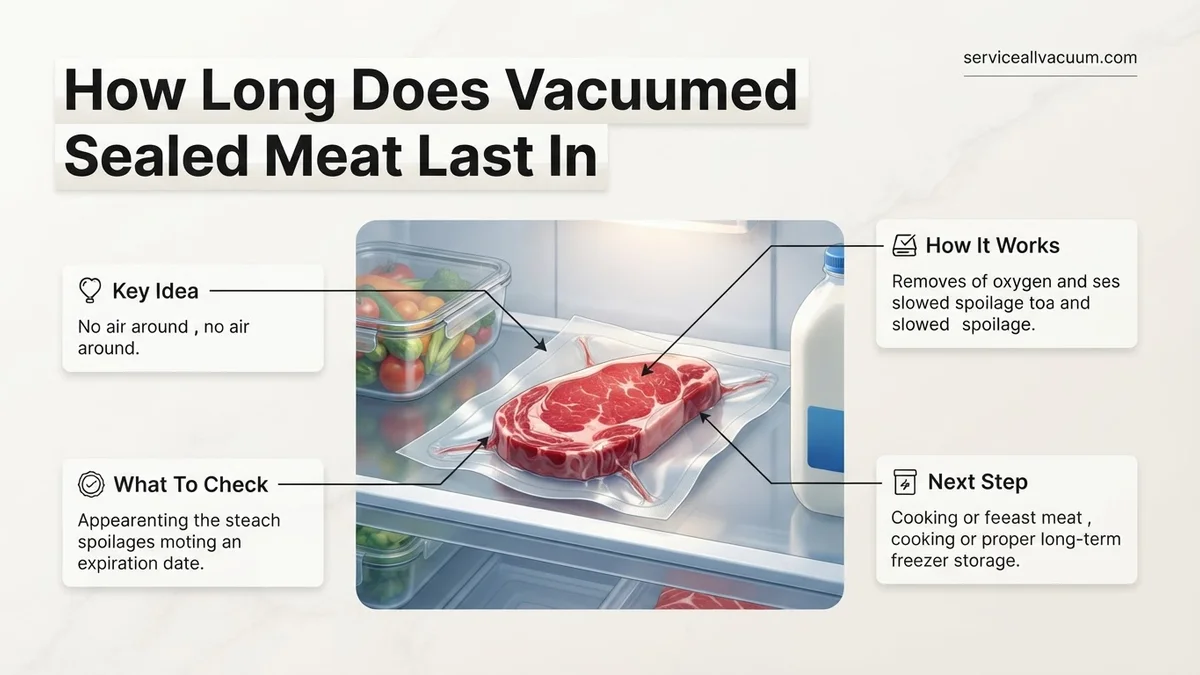
Vacuum-sealed meat generally lasts in the refrigerator for 10 to 14 days, significantly longer than the standard 3 to 5 days for traditionally wrapped meat. This extended shelf life depends heavily on maintaining a consistent refrigerator temperature below 38°F and the initial freshness of the cut. Properly sealed packaging prevents oxygen exposure, which slows down bacterial growth and freezer burn.
Vacuum-sealed meat generally lasts in the refrigerator for 10 to 14 days, which is significantly longer than the standard 3 to 5 days for conventionally wrapped meat. When you remove oxygen from the storage environment, you drastically slow down the oxidation and bacterial growth that causes spoilage.
Extending your meat’s refrigerator life helps you reduce food waste and save money on grocery bills. Knowing these exact timelines ensures you always serve safe, high-quality proteins to your household throughout 2026.
Key Takeaways
- Vacuum-sealed meat lasts 10 to 14 days in the refrigerator.
- Keep refrigerator temperatures at or below 38°F for maximum safety.
- Check for off-odors, discoloration, and slimy textures to spot spoilage.
- Poultry and ground meat spoil faster than beef or pork.
- Transfer meat to the freezer for storage beyond two weeks.
What Causes Meat Spoilage in Vacuum Packaging
Understanding how spoilage works helps you maximize your vacuum sealer‘s potential. Even though oxygen is removed, certain biological processes still occur at reduced rates inside your refrigerator.
The Role of Anaerobic Bacteria
Most common food spoilage bacteria require oxygen to multiply rapidly. Vacuum sealing removes this oxygen, which pauses aerobic bacterial activity. However, anaerobic bacteria can still survive and multiply slowly in oxygen-depleted environments at typical refrigerator temperatures.
- Listeria monocytogenes and Clostridium botulinum can tolerate low-oxygen conditions.
- Keeping your refrigerator consistently below 40 degrees Fahrenheit suppresses these bacteria effectively.
- Commercial processing plants use stricter vacuums and flash-cooling to achieve longer dates than home sealers.
Enzymatic Breakdown and Oxidation
Spoilage is not solely driven by bacteria. Natural enzymes present in animal muscle tissue continue to break down proteins over time.
- Lipids in the fat layers can still oxidize very slowly, causing off-flavors.
- Color changes from bright red to a purplish hue are normal due to the lack of oxygen, not necessarily spoilage.
- Temperature fluctuations in your fridge accelerate both enzymatic activity and spoilage rates.
How to Store and Monitor Vacuum-Sealed Meat Step-by-Step
Proper handling determines whether your vacuum-sealed meat reaches that 14-day limit safely. Follow strict protocols from the moment you seal your protein to storage maintenance.
Optimal Refrigeration Placement
Where you place your packaged meat inside the refrigerator matters significantly for temperature stability.
- Store meat on the lowest shelf of your refrigerator to prevent any accidental dripping onto other foods.
- Keep packages away from the refrigerator door, where temperatures fluctuate the most during daily use.
- Maintain your refrigerator internal temperature at 34 to 38 degrees Fahrenheit for maximum shelf life extension in 2026.
Daily Inspection and Safety Checks
Never rely solely on dates or vacuum seals alone. Always inspect your meat before cooking or freezing.
- Check for loss of vacuum seal, known as a broken seal or loose bag, which instantly resets shelf life to standard 3-day limits.
- Smell the meat immediately upon opening the package; a sour or sulfur-like odor indicates spoilage.
- Look for excessive gas buildup or milky liquid inside the bag, which signals advanced bacterial fermentation.
What If Your Vacuum Seal Fails or Spoilage Occurs
Even with advanced 2026 vacuum sealing technology, seals can occasionally fail, or meat can spoil prematurely due to temperature fluctuations in the refrigerator. Understanding the warning signs of compromised packaging ensures you never consume unsafe protein.
Recognizing Seal Failure
A compromised vacuum seal is often easy to spot if you know what indicators to look for. When air re-enters the package, the tight plastic wrapping relaxes, and moisture or juices begin to pool inside the bag. According to food safety guidelines from the USDA, if a vacuum-sealed package loses its seal while sitting in the refrigerator, it immediately reverts to standard storage timelines. You must cook or freeze the meat within 24 hours to prevent rapid bacterial proliferation.
Detecting Spoilage in Sealed Meats
Vacuum sealing slows aerobic bacteria, but anaerobic pathogens like Clostridium botulinum can still thrive in oxygen-free environments if temperatures rise above 40°F (4°C). Always inspect your meat thoroughly before preparation, even if the seal appears intact. Look for a milky or discolored liquid pooling in the package, a slimy texture on the surface of the meat, or a sharp, sour, or sulfurous odor upon opening. If any of these red flags are present, discard the meat immediately without tasting it.
What If It Still Doesn’t Work?
If your vacuum sealer consistently fails to maintain a proper seal or your stored meats are spoiling before their expected shelf life, your equipment or refrigeration setup may require intervention. Implement these troubleshooting steps to resolve chronic storage failures:
- Check and replace sealing gaskets: Foam or rubber gaskets dry out and crack over time, preventing an airtight chamber. Replacement gaskets typically cost between $10 and $25 depending on your machine model.
- Inspect the heat strip: Clean residue off the sealing strip with isopropyl alcohol. If the strip fails to heat up or burns through the plastic, a replacement heating element costs approximately $15 to $35.
- Verify refrigerator temperature: Use an independent appliance thermometer to ensure your fridge maintains a steady 34°F to 38°F. Fluctuating temperatures severely compromise refrigerated shelf life regardless of packaging.
- Upgrade your sealing bags: Ensure you are using commercial-grade, textured channel bags or heavy-duty chamber pouches that match your machine specifications. Thin or incompatible bags often develop micro-leaks.
- Consult a professional appliance technician: If an automated chamber sealer loses vacuum pressure due to internal pump failure, professional repair services range from $100 to $250, though replacing a consumer-grade external sealer is often more cost-effective.
Conclusion
Maximizing the refrigerator shelf life of vacuum-sealed meat requires strict adherence to proper sealing techniques, constant temperature control, and vigilant monitoring for signs of spoilage. While sealing extends raw beef, poultry, and fish storage significantly beyond traditional packaging, safety should always take precedence over extended timelines. According to verified research and expert sources from the USDA and food safety authorities, maintaining your refrigerator below 40°F and promptly recognizing seal failures are the ultimate defenses against foodborne illness. Take the actionable next step today by auditing your refrigerator’s internal temperature and inspecting your current vacuum-sealed inventory for any loss of suction.
❓ Frequently Asked Questions
How long does vacuumed sealed meat last in fridge compared to regular packaging?
Vacuum sealing removes oxygen, which extends the shelf life of fresh meat in the refrigerator from 3-5 days up to 10-14 days depending on the type of meat.
Does the type of meat affect refrigerator shelf life when vacuum sealed?
Yes, denser cuts like beef and pork last longer (up to 14 days), while ground meat and poultry have a shorter safe window of 7 to 10 days.
What temperature should the refrigerator be set to for vacuum-sealed meat?
Your refrigerator should be kept at or below 38°F (3°C) to safely maximize the shelf life of vacuum-packaged perishable foods.
Can vacuum-sealed meat develop a strange smell without being spoiled?
A slight sulfur-like odor can sometimes occur immediately after opening a vacuum package due to harmless trapped gases, but it should dissipate within minutes. If the smell persists or is foul, discard the meat.
Is it safe to freeze vacuum-sealed meat directly in the fridge package?
Yes, high-quality vacuum seal bags are designed for freezing and prevent freezer burn much better than standard grocery store plastic wrapping.
What should I do if the vacuum seal loses its air tightness in the fridge?
If air leaks into the package, treat the meat as conventionally stored and consume or cook it within 24 to 48 hours to prevent foodborne illness.