Can I Vacuum Ants? Step-by-Step Removal Guide 2026
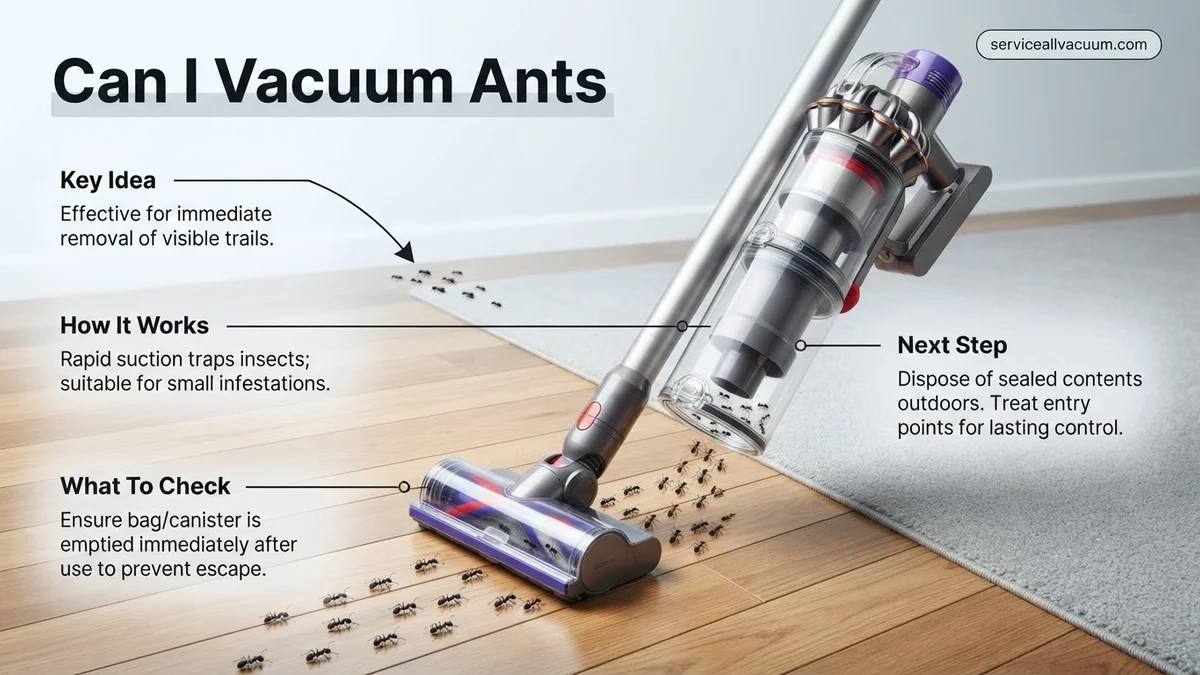
Yes, you can vacuum up ants to quickly clear a surface, but many of them will survive the trip into the canister or bag. Without proper disposal, these surviving insects can easily crawl right back out and reinfest your home.
Yes, you can vacuum up ants, but sucking them into your machine is only a temporary fix rather than a complete extermination method. If you spot a sudden trail of foraging pests marching across your kitchen floor in 2026, reaching for the vacuum hose offers instant gratification and removes the immediate eyesore.
However, simply sucking up the insects creates a brand-new set of problems inside your vacuum canister. Understanding how vacuum mechanics affect tiny bugs helps you decide if this cleaning shortcut is actually worth the extra effort.
Key Takeaways
- Vacuuming provides an instant, physical cleanup for trailing ants without using toxic chemicals.
- A large percentage of vacuumed ants survive the suction and impact inside the machine.
- Always empty your vacuum bag or canister immediately outdoors to prevent an escape.
- Vacuuming does not eliminate the underlying ant colony or source of the invasion.
- Sucking up cornstarch or diatomaceous earth into the vacuum helps kill surviving insects.
What Happens When You Vacuum Ants — The Real Impact
Do Ants Survive the Vacuum Process?
You might assume that the high-velocity suction and tumbling action inside a vacuum hose instantly kills every insect. In reality, a surprisingly high percentage of ants survive the journey into your vacuum bag or canister, thanks to their lightweight exoskeletons and unique physics.
As insects travel through the nozzle, they experience intense airflow rather than solid crushing impacts. While some bugs perish from the sheer force, the physical design of most household vacuums leaves many survivors completely unharmed.
- Lightweight Exoskeletons: Small pests distribute impact force very effectively across their body shells.
- Debris Cushioning: Dust, hair, and carpet fibers act as a soft cushion during the ride through the hose.
- Survival Rates: Depending on your vacuum type, up to fifty percent of sucked-up pests can emerge wandering around your collection bin.
Bagged Versus Bagless Vacuum Mechanics
The type of machine you use drastically changes what happens after the ants enter the housing. Bagless models create cyclonic forces that spin dust and debris at high speeds, which can increase the mortality rate of the insects compared to traditional bagged units.
Even so, surviving bugs inside a bagless transparent canister will simply start crawling up the plastic walls. If you leave them trapped inside without taking action, they will eventually find a way back out through the exhaust or when you open the bin to empty it.
Why Vacuuming Fails to Solve the Root Infestation
The Trail Pheromone Problem
Vacuuming up a visible cluster of foraging workers ignores the hidden queen and the thousands of remaining colony members tucked safely inside your walls. Even worse, vacuuming does nothing to stop the invisible chemical highway your targets left behind.
Ants navigate using chemical scent trails that guide their peers directly to food sources in your home. If you only vacuum the bugs without scrubbing the surface, replacement workers will instantly follow the lingering pheromones right back to the exact same spot.
- Invisible Trails: Scent markers remain on baseboards and counters even after the physical bugs are gone.
- Endless Supply: Worker populations regenerate rapidly from the main nest hidden outdoors or behind drywall.
- Temporary Illusion: You gain a clean floor for a few hours before a brand-new wave arrives to take their place.
Secondary Escape Risks
Releasing live bugs back into your living space defeats the entire purpose of your cleaning effort. If you empty a bagless canister directly into an outdoor trash bin immediately, you eliminate this risk entirely.
Leaving a bagless vacuum sitting in your closet for days gives surviving insects plenty of time to find microscopic gaps in the plastic seals. Once they escape, they will re-enter your rooms and re-establish their foraging routes with renewed determination.
Step-by-Step Guide to Safely Vacuum and Dispose of Ants
Vacuuming ants successfully requires a strategic approach to prevent survivors from escaping the canister. Following proper containment protocols ensures the pests do not reinfest your living space in 2026.
Preparation and Suction
- Inspect your vacuum type to ensure it features a sealed HEPA filtration system, which prevents tiny insects and allergens from blowing back into the room.
- Sprinkle a small amount of cornstarch or baking soda directly over the ant trail before vacuuming to suffocate the insects upon contact.
- Adjust your vacuum to maximum suction power to capture fast-moving species like Argentine ants or odorous house ants.
- Run the vacuum nozzle smoothly across the entire cluster, making overlapping passes to catch any stragglers hiding in baseboard cracks.
Disposal and Post-Clean Hygiene
- Turn off the vacuum immediately after finishing to prevent the motor from overheating while containing live insects.
- Remove the disposable bag or empty the canister directly into an outdoor trash receptacle with a tight-fitting lid.
- Seal the disposable bag inside a separate plastic grocery bag before tying it securely to block any potential escape routes.
- Wash out bagless canisters with warm soapy water and spray the interior hose with a mixture of water and white vinegar to eliminate lingering pheromone trails.
What If It Still Doesn’t Work?
If vacuuming fails to solve your ant problem, the colony likely has a hidden nest nearby producing continuous waves of foragers. Try these fallback steps to regain control:
- Deploy commercial boric acid or sugar-based bait stations near entry points to allow worker ants to poison the hidden queen.
- Seal all visible cracks, crevices, and utility penetrations around baseboards and windows using 100% silicone caulk.
- Eliminate interior moisture sources by repairing leaking pipes and wiping down kitchen counters every evening.
- Hire a licensed pest control professional if the infestation persists beyond two weeks, with typical professional treatments costing between $150 and $350 depending on the property size.
Conclusion
Vacuuming offers an immediate, chemical-free method to clear visible surface ants, but it only addresses the symptoms of a larger indoor infestation. Long-term success requires destroying the hidden queen through targeted baits and sealing structural entry points. According to verified research and pest management experts, combining physical removal with integrated pest management provides the most reliable defense for modern households. Take action today by inspecting your baseboards and setting out professional-grade bait stations where foragers appear.
❓ Frequently Asked Questions
Can I vacuum flying ants or swarmers?
Yes, you can vacuum flying ants just like worker ants to quickly clear them from windowsills or light fixtures. However, because reproductive swarmers often indicate a nearby nest, you must still investigate and address the underlying colony.
Do ant pheromones get released when I vacuum them?
When ants are crushed by the suction mechanism or panic inside the hose, they may release alarm pheromones. If these scents coat the inside of your vacuum hose, it might temporarily attract more activity to that area.
How do I stop ants from escaping my bagless vacuum?
Immediately take your bagless canister outside to a sealed outdoor trash bin and empty its contents. Wash the plastic canister with soapy water to eliminate any remaining scent trails or surviving insects.
Is it safe to vacuum up fire ants?
Vacuuming fire ants is generally discouraged because aggressive species can climb out of the machine and attack the user. If you must vacuum them, ensure you use cornstarch or powder to neutralize them instantly.
Will baking soda kill ants inside the vacuum?
Yes, vacuuming up baking soda or cornstarch can help smother and kill the insects trapped inside the collection bag. It absorbs moisture and coats their bodies, reducing their chances of survival.
Does vacuuming replace traditional ant bait traps?
No, vacuuming is strictly a surface cleaning method and does not target the queen or the hidden nest. You should combine vacuuming with bait stations for long-term pest control.