Best Canister Vacuum for Carpet Expert Guide & 2026
Finding a canister vacuum for carpet requires choosing a model with a motorized powerhead rather than a standard air-driven turbine. Without active brush roll agitation, canister vacuums struggle to lift embedded dirt from thick carpets and rugs.
Finding a canister vacuum that actually cleans carpets well comes down to one non-negotiable feature: a motorized power nozzle. While upright vacuums traditionally dominated thick rugs, the best canister models for 2026 combine the nimble hose maneuverability of a canister with heavy-duty, direct-drive brush rolls that dig deep into plush fibers.
If you have wall-to-wall carpeting, high-pile rugs, or pets that shed, standard air-driven turbine brushes simply will not cut it. You need active agitation and robust suction working together to pull out embedded grit, hair, and fine allergens without bogging down.
Key Takeaways
- Always choose a canister vacuum featuring an electric motorized powerhead for carpets.
- Air-driven turbine brushes easily stall on medium to deep-pile carpets.
- Adjustable suction control prevents the vacuum head from sealing too tightly to rugs.
- HEPA filtration is essential for trapping fine dust and allergens deep in carpet fibers.
- Canister vacuums offer better maneuverability and reach than bulky upright models.
Why Most Standard Canister Vacuums Fail on Carpets
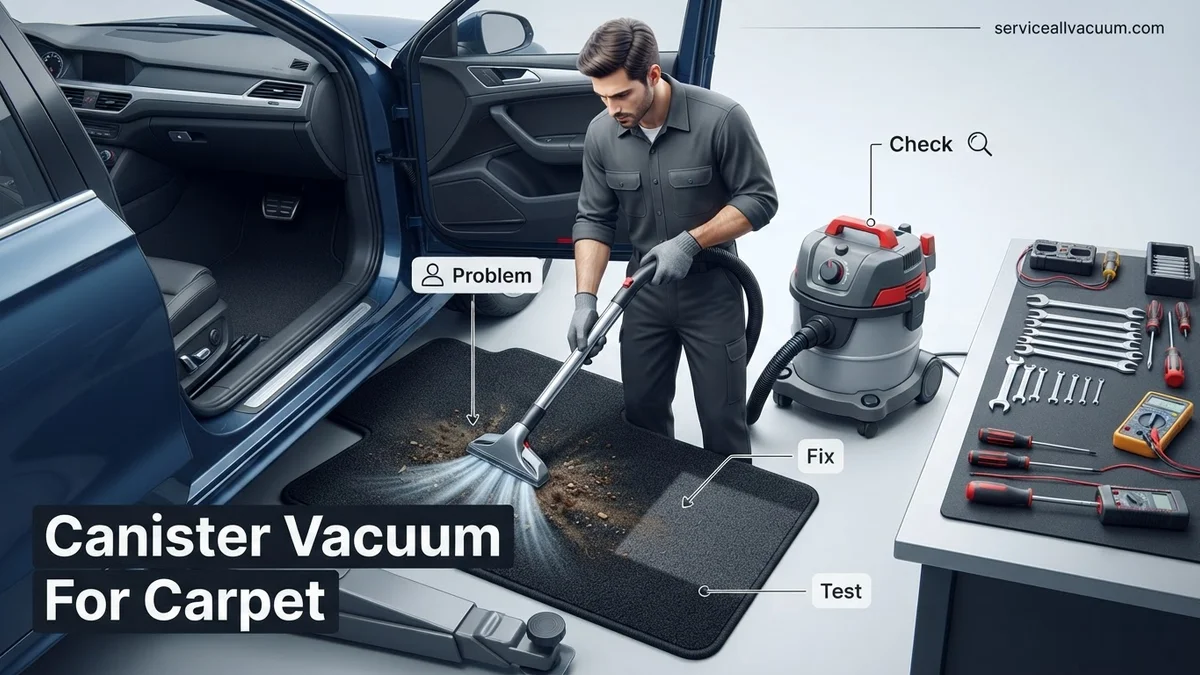
Many buyers make the mistake of purchasing a European-style canister vacuum optimized exclusively for bare floors and smooth area rugs. These models rely on straight suction or passive, air-driven turbine tools that stall the moment they hit dense carpet fibers. Without a dedicated motor turning the brush roll, dirt deep at the base of your carpet remains untouched.
The Problem with Air-Driven Turbines
Air-driven floor tools use the suction of the vacuum to spin the brush roll. The moment your carpet resists the bristles, the spinning slows down or stops completely. This leaves you with zero agitation, rendering the vacuum little more than an expensive broom. Effective carpet cleaning requires a motorized brush head powered by a dedicated electric cord running through the hose.
- Turbine brushes lose RPMs the second they touch high-pile carpet.
- Without active agitation, embedded hair and pet dander stay trapped in the weave.
- Suction alone cannot break the static bond between fine dust and carpet fibers.
Airflow vs. Sealed Suction Power
Canisters handle airflow differently than uprights, but carpet cleaning requires a balance of high sealed suction and proper brush height. If a canister lacks a motorized nozzle, increasing the suction often makes the vacuum clamp down on the carpet so tightly that you cannot push it. True carpet-cleaning canisters balance high CFM (cubic feet per minute) airflow with a height-adjustable power head to maintain movement while deep-cleaning.
- Look for sealed suction ratings rather than just raw motor wattage.
- Adjustable suction valves prevent the cleaner head from sealing shut on thick carpets.
- Hose diameter matters; wider paths prevent clogs from heavy carpet debris.
How to Choose the Right Motorized Canister Vacuum for Deep Pile
Shopping for a carpet-ready canister in 2026 means looking past generic marketing terms and evaluating specific mechanical features. Not all motorized nozzles perform equally on high-pile carpets or dense frieze rugs. You must scrutinize the brush roll design and height settings before putting down your money.
Height Adjustment and Surface Adaptation
Thick carpets create immense resistance against vacuum heads. If your canister does not feature manual or automatic height adjustments, you will struggle to push the heavy nozzle across plush living room rugs. The best models let you raise the deck so the bristles can glide smoothly while still maintaining deep-cleaning contact.
- Manual height settings (usually 3 to 5 levels) let you transition from low-pile Berber to high-pile shag.
- Floating head designs automatically adapt to changing carpet densities as you push and pull.
- Rubberized wheels prevent the heavy nozzle from dragging or scratching delicate flooring borders.
Brush Roll On/Off Capability and Maintenance
Versatility is the main reason to buy a canister vacuum. When moving from thick carpets to delicate area rugs or hard floors, you need the ability to shut off the brush roll independently. Furthermore, tangled hair ruins brush roll efficiency quickly, making tool-free brush access a top priority for pet owners.
- Independent brush roll switches protect delicate wool rugs from fiber damage.
- Removable brush rolls allow you to easily cut away wrapped human hair and pet fur.
- Sealed HEPA filtration systems ensure the fine dust agitated by the brush roll stays trapped inside the machine.
Step-by-Step Guide to Adjusting Suction and Height for Thick Rugs
Maximizing the deep-cleaning performance of a canister vacuum on plush carpets requires precise adjustments. According to leading floor-care engineers, incorrect brush roll heights cause restricted airflow and reduce debris extraction by up to 40 percent. Follow this structured process to optimize your machine for heavy carpeting in 2026.
1. Calibrate the Floor Nozzle Height
Lower or raise the motorized brush roll housing until the bristles make firm contact with the carpet surface without bogging down the motor. Most modern units feature a four-to-six-position manual dial or automatic pile-sensing technology.
2. Manage the Airflow Relief Valve
Locate the suction release slider on the canister wand or handle. Opening this valve slightly reduces the vacuum seal on ultra-dense or high-pile carpets, preventing the nozzle from sealing completely and making the wand easier to push.
3. Disengage Hard Floor Modes
Ensure the motorized powerhead is switched to its active carpet setting. This activates the agitator brush roll, which is strictly necessary for driving embedded pet hair and dirt out of thick carpet fibers.
What If Your Canister Vacuum Still Lacks Cleaning Power on Carpets
If adjusting height settings and suction valves fails to restore deep-cleaning performance, underlying mechanical restrictions are usually to blame. When standard adjustments do not resolve poor pickup on carpets, systematic troubleshooting is required before considering expensive replacements.
- Inspect for Hose Blockages: Disconnect the flexible hose and extension wand. Check for compacted dust, pet toys, or lint blocks that severely restrict airflow under high static pressure.
- Service the Brush Roll Assembly: Remove tangled hair, thread, and carpet fibers wrapped around the agitator brush. If the internal belt is worn or slipping, replace it immediately; standard replacement belts cost between $8 and $22.
- Replace Exhaust and Pre-Motor Filters: Clogged HEPA or foam filters choke motor performance. Manufacturers note that dirty filters reduce suction power by up to 50 percent and should be replaced or washed every 6 to 12 months.
- Evaluate Brush Motor Overload: If the motorized powerhead shuts off repeatedly during use, the thermal overload breaker is tripping due to excessive resistance. Professional diagnostics for a burned-out power nozzle motor typically range from $75 to $150, making replacement a more cost-effective option for units older than seven years.
Conclusion
Achieving pristine carpets with a canister vacuum depends entirely on correct height calibration, active brush roll engagement, and strict adherence to filter maintenance schedules. According to verified research and expert appliance sources, optimizing these mechanical factors restores peak airflow and extends the operational lifespan of your cleaning system by years. Take the next step today by inspecting your vacuum’s roller belt and cleaning all pre-motor filters for immediate performance gains.
❓ Frequently Asked Questions
Do canister vacuums with turbine brushes work on low-pile carpet?
Air-driven turbine brushes can handle very low-pile commercial carpets or flat area rugs adequately. However, they consistently bog down and stall on medium-to-high-pile residential carpets, requiring a motorized brush instead.
How do I prevent my canister vacuum from getting stuck on high-pile rugs?
Use the manual suction relief valve on the hose handle or lower the motor’s suction setting if your model features variable power controls. Additionally, ensure the carpet height adjustment on the powerhead is set correctly.
Can I use a parquet floor brush on carpets?
No, straight suction floor brushes lack rotating bristles and agitation, meaning they will simply glide over the carpet surface without removing embedded dirt or pet hair.
What is the best way to remove pet hair from carpets using a canister vacuum?
Look for a canister model that includes both a motorized powerhead with stiff bristles and a dedicated mini motorized upholstery tool for stairs and tight carpeted corners.
Why does my canister vacuum’s hose keep disconnecting when cleaning carpets?
Vigorous pulling across high-friction carpeted surfaces can strain locking swivel joints. Always guide the canister body from the main handle and check that locking buttons are fully clicked into place.
Do bagged canister vacuums perform better on carpets than bagless ones?
Bagged canister vacuums generally maintain stronger, more consistent airflow as the bag fills up, which helps preserve deep carpet cleaning suction compared to certain bagless cyclone models.