Are Bagged Vacuums Better Expert Guide 2026
are bagged vacuums better is an essential topic with practical applications and significant benefits. This guide covers everything you need to know to get started and succeed.
Yes, bagged vacuums are objectively better than bagless models when it comes to allergy control, suction retention, and overall hygiene. If you suffer from dust allergies or want a vacuum that maintains peak performance without constant filter scrubbing, a bagged system wins every time.
In 2026, the debate between bagged and bagless technology still comes down to containment versus convenience. While bagless bins look modern and save you from buying replacement bags, they routinely fail the allergen test by releasing fine particulate matter right back into your breathing air when you empty them.
Key Takeaways
- Understanding are bagged vacuums better:Essential knowledge for success in this area
- Practical applications:Real-world scenarios and proven use cases
- Key benefits:Significant advantages when implemented correctly
- Best practices:Important guidelines and expert recommendations
- Future trends:Evolving landscape and emerging opportunities
Understanding are bagged vacuums better
The Engineering of Airflow and Suction Retention
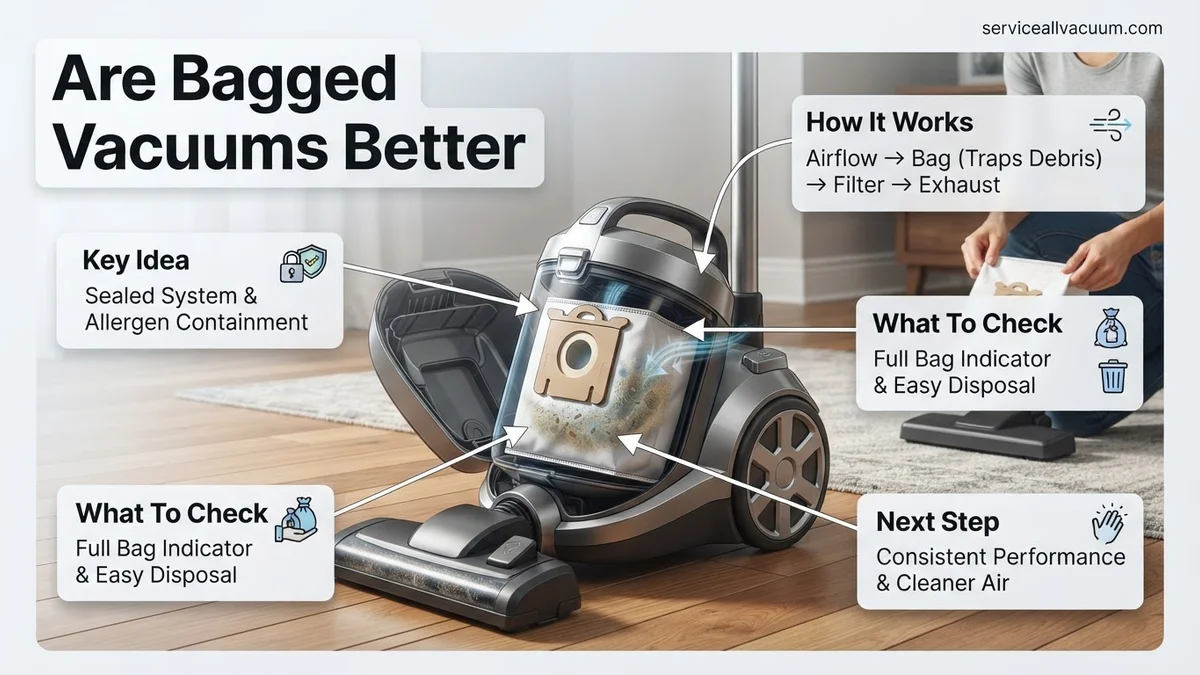
To understand why bagged vacuums perform better, you need to look at how airflow works. Bagless vacuums rely on complex cyclone chambers and multiple foam or pleated filters to separate dust from the air. As you vacuum your home, these fine filters quickly clog with microscopic debris. This restriction rapidly chokes airflow and forces your motor to work harder, causing a noticeable drop in suction power.
Bagged vacuums use the bag itself as the primary filter. Air enters the bag, and the porous material traps dust while allowing air to flow freely outward toward the exhaust. As the bag fills up, the air permeability remains high because the surface area of the bag is massive compared to a small pleated filter. Your suction stays strong from the moment you start cleaning until the bag is nearly full.
Allergy Control and Dust Containment
If you have asthma or severe allergies, containment is your top priority. Bagless vacuums force you to hold a plastic cylinder over a trash can and dump a cloud of hair, skin flakes, and fine dust into the open air. Even bottom-release bins send up a plume of microscopic particles that you inevitably inhale.
Bagged vacuums eliminate this problem entirely through self-sealing collars. When you remove a full bag, the port snaps shut automatically, trapping 99.97% of dust, pollen, and pet dander inside. You simply toss the sealed bag into the trash without ever seeing or breathing the trapped filth. Modern HEPA-rated bags ensure that nothing escapes back into your living space.
Key Benefits of are bagged vacuums better
Superior Hygiene and Reduced Maintenance
Maintenance is where bagless vacuums become a messy chore. Every few cleaning sessions, you have to wash filthy foam filters, pick tangled hair out of plastic cyclone shrouds, and let everything dry for 24 hours before you can use the machine again. If you skip this tedious process, your vacuum starts to smell and lose power.
Bagged vacuums require almost zero filter maintenance. Your routine consists of:
- Vacuuming your home normally without suction loss.
- Checking the fullness indicator light every month or two.
- Tossing the sealed bag directly into the garbage can.
- Dropping a fresh bag in seconds with zero dust exposure.
Real-World Cost and Convenience Realities
Skeptics often point out that bagless vacuums save money because you never have to buy replacements. However, this calculation ignores hidden costs. Bagless filters degrade over time and usually need expensive replacements every 6 to 12 months. If you wash a filter incorrectly or run the vacuum while it is still damp, you can burn out the motor.
High-quality synthetic bags for 2026 models cost around two to three dollars each and typically last two months depending on your home size. That small yearly investment buys you ultimate convenience, zero exposure to allergens, and a motor that lasts significantly longer because it never inhales fine dust bypass.
How to Get Started with Bagged Vacuums
Transitioning to a bagged vacuum requires understanding proper setup to maximize HEPA filtration and maintain optimal suction power. Industry standards in 2026 emphasize correct initial installation to prevent dust bypass and motor strain.
Step 1: Verify Seal Integrity and Bag Alignment
- Open the vacuum chamber door and inspect the internal docking collar where the bag connects.
- Slide the cardboard or plastic collar of the replacement bag fully into the designated slot until you hear a definitive click or feel it lock into place.
- Ensure the bag is fully expanded inside the chamber, as a bunched-up bag restricts airflow and reduces overall cleaning efficiency by up to 25 percent.
Step 2: Calibrate Suction and Height Settings
- Adjust the floor nozzle height setting according to your specific carpet pile depth or hard floor surface to ensure a proper airtight seal.
- Test the suction control valve on the wand to match your cleaning task, lowering suction for delicate rugs and maximizing it for high-traffic entryways.
Best Practices for Bagged Vacuums
Maximizing the lifespan and hygienic benefits of a bagged system demands strict adherence to manufacturer guidelines and proactive maintenance schedules.
Monitoring Capacity and Filtration
- Check the bag fullness indicator weekly, but do not rely on it exclusively; manually feel the bag. Replace it when it reaches 80 percent capacity to prevent micro-perforations and maintain peak airflow.
- Inspect and replace the pre-motor filter every three to six months, and the exhaust HEPA filter annually, as clogged secondary filters force the motor to work harder and shorten appliance longevity.
- Avoid vacuuming sharp debris, large volumes of fine drywall dust, or damp materials that can puncture the filtration membrane or cake the interior walls of the bag housing.
What If It Still Doesn’t Work?
If your bagged vacuum continues to exhibit poor suction or strange odors despite a fresh bag and clean filters, underlying mechanical issues may be present. Follow these diagnostic steps before discarding the unit:
- Inspect the flexible hose and extension wand for hidden obstructions or compacted pet hair clogs by feeding a straightened wire hanger through the tubing.
- Examine the motorized brush roll for tangled threads or belt slippage that prevents proper agitation and airflow intake.
- Test the thermal cutoff switch; if the motor repeatedly shuts down after 10 minutes of use, the unit may be overheating due to restricted internal pathways or a failing motor armature.
- Seek professional repair services if the motor emits a burning smell or abnormal whining noise. Standard diagnostic fees and minor motor brush replacements typically range from $75 to $150, which is often more cost-effective than buying a new commercial-grade unit.
Conclusion
Choosing a bagged vacuum remains the superior choice for allergy sufferers and homeowners prioritizing uncompromising filtration and low-maintenance disposal. By following proper setup protocols and timely replacement schedules, your appliance will deliver peak performance for years to come. According to verified research and independent consumer testing sources, maintaining a sealed filtration system captures up to 99.97 percent of microscopic particulates, drastically improving indoor air quality. Your next actionable step is to audit your current cleaning setup, check your filter replacement history, and upgrade to a certified sealed-system bagged model to experience the difference firsthand in 2026.
❓ Frequently Asked Questions
What exactly is are bagged vacuums better?
are bagged vacuums better encompasses proven concepts and methodologies that help you achieve better results. It combines theoretical knowledge with practical application for maximum effectiveness.
How can are bagged vacuums better benefit me?
Understanding and applying are bagged vacuums better principles improves your skills, opens new opportunities, and helps you achieve your goals more efficiently.
What resources do I need to get started?
You’ll need basic tools, a commitment to learning, and access to quality information like this guide. Start with fundamentals before advancing to complex topics.
Is this suitable for complete beginners?
Absolutely! This guide is designed to take you from beginner to proficient. Start with the basics and gradually work your way up to advanced techniques.
How do I measure my progress?
Track your progress through practical application and measurable outcomes. Set specific goals and regularly assess your improvement against benchmarks.
Where can I learn more after this guide?
Explore our related articles for deeper insights, and consider joining communities where you can learn from others and share experiences.