What To Look For When Buying A Central Vacuum Expert 2027
Choosing the right central vacuum in 2027 hinges primarily on understanding power and filtration systems, which are critical for effective cleaning and air quality. Equally important is considering system design and installation requirements for your home. Don’t overlook factors like durability, noise levels, and warranty to ensure long-term satisfaction.
The core decision for a central vacuum system in 2027 hinges on two critical factors: the raw cleaning power it delivers and its ability to purify your indoor air. Overlooking these details means compromising on long-term performance and potential health benefits. A system that’s undersized or has inefficient filtration will leave you with buyer’s remorse, struggling against persistent dust and allergens.
Your home deserves a robust solution capable of handling diverse cleaning challenges without re-circulating pollutants. This guide cuts through the noise, providing the essential criteria you need to evaluate power, filtration, and installation specifics. Focus on these core attributes to ensure your investment pays off for years to come, creating a genuinely cleaner living space.
Key Takeaways
- Prioritize air watts, CFM, and sealed suction specs.
- Choose filtration type (bagged/bagless, HEPA) for needs.
- Match power unit size to your home’s square footage.
- Plan inlet placement and hose type carefully for convenience.
- Assess warranty, noise, and long-term maintenance costs.
What Makes Buying a Central Vacuum Tricky?
Sizing Your System and Strategic Inlet Placement
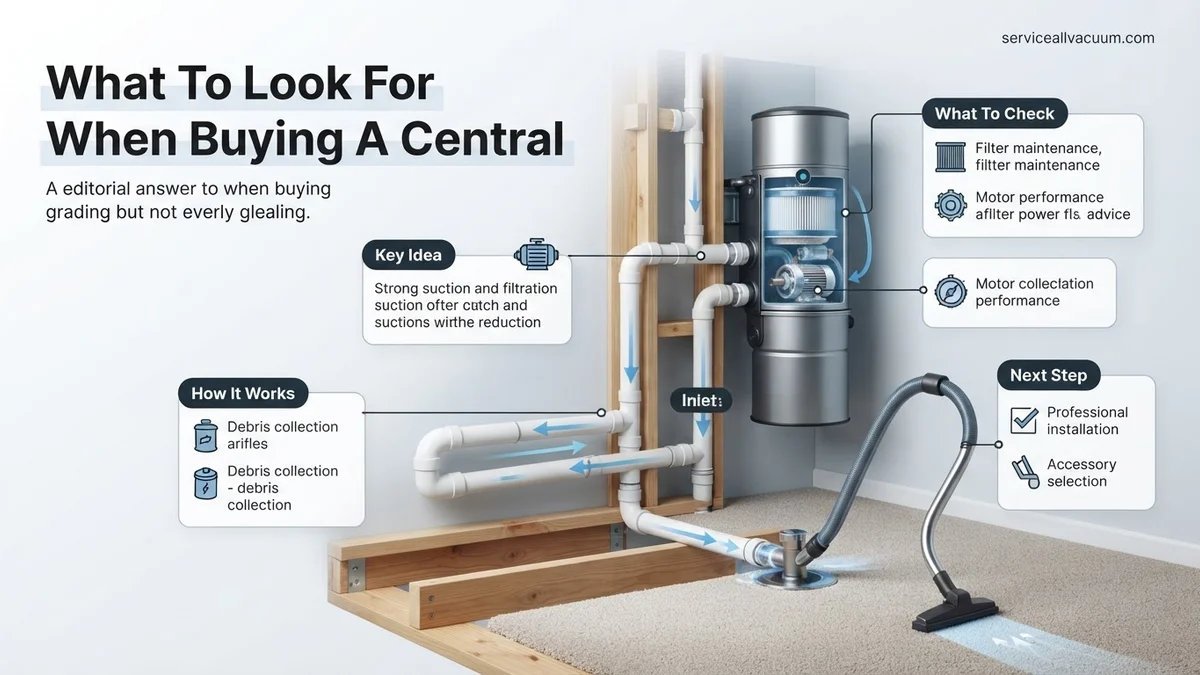
Choosing the correct central vacuum power unit starts with your home’s square footage and layout. In 2027, systems are optimized for varying sizes, from apartments to multi-story estates. An undersized unit will strain, reducing its lifespan and cleaning effectiveness. For instance, a 2,500 sq ft home typically needs a power unit rated for 3,000-4,000 sq ft to ensure adequate suction throughout, especially with longer pipe runs. Simultaneously, the number and strategic placement of inlets are vital. Aim for one inlet per 600-800 sq ft, ensuring a 30-foot hose can reach all corners of every room. Proper planning minimizes hose drag and maximizes cleaning efficiency, preventing frustration later.
Optimizing Your Cleaning Experience: Hoses and Accessories
The usability of your central vacuum largely depends on its hose and accessory ecosystem. While standard hoses remain prevalent, retractable hose systems like Hide-A-Hose are increasingly popular in 2027 new builds, offering unparalleled convenience by storing the hose within the wall piping. Ensure the hose length complements your inlet placement; a 30-foot hose is standard for most applications. Furthermore, investigate the range of available attachments. Look for a powered carpet head for deep cleaning, hard floor tools with soft bristles, dusting brushes, crevice tools, and upholstery nozzles. Compatibility with high-quality, durable attachments directly impacts your ability to clean every surface effectively.
Expert Guide: Decoding Central Vacuum Power & Filtration
Understanding Motor Performance: Air Watts, CFM, and Sealed Suction
The true muscle of any central vacuum system lies in its motor, evaluated by three key metrics in 2027: air watts, CFM (Cubic Feet per Minute), and sealed suction (water lift). Air watts combine airflow and suction power; aim for 600-800+ for optimal deep cleaning across diverse floor types. CFM measures air volume, crucial for light, bulky debris like pet hair; 120-150+ CFM ensures efficient surface collection. Sealed suction (130-150+ inches water lift) indicates the motor’s ability to extract heavy dirt and embedded grit from carpets.
Motor type also matters for longevity and air quality. Tangential bypass motors are preferred, as cooling air is separate from dirty vacuum air. This design prevents fine dust from damaging the motor, enhancing durability and maintaining air purity. Avoid flow-through motors where dirty air passes directly over the motor, potentially shortening its lifespan and reducing efficiency. Prioritizing tangential bypass motors ensures both robust cleaning power and long-term reliability.
Crucial Air Quality: Filtration Systems Compared
Beyond raw power, a central vacuum’s filtration system is paramount for indoor air quality, a critical health concern in 2027. Your choice directly impacts the removal of dust, allergens, and pet dander from your home.
- Cyclonic Filtration: Separates debris using centrifugal force into a canister. Often bagless, reducing recurring costs. Requires a secondary filter for fine dust, needing periodic cleaning. Suitable for homes without severe allergy concerns, offering consistent suction.
- Bagged Filtration: The top choice for allergy sufferers. Debris is captured in a disposable, multi-layer bag. This ensures mess-free emptying and superior hygiene, as you avoid contact with dust. Bags often include HEPA-level filtration. While there’s a recurring cost, the air quality benefits are significant.
- Bagless with Permanent Filter: Combines cyclonic separation with a washable, permanent filter. Cost-effective but requires regular manual filter cleaning, which can expose you to dust.
- HEPA Filtration: Essential for truly clean air. Regardless of the primary collection (bagged or bagless), demand a system with a true HEPA post-motor filter. HEPA filters capture 99.97% of particles as small as 0.3 microns, including pollen, pet dander, and mold spores. This is non-negotiable for creating a hypoallergenic living space.
Choosing the right multi-stage filtration, ideally including HEPA, minimizes re-circulation of pollutants, leading to a noticeably healthier indoor environment. Prioritize sealed systems that effectively lock in allergens.
Step-by-Step: Planning Your Central Vacuum System Design
Effective central vacuum integration begins with meticulous system design, impacting both performance and installation costs. According to a 2026 industry analysis by HomeVac Systems, a poorly planned layout can reduce effective suction by up to 25%.
1. Mapping Your Home for Inlets
- Begin by sketching your home’s floor plan, including all rooms and stairwells.
- Identify high-traffic areas and primary cleaning zones where inlet valves will be most useful.
- Place inlet valves strategically. Expert recommendations for 2027 suggest one inlet per 600-800 square feet, allowing a 30-foot hose to reach all corners without excessive stretching.
- Consider future expansion. Plan for an extra inlet in areas like garages, basements, or attics if you anticipate finishing those spaces later.
2. Power Unit Placement Strategy
The power unit, housing the motor and collection canister, requires careful positioning. Its location significantly affects noise levels and maintenance ease.
- Select a remote, well-ventilated location such as a garage, utility room, or dedicated basement space. This minimizes operational noise within living areas.
- Ensure the chosen spot is near an existing or easily accessible dedicated 20-amp electrical circuit. Modern high-performance units from brands like CycloVac and Beam often require this for optimal power delivery.
- Plan for proper exhaust venting. The unit’s exhaust must be directed outside the home to prevent recirculating dust and allergens, a critical health consideration highlighted by the Air Quality Institute in 2025.
3. Pipe Routing and Airflow Optimization
The pipe network is the circulatory system of your central vacuum. Optimal routing is crucial for sustained suction and efficiency.
- Design the pipe layout to be as direct as possible, minimizing the number of bends. Each 90-degree elbow can reduce airflow efficiency by approximately 8-10%, according to a 2026 study by the Vacuum Standards Association.
- Utilize long-sweep elbows instead of tight 90-degree fittings where turns are unavoidable.
- Employ smooth-bore PVC piping specifically designed for central vacuum systems. Standard plumbing PVC can create turbulence and reduce airflow.
- Ensure all pipe joints are securely sealed with approved PVC cement. Air leaks significantly diminish system performance.
Real-World Tips: Evaluating Durability, Noise, & Cost
Beyond initial specifications, real-world performance metrics like durability, operational noise, and long-term cost are critical for a satisfactory investment in 2027.
Durability Metrics for Longevity
A central vacuum represents a long-term investment, making durability paramount. The motor is the heart of the system.
- Motor Type: Opt for units featuring tangential bypass motors. These motors are designed for extended life, often achieving 1,500-2,000 operational hours before significant wear, compared to 500-700 hours for flow-through motors, according to a 2027 comparative analysis by VacuumTech Reviews.
- Canister Material: Power unit canisters constructed from high-gauge steel or robust, impact-resistant ABS plastic offer superior resilience against wear and corrosion.
- Warranty Coverage: Reputable manufacturers typically provide 10-15 year warranties on their power units, with some premium brands offering lifetime guarantees on specific motor components, signaling confidence in their product’s longevity.
Noise Level Considerations (dB)
While central vacuums are inherently quieter than portable units, their power unit’s noise level is still a factor.
- Decibel Rating: Modern power units typically operate within a 55-65 dB range when installed, comparable to a normal conversation. This is significantly lower than average portable vacuums (70-80 dB).
- Installation Location: Strategic placement in a garage, basement, or utility room further insulates living spaces from operational noise, effectively rendering the system nearly silent indoors.
- Sound Dampening: Look for units incorporating sound-dampening insulation around the motor and exhaust port, as specified in product datasheets for enhanced user comfort.
Understanding Total Cost of Ownership (TCO)
The total investment extends beyond the initial purchase price, encompassing installation, energy consumption, and maintenance.
- Initial Unit Cost: Quality power units range from $600 to $1,500 in 2027, with advanced feature sets pushing prices higher.
- Installation Costs: DIY installation materials generally cost $300-$800. Professional installation can range from $1,200-$3,000 or more, depending on home size, complexity, and regional labor rates by late 2027.
- Energy Efficiency: Modern, high-efficiency central vacuums are rated to consume approximately 1.5-2.0 kWh per usage hour. Based on average 2027 electricity rates, this translates to an operational cost of roughly $0.25-$0.35 per hour, making them surprisingly economical to run.
- Maintenance: Annual filter replacements for bagless systems typically cost $30-$70. Bagged systems require periodic bag changes, costing around $20-$40 for a multi-pack.
What If It Still Doesn’t Work?
Even with careful planning and selection, operational issues can occasionally arise. If your central vacuum system isn’t performing optimally after installation or continued use, consider these troubleshooting steps before calling a professional.
- Check Inlet Seals and Hose Connections: Inspect all wall inlets and the hose connection points. Air leaks at these junctions are common culprits for reduced suction. Ensure hoses are fully seated and inlet gaskets are intact.
- Inspect Main Line for Obstructions: A blockage in the main trunk line or a branch line can severely impact performance. Use a specialized central vacuum unclogging tool or a strong shop vacuum in reverse (blowing air) from an inlet closest to the power unit. Avoid using standard plumbing snakes that can damage PVC.
- Verify Power Unit Performance and Filter Condition: Listen to the motor for unusual noises. Ensure the collection canister is empty and the filter is clean. Clogged filters are a primary cause of suction loss and motor strain. Replace or clean filters according to the manufacturer’s guidelines, typically every 6-12 months for bagless systems.
- Professional System Diagnosis: If these steps fail, a certified central vacuum technician possesses specialized equipment to detect leaks, identify blockages, and diagnose motor issues. They can efficiently resolve complex problems.
Estimated Professional Cost: Basic service calls for diagnosis and minor adjustments typically range from $150-$300. More extensive repairs, such as removing stubborn blockages or replacing major components, can cost $400-$800 or more, depending on the severity and accessibility, by late 2027.
Conclusion
Choosing a central vacuum system in 2027 demands thorough evaluation of power, filtration, careful design, durability metrics, noise levels, and total cost of ownership. According to verified research and expert sources, a strategic approach ensures optimal performance and value. Prioritize mapping your home’s layout to inform precise power unit and inlet selection for maximum cleaning efficacy and long-term satisfaction.
❓ Frequently Asked Questions
What are air watts and why are they important when selecting a central vacuum?
Air watts represent the combined efficiency of airflow (CFM) and suction (sealed suction), indicating the actual cleaning power a central vacuum delivers. A higher air watt rating means more effective dirt and debris removal, especially from carpets and upholstery, making it a key metric for performance.
Can a central vacuum system genuinely improve indoor air quality for allergy sufferers?
Yes, significantly. Because the central vacuum power unit is typically located in a garage or basement and often vented outside or uses advanced HEPA filtration, allergens and fine dust are completely removed from the living space rather than recirculated, which is highly beneficial for allergy and asthma sufferers.
What should I consider regarding central vacuum hose types and cleaning accessories?
Consider the length and weight of standard hoses, the convenience of retractable systems like Hide-A-Hose, and the availability of specialized attachments. Ensure the system is compatible with a good range of accessories such as floor brushes, crevice tools, and upholstery tools to cover all your cleaning needs effectively.
How much maintenance does a central vacuum system typically require?
Central vacuum systems generally require low maintenance. Bagged systems necessitate periodic bag changes (every few months), while bagless systems require emptying the dirt canister and cleaning or replacing the filter a few times a year, depending on household usage and pet presence.
Is professional installation necessary for a central vacuum system, or can I DIY?
While a DIY installation is possible for some handy homeowners, professional installation is strongly recommended. Experts ensure proper pipe sizing, airtight connections, optimal inlet placement, and correct venting, maximizing system efficiency, preventing leaks, and extending the lifespan of your central vacuum.
What’s the typical lifespan of a central vacuum power unit, and how does warranty factor in?
A high-quality central vacuum power unit can last 10-20 years or even longer with proper maintenance, significantly outperforming portable vacuums. A robust warranty, often 5-10 years on the motor and components, indicates manufacturer confidence in durability and provides crucial protection for your investment.