What Is a Vacuum Breaker on a Hose Bib Expert Guide 2026
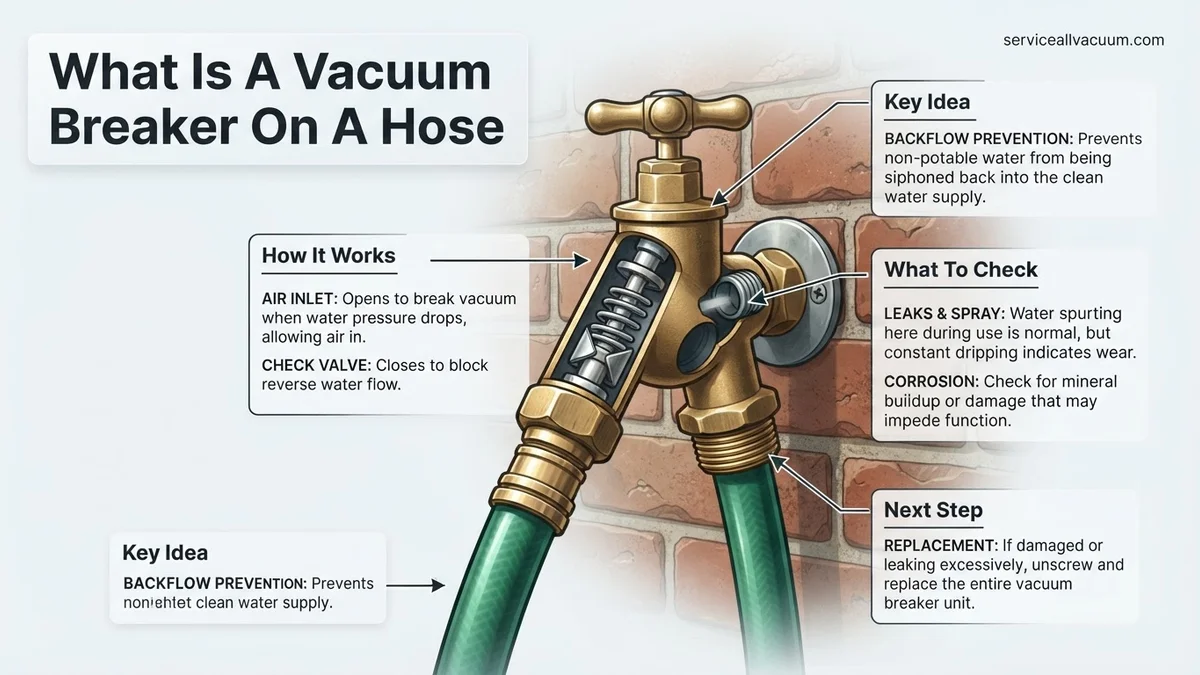
A vacuum breaker on a hose bib is a crucial backflow prevention device that stops contaminated garden hose water from being sucked back into your home’s drinking water supply. It uses an internal spring-loaded check valve to automatically seal off backward suction whenever water pressure drops.
A vacuum breaker on a hose bib is a critical backflow prevention device designed to stop contaminated water from your garden hose from being siphoned backward into your home’s clean drinking water supply. When a sudden drop in water pressure occurs in the municipal main—often called a backsiphonage event—dirty water trapped in a submerged hose, pesticide sprayer, or pressure washer can be sucked straight through your plumbing and into your kitchen tap. In 2026, building codes across nearly all municipalities strictly require these small, bell-shaped brass or plastic attachments on every outdoor spigot to protect public and private health.
Without this simple device, everyday tasks like spraying weedkiller or filling a backyard pool carry a hidden risk of chemical contamination. Inside your plumbing system, clean water relies on positive pressure to flow outward. The moment that pressure drops, any connected hose acts as a straw. A vacuum breaker acts as a one-way physical gatekeeper, instantly breaking the suction and venting atmospheric air into the line to block dangerous pollutants from entering your home.
Key Takeaways
- Vacuum breakers prevent toxic lawn chemicals from entering household drinking water.
- They operate automatically using water pressure and internal spring-loaded atmospheric vents.
- Leaking from the side vents indicates a worn-out internal seal that requires replacement.
- Many units feature a breakaway set screw to prevent unauthorized removal.
- Removing a stuck vacuum breaker often requires specialized pliers or careful cutting.
What Causes Vacuum Breakers to Fail and Leak on a Hose Bib
Mineral Buildup and Hard Water Scaling
Hard water is the primary enemy of outdoor plumbing fixtures. As water evaporates from your hose bib between uses, it leaves behind calcium and magnesium deposits. By 2026, standard plumbing hardware must endure increasingly aggressive mineral content in municipal water supplies. These chalky deposits build up inside the tiny atmospheric vents and around the delicate plastic or rubber check valve of your vacuum breaker. When the mineral crust restricts movement, the internal components can no longer seal properly or drop back down into place after use.
Freezing Temperatures and Seasonal Wear
Winter weather takes a massive toll on exterior hose bibs, especially if you leave a garden hose attached during freezing months. Water trapped inside the vacuum breaker housing expands as it turns to ice. This expansion cracks plastic internal stems, warps rubber washers, and distorts the delicate springs that keep the atmospheric vent functioning. Even frost-free hose bibs will leak profusely from the vacuum breaker come spring if the anti-siphon device was not drained or insulated properly before the first hard freeze.
- Stuck springs caused by internal rust or grit accumulation
- Degraded rubber diaphragms that flatten out and lose elasticity
- Cross-threaded or overtightened set screws shearing off during installation
How to Fix a Stuck or Leaking Hose Bib Vacuum Breaker Step-by-Step
Diagnosing and Removing a Damaged Unit
If water sprays wildly out of the side vents of your hose bib every time you turn on the tap, your vacuum breaker is jammed. Before you attempt any repairs, shut off the main water supply to the outdoor spigot if an interior isolation valve is available. Most modern vacuum breakers are secured to the hose bib threads with a small, tamper-resistant set screw designed to snap off during factory installation. You will need to carefully drill out this tiny screw using a cobalt drill bit or grip the collar with locking pliers to unscrew the entire assembly counterclockwise.
Installing a Replacement Assembly
Once you remove the old, leaking vacuum breaker, clean the male threads of the hose bib thoroughly with a wire brush to remove old pipe tape and mineral scale. Purchase an exact replacement model rated for your specific brand of frost-free valve. Modern plumbing codes require replacing the entire assembly rather than attempting to swap out internal springs. Wrap the clean threads with three turns of PTFE plumber tape in a clockwise direction. Thread the new vacuum breaker on by hand until snug, then give it a final quarter-turn with a wrench, taking care not to strip the brass threads.
- Shut off water pressure and relieve any remaining tension by opening the spigot handle.
- Extract or shear off the locking set screw using a pair of flathead pliers or a drill.
- Twist the old unit counterclockwise using an adjustable wrench to break the seal.
- Apply fresh plumber tape and thread the new 2026-compliant vacuum breaker firmly into place.
What If It Still Leaks After Replacing the Vacuum Breaker
Replacing a worn-out atmospheric vacuum breaker usually solves persistent outdoor spigot leaks, but component failures sometimes run deeper. If water continues spraying from the side relief ports or leaking around the threads after installing a brand-new valve in 2026, the issue likely involves household water pressure or internal spigot damage.
Troubleshooting Persistent Outdoor Backflow Leaks
- Check home water pressure: According to plumbing standards set by the Uniform Plumbing Code, residential water pressure should not exceed 80 PSI. Pressures above 84 PSI regularly force vacuum breakers open prematurely, causing continuous spraying during use.
- Inspect hose bib threads: Mineral deposits or cross-threaded installations can prevent the new vacuum breaker from seating flush against the rubber washer, creating a bypass leak.
- Examine the set screw: Many modern code-compliant vacuum breakers use a breakaway set screw. If this was overtightened during installation, it might have distorted the internal brass housing.
When to Call a Professional
If adjusting pressure regulators or cleaning the spigot threads does not stop the leaking, contact a licensed plumber. According to industry data from 2026 home service cost indexes, hiring a professional to repair or replace a damaged frost-free hose bib generally ranges from $150 to $350, depending on the accessibility of the interior supply line.
What If It Still Doesn’t Work?
When standard troubleshooting steps fail to stop a leaking vacuum breaker, homeowners must move past basic DIY fixes. Persistent issues often point to systemic plumbing failures that require specialized intervention.
- Test for thermal expansion: A closed-loop water heating system without an expansion tank can cause extreme pressure spikes, blowing out vacuum breakers repeatedly. Install a pressure gauge with a maximum-recording needle to monitor spikes overnight.
- Evaluate the entire frost-free valve: If the internal stem of a frost-free hose bib is bent or corroded, water will seep backward past the vacuum breaker ports regardless of external components.
- Consult local municipal codes: Some regional jurisdictions maintain amendments requiring specific ASSE 1011 or ASSE 1019 certifications that standard retail devices fail to meet.
- Hire a licensed plumber: If DIY replacement fails twice, schedule a service call to prevent structural water damage to exterior walls. Professional replacement typically costs between $150 and $350 in 2026.
Best Practices for Maintaining Outdoor Backflow Preventers
Proactive maintenance extends the operational lifespan of exterior backflow prevention devices and prevents costly water damage. Environmental exposure to UV rays and sub-freezing temperatures degrades the internal rubber diaphragms and plastic check valves over time.
Seasonal Winterization Protocol
- Disconnect all garden hoses, timers, and splitters from the hose bib by late autumn to prevent trapped water from freezing against the vacuum breaker.
- Shut off the dedicated interior isolation valve supplying water to the outdoor spigot.
- Open the exterior hose bib fully to drain any residual water from the valve body and vacuum breaker assembly.
- In severe winter climates, cover the exposed vacuum breaker with an insulated foam faucet sock to shield it from harsh wind chills.
Conclusion
A vacuum breaker on a hose bib is a critical plumbing safety device designed to protect your household drinking water from dangerous outdoor contaminants. Replacing a faulty, leaking, or calcified unit restores code compliance and stops wasted water. According to verified research and expert sources from the American Society of Sanitary Engineering, inspecting and draining these devices annually prevents premature failure. Take the next step today by checking your outdoor spigots and replacing any leaking vacuum breakers before the next seasonal shift.
❓ Frequently Asked Questions
What exactly does a hose bib vacuum breaker do?
A hose bib vacuum breaker prevents dangerous cross-connection contamination. If a sudden drop in municipal water pressure occurs while your garden hose is submerged in a pool or chemical bucket, the vacuum breaker opens an atmospheric vent to break the siphon effect, stopping dirty water from entering your home pipes.
Why is water leaking from the small holes on my vacuum breaker?
The small side holes are atmospheric vents. When the faucet is turned on, water pressure pushes a internal plunger up to seal those holes. If water leaks out of them during use, the internal washer is likely worn, or mineral buildup is preventing the plunger from sealing correctly.
How do I remove a vacuum breaker that is stuck?
If the unit has a headless set screw, you may need to use locking pliers (Vise-Grips) to clamp onto the outer body and unscrew the entire assembly counterclockwise. If it refuses to budge, carefully cutting a vertical slit into the brass collar with a hacksaw can relieve the tension.
Do I need a vacuum breaker if my hose bib is already frost-free?
Yes. Frost-free sillcocks prevent water inside the wall from freezing, but they do not inherently stop backflow. Most modern frost-free hose bibs actually come with an integrated or attached vacuum breaker for complete code compliance.
Can I replace just the internal parts of a vacuum breaker?
Some brand-name vacuum breakers sell replacement cartridge repair kits. However, due to mineral corrosion and the low cost of standard units, completely unscrewing and replacing the entire exterior device is usually faster and more reliable.
Will a vacuum breaker cause my hose to lose water pressure?
A properly functioning vacuum breaker has a negligible impact on water flow and pressure. If you notice a significant drop in pressure, the internal check valve is likely stuck or clogged with hard water scale and needs replacement.