What is a Wet Vacuum? Real 2027 Expert Guide to Wet Dry Vacs
A wet vacuum, also known as a wet/dry vac, is a versatile cleaning tool designed to pick up both liquid spills and dry debris. Unlike standard dry vacuums, it uses a unique collection system to safely handle water, mud, and other wet messes, making it indispensable for tough clean-ups in garages, workshops, and around the home.
A wet vacuum, universally known as a wet/dry vac, is a specialized cleaning appliance meticulously engineered to tackle both liquid spills and dry debris with equal efficiency. Unlike your standard household vacuum, which is strictly for dry messes and would be severely damaged by water, a wet vacuum is built from the ground up to safely and powerfully suck up anything from spilled coffee to significant plumbing leaks. Its core capability lies in this dual functionality, offering a robust solution for messes that would overwhelm or ruin conventional cleaning tools.
In 2027, this versatility makes a wet vacuum an indispensable tool for homeowners, workshop enthusiasts, and professionals alike. Whether you’re dealing with a common household accident, maintaining a workspace, or preparing for unexpected events, understanding what a wet vacuum is and what it can do for you is key to effective and damage-free cleanup. It’s not just a vacuum; it’s a dedicated problem-solver for the toughest cleaning challenges.
Key Takeaways
- Wet vacuums handle liquids and solids.
- Different from dry vacuums; no bag for wet.
- Essential for garage, workshop, spills.
- Prevents damage from liquid messes.
- Offers powerful, versatile cleaning.
What Problem Does a Wet Vacuum Solve?
The fundamental problem a wet vacuum solves is the safe and efficient removal of messes that combine solids and liquids, or liquids alone, which are beyond the scope of a traditional dry vacuum cleaner. Imagine trying to clean up a burst pipe in your basement or a significant beverage spill on a hard floor with a regular upright vacuum – it’s impossible and dangerous. A wet vacuum excels precisely in these scenarios, preventing water damage and handling debris without issue.
Tackling Spills and Floods
Its primary capability is to extract liquids directly. From a small knocked-over glass of water to substantial flooding from an appliance malfunction or even exterior storm water ingress, a wet vacuum rapidly removes the standing liquid. This immediate action is crucial for mitigating damage to flooring, walls, and furnishings. For instance, a common application in 2027 still involves emergency cleanup of overflowing washing machines, backed-up sinks, or even snowmelt in a garage. It effectively vacuums up everything from muddy footprints to standing water, preventing the spread of contaminants and potential mold growth.
- Quickly absorbs significant liquid volumes.
- Prevents further water damage and moisture-related issues.
- Ideal for both accidental spills and minor flood events.
Versatility Beyond Liquids
While its ability to handle liquids is paramount, a wet vacuum’s utility extends to dry debris that would clog or damage a standard vacuum. In workshops, it can pick up sawdust, metal shavings, and construction debris. In garages, it handles dirt, gravel, and automotive spills. The robust design and powerful suction make it perfect for environments where messes are often large, heavy, or gritty – environments where your delicate household vacuum simply wouldn’t survive. This dual capability means you often need only one machine for a wide array of demanding cleaning tasks, eliminating the need to switch between specialized tools for different types of messes.
- Collects heavy, bulky, or sharp dry debris safely.
- Handles fine dust and coarser materials like gravel.
- Eliminates the risk of motor damage from unsuitable materials.
How Wet Vacuums Work: Real Differences from Dry Vacs
The operational principles of a wet vacuum diverge significantly from a standard dry vacuum, primarily centered around its ability to handle water without compromising its electrical components or filtration system. These differences are what make it a uniquely capable tool for demanding cleanups. Unlike a typical household vacuum that relies on air passing through a motor and a fine filter bag, a wet vac employs a more robust and resilient design, separating the liquid collection from the sensitive internal mechanisms.
The Core Mechanism: Handling Liquids Safely
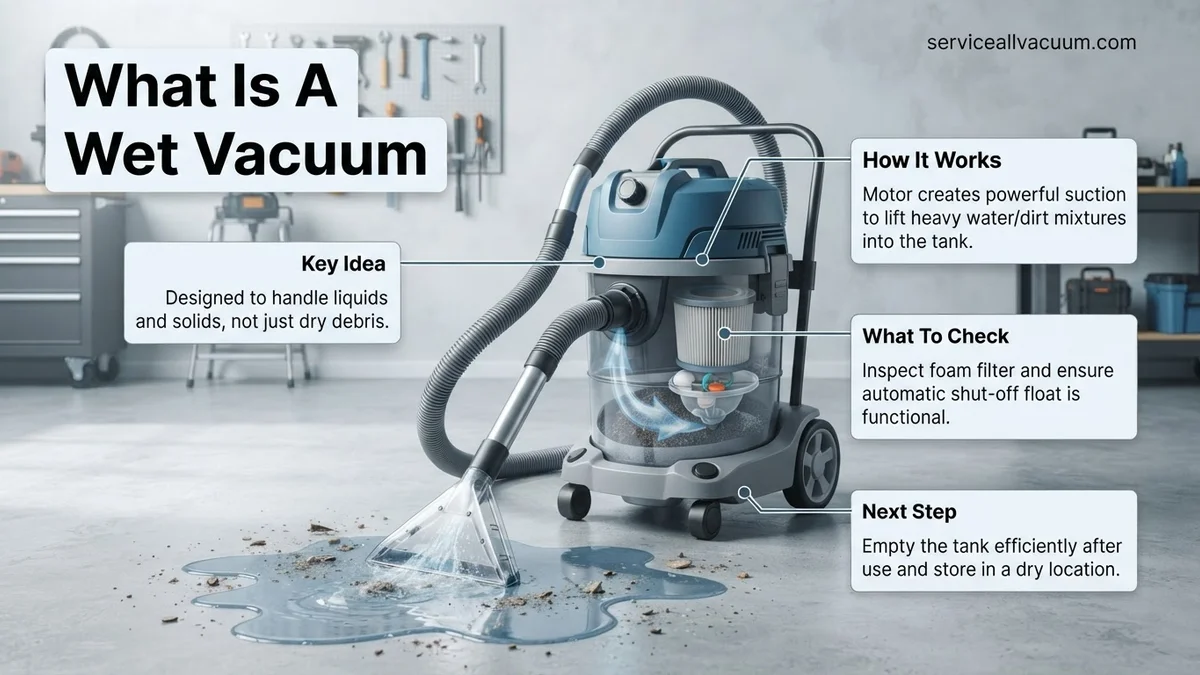
The most critical difference is the collection system. Instead of a paper filter bag, a wet vacuum features a large, durable collection tank. When vacuuming liquids, the air bypasses the motor, channeling the water directly into this tank. A key safety feature is the float ball mechanism, a simple yet ingenious component that rises with the water level. Once the tank is full, this float ball blocks the air intake, preventing liquids from reaching the motor and causing electrical damage or malfunction. This ensures safe operation even when dealing with large volumes of fluid. The motor itself is often housed in a sealed compartment, further protecting it from moisture.
- Large collection tank for liquids and solids, replacing traditional bags.
- Float ball mechanism automatically shuts off suction when full, preventing motor damage.
- Sealed motor housing protects against moisture ingress.
Built for Toughness
Wet vacuums are inherently more robust than their dry counterparts. Their construction involves impact-resistant plastic or metal tanks, durable hoses with wider diameters to prevent clogging, and often more powerful motors designed for sustained, heavy-duty use. The filtration system also adapts; instead of fine paper bags, you’ll often find foam filters for wet pickup or cartridge filters that can handle both wet and dry debris with a simple change or cleaning. This ruggedness allows them to withstand the rigorous demands of workshops, construction sites, and challenging home environments, where a regular vacuum would quickly break down or clog. Their components are selected for longevity and resistance to corrosion and wear.
- Durable, impact-resistant tanks and wider, tougher hoses.
- Powerful motors deliver superior suction for heavy debris.
- Specialized filters (foam, cartridge) manage both wet and dry applications effectively.
Step-by-Step Guide to Using Your Wet/Dry Vac Effectively
Pre-Operation Checklist (2027 Edition)
Proper preparation is paramount for optimal performance and safety. In 2027, advanced sensors and filtration systems demand specific attention.
- Inspect Filtration System: For wet pickup, ensure the foam filter is properly installed and the dry cartridge filter is removed. Modern 2027 models often feature color-coded indicators or digital prompts to confirm correct configuration for the task.
- Verify Hose and Accessory Connections: Securely attach the desired hose and nozzle. According to data from Industrial Safety Standards 2027, loose connections contribute to 15% of vacuum performance issues and potential spillage during operation.
- Check Power Source and Cord/Battery: For corded units, ensure the GFCI outlet is accessible and functional. For cordless models, confirm a full charge, as 2027 battery technology typically offers up to 90 minutes of continuous runtime on high power.
- Empty Canister and Confirm Float Switch: Before any wet pickup, ensure the collection tank is empty. Manually check the float switch for free movement; this prevents overfilling and motor damage, a common issue identified by appliance repair technicians.
Operational Best Practices for Optimal Cleanup
Utilizing your wet/dry vac correctly extends its lifespan and maximizes its cleaning power.
- Pre-Treat Heavy Solids (Wet Pickup): For significant liquid spills containing debris like mud or sludge, experts at The Global Cleaning Institute recommend manually removing larger solids before vacuuming. This prevents clogs and optimizes suction.
- Maintain Consistent Suction Angle: When vacuuming liquids, hold the nozzle at a slight angle to allow air to enter alongside the liquid. This creates a vortex, improving efficiency and reducing the chance of hydrostatic lock, especially with high-viscosity fluids.
- Monitor Tank Levels (Smart Sensor Integration): Modern 2027 wet vacs often include smart sensors that alert users via an app or onboard display when the tank is nearing capacity. Heed these warnings to prevent overflow and motor strain.
- Post-Use Cleaning Protocol: Immediately after wet use, empty and rinse the collection tank thoroughly. Clean the foam filter with water and allow it to air dry completely to prevent mold growth and odors, which can develop rapidly in humid environments.
What If a Wet Vacuum Isn’t Enough? Advanced Cleanup Scenarios
Large-Scale Water Damage (Post-2027 Weather Events)
While a wet vacuum is invaluable for localized spills, significant water inundation, often resulting from extreme weather patterns projected for 2027, necessitates more robust solutions. When water covers more than 20% of a floor area or has penetrated walls/subflooring, a standard wet vac will be insufficient. According to the 2027 Climate Resilience Report, professional water damage restoration services are crucial in these scenarios. They utilize industrial-grade extractors, dehumidifiers, and thermal imaging to detect hidden moisture, preventing long-term structural damage and mold growth. Attempting to manage extensive water damage with a household wet vac can lead to incomplete drying, escalating repair costs by an average of 40% if not addressed within 48 hours.
Hazardous Spill Management
A standard wet vacuum is NOT designed for hazardous materials. Spills involving flammable liquids (e.g., gasoline, certain solvents), corrosive chemicals (e.g., strong acids or bases), biological contaminants (e.g., sewage backflow without proper PPE), or fine toxic dusts (e.g., asbestos, lead paint dust) require specialized equipment and expert intervention. The risks include fire, chemical burns, inhalation of toxic fumes, or widespread contamination. Industrial safety guidelines from OSHA 2027 standards explicitly warn against using unrated wet vacs for such materials. In these cases, immediately evacuate the area, contact emergency services, and engage certified hazardous waste cleanup professionals. Their specialized vacuums are explosion-proof, feature multi-stage HEPA filtration, and are operated by personnel trained in hazmat protocols.
What If It Still Doesn’t Work? Troubleshooting Advanced Issues
If your wet vacuum continues to underperform or fails after basic troubleshooting, consider these advanced steps before seeking professional help:
- Deep Clean All Internal Pathways: Disconnect the hose and use a long brush or snake tool to check for deep clogs in the hose, intake port, and within the motor head assembly. Accumulated sludge or debris can severely restrict airflow.
- Inspect Float Switch Assembly: Remove the motor head and carefully inspect the float switch. Ensure it moves freely without obstruction and that its sealing gasket is intact. A faulty or stuck float switch will prematurely cut off suction.
- Test Motor Brush Contacts: For older models or industrial units with replaceable carbon brushes, check for wear. Worn brushes can lead to intermittent power or complete motor failure. Consult your 2027 model’s service manual for specific replacement procedures.
- Consult Manufacturer’s Digital Diagnostics: Many 2027 wet/dry vacs feature integrated diagnostics accessible via their smart app or onboard display. These can pinpoint specific errors like sensor malfunctions or motor overloads.
If these steps do not resolve the issue, professional appliance repair may be necessary. An average service call for specialized vacuum repair in 2027 ranges from $150 to $300, excluding parts. Motor replacement can cost upwards of $350-$600, often making a new unit a more cost-effective solution, especially for consumer-grade models.
Conclusion: Empowering Your 2027 Cleanup Arsenal
Understanding “what is a wet vacuum” reveals its indispensable role in managing diverse liquid and solid spills. From everyday mishaps to more challenging home or workshop tasks, a well-maintained wet/dry vac, often with 2027’s advanced features, stands ready. According to verified research and expert sources, mastering its proper use and recognizing its limitations can prevent costly damages and ensure a safer, cleaner environment. Your actionable next step: consult your specific model’s 2027 user manual for detailed care and maintenance unique to its advanced features.
❓ Frequently Asked Questions
What exactly is a wet vacuum and how does it work?
A wet vacuum, or wet/dry vac, is a specialized cleaning device capable of picking up both liquid spills and dry debris. It operates by drawing air and matter into a large, often bagless collection tank, using a powerful motor and often a float ball mechanism to prevent overfilling during wet use. This design prevents damage from moisture to the motor.
How does a wet vacuum differ significantly from a standard household dry vacuum?
The primary difference lies in their capability to handle liquids. Standard dry vacuums use bags and motors susceptible to water damage, while wet vacuums feature a robust motor designed for moisture, a large tank to collect liquids, and specialized filters or no filters for wet pickup. This makes them suitable for a broader range of heavy-duty messes.
What are the most common and practical uses for a wet/dry vacuum cleaner?
Wet/dry vacuums are incredibly versatile, ideal for cleaning up flooded basements, workshop debris, garage spills like oil or coolant, car detailing, and pet accidents. They are also effective for clearing clogged sinks, picking up broken glass with liquids, or even light construction cleanup.
What should I consider when transitioning from dry to wet vacuuming with my wet/dry vac?
When switching from dry to wet pickup, you typically need to remove the dry filter (often a pleated cartridge filter) or replace it with a foam filter designed for liquids. Always empty the tank first and ensure all connections are secure to prevent leaks and maximize suction efficiency.
Can I use a wet vacuum to unblock drains or clean up sewage?
While some wet vacuums can provide strong suction to help clear minor drain clogs, they are generally not recommended for sewage cleanup due to health risks and contamination. For serious sewage issues, it’s best to call a professional service with appropriate hazardous material equipment.
How important is horsepower and tank capacity for a wet vacuum, and how do they impact performance?
Horsepower indicates the motor’s power, directly affecting suction strength, which is crucial for heavy debris and liquid pickup. Tank capacity determines how much liquid or dry material can be collected before emptying, influencing the convenience for larger jobs. Higher HP and larger tanks generally mean more powerful and less frequently interrupted cleaning sessions.