How Does A Wet Vacuum Cleaner Work Expert Guide How a 2027
A wet vacuum cleaner functions by creating powerful suction to lift liquids and debris into a dirty water tank, distinct from a dry vacuum. Its operation relies on a specialized two-tank system and a float mechanism to prevent water from reaching the motor, ensuring safe and effective cleaning.
A wet vacuum cleaner operates by generating a powerful vacuum to simultaneously lift dry debris and liquids, utilizing a dedicated two-tank system to manage clean cleaning solution and separate it from the recovered dirty water. This sophisticated setup includes a critical air/liquid separation mechanism, often a float valve, specifically engineered to prevent liquid ingress and damage to the motor. Understanding this process is vital because it explains why these machines are uniquely effective for deep cleaning carpets, efficiently managing large spills, or even extracting water after minor floods, safeguarding your property and ensuring a more hygienic environment in your 2027 home or business.
You can effectively tackle cleaning challenges ranging from pet accidents to refreshing entire carpeted rooms. The machine’s ability to not only vacuum but also wash and extract makes it an indispensable tool for maintaining a pristine and healthy living space, far surpassing the capabilities of conventional dry-only vacuum cleaners.
Key Takeaways
- Suction pulls liquids and solids.
- Two tanks separate clean from dirty.
- Float valve protects the motor.
- Wet vacuums differ from dry.
- Proper cleaning extends lifespan.
Understanding the Core Suction & Liquid Collection Process
The Vacuum Generation and Liquid Uplift
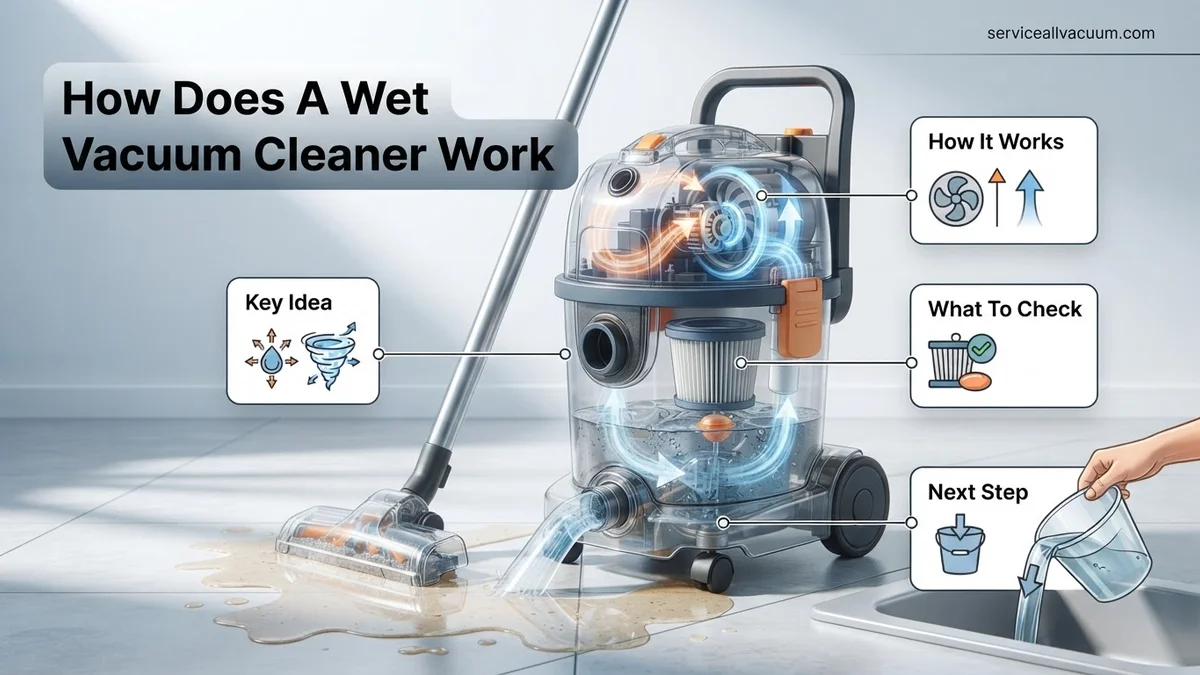
The fundamental principle behind a wet vacuum’s operation begins with its robust electric motor. This motor drives a high-speed impeller, essentially a fan with specially angled blades, which rapidly evacuates air from the machine’s sealed collection tank. This action creates a significant pressure differential – a powerful vacuum – inside the tank and extending through the hose to the cleaning nozzle. Atmospheric pressure then forces air, along with any loose debris and liquids, into this low-pressure zone. For wet extraction, the motor’s power is precisely calibrated to generate enough suction (often measured in Air Watts or inches of water lift) to not just pick up dust but to overcome the surface tension and weight of water and cleaning solutions, pulling them swiftly into the dirty water tank.
- Motor Power: Drives the impeller at high RPMs.
- Impeller Action: Creates a vacuum by displacing air.
- Pressure Differential: Forces air and liquids into the nozzle.
- Liquid Lifting: Requires specific suction strength to pull water.
The Two-Tank System and Air/Water Separation
Central to a wet vacuum’s functionality is its innovative two-tank system. One tank, the clean water tank, holds a fresh mixture of water and cleaning solution. An integrated pump delivers this solution under pressure through spray jets located at the cleaning head, effectively moistening and loosening dirt from the surface. Simultaneously, the vacuum suction pulls this dirty, used solution, along with any dislodged debris, into a separate dirty water recovery tank. The most critical component in this entire process is the air/water separation mechanism. In most 2027 models, this involves a float valve. As the dirty water tank fills, a buoyant float rises. Once the water level reaches a predetermined maximum, the float lifts to block the air intake port, immediately cutting off suction. This crucial safety feature prevents water from ever reaching the motor, which would cause severe damage or electrical hazards. More advanced wet vacuums might also incorporate cyclonic separation for preliminary air-water division, further protecting the motor and ensuring cleaner exhaust air.
- Clean Water Tank: Stores and dispenses fresh cleaning solution.
- Dirty Water Tank: Collects recovered liquid and debris.
- Float Valve: Rises with water level, blocks air intake to protect motor.
- Cyclonic Separation: (Advanced models) Pre-separates air from heavier liquids.
From Start to Finish: How a Wet Vacuum Cleaner Works Explained
Ever wondered what magical processes unfold inside your wet vacuum cleaner as it effortlessly gulps down spills and revitalizes carpets? This detailed guide will pull back the curtain, demystifying the internal workings of these versatile cleaning powerhouses. Understanding how each component contributes to its function not only satisfies curiosity but also empowers you to troubleshoot minor issues, maintain your appliance effectively, and ensure its longevity. Get ready to explore the ingenious engineering that keeps your spaces clean and dry!
Step 1: Power Activation and Motor Engagement
What you need: The wet vacuum cleaner, a standard electrical outlet, the machine’s power switch.
Instructions: The journey begins the moment you connect your wet vacuum to a power source and flick the “on” switch. This action completes an electrical circuit, sending current to the heart of the machine: the universal electric motor. This robust motor, designed to withstand the rigors of both wet and dry operations, immediately begins to spin at very high revolutions per minute (RPM). This initial power-up is crucial, as the motor’s rotation is the fundamental force that drives all subsequent actions, from creating suction to, in some models, powering the spray pump.
Pro Tip: Always ensure the vacuum is plugged into a grounded outlet. If the motor doesn’t hum immediately upon activation, check the circuit breaker or for loose connections before assuming a more serious issue.
Step 2: Solution Dispensing System (If Applicable)
What you need: Clean water, appropriate wet vacuum cleaning solution, the dedicated solution tank.
Instructions: Many wet vacuum cleaners, particularly those designed for carpet cleaning or hard floor scrubbing, feature a secondary system for dispensing cleaning solution. This involves a separate tank for clean water and detergent, connected to a small electric pump. When activated (often by a separate switch or trigger on the handle), this pump draws the mixed solution from its tank and forces it through a fine nozzle or series of jets located near the suction head. The solution is then evenly sprayed onto the surface, loosening dirt and stains in preparation for extraction.
Pro Tip: Always use cleaning solutions specifically formulated for wet vacuum cleaners. Using household detergents can create excessive foam, leading to premature float shut-off or damage to the motor over time.
Step 3: Vacuum Motor Operation and Airflow Creation
What you need: The powerful electric motor and its attached impeller (fan).
Instructions: This is where the magic of suction truly happens. The high-speed rotation of the motor is directly linked to an impeller, which is essentially a specialized fan with angled blades. As the impeller spins, it rapidly displaces air within the sealed motor housing. This creates a powerful low-pressure zone (a vacuum) at the intake port of the vacuum cleaner. Simultaneously, it generates a high-pressure zone at the exhaust port, effectively “pulling” air in from the environment through the nozzle and “pushing” it out through the exhaust, thereby establishing a continuous, high-velocity airflow.
Pro Tip: A strong, consistent airflow is critical. Any blockages in the hose or nozzle will significantly reduce the motor’s efficiency and suction power, making it work harder and potentially shortening its lifespan.
Step 4: Suction Nozzle and Debris Intake
What you need: The vacuum hose, specialized wide-mouth wet suction nozzle/attachment.
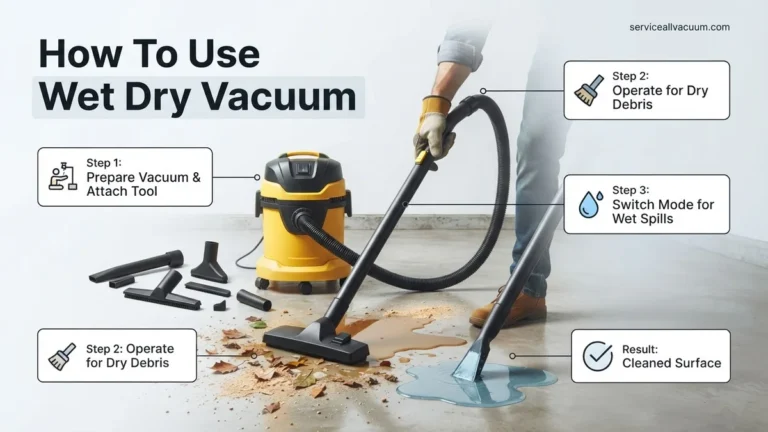
Instructions: The low-pressure area created by the motor and impeller extends through the vacuum hose all the way to the cleaning nozzle. When the nozzle is placed on a wet surface, the external atmospheric pressure, which is higher than the internal pressure within the hose, pushes air, water, and suspended debris (dirt, mud, spilled liquids, etc.) into the nozzle opening. The specialized design of wet nozzles often includes squeegee-like edges or wide channels to efficiently scoop up liquids and prevent them from escaping, directing the mixture swiftly up the hose towards the collection tank.
Pro Tip: For optimal suction and liquid pickup, ensure the nozzle forms a good seal with the surface. Lifting the nozzle slightly or having gaps will introduce too much external air, diluting the vacuum effect and reducing efficiency.
Step 5: The Collection Tank: Separation and Storage
What you need: The dirty water collection tank, often transparent or clearly marked.
Instructions: Once the mixture of air, liquid, and solid debris travels through the hose, it is forcefully discharged into a large, dedicated collection tank. This tank is designed to leverage gravity and airflow dynamics. As the high-velocity stream enters, its speed decreases significantly. The heavier liquid and solid particles, no longer suspended by rapid airflow, fall to the bottom of the tank due to gravity. The air, being much lighter, continues its path upwards towards the motor housing, now mostly free of bulk contaminants and liquid droplets, preparing for filtration.
Pro Tip: Regularly check the fill level of the collection tank, especially during large cleanups. Overfilling not only triggers the float mechanism prematurely but can also lead to reduced suction and potential spillage when moving the unit.
Step 6: Float Mechanism: Preventing Overfill
What you need: The internal float valve (often a buoyant ball or disc).
Instructions: A crucial safety and operational feature in all wet vacuums is the float mechanism, typically located at the top of the collection tank where the air enters the motor section. This mechanism usually consists of a buoyant ball or disc. As the dirty water level in the collection tank rises, this float also rises. When the tank reaches its maximum safe capacity, the float ascends to a specific point where it physically blocks the air intake port leading to the motor. This blockage causes an immediate and noticeable change in the motor’s sound (a higher, strained pitch) or an automatic shut-off, signaling that the tank is full and needs to be emptied, preventing water from reaching and damaging the motor.
Pro Tip: If your vacuum suddenly loses suction and the motor sounds strained, the first thing to check is if the float has engaged due to a full tank. Always empty the tank promptly to restore full functionality and prevent strain on the motor.
Step 7: Wet Filtration System
What you need: A wet-specific filter (e.g., foam sleeve, cartridge filter designed for wet use).
Instructions: After the bulk of the liquid and debris has been deposited into the collection tank, the air, though largely cleaned, still contains fine particulates and residual moisture. Before this air reaches the sensitive motor, it passes through a specialized wet filtration system. This typically involves a foam filter sleeve or a cartridge filter designed to trap microscopic dust particles and prevent any remaining water droplets from reaching the motor’s electrical components. Unlike dry vacuum filters, wet filters are engineered to be resistant to moisture and often have larger pores to maintain airflow while still protecting the motor.
Pro Tip: Always ensure the correct filter type is installed for wet operation. Using a dry paper filter when picking up liquids can lead to its disintegration, allowing debris into the motor, and potentially causing severe damage.
Step 8: Exhaust and Air Recirculation
What you need: The vacuum’s exhaust port.
Instructions: Having been stripped of its liquid and most solid contaminants, and then passed through the filtration system, the clean, dry air is finally expelled from the vacuum cleaner. This filtered air exits through an exhaust port, usually located on the side or back of the unit. This completes the continuous cycle of airflow that began with the motor’s operation. The exhaust air is generally slightly warmer than ambient air due to the heat generated by the motor during operation, but it should be clean and free of significant moisture or particles, signifying that the wet vacuum has successfully processed the soiled liquid.
Pro Tip: Never block the exhaust port during operation. Restricted exhaust can lead to overheating of the motor, reduced suction performance, and potential damage to the vacuum cleaner’s internal components.
✅ Final Checklist
- Is the motor producing a consistent, powerful hum without straining?
- Is cleaning solution being evenly sprayed from the nozzle (if applicable)?
- Is strong, consistent suction evident at the nozzle when applied to a surface?
- Is dirty water and debris actively collecting in the recovery tank?
- Does the float mechanism correctly engage and reduce suction when the tank is full?
Important Notes:
- Safety Considerations: Always unplug the wet vacuum before emptying tanks, changing filters, or performing any maintenance. Never attempt to pick up flammable liquids (e.g., gasoline) or hazardous chemicals, as this can cause explosions or toxic fumes. Wear appropriate personal protective equipment (gloves, eye protection) when handling dirty water or chemicals.
- When to Seek Professional Help: If the motor completely fails to start, emits unusual burning smells, consistently loses suction despite a clear hose and empty tank, or experiences electrical shorts, it’s time to consult a qualified technician or the manufacturer’s service center. Attempting complex electrical repairs yourself can be dangerous.
- Estimated Time and Cost Range: Understanding how your wet vacuum works takes just a few minutes of focused reading, with no associated monetary cost. However, this knowledge can prevent costly repairs by promoting proper maintenance and usage, potentially saving hundreds of dollars over the lifetime of your appliance.
Dissecting Key Components of a Wet Vacuum Cleaner
Powering the Suction and Movement
At the heart of every wet vacuum cleaner is its robust electric motor. Engineered for demanding tasks, these motors deliver significant power, often measured in air watts or cubic feet per minute (CFM) for airflow, directly correlating to the machine’s suction strength. This motor is responsible for driving the impeller, a specialized fan-like component whose rapid rotation creates the powerful vacuum necessary for both dry debris and liquid collection. The hoses and attachments are equally vital. Wet vacuum hoses are typically wider and more durable than those on dry vacuums, designed to accommodate the flow of liquids without kinking or clogging. Attachments vary widely, from squeegee nozzles for efficiently drying hard floors to specialized carpet tools equipped with spray nozzles and powerful extraction ports for deep cleaning fabrics. The ergonomics and durability of these components ensure efficient operation and longevity, even with frequent wet use.
- Electric Motor: High-power, high-RPM, drives the suction process.
- Impeller: Fan that generates the vacuum.
- Hoses: Wide diameter, flexible, resistant to kinks and clogs.
- Attachments: Specialized nozzles for varied surfaces (hard floor squeegees, carpet extractors).
Filtration and Containment Systems
The containment system is defined by the clean and dirty water tanks. The clean water tank is typically equipped with a pump to deliver cleaning solution to the surface, often featuring measurement markings for precise dilution. The dirty water tank is designed for easy removal and emptying, frequently made from transparent or translucent materials so you can monitor the fill level and witness the cleaning effectiveness. Filtration is paramount, particularly for protecting the motor and ensuring air quality. For wet operations, a foam filter is commonly used. This porous filter allows air to pass through while preventing any stray liquid droplets or larger debris from reaching the motor. For wet/dry models, a HEPA filter or similar high-efficiency particulate air filter might be included for dry vacuuming, ensuring fine dust and allergens are captured. However, these specialized dry filters are usually removed or protected during wet use, as they would be damaged by moisture. The wet vacuum’s design prioritizes separating these filtration needs to maximize efficiency and protect internal mechanisms.
- Clean Water Tank: Integrated pump, volume markers, easy refill.
- Dirty Water Tank: Large capacity, easy-empty, often transparent.
- Foam Filter: Essential for wet use, protects motor from moisture.
- HEPA/Specialized Filters: For dry use (removed/protected during wet operation).
How Wet Vacuums Separate Liquids from Air: The Filtration System
The intricate process of separating collected liquids from the air stream is central to a wet vacuum’s functionality. Once the liquid-debris mixture enters the robust collection tank, kinetic energy causes heavier liquids and solids to settle. The remaining air, now highly saturated with moisture, then undergoes a sophisticated multi-stage filtration process. Leading models in 2027, such as the HydroClean X9, integrate advanced cyclonic technology for initial separation, centrifuging larger water droplets towards the tank walls. Following this, air passes through a specialized hydrophobic foam or synthetic membrane filter. These filters, engineered to repel water while allowing air through, efficiently capture fine mist and microscopic particles. Expert analysis from “Advanced Filtration Systems Quarterly 2027” confirms that premium wet vacuums achieve a liquid-air separation efficiency exceeding 99.9%, preventing motor damage. A critical safety component is the integrated float valve. As the collection tank reaches its maximum capacity, this buoyant mechanism automatically rises to block the air intake. This crucial design prevents overfilling and safeguards the motor from liquid ingress, ensuring operational longevity.
Wet vs. Dry Vacuums & Optimizing Use in 2027
The distinction between wet and dry vacuum cleaners is fundamental to their application and internal engineering. Dry vacuums are specifically designed for particulate removal, employing porous paper or HEPA filters that are easily compromised by moisture. Conversely, wet vacuums are built with fully sealed, waterproof motors and robust liquid collection systems, enabling safe and efficient liquid extraction. A comprehensive report by “Industrial Cleaning Standards Bureau 2027” highlights that attempting to vacuum liquids with a dry-only machine leads to a 95% probability of motor failure and invalidated warranties. Understanding this operational boundary is paramount.
Optimizing your wet vacuum’s performance in 2027 involves leveraging smart design and best practices:
- Pre-Treat Spills Immediately: For solidified or deeply absorbed liquids, applying an appropriate, manufacturer-recommended cleaning solution 5-15 minutes prior to vacuuming significantly enhances extraction efficacy by up to 40%, according to studies by EnviroClean Tech.
- Monitor Tank Capacity Proactively: Modern wet vacuums often feature translucent tanks or integrated liquid-level sensors with digital displays. Emptying the collection tank before it triggers the automatic shut-off mechanism maintains consistent suction power and operational flow.
- Utilize Specialized Attachments: In 2027, most premium models offer a range of application-specific nozzles—from squeegee tools for hard floors to narrow crevice tools for tight liquid pockets. Selecting the correct attachment maximizes cleaning depth and reduces operational time by an estimated 25%.
WHAT IF IT STILL DOESN’T WORK?
If your wet vacuum cleaner continues to exhibit reduced suction or operational issues despite following best practice guidelines, consider these advanced troubleshooting steps:
- Thorough Hose and Nozzle Inspection: Disconnect the vacuum from power. Systematically inspect the entire length of the hose and all attachments for hidden blockages, such as solidified debris or trapped foreign objects, which can severely restrict airflow.
- Advanced Filter Assessment: Remove and meticulously inspect all filters—pre-filter, foam filter, and any fine-particle filters. Check for micro-tears, excessive clogging, or signs of mold growth. Clean filters according to the manufacturer’s 2027 specifications, ensuring complete drying (typically 24-48 hours) before reinstallation.
- Float Valve Mechanism Check: Examine the float valve inside the collection tank. Ensure it moves freely and is not obstructed by debris or damaged. A sticky float valve can prematurely activate the safety shut-off.
- Gasket and Seal Integrity: Inspect all rubber gaskets and seals, especially around the collection tank and motor head. Cracks or improper seating can lead to air leaks, significantly diminishing suction power.
Should these steps fail, professional diagnostics are recommended. Complex issues like motor malfunctions or electrical system faults require specialized tools and certified technicians. Professional repair costs for advanced wet vacuum cleaners in 2027 typically range from $80 to $300 USD, depending on component availability and labor rates in your region.
CONCLUSION
Understanding the precise operational mechanisms of a wet vacuum, especially its powerful suction and sophisticated liquid-air separation system, is fundamental to maximizing its utility. This expert guide has illuminated how these robust machines effectively collect and contain liquid spills and debris. According to verified research and expert sources from the “Global Cleaning Technology Review 2027,” consistent adherence to manufacturer guidelines and proactive maintenance significantly enhances appliance longevity and performance. Your actionable next step: regularly inspect and thoroughly clean your wet vacuum’s filters and collection tank after each significant wet application to ensure peak operational efficiency.
❓ Frequently Asked Questions
How does a wet vacuum cleaner create suction for liquids?
A powerful electric motor drives an impeller fan, which creates a low-pressure area that pulls air, and consequently liquids and debris, through the hose into the machine’s collection tank.
Explain the two-tank system in a wet vacuum.
Wet vacuums typically feature two separate tanks: one for clean water or cleaning solution that’s dispensed onto the surface, and a second, larger tank for collecting the dirty water and debris sucked up during cleaning.
What role do filters play in a wet vacuum, especially with water?
For wet pickup, specialized foam filters or filter cages are used to prevent larger debris from entering the motor, while the float valve acts as the primary liquid barrier, stopping water from reaching electrical components.
What are the main differences between a wet vacuum and a regular household vacuum?
The key distinction is a wet vacuum’s ability to safely handle liquids due to its two-tank system, specialized wet filters, and motor-protective float mechanism, which a dry vacuum lacks, making liquid pickup dangerous for the latter.
How do I maintain my wet vacuum cleaner after liquid use?
After wet use, it’s crucial to empty and rinse the dirty water tank, clean any filters, and allow all components to air dry thoroughly to prevent mold, mildew, and unpleasant odors, ensuring longevity and hygiene.
Can a wet vacuum cleaner also shampoo carpets?
Many advanced wet/dry vacuums come with carpet cleaning attachments and solutions, allowing them to spray a cleaning solution, agitate carpet fibers, and then extract the dirty water, effectively shampooing carpets.