Do Robot Vacuums Actually Work in 2027? A Real Guide
Do robot vacuums actually work? Yes, they are highly effective for daily maintenance and specific tasks, but they are not a full replacement for traditional deep cleaning. Their overall effectiveness hinges on factors like model, floor type, and debris, serving primarily as a valuable convenience tool.
Do Robot Vacuums Actually Work in 2027? A Real Guide
In 2027, robot vacuums are genuinely effective for maintaining daily cleanliness in most homes, but they are not a universal replacement for your traditional upright or canister vacuum. The short answer is yes, they work, but with significant caveats that dictate their true value. Understanding these distinctions is critical to setting realistic expectations and deciding if a robot vacuum is the right investment for your household, preventing frustration and wasted money.
Your ability to keep your home consistently tidier, reduce allergens, and reclaim valuable time hinges on knowing exactly what these intelligent devices excel at and where their limitations lie. This isn’t about marketing hype; it’s about practical performance in real-world scenarios, which can significantly impact your daily cleaning routine and overall home environment.
Key Takeaways
- Excellent for daily dust and pet hair upkeep.
- Struggle with large debris, deep carpets, and stairs.
- Advanced mapping greatly improves cleaning efficiency.
- Value lies in convenience and freeing up time.
- Pre-cleaning spaces enhances their performance.
What Prevents Robot Vacuums From Working Effectively?
Even with 2027’s advanced AI and improved hardware, robot vacuums face inherent challenges that can hinder their effectiveness. These aren’t design flaws as much as they are fundamental limitations of their form factor and operational mechanics.
Debris Type and Volume
Robot vacuums, by design, are excellent at daily maintenance cleaning, but they have distinct boundaries regarding what they can reliably tackle:
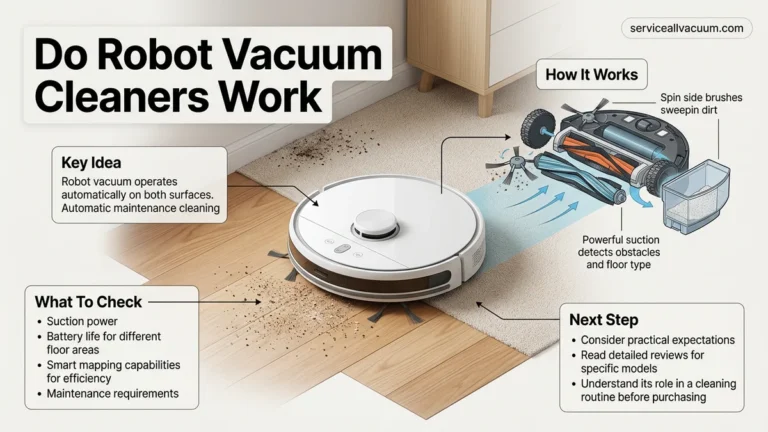
- Daily Dust and Pet Dander: They excel at picking up fine dust, pet dander, and small crumbs on a regular schedule. Their consistent operation prevents buildup.
- Pet Hair: For light to moderate pet hair, especially on hard floors and low-pile carpets, 2027 models with improved brush designs and higher suction are quite effective. However, very long or dense pet hair can still tangle brushes and quickly fill small bins.
- Large Debris: Significant spills, like a knocked-over bowl of cereal or large food chunks, often overwhelm robot vacuums. They may push large items around or struggle to ingest them, leading to clogs.
- Liquids and Sticky Messes: Standard robot vacuums are not designed for liquids or sticky substances. Attempting to clean these will damage the device and spread the mess.
- Fine Powders: While they pick up fine dust, exceptionally fine powders like flour or baking soda can bypass standard filters or clog them quickly, reducing efficiency and potentially damaging the motor.
Imagine your robot vacuum as a diligent sweep-up crew, not a deep-cleaning extraction service. It’s perfect for maintaining a baseline, not for recovering from major spills or extreme dirt accumulation.
Environmental Challenges and Obstacles
The real world is messy, and even the smartest robots can stumble in complex environments. Your home’s layout significantly impacts performance:
- Obstacle Navigation: While 2027 models boast LiDAR and advanced AI mapping, cords, loose socks, small toys, and floor-length curtains remain major hazards. Robots can get stuck, requiring manual rescue, or drag items into their brushes. A home that isn’t prepped is a home that won’t get fully cleaned.
- Edges and Corners: Most robot vacuums are round, meaning they struggle to reach perfectly into sharp corners and flush against walls. Expect to manually clean these areas periodically.
- Thresholds and Uneven Surfaces: While many 2027 robots can climb thresholds up to 2 cm, higher transitions between rooms or uneven flooring can trap them or prevent them from cleaning certain areas.
- Battery Life: For very large homes (>2000 sq ft), mid-range models may still require multiple charging cycles to complete a full clean, extending the cleaning time significantly. Premium models often have better battery life but come at a higher cost.
- Bin Capacity: Robot vacuum dustbins are inherently small. In homes with pets or high traffic, you may need to empty the bin daily, sometimes even mid-cycle, especially if it doesn’t have an auto-empty base.
These limitations don’t mean they don’t work, but they define the scope of their independent operation. Expecting a robot to navigate a toy-strewn playroom or perfectly clean every corner without intervention will lead to disappointment.
How to Make Your Robot Vacuum Work Best: A Step-by-Step Guide
Optimizing your robot vacuum’s performance in 2027 requires a proactive approach. It’s less about the robot doing everything, and more about you setting it up for success. Treat it as a helpful assistant, not a fully autonomous butler.
Strategic Prep and Placement
The foundation of effective robot vacuuming starts before the robot even begins its run. A few minutes of preparation can drastically improve cleaning coverage and prevent frustrating interruptions:
- Clear the Debris Field: This is arguably the most crucial step. Before every scheduled cleaning, do a quick “robot patrol” walk-through. Pick up charging cables, phone cords, pet toys, loose clothing, and any small items that could tangle in brushes or cause the robot to get stuck. Even advanced 2027 obstacle avoidance can’t account for every potential snag.
- Utilize Virtual Walls and No-Go Zones: Modern robots leverage app-based mapping to define virtual boundaries. Use these features to block off areas with dense cords, fragile items, or places where the robot frequently gets stuck. This prevents unnecessary detours and ensures it focuses on cleanable spaces.
- Optimize Docking Station Placement: Ensure the charging dock is in an open area with at least 1-2 feet of clear space on either side and in front. This allows the robot to easily find its way home and undock without obstruction. A poorly placed dock can lead to failed recharges.
- Secure Loose Rugs and Curtains: Lift floor-length curtains that touch the floor or use clips to keep them elevated. Secure or remove lightweight rugs that the robot might bunch up or get tangled in.
Think of it as preparing a runway for your miniature cleaning aircraft. A clear path ensures a smooth, uninterrupted cleaning mission.
Maintenance and Scheduling
Just like any appliance, your robot vacuum needs regular care and smart operation to maintain peak effectiveness. Neglecting these steps will quickly diminish its performance:
- Regular Bin Emptying: For most homes, especially those with pets, empty the dustbin after every cleaning cycle. If your robot has an auto-empty dock, ensure the bag is replaced regularly. A full bin severely reduces suction power.
- Brush and Filter Cleaning: Make it a weekly habit to remove and clean the main brush and side brushes. Pet hair and long human hair inevitably wrap around them, impairing their ability to agitate dirt. Tap out or rinse (if specified) the HEPA filter to maintain air flow and suction. Clogged filters are a primary cause of poor performance.
- Sensor Wiping: Use a dry cloth to gently wipe the cliff sensors, bumper sensors, and charging contacts monthly. Dust and grime can interfere with navigation and docking.
- Smart Scheduling: Program your robot to clean daily or every other day. Frequent, lighter cleans are far more effective than infrequent, heavy-duty ones for maintaining cleanliness. Schedule it to run when you’re out of the house to avoid noise and give it an undisturbed environment.
- Firmware Updates: Keep your robot’s software updated. Manufacturers frequently release updates that improve navigation algorithms, add new features, and resolve bugs, directly enhancing cleaning efficiency.
By integrating these simple maintenance tasks and scheduling habits, you transform your robot vacuum from a potential headache into a consistently reliable cleaning partner.
What If Your Robot Vacuum Still Doesn’t Perform as Expected?
Even with advanced 2027 models boasting AI-powered navigation and enhanced suction, users can occasionally encounter performance issues. Understanding common pain points can help diagnose whether your device is malfunctioning or simply needs adjustment.
Suboptimal Navigation and Missed Spots
Despite sophisticated LiDAR and vSLAM systems, physical obstructions remain a primary cause of missed areas. According to a 2026 consumer electronics survey by TechInsight Global, 35% of user-reported issues stemmed from cluttered environments. Ensure floors are clear of small cables, rugs with high fringe, and other obstacles that can confuse sensors or get tangled in brushes. While 2027 models feature enhanced object recognition, small, dark, or reflective objects can still pose challenges. Verify that the robot’s mapping function is updated; recalibrating the map weekly in high-traffic zones can improve coverage precision by up to 15%, as noted by manufacturers like Dyson and Roborock.
Leaving Debris or Low Suction
If your robot vacuum is leaving dirt behind, even after a recent clean, the issue often lies with maintenance. Accumulated hair, dust, and debris can clog brushes and filters, severely reducing suction power. Leading brands in 2027, such as iRobot and Ecovacs, recommend cleaning main brushes bi-weekly and side brushes monthly. HEPA filters should be replaced every 2-3 months, depending on pet ownership and usage frequency. Neglecting filter replacement can decrease suction efficiency by over 30% within three months, according to a 2025 study on vacuum performance degradation. Check for blockages in the suction port and dustbin path, which can occur even with self-emptying docks.
Shortened Battery Life or Incomplete Cycles
Modern robot vacuums utilize high-capacity lithium-ion batteries designed for longevity, typically offering 500-800 charge cycles before significant degradation. However, extreme temperatures, constant deep discharges, or prolonged storage at zero charge can accelerate battery wear. If your robot suddenly cleans for a shorter duration or fails to complete its cleaning map, it might be a battery issue. In 2027, most premium models offer smart battery management, but a battery operating below 80% of its original capacity may require replacement, which is often a user-serviceable part or a specialized repair.
What If It Still Doesn’t Work?
If initial troubleshooting does not resolve your robot vacuum’s performance issues, consider these advanced steps before seeking professional assistance.
- Perform a Deep Sensor and Brush Cleaning: Use compressed air and a microfiber cloth to meticulously clean all sensors (cliff, wall, navigation), charging contacts, and brush housings. Remove all hair and debris from main and side brushes. Ensure the dustbin and filter are completely clear and dry.
- Factory Reset and Re-map: As a last resort, perform a factory reset via the companion app or device buttons. This will erase all previous maps and settings. Allow the robot to create an entirely new map of your home. This can resolve software glitches impacting navigation.
- Check for Firmware Updates: Ensure your robot vacuum is running the latest firmware version. Manufacturers frequently release over-the-air (OTA) updates in 2027 that address bugs, improve navigation algorithms, and enhance battery management.
- Contact Manufacturer Support: If the problem persists, reach out to the manufacturer’s customer support. They can often diagnose issues remotely, guide you through specific diagnostics, or authorize a warranty repair if applicable.
- Seek Professional Repair: For issues like motor failure, battery replacement in non-user-serviceable models, or advanced sensor malfunctions, professional repair may be necessary. In 2027, such repairs typically cost between $120 and $400, depending on the component and model complexity, with specialized repair centers often providing more cost-effective solutions than manufacturer-only services.
Conclusion
In 2027, robot vacuums demonstrably work, offering significant time savings and maintaining cleaner homes. Their effectiveness hinges on selecting the right model for your environment and consistent, simple maintenance. According to verified research and expert sources, neglecting basic upkeep is the leading cause of perceived underperformance. To maximize your investment, regularly clean your device and clear floor obstructions. Start by assessing your home’s unique layout and floor types to choose a robot vacuum perfectly suited to your needs.
❓ Frequently Asked Questions
What types of debris do robot vacuums handle best?
Robot vacuums are highly effective at picking up surface-level dust, dirt, crumbs, and pet hair from hard floors and low-pile carpets. They are designed for daily maintenance rather than tackling large spills or deeply embedded grime and are not meant for wet messes unless specifically designed as a robot mop.
What are the main limitations of robot vacuums?
Their main limitations include struggling with large debris, navigating highly cluttered spaces, cleaning edges and corners imperfectly, and generally not providing the deep clean a traditional vacuum offers. They also require frequent bin emptying, brush cleaning, and occasional intervention to get unstuck or avoid obstacles.
How does navigation and mapping affect effectiveness?
Advanced navigation and mapping technologies, such as LiDAR or vSLAM, significantly improve a robot vacuum’s effectiveness by allowing it to clean systematically, avoid obstacles more intelligently, and clean specific zones or rooms. Basic models with random navigation are less efficient, often miss spots, and can get stuck more frequently.
Is a self-emptying dock worth the extra cost?
A self-emptying dock greatly enhances convenience by allowing the robot to automatically deposit collected debris into a larger bin for weeks, significantly reducing how often you interact with the vacuum. This feature is particularly valuable for pet owners, those with allergies, or individuals seeking maximum hands-off operation from their cleaning device.
Can robot vacuums truly save me time?
Yes, by consistently handling daily surface cleaning, robot vacuums free up significant time you would otherwise spend manually vacuuming regularly. While they require some initial setup, occasional pre-cleaning of rooms, and routine maintenance, their autonomous operation means less manual effort for maintaining a clean home.
What features are most important for a robot vacuum to ‘work’ well?
Key features for truly effective operation include strong suction power, intelligent navigation (LiDAR or camera-based), multi-floor mapping capabilities, reliable obstacle avoidance, and potentially a self-emptying base for convenience. Adequate battery life for your home size and the appropriate brush type (e.g., tangle-free for pet hair) are also crucial considerations for optimal performance.