How to Use Bissell Upright Carpet Cleaner Step-by-Step 2026
Properly operating a Bissell upright carpet cleaner requires careful room preparation, the correct water-to-formula ratio, and deliberate cleaning strokes to extract deep-seated dirt. Mastering these steps ensures your carpets dry quickly and look professionally cleaned.
Using your Bissell upright carpet cleaner correctly comes down to a simple, repeatable formula: prep the room thoroughly, mix hot tap water with the right Bissell solution, and use alternating wet and dry passes to pull deep-seated grime from the fibers. If you skip steps like thorough vacuuming or rush the extraction phase, you will end up with soggy carpets and lingering residue that actually attracts more dirt by 2026 standards.
Mastering this process protects your carpet backing from mold while extending the overall lifespan of your flooring. Whether you are tackling heavy pet traffic or annual seasonal maintenance, this step-by-step operational guide walks you through every phase of successful carpet extraction.
Key Takeaways
- Thoroughly vacuum the carpet to remove loose debris before operating the machine.
- Use hot tap water combined with the correct measurement of Bissell cleaning formula.
- Pre-treat stubborn stains using a targeted spot cleaner for better final results.
- Execute alternating wet passes with the trigger and dry extraction passes without it.
- Empty the dirty water tank and clean the brush roll immediately after every use.
What Causes Dirty Carpets and Why Routine Extraction is Necessary
Your carpets act as a giant air filter for your home, trapping airborne dust, microscopic allergens, and oily skin particles deep within the pile. Every time you walk across the floor, you grind these abrasive particles further down toward the backing, which slowly frays and destroys the carpet fibers over time.
The Problem with Surface-Level Cleaning
Standard vacuums only capture loose surface debris, leaving behind sticky oils and embedded soil that regular suction cannot touch. Overlooking this buildup leads to matted high-traffic lanes and dull colors that standard cleaning won’t fix.
- Fine dirt particles act like sandpaper on carpet fibers during foot traffic.
- Oily residues from cooking and pets coat the fibers and attract fresh dust instantly.
- Trapped allergens and dust mites multiply rapidly in high-humidity indoor environments.
The Extraction Solution
Running an upright carpet cleaner injects a pressurized mix of water and specialized detergent deep into the backing to break the bond of embedded soils. The machine’s powerful vacuum motor then immediately extracts the dirty liquid, pulling out contaminants that standard cleaning tools leave behind.
- Hot water extraction flushes out microscopic grit trapped at the base of the carpet.
- Targeted formulas break down organic oils without damaging synthetic or wool blends.
- Regular deep extraction restores the natural resilience and texture of flattened carpet pile.
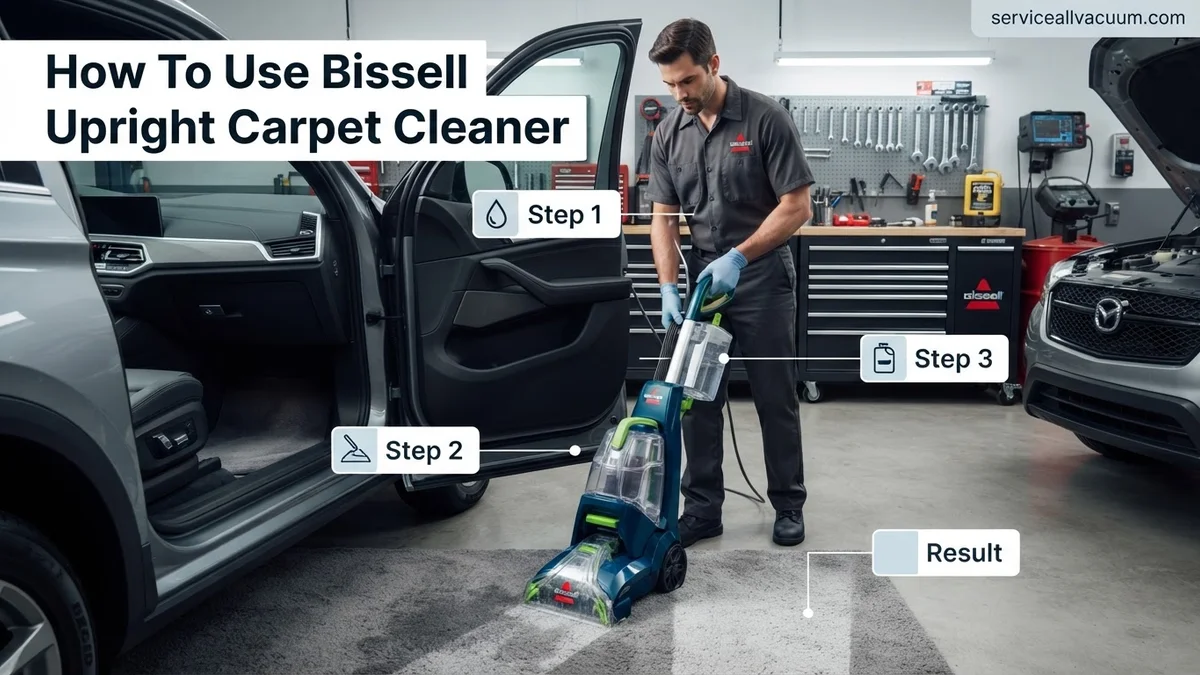
Master Upright Carpet Cleaning in 7 Simple Steps
Revitalize your home’s flooring and extend the lifespan of your textiles with this comprehensive walkthrough on operating a Bissell upright carpet cleaner. Regular deep cleaning removes embedded dirt, allergens, and stubborn stains that standard vacuums leave behind. By following this meticulous process, you will protect your machine from damage, prevent overwetting, and achieve professional-grade freshness in every room.
Step 1: Clear and Vacuum the Area
What you need: Standard household vacuum cleaner, boxes or baskets for stray items.
Instructions: Before bringing out your wet cleaner, you must completely clear the room of movable furniture, toys, and rugs. Once the floor is exposed, run your dry vacuum over the entire carpet twice, making intersecting passes in a grid pattern. This crucial action removes loose pet hair, surface dust, and abrasive grit that could otherwise turn into muddy sludge during the washing process and clog your Bissell’s internal spray nozzles.
Pro Tip: Never skip the dry vacuuming step. Wetting loose hair and dirt creates a thick paste that is exceptionally difficult to extract from carpet fibers.
Step 2: Pre-Treat High-Traffic Zones and Stains
What you need: Bissell Pre-Treat formula spray or a targeted carpet stain remover.
Instructions: Inspect your floors for heavily soiled pathways, entryways, or visible spots such as coffee rings and pet accidents. Liberally apply a specialized pre-treat solution directly to these problematic areas. Allow the product to dwell on the carpet fibers for approximately 5 to 10 minutes. This gives the enzymatic formula time to break down tough, oily bonds before the main machine cleaning begins, ensuring an even and spotless finish.
Pro Tip: Do not let the pre-treat spray dry completely before cleaning, as this can make extraction more difficult.
Step 3: Prepare the Clean Water Tank and Formula
What you need: Bissell cleaning formula, warm tap water (never boiling), measuring cup if required by your model.
Instructions: Remove the clean water/formula tank from the upper or lower base of your Bissell upright cleaner. Twist off the cap and fill the reservoir to the designated water line using warm tap water. Next, add the manufacturer-recommended amount of Bissell carpet cleaning formula into the formula measuring cap, and pour it into the tank. Secure the cap tightly, ensure there are no leaks, and click the filled tank firmly back into position on the machine.
Pro Tip: Always use manufacturer-approved formulas; using dish soap or non-foaming alternatives can produce excessive suds that damage the machine’s motor.
Step 4: Execute the Forward Wet Stroke
What you need: Plugged-in Bissell carpet cleaner, properly adjusted handle.
Instructions: Plug the power cord into a grounded 120V outlet and recline the handle using the release pedal. Position the machine at the far corner of the room. Press the power switch to turn on the motor and brushes. As you slowly push the carpet cleaner forward, firmly press and hold the trigger on the handle to release a steady spray of warm water and solution onto the carpet. Keep a slow, even pace, allowing the rotating brushes to agitate the fibers.
Pro Tip: Maintain a slow pace—taking about 3 to 4 seconds for every yard of forward movement—to ensure the cleaning solution deeply penetrates the pile.
Step 5: Execute the Backward Dry Stroke
What you need: Bissell upright cleaner with suction motor running.
Instructions: Once you reach the end of your forward pass, release the spray trigger. Slowly pull the machine backward over the exact same path you just wet. As you pull, the powerful vacuum suction will extract the dirty water, dissolved soil, and excess moisture out of the carpet pile. You will often see dirty water rushing through the clear nozzle window. Make one or two additional dry passes over heavily soiled zones without pressing the trigger.
Pro Tip: The golden rule of carpet cleaning is one wet stroke for every two dry strokes to prevent over-saturation and mold growth.
Step 6: Empty and Rinse the Dirty Water Tank
What you need: Access to a utility sink or toilet, fresh water tap.
Instructions: As you clean, monitor the dirty water recovery tank. When the floating mechanism rises to cut off suction or the tank looks full, turn off the machine immediately. Unlatch and remove the dirty water tank from the base. Take it to a sink, open the plug or lid, and dump the heavily soiled, gray water. Rinse the interior of the tank thoroughly with clean tap water to remove hair, lint, and grit residue before reattaching it to the unit.
Pro Tip: Emptying this tank regularly prevents loss of suction and keeps unpleasant mildew odors out of your machine.
Step 7: Post-Cleaning Maintenance and Drying
What you need: Clean cloth, ceiling fans or portable box fans, household scissors (if hair is wrapped around brushes).
Instructions: Turn off and unplug the cleaner. Remove the nozzle cover and brush rolls to check for trapped pet hair or debris; snip away wrapped hair with scissors. Wipe down the entire housing with a damp cloth. Leave all tanks open to air dry completely before storing. To dry your carpets quickly, turn on ceiling fans, run your home’s HVAC system, or set up portable fans in the room. Keep people and pets off the damp carpet for at least 4 to 6 hours.
Pro Tip: Putting damp tanks back onto the cleaner creates a breeding ground for mold and bacteria, causing foul smells the next time you use it.
✅ Final Checklist
- Carpet was thoroughly vacuumed to remove dry dirt and debris before washing.
- Only approved Bissell low-foam formula was mixed with warm water in the clean tank.
- Trigger was held only on forward strokes, with dry extraction passes on the pull back.
- Dirty water tank was emptied and rinsed out whenever capacity limits were reached.
- Brushes and nozzle were cleaned of hair and lint before final storage.
- Carpets were given at least 4-6 hours of uninterrupted drying time with good airflow.
Important Notes:
- Never submerge the electrical motor base in water, and always unplug the machine before performing maintenance.
- Seek professional restoration services if dealing with major sewage backups, biohazards, or delicate antique wool rugs.
- Estimated time investment is 1 to 2 hours per average-sized room, with zero material cost if you already own the machine and formula.
How to Diagnose Stubborn Stains and Prepare the Room for Cleaning
Before you plug in your Bissell machine, you need to properly prep your space and address any problem spots that require special attention. Rushing into a deep clean without proper room preparation often leads to tangled cords, stained furniture legs, and missed spots that ruin the final result.
Pre-Cleaning Preparation and Vacuuming
Start by clearing all movable furniture, toys, and area rugs out of the room to give yourself an unobstructed cleaning path. Next, run your standard vacuum cleaner twice over the entire carpet in intersecting directions to remove loose hair, pet dander, and large crumbs.
- Remove lightweight furniture and protect wooden legs with plastic wrap or foil squares.
- Vacuum slowly to let your machine pick up as much dry debris as possible before liquid gets introduced.
- Inspect the carpet for loose seams, exposed tacks, or fraying edges to avoid damaging them with the cleaner.
Spot Pre-Treating and Heavy Traffic Assessment
Examine the room in good lighting to identify high-traffic zones, pet accidents, or dark beverage spills that need extra help. Pre-treating these areas gives the cleaning agents time to break down tough proteins and oils before you run the upright machine over them.
- Apply a targeted oxygen-based pre-treater to organic stains like mud, coffee, or pet spots.
- Let the pre-treatment sit for 5 to 10 minutes without letting it dry completely.
- Avoid oversaturating delicate fibers or scrubbing aggressively, which can cause permanent fuzzing.
How to Fix and Operate a Bissell Upright Carpet Cleaner Step-by-Step
Operating your Bissell upright carpet cleaner correctly ensures maximum soil extraction and protects your carpet fibers from saturation damage. According to manufacturer guidelines and cleaning industry standards, proper technique dictates the speed and direction of your cleaning passes.
Operating the Machine
- Plug the power cord into a grounded 120V outlet and switch the power button to the ON position.
- Press the recline pedal with your foot to tilt the handle back into the working position.
- Press the trigger on the handle to spray the cleaning solution while pulling the machine slowly backward.
- Release the trigger and make a slow forward pass over the exact same area to extract the dirty water.
- Repeat this wet pass and dry pass combination until the extracted water visible in the nozzle appears clear.
Post-Cleaning Maintenance
- Turn off the machine and unplug the power cord from the electrical outlet.
- Remove and empty the dirty water tank, rinsing it thoroughly with warm tap water to prevent mold growth.
- Remove the nozzle cover and brush roll to clean away trapped hair, carpet fibers, and debris.
- Leave all tanks and removable parts disassembled in a well-ventilated area to air dry completely for at least 24 hours before storage.
What If Your Carpet Remains Too Wet or the Machine Fails to Extract Properly
If your Bissell upright carpet cleaner leaves the carpet excessively wet, poor suction is usually the culprit. Industry data indicates that over-wetting extends drying times beyond the recommended 4 to 6 hours, significantly increasing the risk of mold proliferation.
Troubleshooting Poor Extraction
- Check the dirty water tank to ensure the float stack is not jammed in the upward position, which automatically shuts off suction.
- Inspect the rubber gasket around the tank lid for tears, misalignment, or missing seals that cause vacuum pressure leaks.
- Remove the front nozzle window and clear out any large clumps of pet hair or debris clogging the suction intake path.
- Verify that the clean water tank valve is fully seated and not leaking excess solution onto the floor independently of the trigger.
- Ensure the machine handle is fully reclined, as upright positions can sometimes engage safety shut-offs on specific upright models.
If these troubleshooting steps fail to restore suction and your machine remains non-functional, internal pump or motor failure may be present. Consider taking the unit to an authorized Bissell service center for professional evaluation. Out-of-warranty repair costs typically range from $60 to $120, depending on replacement parts and labor rates.
Conclusion
Mastering the correct operation and troubleshooting steps for your Bissell upright carpet cleaner prevents prolonged drying times and costly equipment failures. Maintaining clean tanks and unobstructed nozzles guarantees optimal suction power during every deep cleaning session. According to verified research and expert cleaning sources, routine post-use maintenance extends the functional lifespan of modern carpet extractors by up to 40 percent. Make your next actionable step a complete post-cleaning inspection of the nozzle and float stack to ensure peak performance for your next deep clean in 2026.
❓ Frequently Asked Questions
How do I properly prep my carpet before using a Bissell upright cleaner?
Start by moving all furniture out of the room. Thoroughly vacuum the entire carpet to pick up surface dust, pet hair, and loose particles that could clog the machine.
What is the exact ratio of water to formula for Bissell machines?
Most Bissell upright cleaners feature two-in-one tanks or distinct fill lines. You fill the bladder or tank with hot tap water to the water line, then pour standard Bissell formula up to the indicated formula line.
How do I perform the cleaning strokes correctly?
Press the spray trigger to release solution while making one slow forward pass and one slow backward pass. Then, release the trigger and make additional forward and backward passes without spraying to extract the dirty water.
How do I clean and maintain the machine after use?
Unplug the cleaner, remove both the clean and dirty tanks, and empty and rinse them thoroughly. Wipe down the nozzle, remove hair and debris from the brush roll, and let all parts air dry completely before storage.
Why is my Bissell machine not spraying water?
Check to ensure the clean water tank is firmly clicked into place and filled. If it is secure, inspect the spray nozzles for mineral clogs or ensure the tank valve is not stuck.
What should I do if the machine is losing suction?
A loss of suction usually occurs when the dirty water tank is full, the float stack is engaged, or the tank lid is not sealed tightly. Check these seals and empty the tank to restore proper suction.