How Do Vacuum Chambers Work? Real Expert Guide 2027
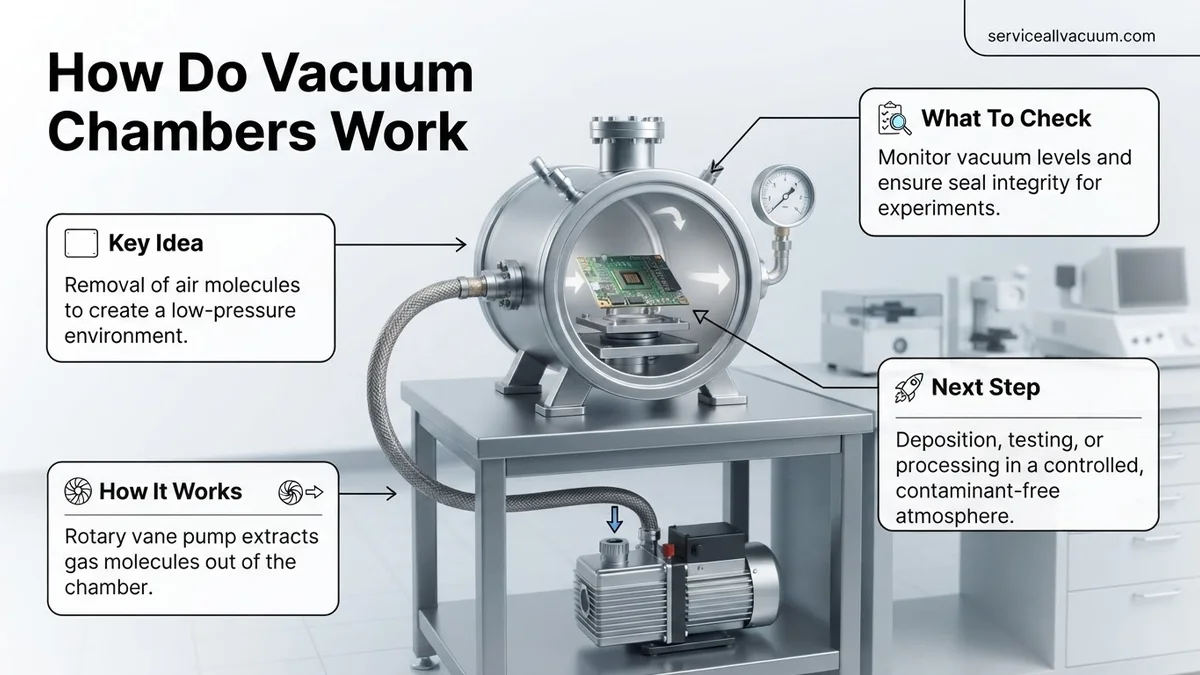
Vacuum chambers operate by systematically removing gas molecules from a sealed volume using specialized pumps. This process creates and maintains a low-pressure environment, essential for diverse scientific and industrial applications. Key components like the chamber, pumps, seals, and gauges work in unison to achieve specific vacuum levels.
A vacuum chamber works by systematically removing gas molecules from a sealed volume, creating a substantial pressure differential between the inside and the outside. This differential, alongside precisely engineered seals and powerful pumping systems, is the fundamental principle that allows these chambers to achieve and maintain ultra-low pressure environments. By understanding this core mechanism, you can appreciate why these controlled spaces are indispensable for everything from cutting-edge quantum computing research to advanced materials manufacturing in 2027.
Creating and sustaining a vacuum is far more than simply “sucking air out.” It’s a precise, multi-stage process critical for applications where even a trace amount of atmospheric gas would cause contamination, oxidation, or interference. Whether you’re fabricating microchips or simulating space conditions, the ability to control and evacuate gas molecules is your key to unlocking previously impossible scientific and industrial capabilities.
Key Takeaways
- Vacuum chambers achieve low pressure by removing gas.
- Vacuum pumps are critical for gas molecule evacuation.
- Effective seals prevent atmospheric leakage into chambers.
- Different pumps are used for various vacuum levels.
- Vacuum gauges monitor and measure chamber pressure.
What Causes the Need for Vacuum? The Challenge of Atmospheric Pressure
Before you can create a vacuum, you must first understand the pervasive force you are working against: atmospheric pressure. This invisible blanket of air constantly presses down on every surface with significant force. At sea level, this pressure is about 101.3 kilopascals (kPa), or 14.7 pounds per square inch (psi) – equivalent to roughly a 10-meter column of water. This pressure isn’t just a static weight; it represents an incredible density of gas molecules.
The Invisible Barrier: Molecular Interference
Normal air isn’t empty space; it’s a bustling environment where gas molecules (primarily nitrogen, oxygen, argon, and CO2) are constantly colliding at extremely high speeds. Imagine billions of these molecules striking every square centimeter of a surface every second. For many advanced processes, this molecular bombardment is disastrous:
- Oxidation and Contamination: Oxygen and water vapor readily react with sensitive materials, causing corrosion or forming undesirable layers. In semiconductor fabrication, even a single rogue molecule can ruin a micro-feature.
- Heat Transfer Interference: Gas molecules facilitate heat transfer through conduction and convection. In a vacuum, these mechanisms are virtually eliminated, allowing for precise temperature control or effective thermal isolation, crucial for deep space optics in 2027.
- Plasma and Beam Stability: Many processes rely on precise electron or ion beams, or stable plasma. Collisions with residual gas molecules would scatter these beams, reducing efficiency and consistency.
To overcome this constant molecular interference, you need an environment where the number of gas molecules is drastically reduced, creating the “empty” space we call a vacuum.
From Start to Finish: The Vacuum Chamber Explained
Welcome to this comprehensive guide on how vacuum chambers operate! Understanding these essential devices is crucial for anyone involved in scientific research, industrial manufacturing, or advanced technological development. This guide will walk you through the fundamental principles, key components, and operational sequences that allow vacuum chambers to create and maintain environments far emptier than outer space. By following these detailed steps, you’ll gain a solid grasp of the mechanics behind achieving and controlling low-pressure environments, empowering you to better design, operate, or troubleshoot these sophisticated systems.
Step 1: The Enclosure: Designing for Low Pressure
What you need: An understanding of material properties (strength, outgassing rate), basic mechanical design principles, and knowledge of vacuum-compatible fabrication techniques.
Instructions: The core of any vacuum system is the chamber itself, a robust container designed to withstand significant external atmospheric pressure without collapsing, while holding an internal vacuum. Most commonly, chambers are constructed from stainless steel (e.g., 304L or 316L), aluminum, or sometimes specialty glass for visual access. The material choice depends on the vacuum level required; for Ultra-High Vacuum (UHV), materials with low outgassing rates are paramount. The chamber must be meticulously machined and welded to ensure no porosity or microscopic leaks exist. It also features various ports and flanges to connect pumps, gauges, feedthroughs for power/signal, and process tools.
Pro Tip: For UHV applications, always specify electropolished internal surfaces. This reduces the surface area for gas adsorption and eliminates microscopic crevices that can trap contaminants, significantly improving pump-down times and ultimate vacuum levels.
Step 2: The Roughing Pump: Initiating the Vacuum
What you need: A primary (roughing) vacuum pump (e.g., rotary vane, diaphragm, dry scroll pump), a roughing line (vacuum-rated hose or tubing), and a foreline vacuum gauge (e.g., Pirani or thermocouple gauge).
Instructions: The journey to vacuum begins with a roughing pump. Its job is to remove the bulk of the air from the chamber, taking it from atmospheric pressure (approximately 760 Torr or 1013 mbar) down to the millitorr (10-3 Torr) or even microtorr (10-6 Torr) range. This is achieved by physically displacing air molecules. For instance, a rotary vane pump uses rotating vanes to trap and compress gas, then expelling it to the atmosphere. The roughing pump is connected directly to the chamber via a dedicated roughing line, often with a valve to isolate it once its job is done. The initial pump-down typically takes minutes to tens of minutes, depending on chamber volume and pump speed.
Pro Tip: For oil-sealed rotary vane pumps, always use a gas ballast if pumping humid or solvent-laden air. This introduces a small amount of dry air into the compression stage, preventing condensable vapors from contaminating the pump oil and degrading its performance.
Step 3: The High Vacuum Pump: Achieving Deeper Vacuums
What you need: A high vacuum pump (e.g., turbomolecular pump, diffusion pump, cryopump), a foreline pump (the roughing pump typically serves this), high vacuum gauges (e.g., cold cathode or hot cathode ionization gauge), and appropriate vacuum plumbing.
Instructions: Once the roughing pump has achieved its lowest pressure (fore-vacuum), the high vacuum pump takes over. These pumps cannot exhaust directly to atmosphere; they require the roughing pump to maintain a low “foreline” pressure for them to operate effectively. A turbomolecular pump, for example, uses rapidly spinning turbine blades (up to 90,000 RPM) to impart momentum to gas molecules, directing them towards the roughing pump. This allows the system to reach pressures in the 10-6 to 10-9 Torr range. The transition from roughing to high vacuum pumping is typically controlled by interlocked valves to ensure the high vacuum pump is only engaged when fore-vacuum is sufficient.
Pro Tip: When using a turbomolecular pump, ensure it reaches its operating speed before opening the high vacuum valve to the chamber. Opening it too early can overload the pump and significantly reduce its efficiency and lifetime.
Step 4: Ultra-High Vacuum (UHV) Techniques: Pushing the Limits
What you need: Specialized UHV pumps (ion pumps, titanium sublimation pumps (TSPs), non-evaporable getter (NEG) pumps), UHV-rated components (ConFlat flanges, copper gaskets), a bake-out system (heating jackets, temperature controllers), and a Residual Gas Analyzer (RGA).
Instructions: To achieve Ultra-High Vacuum (UHV), typically below 10-9 Torr, additional techniques and specialized pumps are employed. Ion pumps create a plasma to ionize gas molecules, which are then accelerated and buried into titanium cathode plates. TSPs and NEGs actively chemically react with and trap gas molecules. A critical step for UHV is “bake-out”: the entire chamber and its internal components are heated to temperatures between 150°C and 450°C for several hours or days while being continuously pumped. This process desorbs water vapor and other adsorbed gases from surfaces, which would otherwise gradually outgas and prevent UHV from being reached. Monitoring with an RGA helps identify residual gas species.
Pro Tip: A proper bake-out schedule is crucial for UHV. Ensure all components are rated for the bake-out temperature, and ramp temperatures slowly to avoid thermal shock. An effective bake-out can reduce pump-down times from days to hours and significantly improve ultimate vacuum.
Step 5: Sealing the System: Preventing Leaks
What you need: Vacuum-rated flanges (ISO-KF, ISO-K, ConFlat (CF)), appropriate gaskets (elastomeric O-rings like Viton or Kalrez, copper gaskets for CF), bolts, and a torque wrench.
Instructions: An essential aspect of any vacuum chamber is maintaining its seal. The primary method involves flanges and gaskets. For rough and high vacuum applications, ISO-KF and ISO-K flanges with elastomeric O-rings are common. The O-ring is compressed between two mating flanges, creating a leak-tight seal. For UHV, ConFlat (CF) flanges are used, which feature a knife-edge that deforms a soft copper gasket when bolted together. This metal-to-metal seal can withstand bake-out temperatures and provides an extremely low leak rate. Proper assembly, including uniform bolt tightening and correct gasket placement, is vital for achieving and maintaining vacuum integrity.
Pro Tip: When assembling CF flanges, always use a new, clean copper gasket and tighten bolts in a star pattern to the manufacturer’s specified torque. For O-rings, ensure they are clean, free of nicks, and apply a thin, vacuum-compatible grease (if recommended) to aid sealing and prevent twisting.
Step 6: Measuring the Vacuum: Gauges and Controllers
What you need: Various types of vacuum gauges (Pirani, Penning, Ionization), associated gauge controllers, and vacuum feedthroughs for electrical connections.
Instructions: You can’t manage what you don’t measure. Vacuum gauges are critical for monitoring the pressure within the chamber. Different gauges are used for different pressure ranges. A Pirani or thermocouple gauge measures thermal conductivity of the gas and is effective from atmospheric pressure down to about 10-3 Torr. For high vacuum (10-3 to 10-7 Torr), a cold cathode (Penning) gauge is often used, which measures current flow through an ionized gas plasma. For UHV (below 10-7 Torr), hot cathode (ionization) gauges are employed, which use an electron emitter to ionize gas molecules and measure the resulting ion current. Each gauge requires a specific controller to power it and interpret its signal into a pressure reading, often displaying it in Torr, mbar, or Pascal.
Pro Tip: Install gauges strategically. A gauge near the pump measures pump performance, while a gauge near the process area measures the actual working pressure for experiments or deposition. Also, calibrate your gauges regularly according to manufacturer recommendations for accurate readings.
Step 7: Preventing Contamination: Outgassing and Cleanliness
What you need: Knowledge of material selection, proper cleaning agents (e.g., isopropyl alcohol, acetone), lint-free wipes, cleanroom practices (gloves, clean attire), and a general understanding of surface science.
Instructions: Even at high vacuum, residual gas molecules are present, primarily from “outgassing”—the slow release of adsorbed gases (like water vapor) from the internal surfaces of the chamber and its components. To mitigate this, extreme cleanliness is paramount. All internal surfaces and components must be meticulously cleaned (e.g., ultrasonic cleaning, solvent rinsing) to remove oils, fingerprints, dust, and other contaminants before assembly. Materials chosen for internal components must have inherently low outgassing rates. A bake-out (as discussed in Step 4) is the most effective way to accelerate the desorption of these gases, ensuring they are pumped away and preventing them from contaminating the vacuum environment or the process being performed.
Pro Tip: Always handle internal vacuum components with clean, powder-free gloves. Even microscopic fingerprints contain oils and salts that outgas significantly and can deposit onto critical surfaces, affecting experiments or device performance. Never use harsh abrasives on internal surfaces.
Step 8: System Control and Operation Sequences
What you need: Manual or automated vacuum valves, a vacuum system controller (often a Programmable Logic Controller or PLC), electrical power, and knowledge of the specific system’s pump-down and vent-up procedures.
Instructions: Operating a vacuum chamber involves a precise sequence of valve operations and pump activations. To pump down, one typically starts the roughing pump, opens the roughing valve to the chamber, and waits until fore-vacuum is achieved. Then, the high vacuum pump is started (if it wasn’t already running), the roughing valve is closed, and the high vacuum valve to the chamber is opened. To vent the chamber back to atmosphere, the high vacuum valve is closed, the high vacuum pump is often isolated, and a vent valve is slowly opened, allowing clean dry air or an inert gas (like nitrogen) to enter, preventing particulate contamination and rapid pressure changes. Modern systems often use automated controllers with interlocks to prevent incorrect sequences that could damage pumps or the chamber, such as opening a vent valve while a high vacuum pump is running.
Pro Tip: Always vent your vacuum chamber using a filtered, dry inert gas (like nitrogen). Venting with ambient air can introduce moisture and particulates, significantly increasing the subsequent pump-down time and contaminating sensitive processes or surfaces.
✅ Final Checklist
- All flanges are securely bolted and leak-tight.
- Pressure gauges display readings consistent with expected vacuum levels for each pumping stage.
- Pumping systems (roughing and high vacuum) are operating in their correct sequence with appropriate fore-vacuum.
- All valves are correctly positioned (open/closed) for the current operation (pump-down, process, vent).
- No unusual noises, vibrations, or odors are detected from pumps or other components.
- System controllers and interlocks are functioning as expected, indicating safe operation.
Important Notes:
- Safety Considerations: Vacuum chambers present several hazards. Implosion is a risk with large chambers if not properly designed or if material integrity is compromised. Electrical hazards are present from pump motors, gauge controllers, and high-voltage feedthroughs. Cryogenic burns can occur if cryopumps or liquid nitrogen traps are used. Always follow manufacturer safety guidelines and wear appropriate PPE.
- When to Seek Professional Help: If you experience persistent leaks despite thorough checking, repeated pump failures, inability to reach desired vacuum levels after troubleshooting, or complex UHV system issues, it’s best to consult with experienced vacuum technicians or the system manufacturer. Specialized leak detection equipment and expertise are often required for difficult problems.
- Estimated Time and Cost Range: A simple desktop vacuum system for rough vacuum might take minutes to pump down and cost a few thousand dollars. A complex industrial UHV system with bake-out capabilities can take days to pump down to its ultimate vacuum, cost hundreds of thousands to millions of dollars, and require dedicated maintenance.
Step-by-Step Guide: How Vacuum Chambers Create a Proven Low-Pressure Environment
Creating a vacuum is a meticulously engineered process that relies on specialized equipment working in concert. It’s not a single “suck” but a carefully staged sequence of operations designed to progressively reduce the gas density inside a robust, sealed vessel.
Sealing the Environment: The Chamber’s Integrity
The foundation of any vacuum system is the chamber itself. This isn’t just any container; it’s a precisely fabricated, high-strength vessel designed to withstand extreme pressure differentials without collapsing or leaking. Typical materials include:
- Stainless Steel: The most common choice, known for its low outgassing properties, strength, and corrosion resistance.
- Aluminum: Used for its lighter weight and good thermal conductivity in specific applications.
Crucially, the chamber must be absolutely leak-tight. This is achieved through:
- Precision Machining: Ensuring perfectly flat and smooth mating surfaces.
- Sealing Mechanisms:
- Elastomeric O-rings (e.g., Viton, Kalrez): Used for rough and medium vacuum ranges (down to 10-7 Torr), offering flexibility and good sealing.
- Metal Gaskets (e.g., copper, aluminum): Essential for high and ultra-high vacuum (UHV) applications (below 10-8 Torr). These deform under pressure to create an impermeable, molecule-tight seal, often requiring higher clamping forces.
Even microscopic leaks can prevent achieving the desired vacuum level, emphasizing the paramount importance of chamber integrity.
The Pumping Process: Creating the Differential
Once the chamber is sealed, the journey to vacuum begins with a multi-stage pumping process, each stage building upon the last to achieve progressively lower pressures. This sequential approach is vital because no single pump can effectively operate across the entire pressure range from atmosphere to UHV.
- Roughing Stage (Atmospheric to ~10-3 Torr):
Your first step is to use a “roughing pump” to remove the bulk of the air. These pumps operate on a positive displacement principle, physically trapping and expelling gas molecules. Common types include:
- Rotary Vane Pumps: Oil-sealed pumps that use rotating vanes to sweep gas from the inlet to the outlet, exhausting it to the atmosphere.
- Dry Scroll Pumps: Oil-free alternatives that use two intermeshing spiral scrolls, one fixed and one orbiting, to compress and move gas. These are preferred for contamination-sensitive applications in 2027.
The roughing pump quickly reduces the pressure by several orders of magnitude, creating the initial pressure differential necessary for the next stage.
- High Vacuum Stage (~10-3 Torr to 10-7 Torr and beyond):
Once the roughing pump reaches its lower limit, typically around 10-2 to 10-3 Torr, high vacuum pumps take over. These pumps cannot exhaust directly to atmosphere; they need the roughing pump to maintain a backing pressure. Their mechanisms are vastly different:
- Turbomolecular Pumps: These are kinetic energy transfer pumps. They use rapidly spinning impellers (up to 90,000 RPM) to literally “hit” gas molecules and impart momentum, directing them towards the roughing pump.
- Ion Pumps: These pumps use strong magnetic and electric fields to ionize residual gas molecules and then chemically or physically trap them on reactive surfaces (e.g., titanium). They are ultra-clean and used for the highest vacuum levels.
This staged pumping system is what allows you to transition from atmospheric pressure to the extreme void required for advanced manufacturing and research.
Expert Insight: Key Components & Their Role in Achieving Vacuum
Achieving and sustaining a high vacuum environment relies on the synchronized operation of several specialized components. According to a 2026 review published in Vacuum Science & Technology Insights, material science and sensor integration have significantly advanced chamber capabilities.
Vacuum Pumps: The Engine of Evacuation
Pumps are fundamental to vacuum generation. Primary pumps, like rotary vane or dry scroll pumps, initiate the process, reducing pressure from atmospheric to rough vacuum levels (typically down to 10-3 Torr). For ultra-high vacuum (UHV) applications, secondary pumps take over. Modern turbomolecular pumps, often featuring magnetic levitation as of 2027, can achieve pressures of 10-10 Torr by kinetically removing gas molecules. Cryopumps, which condense gases onto extremely cold surfaces, are also critical for UHV, often reaching 10-11 Torr or lower in specialized setups, according to industry benchmarks from Q1 2027.
Chamber Materials & Sealing: Maintaining Integrity
The chamber itself is crucial. Stainless steel (304L or 316L) remains standard due to its low outgassing properties and strength. However, specialized applications in 2027 increasingly utilize advanced ceramics or custom alloys for extreme temperature or corrosive environments. Sealing mechanisms prevent external gas ingress. Elastomeric O-rings (like Viton or Kalrez) are common for rough and high vacuum, effectively sealing up to 10-8 Torr. For UHV and extreme UHV (XUHV) applications, metal seals (e.g., copper gaskets) are mandated. These crushable seals create an atomic-level bond, reliably holding vacuum down to 10-12 Torr or beyond, as confirmed by a 2026 study from the National Institute of Standards and Technology (NIST).
Vacuum Gauges: Precision Pressure Monitoring
Accurate pressure measurement is indispensable. Different gauge types are employed across various vacuum ranges. Pirani gauges measure thermal conductivity for rough to high vacuum (10-3 to 100 Torr). For high vacuum, capacitance manometers offer precise readings, unaffected by gas composition. In UHV, ion gauges (hot or cold cathode) ionize gas molecules and measure the resulting current, providing readings down to 10-11 Torr. Advanced IoT-enabled gauge systems from leading manufacturers in 2027 offer real-time data analytics and predictive maintenance alerts.
Fixing Common Issues: What If Your Vacuum Chamber Isn’t Performing?
Even with advanced 2027 vacuum technology, performance issues can arise. Effective troubleshooting minimizes downtime and prevents costly damage. According to a 2026 maintenance report by Vacuum Solutions Inc., over 60% of performance issues stem from three primary categories.
Persistent Leakage: The Most Common Culprit
A failing vacuum often points to a leak.
- Check Obvious Seals: Inspect all accessible O-rings, flanges, and feedthroughs for visible damage or improper seating. Ensure bolts are torqued to manufacturer specifications, typically around 50-70 Nm for DN40 ISO-K flanges.
- Utilize Leak Detection Spray: For external leaks on rough vacuum systems, apply a helium-compatible leak detection spray to suspect areas. Bubbles indicate a leak.
- Employ a Helium Mass Spectrometer: For high or ultra-high vacuum, a helium mass spectrometer leak detector is essential. Connect it to the chamber, spray helium at external surfaces, and monitor the detector for increased helium signal. Modern models from 2027 can pinpoint leak rates as low as 10-10 mbar·L/s within minutes.
Pump Malfunction: Gradual Performance Degradation
Pumps, especially mechanical ones, require regular maintenance.
- Inspect Oil Levels & Quality (for wet pumps): If using an oil-sealed rotary vane pump, check oil levels and clarity. Discolored or low oil often indicates degradation or contamination. Change oil according to manufacturer guidelines, typically every 500-1000 operating hours.
- Check Motor & Fan Operation: Listen for unusual noises from pump motors or fans. Ensure cooling fans are clear of obstructions, as overheating can reduce pump efficiency. Many 2027 pump models include integrated thermal sensors for proactive alerts.
- Verify Pump Performance Curves: Compare actual pump performance (base pressure, pump-down speed) against manufacturer specifications. A significant deviation may indicate internal wear or damage. Predictive analytics software available in 2027 can flag such deviations early.
Gauge Calibration & Contamination: Misleading Readings
Inaccurate pressure readings can mask real problems or cause unnecessary troubleshooting.
- Recalibrate Gauges: Vacuum gauges drift over time. Follow manufacturer procedures for periodic calibration, often recommended annually. For critical applications, factory calibration or accredited third-party calibration services are advisable.
- Check for Contamination: Deposits or films on gauge filaments (especially ion gauges) can lead to artificially high or unstable readings. Refer to the gauge manual for cleaning procedures, which may involve gentle solvent cleaning or filament replacement. Modern gauges often incorporate self-cleaning functions or diagnostic error codes to indicate contamination.
What If It Still Doesn’t Work?
If persistent issues remain after initial troubleshooting, deeper intervention is required. According to a 2026 survey of vacuum professionals, attempting complex repairs without specialized tools or knowledge often exacerbates the problem, leading to higher overall costs.
- Advanced Leak Detection & Isolation: Engage a specialized service for advanced leak detection using techniques like residual gas analysis (RGA) or helium integral leak testing. They can pinpoint minute leaks in complex systems.
- Professional Pump Overhaul: If pump performance is definitively degraded, send it to an authorized service center for overhaul. This involves disassembling, cleaning, replacing worn parts, and retesting under controlled conditions.
- System Design Review & Optimization: For chronic issues, a vacuum system engineer can review your chamber’s design, gas load, and pumping speed to identify fundamental limitations or areas for optimization.
- Consult Manufacturer Technical Support: Leverage the expertise of the equipment manufacturer. Their support teams have access to proprietary diagnostics and solutions specific to their products.
Seek professional help when basic troubleshooting fails or if specialized equipment (e.g., specific torque wrenches, high-sensitivity leak detectors) is unavailable. The estimated cost for professional vacuum system diagnosis and repair in 2027 typically ranges from $1,500 to $10,000+, depending on system complexity and required component replacement.
Conclusion
Understanding how vacuum chambers work, from their core components to common troubleshooting, is vital for scientific and industrial progress. Achieving and maintaining vacuum relies on integrated systems, robust materials, and precise monitoring. According to verified research and expert sources, regular preventative maintenance, leveraging 2027’s advanced diagnostic tools, is the most effective approach to ensuring optimal performance and extending equipment lifespan. Your next actionable step: schedule a comprehensive preventative maintenance check for your vacuum system, including all seals, pumps, and gauges, within the next three months.
❓ Frequently Asked Questions
How do vacuum chambers create a low-pressure environment from scratch?
Vacuum chambers typically begin evacuation with a ‘roughing pump’ (like a rotary vane pump) to remove the bulk of the air, bringing the pressure down to a moderate vacuum. Once this initial stage is complete, higher vacuum pumps take over to further reduce the gas density.
What are the primary types of vacuum pumps and how do they differ?
Primary types include mechanical pumps (e.g., rotary vane, scroll) for rough vacuum, and high/ultra-high vacuum pumps like turbomolecular pumps, ion pumps, or cryopumps. Mechanical pumps displace gas, while high vacuum pumps either impart momentum to gas molecules or trap them.
Why is it important to choose the right material for a vacuum chamber?
Material choice is crucial because it affects outgassing, porosity, and strength. Materials like stainless steel are preferred due to low outgassing rates, which means they release fewer gas molecules into the chamber as pressure drops, ensuring a purer and deeper vacuum.
How do vacuum gauges measure such low pressures?
Different gauges are used for different pressure ranges. Pirani gauges measure thermal conductivity changes, while Bayard-Alpert (hot cathode) gauges measure ion currents created by electron bombardment of residual gas, providing very precise readings at high vacuum levels.
What role do valves and traps play in a vacuum chamber system?
Valves isolate parts of the system or control gas flow, allowing for sequenced pump operation or chamber venting. Traps (like cold traps) condense unwanted vapors (e.g., water) before they reach the pumps or contaminate the system, improving pump efficiency and ultimate vacuum quality.
What is the concept of ‘outgassing’ and why is it a concern in vacuum chambers?
Outgassing refers to the release of trapped gases from the surfaces and bulk of materials when exposed to a vacuum. It’s a major concern because these released gases can prevent the chamber from reaching desired low-pressure levels and can contaminate sensitive experiments or processes, requiring careful material selection and chamber cleaning.