Is It Safe to Vacuum Mouse Poop? Expert Guide 2027
Vacuuming mouse poop is generally unsafe as it aerosolizes harmful pathogens like Hantavirus, making them easily inhalable. Always use a wet cleanup method with proper PPE to minimize health risks and ensure a safe environment.
Let’s get straight to the point: no, it is generally not safe to vacuum mouse poop. Despite advancements in home cleaning technology by 2027, using a standard or even a HEPA-filtered vacuum cleaner on dried mouse droppings, urine, or nesting materials poses a significant health risk. This isn’t just about general hygiene; it’s about preventing the serious inhalation of airborne pathogens.
Understanding this critical safety principle is paramount for anyone dealing with a rodent infestation in their home or workplace. Ignoring this warning can lead to severe respiratory illnesses, making proper cleanup techniques not just recommended, but absolutely essential for your well-being. Your safety depends on knowing the right method to address these hazardous materials.
Key Takeaways
- Never vacuum dry mouse droppings; it’s extremely unsafe.
- Hantavirus is a serious, potentially fatal illness from rodent droppings.
- Wear an N-95 respirator, gloves, and eye protection during cleanup.
- Always spray droppings with disinfectant before wiping, never sweep.
- Double-bag all contaminated waste for safe, outdoor disposal.
What Makes Vacuuming Mouse Poop Unsafe?
The Aerosolization Hazard
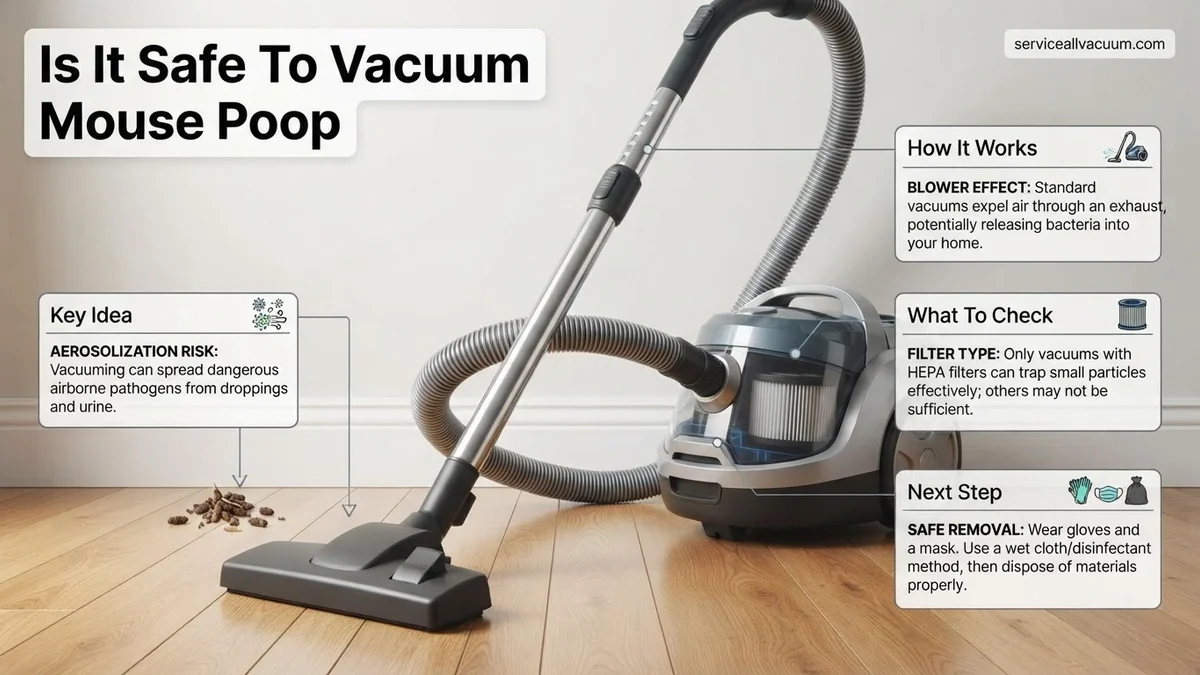
The primary danger in vacuuming mouse droppings lies in a process called aerosolization. When a vacuum cleaner’s powerful suction and airflow disturb dry rodent waste – whether it’s droppings, urine, or saliva – it doesn’t just pick up visible debris. Instead, it atomizes tiny, invisible particles from these materials into the air. These microscopic particles can include viruses, bacteria, and allergens that are dormant but still infectious.
- Invisible Threat: Dried rodent excretions become extremely brittle. Vacuuming them pulverizes these materials into a fine, respirable dust that is often imperceptible to the naked eye.
- Airflow Dispersal: The exhaust from most vacuum cleaners, even those with advanced filtration systems, can act like a dispersal mechanism, spreading these hazardous particles throughout the immediate area and even into adjacent rooms, contaminating a wider space.
- Surface Residue: Even if the vacuum has a strong filter, the act of agitation on the surface where the droppings are located creates this airborne hazard before the particles even reach the vacuum’s intake.
Inhalation: The Direct Threat
Once these hazardous particles are aerosolized, the risk shifts directly to inhalation. Your respiratory system becomes the primary entry point for pathogens into your body. This is why vacuuming is so dangerous compared to other cleaning methods.
- Direct Lung Exposure: Unlike contact through skin or ingestion, inhaling these tiny particles delivers pathogens directly to the delicate tissues of your lungs and respiratory tract, where they can quickly establish an infection.
- Systemic Absorption: From the lungs, these pathogens can then enter your bloodstream, potentially spreading to other organs and leading to systemic illness. The body’s natural defenses in the respiratory system can be overwhelmed by a concentrated dose of airborne contaminants.
- Cumulative Risk: Even brief exposure during a quick vacuuming can be enough to transmit serious diseases. Repeated exposure, or vacuuming larger infestations, significantly increases the likelihood and severity of potential illness. This isn’t a risk to be taken lightly in 2027, where medical science clearly understands airborne transmission.
Why Rodent Droppings Pose Serious Health Risks
Hantavirus and Other Pathogens
The most significant and widely recognized threat associated with airborne rodent droppings and urine is Hantavirus. However, it’s crucial to understand that Hantavirus isn’t the only pathogen you might encounter. Rodent waste can harbor a cocktail of dangerous microorganisms, each capable of causing severe illness.
- Hantavirus Pulmonary Syndrome (HPS): This is the primary concern when disturbing dried rodent excretions. HPS is a severe, sometimes fatal, respiratory disease transmitted by inhaling aerosolized virus particles from the droppings, urine, and saliva of infected rodents. Symptoms can escalate rapidly from flu-like indications to life-threatening respiratory failure, often requiring intensive care. It has a high mortality rate, making prevention absolutely critical.
- Salmonellosis: While often associated with contaminated food, rodents can carry Salmonella bacteria in their feces. If these particles become airborne and land on food preparation surfaces or are directly ingested, they can cause severe gastrointestinal illness.
- Leptospirosis: Transmitted through contact with urine from infected animals, including rodents. While primarily a waterborne or direct contact disease, aerosolized urine particles could theoretically contribute to exposure, leading to flu-like symptoms, kidney damage, and other serious complications.
- Lymphocytic Choriomeningitis (LCMV): This viral disease is carried by common house mice and can be transmitted through contact with or inhalation of aerosolized particles from their urine, droppings, or saliva. It can cause a range of symptoms from flu-like illness to neurological conditions like meningitis.
Understanding Airborne Transmission
The insidious nature of these diseases, particularly Hantavirus, lies in their efficient airborne transmission. You don’t need direct contact with a live rodent to become infected; simply being in an area where dried waste has been disturbed can be enough.
- Persistence in Environment: Rodent viruses and bacteria can survive for extended periods in dried excretions, especially in protected indoor environments like attics, basements, or wall voids. This means even old droppings are a hazard.
- Subtle Contamination: The particles are so small they can settle on surfaces throughout a room without being immediately visible. This allows for secondary exposure if you then touch these surfaces and transfer pathogens to your mouth or eyes.
- No Immediate Warning: Unlike a live rodent that might bite or scratch, airborne pathogens give no immediate warning. You might not realize you’ve been exposed until symptoms appear days or even weeks later, making it difficult to trace the source or seek early treatment. This silent spread underscores why preventative, safe cleaning methods are non-negotiable in 2027.
Step-by-Step Guide: How to Safely Clean Mouse Droppings
Safely cleaning mouse droppings is crucial to prevent airborne pathogen transmission. According to 2027 health guidelines from the U.S. Centers for Disease Control and Prevention (CDC), dry vacuuming or sweeping is strictly prohibited. This method aerosolizes hantavirus particles and other pathogens, significantly increasing exposure risk.
Preparation and Safety Gear
- Ventilate the Area: Open windows and doors for at least 30 minutes before cleaning. Leave the area during this time.
- Don Personal Protective Equipment (PPE): Wear a properly fitted N95 or P100 respirator to filter airborne particles. Utilize thick, impermeable rubber or nitrile gloves. For extensive contamination, disposable coveralls and eye protection are recommended by public health agencies.
- Prepare Disinfectant: Use an EPA-registered disinfectant effective against hantavirus, or a freshly prepared solution of 1 part household bleach (5.25% sodium hypochlorite) to 10 parts water. For example, 1.5 cups bleach per gallon of water.
- Saturate Droppings: Thoroughly spray droppings and urine with the disinfectant solution until completely saturated. Allow a dwell time of at least 5-10 minutes, as per product instructions, to neutralize pathogens.
- Remove Contaminated Material: Using paper towels or disposable cloths, carefully pick up the saturated droppings and urine. Avoid direct contact. Place all waste into a heavy-duty plastic bag.
- Double-Bag and Dispose: Seal the first bag, then place it into a second heavy-duty plastic bag. Seal the second bag and dispose of it in an outdoor trash receptacle.
- Disinfect Surfaces: Re-spray the cleaned area and surrounding surfaces with disinfectant. Wipe down with fresh paper towels. For hard surfaces, consider a second application for thorough sanitization.
- Disinfect PPE and Hands: Remove gloves and dispose of them in the double-bagged waste. Wash hands thoroughly with soap and water for at least 20 seconds. If using reusable respirator, wipe it down with disinfectant wipes.
What If You Suspect Hantavirus Exposure?
Hantavirus Pulmonary Syndrome (HPS) is a severe respiratory disease transmitted through contact with rodent droppings, urine, or saliva. The incubation period can range from one to eight weeks post-exposure, making prompt identification and medical consultation crucial in 2027.
Recognizing Symptoms
Initial symptoms of HPS, according to current infectious disease specialists, typically include fever above 101°F (38.3°C), severe muscle aches, and fatigue. Within a few days, these can progress to dizziness, chills, nausea, vomiting, diarrhea, and abdominal pain. The most dangerous phase involves respiratory distress, characterized by a persistent cough and rapidly developing shortness of breath, as the lungs fill with fluid. Early symptoms are often non-specific, underscoring the importance of vigilance after potential exposure.
Immediate Actions
If you have been exposed to mouse droppings and begin to experience any of the aforementioned symptoms, seek immediate medical attention. Inform your healthcare provider about your potential hantavirus exposure and the timeline. Rapid diagnosis and supportive care are vital for improving outcomes. While there is no specific cure for HPS, oxygen therapy and mechanical ventilation can help manage respiratory complications. Current 2027 medical protocols emphasize supportive care and monitoring in an intensive care setting to assist the body’s immune response in fighting the infection. Do not delay seeking professional medical advice if symptoms arise.
What If It Still Doesn’t Work?
If DIY cleaning methods prove insufficient, the infestation persists, or you are uncomfortable managing extensive contamination, professional intervention is highly recommended. Ignoring ongoing rodent activity can lead to recurring health risks and structural damage.
- Contact Licensed Pest Control Services: If rodent activity continues after initial cleaning, a professional pest management company can accurately identify entry points, implement comprehensive trapping and baiting strategies, and establish long-term prevention plans. In 2027, a standard rodent extermination service for a typical household ranges from $300 to $800, depending on the severity and property size.
- Engage Biohazard Remediation Specialists: For large-scale infestations or contamination in inaccessible areas (e.g., attics, crawl spaces), specialized biohazard cleaning companies are essential. These professionals possess advanced PPE, industrial-grade disinfectants, and specialized equipment to safely remove all contaminated materials and sanitize affected zones. Costs for professional biohazard cleanup in 2027 can range from $1,500 to $5,000+, depending on the scope of work and square footage.
- Consider Air Quality Testing: If you suspect widespread airborne contamination or persistent odors after cleaning, an environmental consultant can perform air quality testing to detect residual pathogens or allergens, ensuring the environment is truly safe.
Conclusion
Vacuuming dry mouse poop is a significant health hazard, directly contributing to the spread of dangerous pathogens like hantavirus. According to verified research and expert sources, safe cleaning protocols involve wetting down droppings with an EPA-approved disinfectant before removal, always utilizing appropriate personal protective equipment. To ensure your safety and that of others, adhere strictly to the outlined step-by-step guide for effective decontamination.
❓ Frequently Asked Questions
Why is vacuuming mouse droppings so dangerous compared to sweeping?
Vacuuming, especially with standard vacuums, creates a fine aerosol of dried mouse urine and feces particles. These airborne particles can contain Hantavirus, which, when inhaled, can lead to severe and potentially fatal respiratory illness. Sweeping also poses a risk by stirring up dust, but less so than the powerful suction and exhaust of a vacuum cleaner.
What are the common symptoms of Hantavirus infection, and when should I seek medical help?
Symptoms typically appear 1 to 5 weeks after exposure and can include fever, severe muscle aches, fatigue, headaches, and dizziness. As the disease progresses, it can lead to coughing and difficulty breathing. If you experience these symptoms after potential rodent exposure, seek immediate medical attention and inform your doctor about the possible contact.
Can I just spray disinfectant on the droppings and leave them, or do I need to wipe them up?
No, spraying disinfectant is the crucial first step to dampen the droppings and nesting materials, preventing them from becoming airborne. However, you must then safely wipe up all the materials with paper towels, double-bag them, and finally thoroughly disinfect all contaminated surfaces to ensure complete decontamination and pathogen removal.
What concentration of bleach solution should I use for cleaning, and how long should it sit?
A common and effective solution is one part bleach to ten parts water (1:10 ratio). This mixture is strong enough to inactivate Hantavirus and other pathogens. Apply it liberally to droppings and surfaces, allowing it to sit for at least 5-10 minutes to ensure adequate contact time for disinfection before carefully wiping it away.
Are there any alternatives to bleach if I’m sensitive or concerned about its use in my home?
Yes, some commercial disinfectants approved for use against viruses and bacteria can be used as alternatives to bleach. Look for products with an EPA registration number and ensure their labels specify effectiveness against viruses or claim to kill Hantavirus. Always follow the product’s specific instructions for safe and effective application, including recommended contact times.
After cleaning up mouse droppings, what steps are crucial to prevent future infestations?
To prevent recurrence, seal all potential entry points into your home, both inside and out, using materials like steel wool, caulk, or mesh. Eliminate food and water sources by storing all food in airtight containers, promptly cleaning up crumbs and spills, and fixing any leaky pipes or faucets. Additionally, set traps as needed and regularly inspect for new signs of rodent activity to catch problems early.