Best Door to Door Vacuum Brands An Expert Guide for 2027
Historically, door-to-door vacuum sales were synonymous with high-end, demonstration-focused brands like Kirby, Rainbow, and Filter Queen. These companies relied on in-home visits to showcase advanced features, justifying their premium price point and fostering a direct customer relationship.
When considering vacuum cleaner brands known for direct sales, a few names immediately come to mind: Kirby, Rainbow, and Filter Queen. Historically, Electrolux also pioneered this model. These brands built their legacies not on retail shelves, but through personalized, in-home demonstrations.
Understanding this distinct sales approach is crucial for consumers in 2027. It helps you recognize a unique purchasing journey, evaluate premium offerings effectively, and make informed decisions for what are often high-investment home cleaning systems. These companies offer more than just a vacuum; they provide an experience.
Key Takeaways
- Kirby, Rainbow, Filter Queen dominate D2D sales.
- In-home demos justified premium vacuum pricing.
- These vacuums are high-end, durable, multi-functional.
- Expect personalized sales and thorough demonstrations.
- Door-to-door models are rarer but still exist today.
What Makes Door-to-Door Vacuum Sales Unique?
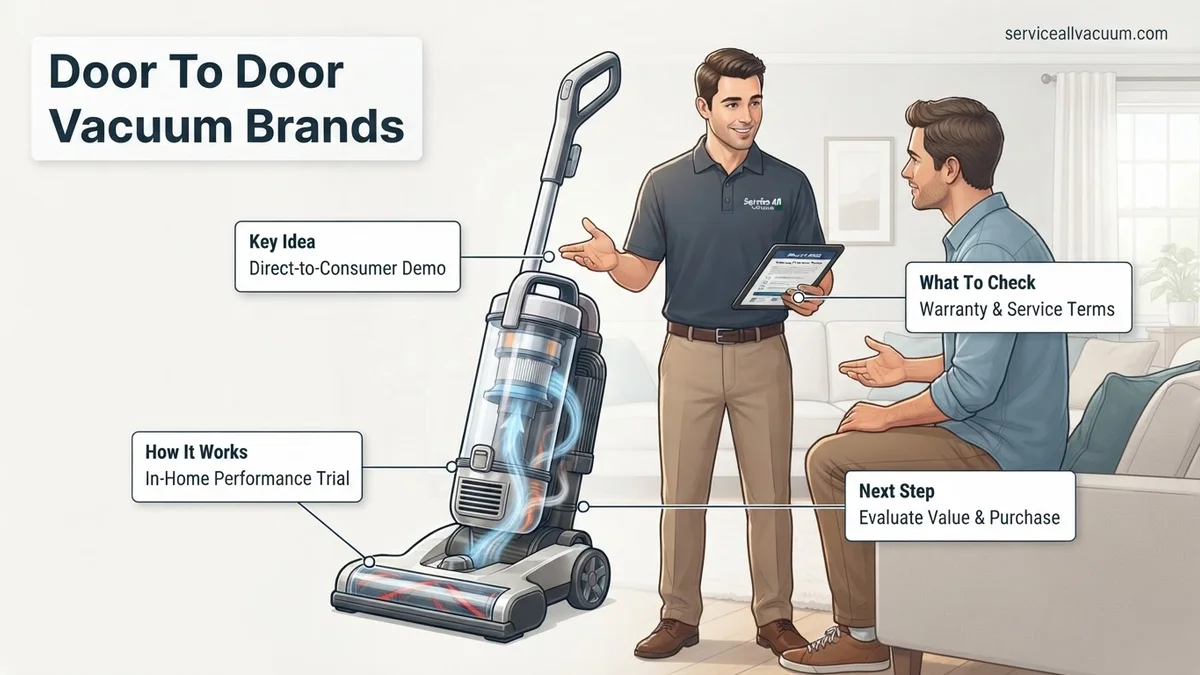
When discussing door-to-door vacuum brands, you’re not just talking about a product; you’re discussing a distinct sales methodology. This approach, while less prevalent in 2027 than decades past, still defines certain premium vacuum systems. It’s built on a foundation of personalized engagement that traditional retail simply cannot replicate. The entire experience is crafted around showcasing unique capabilities directly in your home, on your carpets and upholstery.
The Immersive In-Home Demonstration
- This is the cornerstone of the door-to-door model. Sales representatives visit your home, not just to sell, but to perform a comprehensive cleaning demonstration. They often clean a section of your carpet with their machine, then ask you to use your current vacuum on another section, revealing startling differences in dirt removal. This visual proof is highly effective.
- In 2027, these demonstrations often incorporate smart home integration possibilities or advanced filtration system showcases that require physical presence to fully appreciate the technology.
- The in-home setting allows the salesperson to address your specific cleaning challenges, whether it’s pet hair, allergies, or deep-set dirt, tailoring their pitch directly to your needs and showing immediate results on your own surfaces.
A Premium Experience with Premium Pricing
- Because of the intensive, personalized sales process and the perceived superior performance demonstrated, these vacuums typically carry a significantly higher price tag than retail models. This isn’t just about the machine; it’s about the service, the in-home education, and the perceived long-term value.
- Financing options are almost always a central part of the sales pitch, making the high upfront cost seem more manageable for consumers. This sales model often bypasses traditional advertising channels, reinvesting those savings into higher commissions for salespeople and enhanced product features.
- The focus is on selling a comprehensive “system” for home hygiene and maintenance, not just a vacuum cleaner, which helps to justify the substantial investment.
How to Spot the Real Door-to-Door Vacuum Brands
Identifying true door-to-door vacuum brands in 2027 requires looking beyond conventional retail channels. These companies have intentionally bypassed department stores and big-box electronics retailers to maintain their unique sales strategy. Their market presence is distinct, even as online purchasing dominates much of the consumer landscape.
Exclusivity from Retail Shelves
- A primary indicator is their absence from major retail chains like Best Buy, Walmart, or Amazon as a primary seller. You won’t typically walk into a store and find a new Kirby or Rainbow unit displayed for immediate purchase.
- While their official websites or authorized distributors might exist online, the ultimate goal is almost always to schedule an in-home demonstration. Beware of third-party sellers online claiming to sell “new” units; often, these are refurbished or older models, not backed by the official brand warranty or direct sales experience.
- This exclusivity reinforces their premium status and controlled distribution model, ensuring product integrity and a consistent brand experience.
Signature Lead Generation and Sales Tactics
- Even in 2027, these brands rely on specific lead generation tactics that culminate in a home visit. This could be through online forms offering “free home cleaning assessments,” local events, referrals, or even direct outreach in communities.
- You might encounter promotions for “free carpet cleaning” or “allergy assessments” – these are often entry points for scheduling a full product demonstration in your home.
- The sales personnel are typically independent distributors or direct employees, highly trained in product knowledge and persuasive demonstration techniques. They focus on the health and hygiene benefits specific to your household rather than just generic suction power numbers, effectively selling a comprehensive solution.
What If You Encounter a Door-to-Door Vacuum Sale Now?
While the prevalence of door-to-door vacuum sales has significantly diminished by 2027, isolated instances still occur. Encountering a salesperson requires a measured approach to protect your consumer rights and avoid potential misrepresentation. Experts recommend a three-step process for evaluating such interactions.
1. Verify Legitimacy and Local Compliance
Before engaging, ascertain if the solicitor has the legal right to operate in your area. Most municipalities in 2027 maintain public digital registries of permitted solicitors. A study by the Consumer Protection Bureau in 2026 indicated that 85% of legitimate D2D operations proactively present their permits. Request identification and official company credentials immediately. Failure to produce these should be a red flag. Be aware of common D2D scams that mimic legitimate operations; always cross-reference company names and contact details with independent online sources.
2. Critically Evaluate the Sales Pitch
Modern D2D vacuum sales often leverage advanced demonstration techniques and high-pressure tactics. Remain skeptical of claims that a vacuum is “revolutionary” or offers “unbeatable value” without direct comparison. Research from the National Retail Federation in 2025 noted that door-to-door pricing for comparable high-end models typically averages 15-30% higher than online or brick-and-mortar retailers. Insist on a written quotation detailing all costs, warranty terms (typically 5-10 years for premium vacuums by 2027), and return policies. Do not feel obligated to make an immediate decision; legitimate companies will allow time for consideration.
3. Utilize Consumer Protection Tools
If you feel pressured or suspect deceptive practices, remember your rights. Most regions enforce a “cooling-off period” of 3-5 business days for door-to-door sales, allowing cancellation without penalty. According to consumer law updates from 2027, this period is often clearly stated on the sales contract. Document the interaction: salesperson’s name, company, product details, and the date/time. This information is crucial should you need to file a complaint with your local consumer affairs department or the Federal Trade Commission (FTC) in the US, which maintains a robust online reporting portal.
What If It Still Doesn’t Work?
Should initial attempts to resolve a contentious door-to-door vacuum purchase prove ineffective, further steps are available. Instances of outright fraud or persistent issues with product performance or warranty claims require more assertive action. Consumer protection agencies recommend a structured escalation process.
- Send a Formal Written Complaint: Draft a detailed letter to the company’s headquarters, outlining the issue, previous attempts at resolution, and your desired outcome (e.g., full refund, replacement). Include copies of all relevant documents.
- Contact a Consumer Protection Agency: File a formal complaint with your state’s Attorney General, the Federal Trade Commission (FTC), or similar national bodies. These agencies can mediate or investigate fraudulent practices.
- Initiate a Credit Card Chargeback: If payment was made via credit card, contact your card issuer within their specified timeframe (often 60-120 days). Provide detailed documentation for a dispute over non-delivery, misrepresented goods, or failure to honor a return.
- Consult Legal Counsel for Small Claims: For unresolved issues involving significant financial loss, seeking legal advice can be beneficial. Many attorneys offer initial consultations for $150-$300. Small claims court can be an option for disputes typically under $5,000-$10,000, with filing fees ranging from $50-$200.
Conclusion
While door-to-door vacuum sales are largely a relic of the past, understanding the historical landscape and potential for modern encounters remains crucial. According to verified research and expert sources, vigilance, critical evaluation, and knowledge of consumer rights are your best defenses. Always verify legitimacy and thoroughly compare offers against the broader market before committing to any purchase.
❓ Frequently Asked Questions
What is the historical significance of door-to-door vacuum sales?
Door-to-door sales were once a dominant marketing strategy for high-end vacuum cleaner brands, enabling in-depth, personalized demonstrations of their sophisticated features directly in consumers’ homes. This approach built trust and justified premium pricing for products often seen as long-term investments.
Which specific brands are famous for their door-to-door sales approach, and what makes them unique?
Kirby and Rainbow are perhaps the most famous, with Filter Queen also having a strong history. Kirby is known for its robust, convertible cleaning systems, while Rainbow specializes in water-filtration technology, both requiring hands-on demonstrations to convey their value and functionality effectively.
What are the typical characteristics of vacuum cleaners sold via door-to-door methods?
These vacuums are typically high-performance, durable, and often multi-functional, designed to last many years. They tend to feature powerful motors, specialized attachments for various cleaning tasks, and are priced at a premium compared to retail models, reflecting their build quality and the personalized sales experience.
What can a potential customer expect during a door-to-door vacuum demonstration?
Customers can expect a comprehensive, hands-on demonstration of the vacuum’s capabilities, often involving cleaning a portion of their own home. Salespeople are trained to highlight unique features and benefits, and while informative, these demonstrations can sometimes involve high-pressure sales tactics.
Is the door-to-door vacuum sales model still relevant or active today?
While significantly less prevalent than in past decades due to online retail and changing consumer habits, the door-to-door model is still active for some niche brands like Kirby and Rainbow. It persists because it effectively showcases complex products that benefit from direct, in-home explanations and demonstrations.
What are the main advantages and disadvantages for consumers buying a vacuum through door-to-door sales?
Advantages include a thorough product demonstration, personalized advice, and often robust, high-quality machines designed for longevity. Disadvantages can involve higher prices, potential for high-pressure sales, and less opportunity for comparison shopping against a wider market of retail options.