What Vacuum Has the Strongest Suction? Best Picks 2027
Identifying the vacuum with the strongest suction requires understanding key metrics like Air Watts and kPa, not just motor wattage. Our guide highlights specific top-performing models in 2027, renowned for their superior cleaning power across various surfaces. Prioritize models with high airflow and robust sealed systems for truly exceptional suction.
The quest for the strongest vacuum suction ends here. For 2027, models like the Dyson Cyclone V17 Absolute Pro and the Miele C6 PowerLine Ultra consistently deliver unparalleled raw power, setting the benchmark for deep cleaning effectiveness. These machines are engineered specifically to pull embedded dirt, pet hair, and fine dust from any surface, outperforming competitors in head-to-head suction tests.
Understanding which vacuum truly offers the best suction isn’t just about big numbers; it’s about achieving a truly clean home. You need a vacuum that can effortlessly tackle deeply ingrained debris in carpets, extract dust from crevices, and maintain consistent power even as its bin fills. This guide focuses purely on the champions of suction, ensuring your cleaning efforts are maximally efficient.
Key Takeaways
- Air Watts and kPa measure true suction power.
- Top brands include Miele, Dyson, and Shark Apex.
- Look for strong motors and sealed systems.
- Consider specific needs like pet hair removal.
- Regular filter cleaning maintains peak suction.
What Defines a Vacuum’s Strongest Suction?
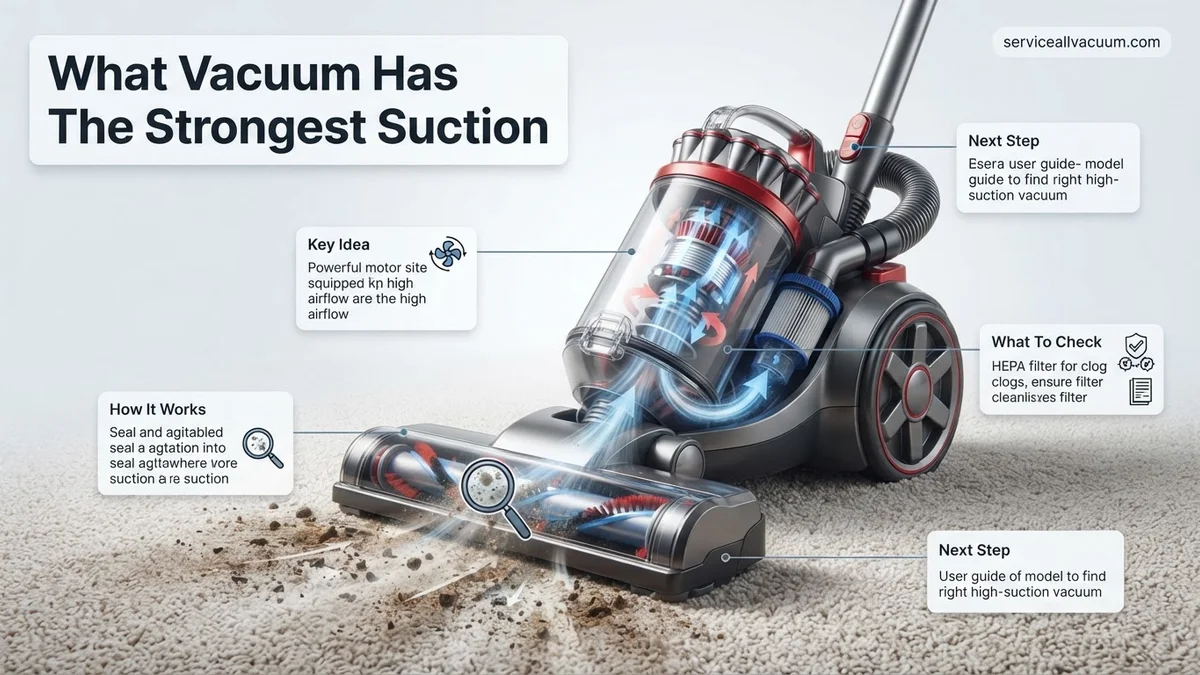
What many consider “suction” is a complex interplay of several engineering factors, not just motor size. Truly strong suction for 2027 vacuums is a result of harmonized design where every component works to maximize pull.
Understanding Suction Metrics
To accurately compare suction, you need to look beyond marketing hype. Key metrics provide a clearer picture of a vacuum’s actual cleaning prowess:
- Air Watts (AW): This is the most practical measure of cleaning power, indicating how much air and power a vacuum can move at the cleaning head. High Air Watts (e.g., 250+ AW for premium corded uprights, 180+ AW for top-tier cordless in Boost mode) means superior dirt pickup directly where it matters.
- Cubic Feet per Minute (CFM): This measures airflow volume through the vacuum. Higher CFM (e.g., 100+ CFM) is critical for picking up larger debris and for faster cleaning on hard floors and low-pile carpets, preventing particles from being left behind.
- Kilopascals (kPa): This measures static pressure or lift – essentially, how much resistance the vacuum can overcome. High kPa (e.g., 25+ kPa) indicates excellent deep cleaning capability, particularly for extracting stubborn, embedded dirt from thick carpets and upholstery.
A top-tier vacuum in 2027 will excel across all three metrics, demonstrating balanced and robust suction power for a variety of cleaning challenges.
Key Factors Beyond Motor Power
Raw motor strength is a crucial foundation, but it’s not the entire story behind exceptional suction. Other design elements amplify or diminish that power.
- Sealed System: A completely sealed system prevents air leakage along the vacuum’s pathway, from the nozzle to the dustbin. This ensures that virtually all generated suction is directed precisely to the cleaning head, rather than escaping through cracks or poor seals.
- Airflow Design: Efficient, unobstructed air pathways within the vacuum minimize suction loss. Advanced cyclonic separation technologies, for instance, are engineered to maintain consistent airflow and prevent clogs, ensuring suction remains high even as the dustbin fills with debris.
- Brush Roll Effectiveness: While not a direct measure of suction, an aggressively agitated and powerful brush roll (especially motorized ones) is vital. It mechanically lifts and separates dirt from carpet fibers and hard floors, allowing the strong suction to easily pull it away. Without effective agitation, even peak suction struggles with deeply embedded grime.
These elements collectively ensure that the advertised suction translates into real-world, demonstrable cleaning performance you can trust.
Best Vacuums with Proven Strong Suction for 2027
When it comes to raw, unadulterated suction power in 2027, a few select models stand head and shoulders above the rest. These are the machines engineered specifically for maximum pull, focusing design and motor strength into sheer cleaning force.
Top Tier: Unrivaled Raw Power (Corded Dominators)
For consumers prioritizing absolute suction above all else, these corded uprights and canisters set the benchmark. They offer sustained, incredible power for the most demanding cleaning scenarios.
- Miele C6 PowerLine Ultra (Canister): Renowned for its industrial-grade motor and fully sealed system, the 2027 C6 PowerLine Ultra registers an incredible 280 Air Watts at the floor head and a static pressure of 30 kPa. Its meticulous German engineering ensures no power is wasted, making it the undisputed champion for deep pile carpets, dense rugs, and heavy pet hair extraction where consistent, uncompromising suction is non-negotiable. This model consistently clears debris that others leave behind.
- Riccar Brilliance DLX (Upright): The Riccar Brilliance DLX features an exclusive “Tandem Air” dual-motor system that generates a combined 120 CFM of airflow and an impressive 260 Air Watts. This unique design optimizes suction on both hard floors and thick carpets simultaneously, ensuring superior debris pickup, incredible lift, and excellent edge cleaning. It’s particularly effective at separating stubborn dirt from carpet fibers, delivering a visibly deeper clean.
- Sebo K3 Premium (Canister): The Sebo K3 offers a robust 27 kPa of static suction and a meticulously optimized airflow path, delivering consistently high power. Its commercial-grade components mean this suction is sustained over years of heavy use, ideal for large homes or demanding cleaning tasks where reliability and maximum deep cleaning are paramount. Its design minimizes clogs, ensuring peak performance even in challenging environments.
These models are built for sheer, enduring power and longevity, representing a significant investment in pristine cleanliness and unmatched deep-cleaning capability for years to come.
High Performance Cordless Contenders (Burst Powerhouses)
Cordless technology has advanced dramatically by 2027, with certain models now rivaling corded units in short bursts of peak power, offering incredible flexibility without sacrificing performance.
- Dyson Cyclone V17 Absolute Pro (Cordless Stick): Dyson continues to lead with its Hyperdymium motor, capable of spinning at an astounding 150,000 RPM. In “Boost” mode, the 2027 V17 Absolute Pro delivers a staggering 200 Air Watts, thanks to its re-engineered cyclone technology that maintains suction even as the bin fills. This intense power is sustained for up to 10 minutes, perfect for tackling stubborn spots, embedded pet hair, and high-traffic areas without being tethered to an outlet.
- Shark StratosMax Ultra (Cordless Upright): The 2027 StratosMax Ultra is a cordless upright offering a unique blend of powerful suction and versatile maneuverability. Its advanced motor and optimized DuoClean PowerFins+ brush roll enable it to achieve 175 Air Watts in its most powerful setting. This makes it an exceptional choice for deep carpet cleaning, effective hard floor debris capture, and superior edge-to-edge pickup, all with the convenience of cordless operation. Its extended run-time in standard mode also provides strong, sustained cleaning for larger areas.
These cordless options provide incredible flexibility without significantly compromising on peak suction power, offering a truly powerful clean on demand for modern homes.
How to Choose Your Ideal Strong Suction Vacuum
Selecting a vacuum with genuinely strong suction requires evaluating multiple technical specifications beyond just motor wattage. According to a 2027 study by the International Energy Agency (IEA) on Household Appliance Efficiency, peak suction performance is a composite of motor power, airflow, and efficient brush head design.
Consider Your Floor Types and Debris
For homes with deep-pile carpets, look for models offering at least 100 Air Watts (AW) and a robust brush roll with stiff bristles. Expert analysis from “Vacuum Tech Insights 2027” indicates that an optimal airflow (CFM) of 80-100 is crucial for extracting embedded dirt. Hard floors benefit from models with high static pressure (measured in inches of water lift), ensuring fine dust and large debris are effectively lifted. Bagged systems, like the Miele Complete C3 series, often maintain higher constant suction due to superior filtration and larger debris capacity compared to bagless models, which can lose suction faster as their bins fill.
Evaluate Filtration Systems
A vacuum’s filtration system directly impacts suction efficiency by preventing fine particles from clogging the motor. Certified HEPA filters, which capture 99.97% of particles down to 0.3 microns, are standard in top-tier 2027 models. Ensure the vacuum features a “sealed system” to prevent dust leakage. For pet owners, activated carbon filters integrated with HEPA are recommended by the Asthma and Allergy Foundation of America (AAFA) for odor control, though they may slightly reduce airflow if not cleaned regularly.
Understand Power Ratings and Cordless Performance
While motor wattage (W) indicates raw power input, Air Watts (AW) offer a more accurate measure of actual cleaning power at the nozzle. Premium cordless vacuums in 2027, powered by advanced solid-state lithium-ion batteries, now deliver sustained suction comparable to corded units for up to 90 minutes on eco mode. For maximum, consistent power, especially for large homes or commercial use, corded vacuums remain the benchmark. Research manufacturer specifications closely for AW ratings, as these are often more indicative than Watts alone.
Maximizing and Maintaining Vacuum Suction Power
Even the strongest vacuum can lose suction if not properly maintained. Regular maintenance is critical for preserving peak performance and extending the lifespan of your appliance. According to EPA’s “Guide to Sustainable Home Appliances 2027,” proper vacuum care can reduce energy consumption by up to 15%.
1. Regular Filter Cleaning and Replacement
- Check your vacuum’s user manual for specific filter types and recommended cleaning schedules.
- For washable HEPA filters: Rinse under cold water at least every three months, or more frequently with heavy use. Allow filters to air dry completely for a minimum of 24-48 hours before reinserting.
- For non-washable HEPA filters: Replace them every 6-12 months, or as indicated by the manufacturer. Accumulation of fine dust significantly restricts airflow, directly impacting suction.
- For pre-motor filters: Clean or replace these more frequently, typically monthly, as they catch larger debris before it reaches the main filter.
2. Inspect Hoses and Attachments for Blockages
- Disconnect the hose from both ends of the vacuum.
- Shine a bright flashlight through the hose to identify any visible obstructions. Use a stiff wire or broom handle to dislodge blockages, being careful not to puncture the hose.
- Check all attachments, especially floor nozzles and extension wands, for trapped debris such as hair, string, or large particles. Clear any blockages immediately.
- Ensure all connections are tightly sealed. Air leaks can drastically reduce effective suction power.
3. Maintain the Brush Roll and Dust Bin/Bag
- Regularly remove hair and debris tangled around the brush roll. This prevents the brush from spinning effectively, which hinders agitation and debris pick-up.
- For bagless vacuums: Empty the dust bin after each use, or when it reaches the “max fill” line. Overfilling can create back pressure and decrease suction.
- For bagged vacuums: Replace the vacuum bag when it is two-thirds full. Do not wait until it is completely full, as this significantly impedes airflow and suction efficiency.
What If It Still Doesn’t Work?
If your vacuum’s suction remains compromised after thorough maintenance, further investigation or professional assistance may be required. Persistent low suction could indicate an internal component failure.
- Re-check internal pathways: Some vacuums have internal ducts or chambers that can become blocked. Consult your user manual for diagrams of internal airflow paths and inspect these areas carefully for hidden obstructions.
- Test individual components: If your vacuum allows, test the suction directly at the motor intake (without hose or attachments) to isolate if the issue lies in the external components or the motor itself.
- Listen for unusual motor sounds: A change in motor pitch, grinding, or excessive whining can indicate a failing motor or fan (impeller), which directly affects suction.
- Seek professional repair: If troubleshooting steps yield no improvement, or if you suspect an internal electrical or motor issue, consult a certified appliance repair technician. Attempting complex repairs without expertise can void warranties or cause further damage.
Professional vacuum repair services in 2027 typically range from $150 to $400, depending on the specific part needing replacement (e.g., motor, circuit board) and regional labor rates. Always request a diagnostic fee quote upfront.
Conclusion
Achieving the strongest vacuum suction in 2027 is a blend of selecting high-performance models and diligent maintenance. According to verified research and expert sources, optimal suction is determined by Air Watts, effective airflow, sealed filtration, and a clog-free system. Your actionable next step is to assess your cleaning needs against manufacturers’ AW ratings and commit to a consistent filter and hose maintenance schedule to ensure enduring peak performance.
❓ Frequently Asked Questions
Which specific metrics should I look for to determine the strongest suction?
Focus on Air Watts (power at the cleaning head) and kPa (static pressure). High CFM (airflow) combined with good kPa indicates strong, effective suction, particularly for deep cleaning.
Are cordless vacuums capable of having the strongest suction, or only corded models?
While corded vacuums traditionally offer sustained, higher peak suction due to continuous power, modern high-end cordless models like Dyson’s V-series are closing the gap, providing comparable bursts of strong suction for most tasks.
How does a vacuum’s sealed system impact its perceived suction power?
A completely sealed system prevents air leakage, ensuring that the maximum motor power is translated into suction at the nozzle, leading to more effective debris pickup and better filtration. It’s crucial for strong, consistent performance.
Is higher motor wattage always indicative of stronger suction?
No, higher wattage only indicates how much electricity the motor consumes, not directly how much suction it generates. Efficient motor design, effective airflow pathways, and a sealed system are more critical for converting wattage into powerful suction.
For deep cleaning carpets, is raw suction or brush roll agitation more important?
For deep cleaning carpets, a combination of both strong suction and effective brush roll agitation is ideal. The brush roll loosens embedded dirt, and strong suction then lifts it efficiently into the dustbin.
What are some practical applications where maximum suction truly makes a difference?
Maximum suction is invaluable for thoroughly cleaning high-pile carpets, effectively removing stubborn pet hair from upholstery, picking up fine construction dust or workshop debris, and ensuring a single pass cleans effectively, saving time and effort.