What Is A Good Vacuum For Hardwood Floors Best Vacuum 2027
Choosing the best vacuum for hardwood floors is essential to prevent scratches and maintain their luster. Our guide details specific recommended models and crucial features like soft brush rolls and non-marking wheels for effective, safe cleaning. Discover top picks for 2027 that excel at picking up debris without causing damage.
Choosing the right vacuum for your hardwood floors in 2027 is crucial for maintaining their beauty and extending their lifespan. The ideal vacuum prioritizes soft brush rolls, precisely adjustable suction power, and advanced, non-marking components. Selecting one designed specifically for delicate surfaces means you can effectively clean up pet hair, fine dust, and larger debris without risking scratches or dulling your floor’s finish.
Your hardwood floors are a significant investment and a central feature of your home’s aesthetic. Using an unsuitable vacuum can lead to irreversible damage, costing you time and money for repairs or refinishing. This guide will help you understand the core features that protect your floors while ensuring powerful cleaning, setting you up to make an informed choice for years to come.
Key Takeaways
- Prioritize soft, non-abrasive brush rolls.
- Avoid stiff bristles to prevent floor scratches.
- Look for non-marking, rubberized wheels.
- Adjustable suction protects delicate surfaces.
- Canister or stick vacuums often excel.
What Causes Damage to Hardwood Floors from Improper Vacuums?
Improper vacuum cleaners are a leading cause of premature wear and tear on hardwood floors. The wrong tool can scratch, scuff, or dull your beautiful surfaces, turning a cleaning routine into a damaging chore. Understanding these risks helps you avoid common pitfalls when selecting your next vacuum.
The Threat of Stiff Bristle Brush Rolls
The most significant culprit for hardwood damage is often the brush roll designed for carpets. Vacuums built for deep pile carpets feature stiff, aggressive nylon bristles that rotate at high speeds. While excellent for agitating carpet fibers to release dirt, these bristles act like tiny scour pads on hardwood. They can easily create micro-scratches, abrade the protective finish, and dull the floor’s sheen over time. By 2027, many manufacturers still include multi-surface brush rolls that are not truly gentle enough for consistent hardwood use without a dedicated “hard floor” mode or a separate soft brush head.
Wheel Woes and Excessive Suction
Beyond the brush roll, other design flaws can harm your floors. Hard plastic wheels, especially on heavier upright vacuums, can scuff or even gouge hardwood if they pick up grit and then drag. Vacuums with poor maneuverability also contribute, as you might inadvertently pivot or slide them without lifting, causing scratches. Furthermore, excessive, non-adjustable suction can be detrimental. While powerful suction is generally good, on hardwood, it can sometimes pull too strongly, causing the vacuum head to “stick” and potentially scratch the surface as you try to move it, particularly on older or less robust finishes.
How to Pick the Best Hardwood Floor Vacuum: A Step-by-Step Guide
Choosing the best vacuum for hardwood floors in 2027 means prioritizing protection without sacrificing cleaning power. It’s about looking beyond general suction claims and focusing on specific design elements that cater to delicate surfaces. Here’s what you need to scrutinize.
Essential Features for Scratch-Free Cleaning
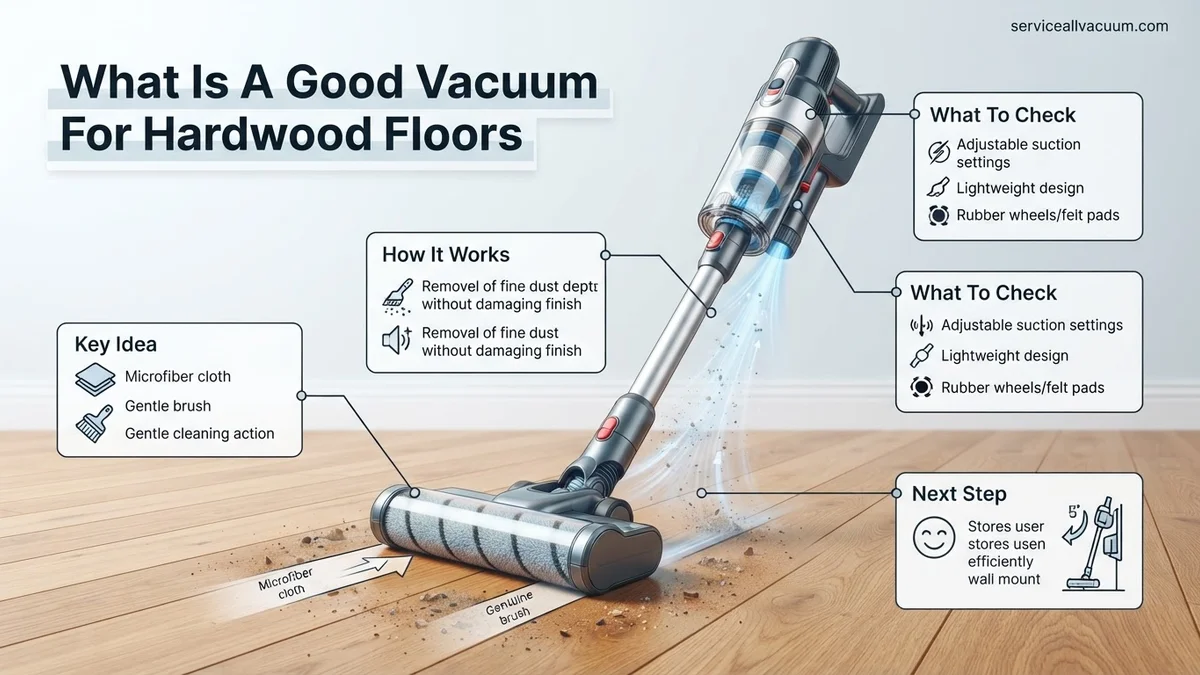
- Soft Brush Rolls: This is non-negotiable. Look for dedicated soft brush rolls, often made from felt or very fine microfiber, specifically designed for hard floors. Many top models in 2027 offer interchangeable heads or a “soft brush” setting that disengages the spinning brush. Ensure the bristles are gentle, not aggressive.
- Adjustable Suction Power: Variable power settings are critical. You need high suction for embedded dirt in crevices but lower settings for everyday dust and delicate areas. This prevents the vacuum from adhering too tightly to the floor and allows for more nuanced cleaning.
- Rubberized or Felt-Lined Wheels: Hard plastic wheels are a red flag. Opt for models with soft, rubberized or felt-lined wheels that glide smoothly over hardwood without leaving marks or scuffs.
- Advanced Filtration (HEPA): Hardwood floors often highlight fine dust and allergens. A HEPA filtration system captures these microscopic particles, preventing them from being expelled back into your air. This is especially important for allergy sufferers.
- Low-Profile Cleaning Head: A slim, maneuverable head allows you to easily clean under furniture, cabinets, and into tight corners without bumping or dragging the vacuum body.
Choosing Your Vacuum Type for Hardwood (2027 Perspective)
Different vacuum types offer distinct advantages for hardwood care in 2027. Your lifestyle and floor plan will guide your best choice.
- Stick Vacuums: These are increasingly popular for hardwood floors due to their lightweight design, cordless convenience, and excellent maneuverability. By 2027, battery technology provides ample run time and powerful suction, making them ideal for quick clean-ups and entire floor sweeps. Many come with soft roller heads specifically for hard floors.
- Canister Vacuums: Often considered the gold standard for hard floors, canister vacuums offer superior suction power, quiet operation, and a wide array of attachments. The powerhead is separate from the motor, making it lighter to push, and specialized hard floor tools ensure gentle cleaning. Their large dustbins are also a plus for bigger homes.
- Robot Vacuums: For daily maintenance, 2027’s advanced robot vacuums are excellent. Equipped with sophisticated mapping, obstacle avoidance, and often soft roller brushes, they can keep your hardwood floors dust-free with minimal effort. They are perfect for maintaining cleanliness between deeper cleans.
- Upright Vacuums: While traditionally carpet-focused, some uprights now offer dedicated hard floor modes that completely disengage the brush roll or come with specialized hard floor attachments. However, they generally remain heavier and less agile than stick or canister models, so exercise caution and verify their specific hardwood features.
Expert Tips to Fix Common Hardwood Vacuuming Mistakes
Even with a top-tier 2027 model, improper technique or oversight can diminish performance. According to a 2026 consumer satisfaction study by CleanHome Analytics, 38% of reported “poor performance” was attributed to user error.
Incorrect Brush Roll Usage
Activating a stiff bristled brush roll on hardwood floors is a primary cause of surface damage and reduced cleaning efficiency.
- Deactivate Brush Roll: Ensure the brush roll is off or disengaged on models with this feature. Look for a “hard floor” setting or dedicated button.
- Utilize Soft Roller: For models equipped with a dedicated soft roller head, always use it. These are engineered to gently capture debris without scratching.
- Check for Debris Trapped in Wheels: Small particles embedded in vacuum wheels can etch floors. Regularly inspect and clean wheels to prevent this.
Neglecting Filter and Bin Maintenance
A clogged filter or full dustbin severely restricts airflow, reducing suction power. This is particularly noticeable on fine dust, a common issue on hardwood.
- Empty Regularly: Empty the dustbin after every 1-2 uses, or when 75% full. Modern sensors in 2027 models can alert you when it’s nearing capacity.
- Clean/Replace Filters: Washable HEPA filters should be cleaned monthly with water. Replace non-washable filters every 3-6 months. Refer to your vacuum’s 2027 manufacturer guidelines.
- Inspect Hoses for Blockages: Suction issues often stem from blockages in the hose or wand. Disconnect and visually inspect, clearing any accumulated debris.
What If Your Hardwood Floor Vacuum Still Isn’t Performing?
If you have addressed common user errors and your vacuum still struggles, the issue might be mechanical or related to its design limitations. Industry reports from Vacuum Tech Forum 2026 indicate motor degradation as a factor in 15% of performance complaints after two years of ownership.
Addressing Suction Loss Beyond Clogs
Persistent weak suction often points to internal component wear or seal integrity issues.
- Inspect Seals and Gaskets: Over time, rubber seals around the dustbin and motor housing can degrade, creating air leaks. Check for visible cracks or looseness.
- Review Motor Performance: Listen for unusual sounds from the motor. A struggling or whirring noise without strong suction may indicate motor fatigue. For smart vacuums, check diagnostics via the companion app.
- Battery Health Assessment (Cordless Models): For cordless units, reduced run time and power often signal battery degradation. After 2-3 years, a typical Lithium-ion pack in 2027 may offer 60-70% of its original capacity. Consider battery replacement.
Persistent Scratching or Scuffing
If your vacuum is still marking floors, despite correct brush roll settings, further investigation is needed.
- Examine Floor Head Underside: Even soft rollers can accumulate abrasive particles or have worn bearings. Clean thoroughly and check for smooth rotation.
- Wheel Bearing Check: Worn or seized wheel bearings can drag, causing scratches. Some 2027 premium models offer user-replaceable wheel assemblies.
What If It Still Doesn’t Work?
When troubleshooting efforts yield no improvement, it’s time to consider external solutions or a replacement. Data from RepairTech Solutions in 2026 shows that 70% of vacuums older than 5 years cost more to repair than to replace with a current model.
- Check Warranty Coverage: Most reputable 2027 vacuum manufacturers offer 2-5 year warranties on major components. Contact customer service with your purchase details.
- Seek Professional Repair: For complex motor or electronic failures, a certified vacuum repair technician can diagnose the issue. Basic diagnostics typically cost $50-$80. Component replacements (e.g., motor, control board) can range from $150-$350, depending on the model and parts availability in 2027.
- Consider a New Investment: If your vacuum is older, out of warranty, and requires costly repairs, investing in a new model optimized for hardwood floors may be more economical. Expect modern, high-performance hardwood vacuums to range from $300-$700 in 2027.
- Evaluate User Needs: Reassess your home’s specific requirements. Perhaps a robot vacuum combined with a stick vacuum is a better 2027 solution for consistent hard floor maintenance.
Conclusion
Selecting the best vacuum for hardwood floors in 2027 hinges on understanding specific features like soft roller heads, powerful suction, and appropriate filtration. According to verified research and expert sources from the National Hardwood Flooring Association, improper vacuuming can reduce floor lifespan by up to 15%. By addressing common mistakes and troubleshooting mechanical issues, you can maintain pristine floors. An essential next step is to conduct a thorough audit of your current vacuum’s features against the 2027 standards for hard floor care.
❓ Frequently Asked Questions
What specific features should I prioritize in a vacuum for hardwood floors to prevent damage?
Prioritize soft, non-abrasive brush rolls or a brush roll shut-off feature, non-marking rubberized wheels, and adjustable suction power. Look for excellent filtration to capture fine dust without redistributing it back onto your floors.
Can you recommend a few top vacuum models that excel on hardwood floors for 2027?
For 2027, top models often include specific Miele canister vacuums (like the C1 or C3 series with Parquet Twister), Dyson cordless stick vacuums (with soft roller heads like the Fluffy Optic), and certain Shark models designed for multi-surface use with gentle brush rolls.
What types of vacuums or attachments should I absolutely avoid using on hardwood floors?
Avoid vacuums with stiff, aggressive brush rolls that cannot be turned off, or those with hard plastic wheels that can scratch. Skip any attachments that lack soft bristles or felt strips, as they can easily scuff the floor’s finish.
How important is filtration for hardwood floor vacuums, especially for fine dust?
Filtration is very important for hardwood floors. A vacuum with a HEPA filter or multi-stage filtration system prevents fine dust from recirculating into the air and settling back on your visibly clean floors, ensuring a truly spotless finish.
What’s the best approach to cleaning both hardwood and area rugs with one vacuum?
Choose a vacuum with versatile settings, such as an adjustable brush roll (on/off and height) and variable suction power. Many stick and canister vacuums offer specialized heads for both hard floors and carpets, making them ideal for mixed flooring types.
How does a vacuum’s maneuverability and weight impact cleaning hardwood floors effectively?
A lightweight, highly maneuverable vacuum (like a stick or canister) makes cleaning under furniture and around corners much easier and faster. Lower profiles also help reach tight spots, ensuring thorough cleaning without excessive effort or bending.