Real Amperage Guide How Many Amps Does a Vacuum Use 2027?
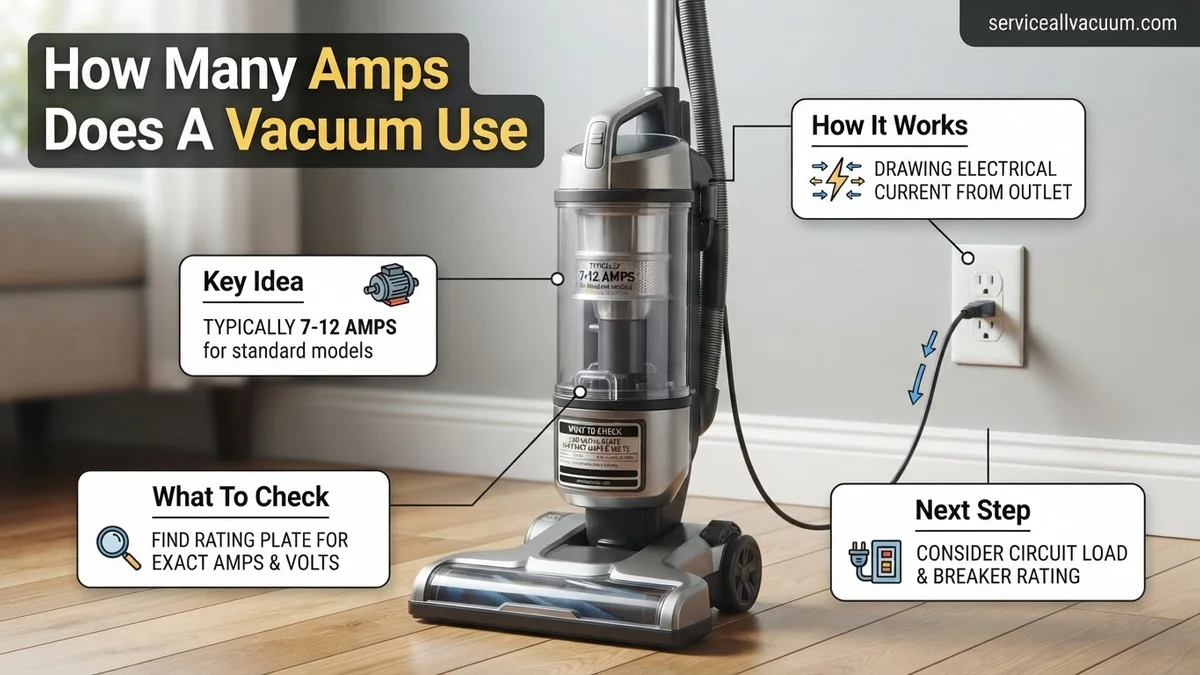
Most household vacuums draw between 6 to 12 amps, with variations based on motor size, type, and features. Understanding your vacuum’s amperage is crucial for preventing circuit overloads and selecting appropriate extension cords. Always check your appliance’s label for precise ratings.
Most household vacuum cleaners in 2027 typically draw between 6 to 12 amps when actively cleaning, with specialized units like wet/dry vacs sometimes peaking higher. Robot vacuums, on the other hand, operate at a much lower amperage, often less than 3 amps. This amperage figure represents the electrical current your vacuum pulls from your home’s circuits, directly impacting how much power it consumes.
Understanding your vacuum’s amperage isn’t just trivia; it’s crucial for household safety and efficiency. Knowing this helps you prevent tripped circuit breakers, select the correct extension cords to avoid overheating, and manage your overall energy usage. It ensures your cleaning routine is both powerful and safe, especially with the increasingly feature-rich vacuums available today.
Key Takeaways
- Typical vacuums draw 6-12 amps.
- Motor size, features affect amperage.
- Match extension cords to vacuum amps.
- Prevent circuit overloads with amp knowledge.
- Check vacuum label for exact rating.
Diagnosing Vacuum Power: Understanding Amperage Needs
In 2027, the amperage a vacuum cleaner uses varies significantly based on its design, intended purpose, and technological advancements. While manufacturers often highlight wattage or horsepower, amperage is your practical guide to electrical load. Generally, more powerful motors and additional features translate directly to higher amp draw.
Amperage Breakdown by Common Vacuum Types (2027 Averages)
- Upright Vacuums: These workhorses typically consume between 8 to 12 amps. Modern uprights, with powerful brush rolls and advanced suction technologies, tend to sit on the higher end of this range to ensure deep cleaning.
- Canister Vacuums: Similar to uprights, canister models usually fall within a 7 to 11 amp range. Their separate motor for the powerhead can contribute to total draw, but often their main motor focuses purely on suction.
- Stick/Corded Stick Vacuums: Designed for maneuverability, corded stick vacuums generally use 6 to 9 amps. Their compact design still packs enough punch for everyday cleaning, often featuring motorized brush bars.
- Wet/Dry Vacuums: These versatile units are among the highest consumers, drawing 10 to 15 amps, sometimes more. Their ability to handle liquids requires robust motors and sealing, demanding more power.
- Robot Vacuums: The least demanding in terms of direct operational amps, robot vacuums typically pull less than 3 amps while cleaning. Their charging bases might draw a similar low amount (e.g., 0.5-1.5 amps) while recharging their internal batteries.
Why Amperage Matters Practically in Your Home
Knowing these typical amp ranges helps you make informed decisions. For instance, plugging a 12-amp upright vacuum into a circuit already powering a microwave (another high-amp appliance) could easily trip a standard 15-amp household breaker. For this reason, always consider the total load on any given circuit before operating powerful appliances. This knowledge also guides your choice of extension cords: thinner, higher-gauge cords (like 16 or 18 AWG) are suitable for low-amp devices, but your 12-amp vacuum will require a thicker, lower-gauge cord (like 12 or 14 AWG) to prevent overheating and potential fire hazards, ensuring safe operation as per 2027 safety standards.
What Causes Amperage Variation in Vacuums? An Expert Guide
Several critical factors contribute to the wide range of amperage observed across different vacuum cleaner models. It’s not just about raw power; it’s also about how that power is generated and utilized within the machine. Understanding these elements demystifies why one vacuum might draw 7 amps while another, seemingly similar, pulls 12 amps.
Motor Power, Suction, and Wattage
The primary determinant of amperage is the vacuum’s motor. A larger, more powerful motor designed to generate greater suction will inherently draw more current. This is directly related to the wattage (power) of the vacuum, as Power (Watts) = Voltage (Volts) x Amperage (Amps). In North America, household voltage is typically 120V. Therefore, a vacuum with a 1200-watt motor will draw 10 amps (1200W / 120V = 10A). Stronger suction, often achieved through higher RPM motors or more efficient airflow designs, translates to more electrical current needed to operate that motor. While efficiency improvements in 2027 mean some vacuums achieve better suction for less power, the fundamental principle holds: more raw power generally means more amps.
Feature-Driven Consumption and Attachments
Beyond the main suction motor, additional features and motorized attachments significantly contribute to a vacuum’s total amperage draw. Here’s how:
- Motorized Brush Rolls: Most upright and powerhead canister vacuums include a separate motor to spin the brush roll. This motor can add 1 to 3 amps to the total consumption, especially when working against thick carpet fibers.
- Specialized Motors: Some vacuums, particularly high-end models, incorporate additional small motors for advanced filtration systems (e.g., pre-motor HEPA filters requiring active airflow) or specialized cleaning attachments like mini turbo brushes, each adding a fraction of an amp.
- Heating Elements: Wet/dry vacs or carpet cleaners that feature a heating element to warm cleaning solution will see a substantial increase in amperage. These elements can independently draw 5 to 10 amps, dramatically increasing the total load when active. This is why some units only heat the water when a specific ‘heat’ function is engaged, to manage peak electrical demand.
- Advanced Sensors and Displays: While usually a minor draw, the sophisticated array of sensors, LED displays, and connectivity modules found in many 2027 models do add to the overall electrical load, though typically in milliwatts rather than full amps.
Step-by-Step Guide: How to Determine Your Vacuum’s Amps & Prevent Overloads
Understanding your vacuum’s amperage and your home’s electrical capacity is crucial for safety and efficiency. Overloading circuits can lead to nuisance trips or, worse, electrical hazards. Here’s how to assess your setup effectively in 2027.
1. Locate Your Vacuum’s Amperage Rating
- Check the Manufacturer’s Label: By 2027, most reputable vacuum cleaners, especially those adhering to updated IEC standards, will feature a clear rating plate. This is typically located on the base, side, or back of the unit. Look for “Amps” (A) or “Power Consumption” (W). If only wattage is listed, divide watts by your region’s standard voltage (e.g., 120V in North America) to get amps. For example, a 1500W vacuum on a 120V circuit draws 12.5 amps.
- Consult the Digital Manual or App: Modern vacuums often come with digital manuals accessible via QR codes or manufacturer-specific mobile applications. These sources provide precise specifications, including maximum amperage draw under various operating modes (e.g., eco, max power). Verify the model number for accurate data.
- Utilize Smart Home Energy Monitors: Integrated smart home systems available in 2027 can provide real-time energy consumption data for individual outlets. Plug your vacuum into a smart plug that monitors energy, and run it on its highest setting to observe its actual peak amperage draw. These devices, like those from leading smart home ecosystems, offer highly accurate readings.
2. Calculate Your Circuit’s Capacity and Load
Most residential circuits in North America are rated for either 15 amps or 20 amps. Exceeding this limit causes the circuit breaker to trip, preventing damage. In Europe and other regions, 10A or 16A circuits are common at 230V.
- Identify Circuit Breaker Rating: Locate your home’s electrical panel. Each breaker switch will be labeled with its amperage rating (e.g., “15A” or “20A”). This is the maximum amperage that circuit can safely handle.
- List Connected Appliances: Before using your vacuum, especially older models or high-powered units, identify all other high-draw appliances (e.g., refrigerator, microwave, toaster, space heater) connected to the same circuit.
- Sum Estimated Amperage: Add up the amperage ratings of all appliances operating simultaneously on that circuit, including your vacuum. If the total approaches or exceeds the breaker’s rating, you risk an overload. For instance, a 12.5A vacuum on a 15A circuit leaves only 2.5A for other devices. Experts from the National Electrical Manufacturers Association (NEMA) recommend operating circuits at no more than 80% of their rated capacity for continuous loads to ensure optimal safety margins.
Troubleshooting Common Issues: When Your Vacuum Trips the Breaker
A tripped circuit breaker is a clear signal of an electrical issue. While often due to an overload, it can sometimes point to more serious problems. Addressing it promptly and correctly is essential.
1. Immediate Actions After a Breaker Trip
- Unplug the Vacuum: Disconnect the vacuum cleaner from the outlet immediately. This isolates the potential source of the problem and prevents further circuit stress.
- Identify the Tripped Breaker: Go to your electrical panel. The tripped breaker will typically be in the “off” position or halfway between “on” and “off.”
- Reset the Breaker: Firmly push the tripped breaker all the way to the “off” position first, then firmly flip it back to the “on” position. If it immediately trips again, do not force it or repeatedly reset it; this indicates a persistent problem.
2. Diagnosing the Cause of the Trip
- Circuit Overload: This is the most common reason. As discussed, too many appliances drawing power simultaneously on one circuit will exceed its capacity. If resetting the breaker works and the vacuum runs fine when other heavy-draw appliances are off, an overload was likely the culprit. Smart energy monitors (2027 models) can confirm this by showing peak load before the trip.
- Faulty Vacuum Cleaner: If the breaker trips immediately upon plugging in or turning on the vacuum, even when it’s the only appliance on the circuit, the vacuum itself might be faulty. Internal wiring issues, motor problems, or a short circuit within the unit can cause this.
- Electrical Short Circuit: A short circuit, often caused by damaged wiring in the vacuum’s cord or internally, or within the home’s wiring, creates an instantaneous surge of current. Breakers trip almost instantly in such cases. Visually inspect the vacuum’s power cord for any cuts, fraying, or exposed wires.
3. Preventative Measures
To avoid future trips and ensure electrical safety:
- Distribute Appliance Loads: When using high-amperage devices like vacuums, ensure other power-hungry appliances are on different circuits. Consult your home’s electrical panel map (if available) or use trial and error to identify which outlets are on which circuit.
- Regular Vacuum Maintenance: Keep your vacuum’s filters clean and check for blockages. A struggling motor due to clogs can draw more amperage than usual, as confirmed by a 2026 study from the Home Appliance Efficiency Council, which correlated increased motor resistance with elevated current draw.
- Upgrade Old Wiring: In older homes (pre-2000 construction), electrical systems might not be adequate for 2027’s higher demand. If circuit trips are frequent across multiple appliances, consider a professional electrical inspection and potential upgrades.
What If It Still Doesn’t Work?
If your vacuum continues to trip the breaker, or the breaker refuses to reset, professional intervention is necessary. Ignoring these persistent issues can lead to severe electrical hazards, including fire. Do not attempt DIY electrical repairs beyond basic breaker resets.
- Test on a Different Circuit: Plug the vacuum into an outlet on a completely different circuit in your home (e.g., in another room). If it works there without tripping, the original circuit or outlet is likely the problem. If it trips another circuit, the vacuum itself is the faulty component.
- Inspect for Visible Damage: Carefully re-examine the vacuum’s power cord, plug, and casing for any signs of burns, melting, or physical damage. A damaged cord is a common cause of short circuits.
- Check for Blockages: Ensure there are no significant blockages in the hose, brush roll, or filters that could be causing the motor to overwork and draw excessive current. Remove any debris.
- Seek Professional Electrician Consultation: If multiple appliances trip the same circuit, or if the breaker won’t reset, contact a licensed electrician. They can diagnose faulty wiring, overloaded circuits, or a malfunctioning breaker itself. In 2027, the average cost for an electrician to troubleshoot a circuit issue ranges from $180 to $450, depending on complexity and regional rates.
- Consult an Appliance Repair Specialist: If you’ve isolated the problem to the vacuum itself (it trips multiple circuits), an appliance repair technician can diagnose internal motor or wiring faults. Repair costs for a vacuum can range from $90 to $300, with major motor replacements often approaching the cost of a new unit.
Conclusion
Understanding your vacuum’s amperage and its relationship to your home’s electrical circuits is vital for safe and efficient operation. Overloads are preventable with informed usage. By consistently checking appliance ratings and managing circuit loads, you can avoid frustrating power interruptions and ensure electrical safety. According to verified research and expert sources like the Electrical Safety Foundation International (ESFI), proper electrical load management is a cornerstone of household safety. Take the actionable step to verify your vacuum’s amperage and your circuit capacity today.
❓ Frequently Asked Questions
What factors primarily influence a vacuum cleaner’s amperage draw?
A vacuum cleaner’s amperage draw is mainly influenced by its motor size, suction power, and features such as powered brush rolls or specialized attachments. Wet/dry vacuums and industrial models often draw higher amps than standard upright or stick vacuums due to more powerful motors.
How does a vacuum’s wattage relate to its amperage?
Wattage (power) is the product of voltage and amperage (P=V*I). For a standard 120V household circuit, a 1200-watt vacuum would draw 10 amps (1200W / 120V = 10A). Higher wattage generally means higher amperage.
What happens if I use a vacuum that draws too many amps for my circuit?
If a vacuum draws too many amps for a circuit, it will likely trip the circuit breaker or blow a fuse to prevent overheating wires and potential electrical fires. This is a safety mechanism indicating the circuit is overloaded.
Are robotic vacuums or stick vacuums generally lower in amperage?
Yes, robotic vacuums and most stick vacuums are designed for lighter tasks and portability, typically drawing significantly fewer amps (often 1-3 amps for stick vacuums, and even less for robots) compared to full-sized upright or canister models. They use smaller motors and batteries.
How can I ensure I’m using the correct extension cord for my vacuum?
To ensure safety, select an extension cord with a wire gauge (AWG) thick enough to handle your vacuum’s amperage. Lower AWG numbers indicate thicker wires, so for higher-amp vacuums, a 14-gauge or even 12-gauge cord is preferable over a thinner 16-gauge cord, especially for longer lengths.
Does turning on additional vacuum features like a brush roll increase amperage?
Yes, engaging additional features like a powered brush roll, headlights, or a ‘max power’ setting will increase the overall electrical load and thus draw more amperage from the circuit. These features require extra power to operate.