What to Do With Old Vacuum 2026 Step-by-Step Guide
Finding out what to do with an old vacuum doesn’t have to be difficult when you explore eco-friendly disposal, recycling, and donation options. Instead of throwing heavy appliances into the regular trash, you can utilize e-waste centers, manufacturer trade-ins, or local charities.
Getting rid of an old vacuum cleaner in 2026 requires more thought than just tossing it in the curb-side bin. Because these appliances contain complex electronics, motors, and sometimes lithium-ion batteries, standard municipal waste collectors often reject them.
You can responsibly handle your unwanted machine by evaluating its condition and matching it to the right disposal stream, whether that is local electronic waste recycling, a retail trade-in program, or donation. This guide walks you through the exact steps to clear out your closet while keeping hazardous materials out of local landfills.
Key Takeaways
- Check local e-waste regulations before tossing any old household appliances into regular trash bins.
- Donate working vacuums to local thrift stores, shelters, or community mutual aid groups.
- Take advantage of retail electronics store trade-in programs for store credit.
- Drop off broken units at dedicated electronic recycling collection sites.
- Salvage functional parts like hoses, motors, and attachments for DIY alternative uses.
Why Old Vacuums Require Special Disposal Instead of Regular Trash
Tossing a broken upright or stick vacuum into your regular weekly trash can lead to municipal fines and environmental damage. Modern cleaning appliances are classified as electronic waste, meaning they need specialized processing facilities.
The Environmental Hazard of E-Waste
Vacuum cleaners are packed with components that do not belong in a standard landfill. When you throw away an old unit, you risk introducing hazardous materials into local soil and water systems.
- Electric Motors: Contain copper wiring and steel components that require energy-intensive mining to replace, making recycling crucial for resource conservation.
- Circuit Boards: Modern smart vacuums and cordless units feature printed circuit boards containing trace amounts of heavy metals like lead and cadmium.
- Plastic Casings: Most vacuum bodies use non-biodegradable plastics that take centuries to break down under standard landfill conditions.
Cordless Battery Regulations in 2026
If your old vacuum is a cordless stick model or a robotic cleaner, it almost certainly runs on a rechargeable lithium-ion battery. Municipal sanitation departments strictly ban these batteries from regular trash trucks because they pose a severe fire hazard when crushed by compaction equipment. In 2026, local waste management laws hold homeowners financially liable for putting rechargeable batteries into standard household bins. You must separate the battery pack from the main plastic body before disposal, routing the power cell to a dedicated battery recycling drop-off point at hardware stores or electronics retailers.
How to Identify Working Versus Broken Units for Proper Routing
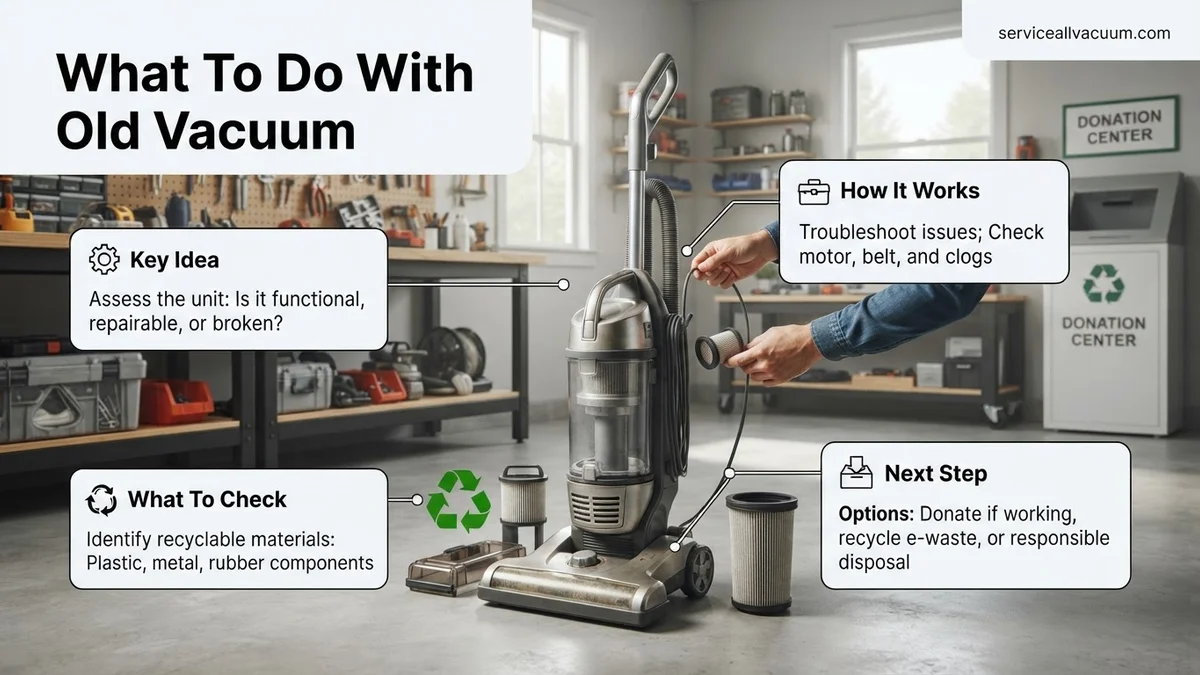
Before you load your vacuum into the car, take ten minutes to test its actual operational status. Sorting your machine into the correct category saves you time and ensures the appliance ends up where it can do the most good.
Testing Functional Status for Donation
A vacuum does not need to be brand new to find a second life in someone else’s home. You should test the unit against specific functional criteria before labeling it as scrap metal or e-waste.
- Suction Power: Does the motor run smoothly without smoking, sparking, or emitting a burning electrical smell?
- Structural Integrity: Are the hose, wand, and caster wheels intact without major cracks that render the machine unsafe?
- Accessory Inclusions: Do you have at least the primary floor head and a crevice tool to make the unit useful to a recipient?
When to Scrap a Machine Completely
If your vacuum suffers from a burned-out motor, cracked main housing, or a completely dead battery system that costs more to replace than a new unit, skip the donation centers entirely. Charities in 2026 reject broken or heavily soiled appliances because testing and repairing them diverts valuable time from their core missions. For units that are truly at the end of their lifespan, your only practical options are designated e-waste drop-off sites, municipal recycling centers, or retail take-back programs that accept broken hardware for component-level material recovery.
Step-by-Step Instructions to Recycle, Donate, or Trade-In Your Old Vacuum
Executing your chosen disposal method requires following proper procedures to ensure environmental compliance and safety. Whether you are utilizing a retail take-back scheme or dropping off equipment at a municipal facility in 2026, structured steps streamline the process.
How to Complete a Retail Trade-In
- Check the 2026 trade-in eligibility list on the manufacturer or retailer website to confirm your vacuum model qualifies for a credit.
- Clean out all dust cups, filters, and debris chambers thoroughly to meet retailer hygiene standards before drop-off or shipment.
- Remove the power cord, hoses, and detachable attachments if the program specifically requests appliance-only units.
- Bring the unit to the designated customer service counter or apply the provided prepaid mail-in shipping label.
- Redeem your promotional voucher or instant store credit toward your new floor care appliance purchase.
How to Process a Responsible Donation
- Test the appliance to ensure the motor runs and basic suction functions operate safely without sparking or emitting burning odors.
- Wash washable filters and wipe down the exterior housing using a disinfectant wipe.
- Gather all proprietary charging docks, crevice tools, and user manuals into a single bag taped securely to the vacuum.
- Contact local domestic shelters or thrift centers beforehand to verify they accept used motorized cleaning electronics.
What to Do If Your Local Municipality Refuses Bulk Electronic Waste
Many regional waste management authorities prohibit small kitchen and household appliances from standard curbside e-waste bins. If your local municipality rejects your vacuum cleaner during regular disposal collections, alternative compliance channels ensure you avoid illegal dumping fines.
Alternative Disposal Pathways
- Search specialized online directories like Earth911 or the 2026 Consumer Technology Association recycling locator using your zip code.
- Transport the unit to a certified R2 or e-Stewards sustainable recycling facility that accepts complex mixed-material small electronics.
- Inquire with local scrap metal yards, as many processing centers accept heavy corded vacuums for their internal copper motor windings and steel components.
- Utilize private electronic manufacturer mail-in stewardship programs that accept brand-agnostic appliance recycling for a nominal shipping fee.
- Coordinate with community cleanup days or designated hazardous and electronic waste drop-off Saturdays hosted seasonally by your county.
What If It Still Doesn’t Work?
If you attempted repairs or evaluated trade-in eligibility only to find the machine completely defunct and ineligible for programs, fallback measures prevent improper waste management. When standard disposal paths fail, consider these final troubleshooting and remediation steps:
- Inspect the appliance for hidden hazardous components like lithium-ion battery packs, which must be detached and taken to dedicated battery recycling kiosks.
- Consult a certified local appliance repair technician to evaluate whether a specialized thermal fuse replacement can revive the unit, with professional diagnostics typically costing between $45 and $90.
- Contact the municipal sanitation department supervisor to request a special oversized item pickup tag if standard curbside rejection was merely due to improper container placement.
- Dismantle the appliance manually using basic hand tools to separate rigid plastics from internal metal wiring for separate, targeted material recycling streams.
Conclusion
Discarding or rehoming an outdated floor care appliance requires balancing environmental safety with practical convenience. By leveraging modern 2026 retail trade-in incentives, certified e-waste drop-off locations, or charitable donations, consumers can divert bulky plastics and copper motors away from overburdened landfills. According to verified research and expert sources from the Environmental Protection Agency, proactive electronic stewardship significantly reduces toxic heavy metal leaching into regional water tables. Take action today by checking your local municipal recycling schedule and scheduling a responsible drop-off for your retired vacuum.
❓ Frequently Asked Questions
Are vacuum cleaners accepted in curbside recycling bins?
No, curbside recycling programs typically reject vacuum cleaners because they contain motors, belts, and mixed materials that automated sorting facilities cannot process.
How do I prep a vacuum cleaner before recycling or donating it?
Empty and clean out the dust cup or bag, remove any reusable washable filters, and neatly wrap the power cord before dropping it off.
Do vacuum manufacturers offer take-back programs?
Some major vacuum manufacturers and appliance brands offer mail-in recycling or take-back initiatives, though options vary by brand and model.
Can I sell a used vacuum cleaner online?
Yes, if the vacuum is in good, clean, working condition, you can list it on local marketplaces like Facebook Marketplace, OfferUp, or Craigslist.
What fees are associated with electronic waste recycling?
Many community e-waste collection events are free, but retail recycling programs or municipal transfer stations may charge a small processing fee for large appliances.
How can I safely dispose of a cordless vacuum with a lithium-ion battery?
Cordless vacuums require special handling because their lithium-ion batteries can cause fires in standard waste streams; always remove the battery and take it to a specialized battery recycling drop-off point.