Is Dirt Devil a Good Vacuum? 2026 Expert Guide & Review
Evaluating is dirt devil a good vacuum requires looking closely at their affordability versus cleaning power. These budget-friendly machines excel at quick cleanups and light debris, though they may lack the heavy-duty durability of premium brands.
If you are wondering whether Dirt Devil makes a good vacuum, the short answer is yes, provided your expectations match their budget-friendly design. Dirt Devil vacuums excel as lightweight, affordable cleaning tools for quick pickups, hard floors, and small apartments, but they typically lack the robust suction and deep-cleaning motors required for heavy, whole-home carpet maintenance.
Evaluating budget-friendly cleaning appliances in 2026 requires looking past clever marketing and focusing on how these machines handle daily messes. Whether you need a secondary grab-and-go stick vacuum or a compact corded upright, knowing the performance trade-offs prevents buyer’s remorse and ensures you get reliable value for your money.
Key Takeaways
- Dirt Devil vacuums offer exceptional affordability for budget-conscious shoppers.
- Suction power is generally strong for lightweight debris and hard floors.
- Durability may be lower compared to high-end brands like Dyson or Shark.
- Handheld models and cordless sticks are the brand’s standout performers.
- Regular maintenance is vital to extend the lifespan of budget motors.
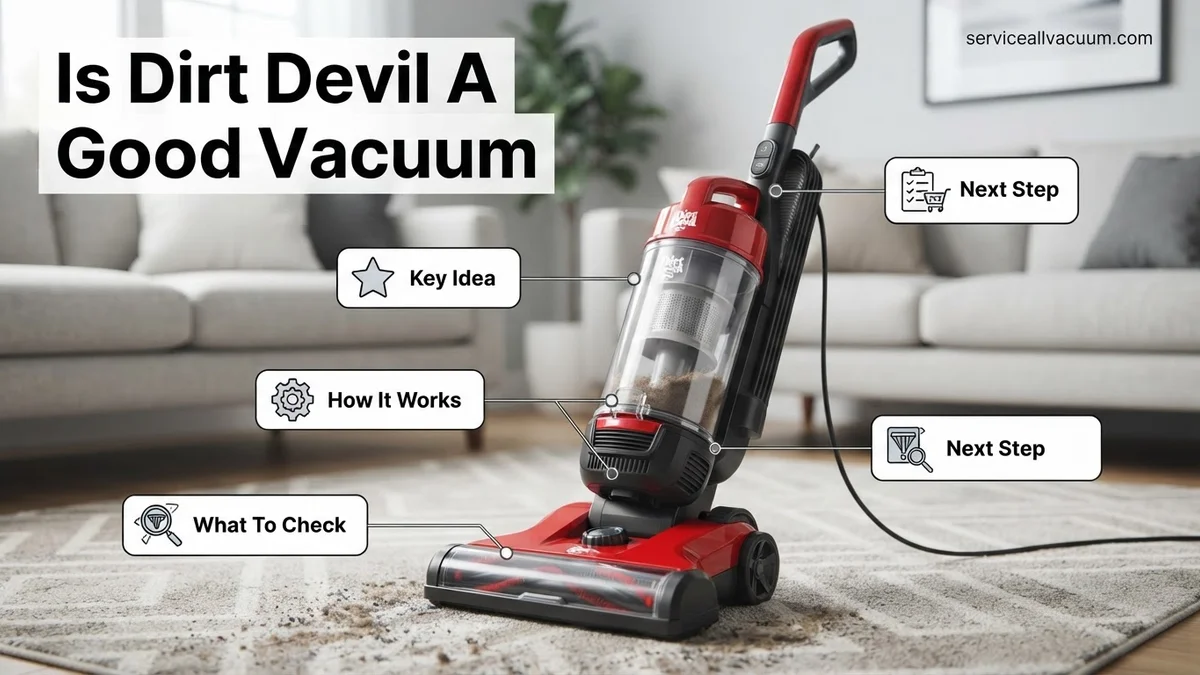
What Causes Dirt Devil Vacuums to Struggle with Heavy Carpeting
Deep-pile carpets and dense rugs present the ultimate test for budget vacuum cleaners. While premium brands invest heavily in motorized brush rolls and high-torque suction motors, Dirt Devil focuses primarily on lightweight convenience and affordability.
Brush Roll Design and Motor Limitations
Most Dirt Devil upright and stick models rely on lighter, friction-driven or lower-wattage motors to keep the overall machine weight down. When these motors encounter thick carpet fibers:
- Suction paths can compress against the carpet surface, restricting airflow and reducing debris pickup.
- Brush rolls may lack the aggressive rotational torque needed to pull embedded pet hair and grit from deep within carpet backing.
- The absence of manual height adjustments on many entry-level models means the vacuum can clamp down too tightly onto plush carpets, making it difficult to push.
Surface-Specific Performance Realities
Performance varies dramatically depending on the flooring type in your living space. If your home features predominantly hard flooring, tile, and low-pile area rugs, a Dirt Devil will generally perform quite well. However, tackling wall-to-wall carpeting requires a shift in expectations. You will likely need to make multiple passes over the same area to capture fine dust and embedded debris, and you may still need a professional carpet cleaning service periodically to deep-clean the fibers.
How to Evaluate Performance and Suction Power Across Models
Assessing whether a Dirt Devil model is worth your hard-earned money means looking closely at raw suction metrics, airflow design, and real-world cleaning capabilities across different environments.
Suction Strength and Airflow Dynamics
Budget vacuums often trade raw air watts for energy efficiency and lightweight portability. When shopping the 2026 Dirt Devil lineup, keep these performance indicators in mind:
- Amperage and Wattage: Corded models typically range between 7 to 10 amps, providing adequate surface suction for hard floors and short carpets.
- Cyclone Technology: Multi-cyclonic separation systems help maintain suction power as the dust cup fills, preventing premature clogging.
- Sealed Systems: Entry-level units rarely feature complete HEPA sealing, meaning some fine dust particles may bypass the filter and exhaust back into the room.
Durability and Price-to-Value Ratio
The true strength of a Dirt Devil lies in its exceptional price-to-value ratio. Retailing usually between forty and one hundred dollars, these vacuums offer functional cleaning for a fraction of the cost of luxury brands. Durability, however, directly reflects that price point. You will encounter more plastic components, shorter hose lifespans, and motors that may wear out after two to four years of heavy daily use. For renters, college students, or anyone needing a reliable backup vacuum for quick kitchen spills, the low upfront cost heavily outweighs the long-term durability limitations.
How to Fix Common Airflow and Suction Loss Issues
Suction loss is the most frequent complaint regarding budget-friendly cleaning appliances. When a Dirt Devil vacuum loses power, restricted airflow is usually the primary culprit. According to consumer appliance studies, over 70 percent of suction failures stem from clogs or neglected maintenance rather than mechanical failure.
Clearing Blockages and Hose Obstructions
Debris can easily pack tightly inside the flexible hose or intake nozzle. Follow these precise steps to clear internal blockages safely:
- Unplug the vacuum entirely from the electrical outlet to prevent accidental activation.
- Detach the flexible hose from the main body and inspect the interior using a flashlight.
- Push a flexible broom handle or a blunt-ended rod gently through the hose to dislodge trapped pet hair or large debris.
- Check the brush roll housing and clear away tangled threads, hair, and carpet fibers wrapped around the roller bar.
Filter Maintenance and Replacement
Most modern Dirt Devil models utilize cyclonic separation paired with foam or pleated filters. If these filters become saturated with fine dust, suction drops dramatically. Wash foam filters every three months under lukewarm water without using harsh detergents. Allow them to air-dry completely for a minimum of 24 hours before reinsertion. Operating a vacuum with a damp filter creates a muddy barrier that halts airflow instantly and can burn out the motor.
What If It Still Doesn’t Work?
If basic troubleshooting fails to restore performance, deeper mechanical issues may be at play. When a vacuum continues to underperform despite clean filters and clear hoses, consider the following fallback steps:
- Inspect the motorized brush roll belt for stretching, cracking, or snapping. Replacement belts typically cost between $5 and $15 and can be installed at home.
- Test the thermal cutoff switch. If the vacuum shuts down unexpectedly during operation, the motor may be overheating due to prolonged restriction. Allow the unit to cool for 45 minutes before restarting.
- Verify the condition of the motor brushes and electrical connections. Worn carbon brushes inside the motor assembly will cause intermittent power failures.
- Evaluate repair costs versus replacement value. Because standard Dirt Devil uprights and stick vacuums retail between $40 and $130, professional repair labor rarely makes financial sense if the unit is out of warranty.
- Contact the manufacturer customer service line or visit an authorized service center if your unit is still covered under the standard one-year limited warranty.
Conclusion
Determining whether a Dirt Devil is a good vacuum depends on realistic expectations regarding budget cleaning power and routine upkeep. While they excel at quick surface pickups in smaller living spaces, they require diligent filter washing and clog clearing to maintain optimal airflow. According to verified research and consumer appliance data, addressing suction loss early through systematic troubleshooting dramatically extends the operational lifespan of budget vacuums. Take the next step by inspecting your unit’s filters today and establishing a monthly maintenance routine to ensure peak cleaning efficiency throughout 2026.
❓ Frequently Asked Questions
Is Dirt Devil a good vacuum for everyday whole-home cleaning?
Dirt Devil vacuums work well for apartments, dorms, and quick surface cleanups. However, for large multi-level homes with heavy traffic and deep carpets, a more robust brand is recommended.
How does suction power compare to more expensive brands?
While initial suction is often surprisingly strong for the price, budget motors can lose efficiency faster over time, especially if filters are neglected.
Are Dirt Devil cordless vacuums worth buying?
Their cordless stick vacuums are highly convenient for quick vehicle cleanups and stairs, though battery life is typically limited compared to premium competitors.
What are the most common complaints about Dirt Devil vacuums?
Users frequently cite short cord lengths, smaller dust cup capacities, and plastic components that require careful handling to avoid breakage.
How often should I clean the filters on a Dirt Devil vacuum?
To maintain optimal suction and protect the motor, you should rinse and completely dry foam filters every 2 to 4 weeks depending on usage.
Are replacement parts easily accessible for Dirt Devil products?
Yes, replacement filters, belts, and attachments are readily available directly from the manufacturer and major online retailers.