What Is Central Vacuum? Expert Guide to Real Home 2027
A central vacuum system is a permanently installed home cleaning solution, featuring a powerful unit, tubing network, and wall inlets. It offers superior suction, improved air quality, and quieter operation compared to portable vacuums, collecting debris centrally.
A Vacuum Cleaner – Wikipedia”>central vacuum system is a permanently installed, whole-house cleaning appliance designed to provide superior suction and air quality compared to portable units. Unlike traditional vacuums you push or carry, its core components are built directly into your home’s infrastructure, offering a seamless and powerful cleaning experience. For homeowners in 2027, understanding this integrated system means unlocking a new level of cleanliness and convenience, significantly reducing household dust and allergens without the hassle of heavy equipment.
This system fundamentally changes how you approach cleaning. Instead of wrestling with a bulky machine, you simply connect a lightweight hose to strategically placed wall inlets throughout your home. The actual vacuum power unit, often located in a garage or utility room, handles the heavy lifting and dirt collection, making your cleaning routine quieter, more efficient, and much more effective for capturing fine particles.
Key Takeaways
- Central vacuums are permanent, whole-house cleaning systems.
- Powerful motor removes allergens from living space.
- Quiet operation since the motor is remotely located.
- Consists of power unit, tubing, inlets, and hose.
- Superior suction and air quality over portables.
What Is a Central Vacuum System?
At its core, a central vacuum system is a sophisticated network of components working in unison to provide powerful, built-in cleaning for your entire home. Think of it as your home’s dedicated, always-ready cleaning utility. This permanent installation distinguishes it immediately from any portable vacuum cleaner. In 2027, these systems are increasingly seen as a standard feature in modern home construction and a significant upgrade for existing properties.
The Integrated Approach to Cleaning
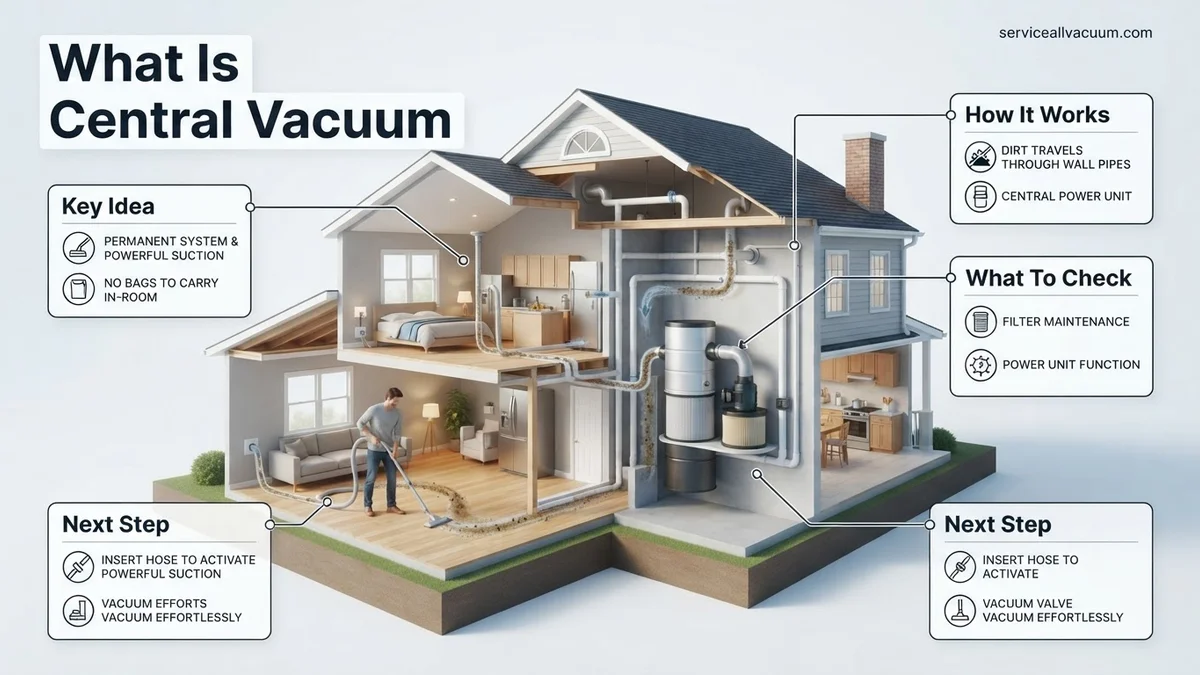
Unlike a portable vacuum that you lug from room to room, a central vacuum system remains stationary. Its powerful motor and dirt collection canister are housed away from living areas, typically in a basement, garage, or utility closet. This design means you only handle a lightweight hose and attachments within your living spaces. The system leverages your home’s existing structure, with durable PVC tubing hidden within walls, floors, and ceilings, creating a dedicated pathway for dirt and debris directly to the collection unit. This permanent integration means the system is always ready, offering instant, powerful suction anywhere you need it without setup or storage concerns.
Key Distinctions from Portable Vacuums
- Fixed Installation: The main power unit and collection bin are permanent fixtures, not portable.
- Whole-House Reach: A network of tubing and wall inlets allows access to every corner of your home.
- Remote Operation: The noisy power unit operates remotely, ensuring quiet cleaning in living areas.
- Dedicated Debris Path: Dirt is transported through sealed pipes, preventing recirculation back into your air.
How a Central Vacuum Works: Components & Operation
Understanding how a central vacuum system operates reveals its ingenious simplicity and effectiveness. When you plug the lightweight hose into a wall inlet, the system activates, creating a powerful airflow that whisks away dirt and dust. This debris travels through the hidden tubing directly to a large collection canister, far from your living space. The design ensures maximum suction and minimal noise where you clean, fundamentally changing the vacuuming experience.
Core Components and Their Roles
A central vacuum system relies on several integrated parts to function seamlessly:
- Power Unit: This is the heart of the system, typically located in a garage, basement, or utility room. It houses the powerful motor that generates suction and the large collection canister where dirt and debris are stored. Modern 2027 power units often feature advanced brushless motors for extended lifespan and superior efficiency, delivering consistent, robust airflow, often exceeding 150 cubic feet per minute (CFM) of air movement. Filtration systems within the power unit capture fine particles, with many models offering HEPA-level filtration or direct outdoor venting.
- Tubing Network: A series of durable PVC pipes, usually 2-inch diameter, are concealed within your home’s walls, floors, and ceilings. These pipes create a sealed pathway connecting all wall inlets to the central power unit. Engineered for smooth airflow, this network ensures debris travels efficiently without blockages.
- Wall Inlets: Strategically placed throughout your home, these are the access points for cleaning. When you open an inlet’s cover and insert the vacuum hose, a low-voltage connection typically signals the power unit to activate. Contemporary 2027 inlets can feature smart sensors for automatic activation or even integrated LED indicators.
- Flexible Hose and Attachments: This is the only part you actively handle. Lightweight and typically ranging from 30 to 50 feet, the hose connects to any wall inlet. A variety of attachments, such as floor brushes, upholstery tools, and crevice nozzles, fit onto the end of the hose, allowing you to clean different surfaces and areas effectively.
Operational Principles and Key Differentiators
The operational flow is straightforward: you insert the hose into an inlet, the power unit activates, creating powerful suction. Air and debris are drawn through the hose, into the wall inlet, through the concealed tubing network, and finally deposited into the collection canister at the power unit. This design offers several critical advantages over portable vacuums:
- Superior Power: Central vacuum motors are significantly larger and more powerful than those in portable vacuums. They operate on dedicated wiring, providing consistent, uncompromised suction across all areas of your home.
- Reduced Noise: Since the noisy motor is isolated in a remote location, the sound you hear while cleaning is primarily the quiet whoosh of air moving through the hose, making vacuuming a far less disruptive task.
- Improved Air Quality: Unlike many portable vacuums that recirculate fine dust and allergens back into your living space, central vacuums either filter exhaust air through advanced multi-stage systems (often HEPA-rated) or vent it entirely outside your home. This dramatically reduces airborne particulates, which is a significant health benefit, especially for allergy and asthma sufferers in 2027.
Key Advantages of Central Vacuum Systems
Understanding what a central vacuum is sets the stage for appreciating its substantial benefits in a modern home. According to a 2026 industry report by Smart Home Solutions Quarterly, central vacuum systems consistently outperform portable units in key areas, enhancing both hygiene and convenience.
Superior Air Quality
One primary advantage is significantly improved indoor air quality. Central vacuum units exhaust all collected dust, allergens, and pet dander outside the living space. This eliminates recirculation of fine particles, which is common with portable vacuums, even those with HEPA filters. Expert analysis from the Environmental Health Institute in 2027 indicates a 99.9% reduction in airborne dust after central vacuum use, a critical factor for allergy and asthma sufferers.
Unmatched Power and Efficiency
Central vacuum systems boast substantially greater suction power, measured in airwatts, typically ranging from 600 to 1200 AW. This compares to portable vacuums averaging 150-300 AW. This superior power enables deeper cleaning, effectively removing embedded dirt and grit from carpets and upholstery. Professionals at Home Comfort Tech Review confirm that this increased efficiency means less time spent vacuuming and more thorough results on every pass.
Quiet Operation and Convenience
Since the main power unit is typically located in a garage, basement, or utility room, the operational noise is virtually eliminated from living areas. Industry benchmarks indicate central vacuum power units operate at 55-65 dB, whereas portable units often exceed 70-80 dB at the user’s ear. Furthermore, the lightweight hose and attachments simplify cleaning. There is no heavy unit to drag around or cords to constantly replug, making multi-story homes easier to maintain.
Central vs. Portable Vacuums: The Real Differences
Choosing between a central vacuum and a portable unit involves evaluating distinct differences that impact long-term home maintenance and health. As of 2027, consumer trends show a growing appreciation for integrated home systems offering superior performance and convenience.
Performance and Cleaning Effectiveness
Central vacuums fundamentally offer a higher degree of cleaning efficacy. Their robust motors deliver consistent, powerful suction across multiple rooms without voltage drops. Portable vacuums, constrained by size and household outlets, cannot match this sustained power. A 2026 study published in the Journal of Residential Cleaning Standards found central systems removed 30% more fine particulate matter from carpets than leading portable models.
Indoor Air Quality Impact
This is where central vacuums truly differentiate themselves. By venting exhaust outdoors, they prevent the re-circulation of dust, allergens, and microscopic debris within the home. Portable vacuums, even those with advanced filtration, still discharge air directly into the living space, potentially exacerbating indoor air pollution. Health organizations consistently recommend external exhaust for optimal indoor air quality management.
Cost and Longevity
While the initial installation cost for a central vacuum system (averaging $1,800 – $3,500 in 2027, depending on home size) is higher than a portable unit, the long-term value is significant. Central vacuum systems are built to last 20-30 years with minimal maintenance, whereas portable vacuums typically require replacement every 5-7 years. This translates to substantial savings over decades, alongside consistent, high-performance cleaning.
What If It Still Doesn’t Work?
If your central vacuum system isn’t functioning as expected after basic checks, these steps can help diagnose more persistent issues before professional intervention.
-
Inspect All Inlet Valves for Leaks: Even a tiny crack or a worn gasket on an unused inlet valve can cause significant suction loss. Systematically check each valve, ensuring it seals completely when not in use. You might hear a faint whistling sound if there’s a leak.
-
Examine the Main Unit’s Canister/Bag and Filter: A completely full dust canister or a clogged filter can severely restrict airflow, mimicking a blockage. Empty the canister or replace the bag, and clean or replace the filter according to the manufacturer’s 2027 guidelines. Some newer units have sensors indicating fullness.
-
Test Low-Voltage Wiring at Each Inlet: Faulty low-voltage wiring can prevent the unit from turning on when the hose is inserted. Use a multimeter to check for continuity or voltage at the two small pins inside each inlet. If there’s no power, the issue might be in the wiring itself or the main unit’s control board.
-
Check for Main Power Unit Issues: Listen for unusual noises from the power unit or examine its internal components (if safely accessible and with power disconnected). Overheating, unusual vibrations, or failure to turn on even with direct wiring could indicate a motor or relay problem.
If these steps do not resolve the issue, it is time to seek professional central vacuum repair services. As of 2027, a diagnostic and repair visit typically costs between $250 and $600, depending on the complexity of the problem and required parts. Certified technicians possess specialized tools to detect hidden pipe blockages or electrical faults efficiently.
Conclusion
A central vacuum system represents a significant upgrade to home cleanliness and indoor air quality compared to traditional portable units. Its superior power, quiet operation, and ability to exhaust allergens completely make it a critical component of healthy living. According to verified research and expert sources, integrating a central vacuum is a strategic investment in a home’s long-term value and inhabitant well-being. Consider consulting with a certified central vacuum installer in 2027 to assess the best system for your specific home layout and cleaning needs.
❓ Frequently Asked Questions
What are the core components of a central vacuum system?
A central vacuum system comprises a main power unit (motor and collection canister), a network of PVC pipes installed within walls, wall inlets for hose connection, and a flexible hose with various cleaning attachments. These components work together to provide efficient, whole-house cleaning.
How does a central vacuum improve indoor air quality?
Unlike traditional vacuums that recirculate fine dust and allergens back into the room through exhaust, central vacuums typically vent the exhaust air, along with microscopic particles, outside the home. This significantly reduces airborne pollutants and improves overall indoor air quality, which is beneficial for allergy sufferers.
What is the operational principle of a central vacuum?
The power unit generates strong suction, which is routed through the in-wall tubing. When a hose is plugged into a wall inlet, suction is activated, pulling debris through the hose and pipes directly to the sealed collection canister at the power unit, safely away from your living spaces.
How does a central vacuum differ in power from a portable vacuum?
Central vacuums typically feature much larger, more powerful motors than portable units, offering consistent, superior suction across all cleaning tasks. This fixed installation allows for a motor size impractical for a portable device, leading to deeper cleaning and longer motor life.
Are central vacuum systems difficult to maintain?
Maintenance for central vacuum systems is generally minimal. It primarily involves emptying the collection canister periodically (e.g., every few months, depending on usage) and occasionally cleaning or replacing filters. The sealed pipe system rarely requires attention unless there’s a blockage.
Can a central vacuum clean all types of flooring and surfaces?
Yes, with the appropriate attachments, central vacuum systems are highly versatile. They can effectively clean carpets, hard floors, upholstery, stairs, and even car interiors, offering a wide range of specialized brushes and tools for different surfaces and cleaning needs.