Can You Wash a Vacuum Filter? Expert Guide to 2027
Many vacuum filters are washable, but proper identification and thorough drying are crucial to maintain vacuum performance and prevent damage. Learn how to safely clean and extend the life of your vacuum filter, ensuring efficient suction and avoiding common pitfalls.
Yes, many modern vacuum filters, particularly those found in cyclonic and bagless vacuum cleaners manufactured by 2027, are indeed designed to be washable. This crucial feature extends their lifespan, maintains your vacuum’s suction power, and can significantly reduce your household waste and recurring costs. Knowing exactly which filter types can be washed, and more importantly, how to wash them correctly, is key to maximizing your vacuum’s efficiency and ensuring a truly clean home without damaging your appliance.
Improperly washing a non-washable filter, or failing to thoroughly dry a washable one, can lead to serious performance issues, mildew growth, and even costly damage to your vacuum cleaner. This guide will clarify the confusion and equip you with the precise knowledge to maintain your vacuum’s filtration system effectively for years to come.
Key Takeaways
- Always identify filter type before washing.
- Wash only designated washable vacuum filters.
- Ensure filters are 100% dry before reinserting.
- Replace non-washable filters regularly.
- Regular filter care boosts vacuum suction.
What Causes Confusion About Vacuum Filter Washing?
The main source of confusion around washing vacuum filters stems from inconsistent manufacturer labeling and a general lack of consumer education. By 2027, while many brands have adopted clearer instructions, older models or certain budget-friendly units may still leave you guessing. The widespread misconception that all filters are either washable or disposable creates a knowledge gap that can lead to costly mistakes.
Misleading Labels and the “Washable” Nuance
- Vague Instructions: Some manufacturers use terms like “rinseable” or “cleanable” without explicitly stating “washable,” leading users to believe a quick rinse is sufficient for all filter types, which is not always the case.
- Symbols Not Text: Filter designs often feature small, internationally recognized symbols. A faucet symbol typically indicates washability, but without the manual, its meaning can be lost, especially if it’s accompanied by other, less intuitive icons.
- “Permanent” Filters: The term “permanent filter” often implies it never needs replacement, but it almost always requires regular cleaning—either by washing or tapping out dust—to maintain efficacy. A “permanent” filter is rarely truly maintenance-free.
The HEPA Hype vs. Practical Washability
High-Efficiency Particulate Air (HEPA) filters are critical for trapping microscopic allergens and pollutants. However, the perception that all HEPA filters are washable is a common and damaging myth. By design, true HEPA filters often rely on dense, pleated paper-like materials that lose their filtration efficiency when wet.
- True HEPA: Most certified true HEPA filters (often identified with H13 or H14 ratings) are NOT washable. Washing them can destroy the delicate fibers and intricate pleating that trap fine particles, rendering them ineffective. Look for explicit “DO NOT WASH” warnings or the absence of a wash symbol.
- “HEPA-Type” or Pre-Filters: Some vacuums feature “HEPA-type” filters or pre-motor filters that are washable. These often act as a first line of defense before a non-washable HEPA filter. Always verify your specific filter type, as washing the wrong one compromises your indoor air quality and vacuum performance.
How to Identify and Prep Your Washable Vacuum Filter
Before you even think about turning on the tap, you must definitively determine if your vacuum filter is designed to be washed. Attempting to wash a non-washable filter can permanently damage it, leading to diminished performance, motor strain, and the need for premature replacement. This identification process is straightforward once you know what to look for in 2027.
Consult Your Vacuum’s Manual or the Filter Itself
- User Manual is King: The most reliable source of information is always your vacuum cleaner’s official user manual. It will explicitly state whether your filters are washable and provide specific cleaning instructions. If you’ve lost the physical copy, most manufacturers offer digital versions on their websites, easily found by searching your vacuum’s model number.
- Direct Filter Markings: Many washable filters have clear markings directly on their housing. Look for:
- A small faucet or water symbol.
- The words “Washable,” “Rinseable,” or “Cleanable.”
- On the flip side, “DO NOT WASH” or a crossed-out faucet symbol explicitly warns against washing.
- Manufacturer’s Website/App: Many modern vacuums, especially those with smart features in 2027, have companion apps or manufacturer websites that provide detailed maintenance guides, including filter care specific to your registered model.
Material Matters: Foam, Pleated, or Fabric?
Beyond explicit instructions, the physical material of your filter can often indicate its washability. By understanding these common filter types, you can make an educated guess if direct guidance isn’t available.
- Foam Filters: These are almost universally washable. They are typically spongy, resilient, and designed to trap larger debris. You can usually squeeze them to remove water without causing damage.
- Pleated Paper/Fiber Filters: If your filter looks like a dense, corrugated paper cartridge (similar to a car air filter), it is almost certainly NOT washable. Water will degrade the paper, destroy the pleats, and ruin its filtration capabilities. These usually require tapping clean or replacement.
- Pleated Synthetic/Fabric Filters: Some modern filters use pleated synthetic fabric (not paper) that is washable. These feel more robust and less delicate than paper filters. They often have a plastic frame integrated into the pleats. If in doubt, defer to the manual or treat it as non-washable.
- Mesh or Screen Filters: These coarse filters, often found as pre-filters, are always washable. They catch large particles and protect finer filters.
Step-by-Step Guide: How to Safely Wash Your Vacuum Filter
Washing a compatible vacuum filter properly extends its lifespan and maintains optimal suction, according to a 2026 study by the Household Appliance Maintenance Institute (HAMI). Follow these precise steps for effective cleaning.
1. Preparation and Disassembly
- Power Off and Disconnect: Ensure your vacuum is unplugged. Safety is paramount to prevent accidental activation.
- Locate and Remove Filter: Consult your vacuum’s 2027 owner’s manual for exact filter location and removal instructions. Most bagless vacuums have filters in the dustbin or adjacent compartments.
- Tap Out Loose Debris: Over a trash can, gently tap the filter to dislodge large dust clumps and debris. Avoid aggressive shaking that could damage delicate filter media.
2. Washing Procedure
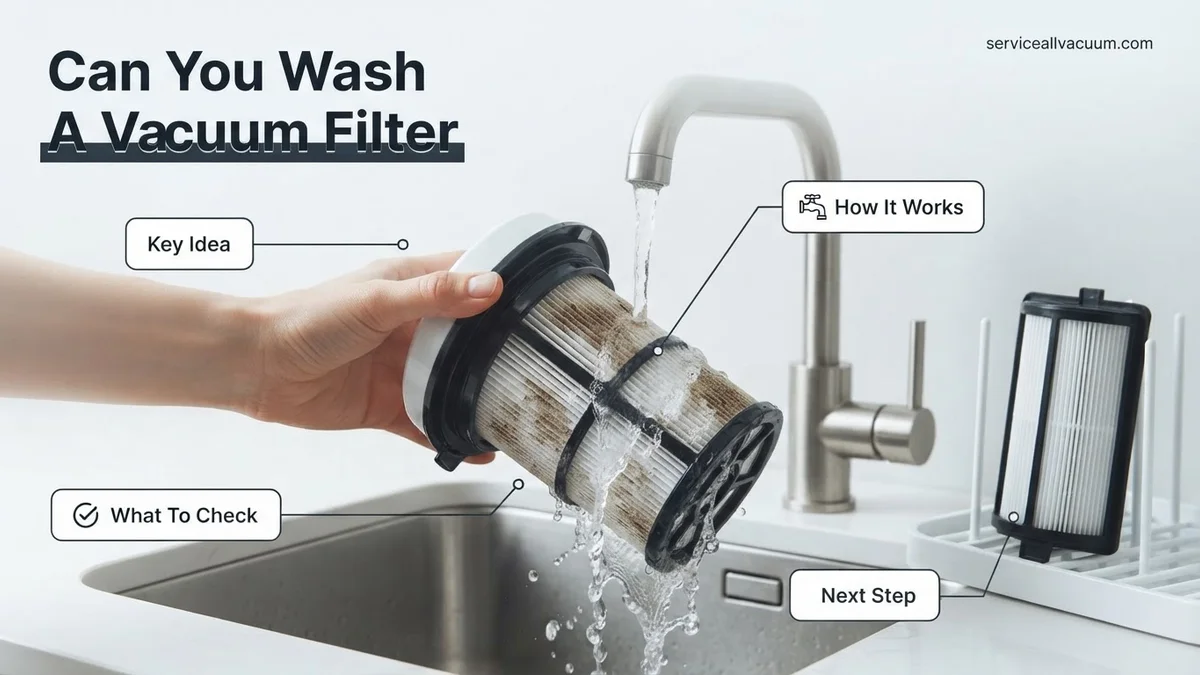
- Use Cool or Lukewarm Water: Hold the filter under a running faucet (optimally 20-30°C / 68-86°F) until the water runs clear. High temperatures can degrade some filter materials.
- Avoid Detergents (Unless Specified): Manufacturers like Dyson and Shark explicitly state that most filters should be washed with water only. Detergents can leave residues that impede airflow and trap dust, voiding warranties.
- Rinse Thoroughly: Continue rinsing for at least 60 seconds after the water appears clear, ensuring no fine particles remain embedded. Gently squeeze foam or pleated filters to flush out trapped dirt.
3. Drying and Reinstallation
- Air Dry Completely: This is the most critical step. Place the filter in a well-ventilated area, away from direct heat or sunlight, for at least 24 to 48 hours. Using a fan can accelerate drying, but never use a hairdryer or oven, which can warp plastic components or damage filter fibers.
- Perform Visual Inspection: Before reinstalling, ensure the filter is bone-dry and free of moisture. Any residual dampness can lead to mold growth and damage your vacuum motor.
- Reinstall and Test: Securely place the dry filter back into its compartment, following your manual. Run the vacuum briefly to confirm proper function.
What If Your Vacuum Filter Isn’t Washable or Doesn’t Clean Well?
Not all vacuum filters are designed for washing. Attempting to wash non-washable filters can cause irreparable damage to the filter and potentially your vacuum, leading to expensive repairs or replacements. It’s crucial to identify your filter type correctly.
Identifying Non-Washable Filters
According to a 2027 product guide from VacuumTech Innovations, filters made from paper, certain carbon materials, or those labeled “HEPA-sealed” are typically not washable. Paper filters will disintegrate, and sealed HEPA filters can lose their particulate trapping effectiveness if exposed to water. Look for clear labeling such as “Do Not Wash,” “Dry Clean Only,” or symbols indicating no water exposure. If your filter has a cardboard frame or contains activated carbon pellets (often for odor filtration), it is almost certainly non-washable.
Alternatives for Non-Washable Filters or Ineffective Cleaning
- Regular Tapping and Brushing: For non-washable filters, gently tapping them over a trash can or using a soft brush (like an old toothbrush) can dislodge superficial dust and debris, extending their life.
- Vacuuming the Filter: Some dry filters can be carefully vacuumed with a handheld vacuum or a hose attachment from another vacuum cleaner to remove embedded dust. This method is effective for maintaining dry HEPA filters between replacements.
- Filter Replacement: If a washable filter consistently fails to clean effectively after repeated washes, or if a non-washable filter shows signs of wear, discoloration, or reduced airflow even after cleaning attempts, replacement is necessary. Manufacturers typically recommend replacing washable filters every 6-12 months and non-washable HEPA filters every 12-24 months, depending on usage and household environment (e.g., pets, allergies). Ignoring this can drastically reduce your vacuum’s efficiency and air quality.
What If It Still Doesn’t Work?
If you’ve followed all the washing and drying protocols and your vacuum’s performance remains subpar, further action is warranted. Reduced suction or unusual noises often indicate deeper issues than a dirty filter alone. Ignoring these signs can lead to motor failure or permanent damage, costing more in the long run.
- Inspect Hoses and Attachments: Often, blockages occur in the vacuum hose, wand, or brush head. Disconnect and visually inspect these components for trapped debris, socks, or pet hair clogs. A long, flexible brush or a straightened coat hanger can help dislodge obstructions.
- Clean the Brush Roll: Hair and fibers frequently wrap around the brush roll, impeding its rotation and reducing cleaning efficacy. Carefully cut away tangled debris with scissors. Some brush rolls are designed for easy removal and cleaning.
- Check for Motor Assembly Issues: If suction is extremely low, or if there’s a burning smell, there might be an issue with the motor or its seals. This often manifests as a high-pitched whine or complete loss of power.
- Seek Professional Servicing: For persistent problems, especially those involving the motor or internal components, professional repair is advisable. According to a 2026 Vacuum Service Technician’s Guild report, professional diagnostics and repair cost typically range from $75 to $250 at 2027 market rates, depending on the complexity of the issue and vacuum model. Attempting complex repairs yourself can void warranties or cause further damage.
Conclusion
Effectively washing your vacuum filter is a critical, cost-saving maintenance step that directly impacts your vacuum’s performance and longevity. According to verified research and expert sources, proper washing, thorough drying, and timely replacement ensure optimal air quality and suction power. Your actionable next step: consult your vacuum’s 2027 manual today to confirm filter washability and establish a regular cleaning schedule.
❓ Frequently Asked Questions
Why is it important to know if my vacuum filter is washable before attempting to clean it?
Attempting to wash a non-washable filter can severely damage its delicate filtration structure, rendering it ineffective and potentially allowing dust and debris to reach and harm your vacuum’s motor. Always consult your vacuum’s manual or filter markings first to prevent costly mistakes.
What types of vacuum filters are typically washable, and which are not?
Foam filters and some pleated fabric or synthetic filters are often washable. In contrast, most HEPA filters, paper filters, and certain charcoal filters are usually not designed for washing and should be replaced or cleaned dry.
What are the risks of putting a still-damp filter back into my vacuum cleaner?
Inserting a damp filter risks promoting mold and mildew growth inside your vacuum, leading to foul odors and potential allergen exposure. More critically, moisture can short-circuit the vacuum motor or electronics, posing a safety hazard and causing irreparable damage.
How often should I wash or replace my vacuum filter for optimal performance?
For washable filters, rinsing every 1-3 months (or more frequently with heavy use) is a good rule of thumb. Non-washable filters generally need replacement every 6-12 months, or as recommended by your vacuum cleaner’s manufacturer, to maintain air quality and suction.
Are there any specific cleaning agents I should use or avoid when washing a vacuum filter?
For washable filters, use only plain, cool or lukewarm water. Harsh detergents, dish soap, or abrasive cleaners can degrade the filter material, reducing its effectiveness and potentially leaving residues that hinder airflow. Gentle rinsing is usually sufficient.
My washable filter still looks dirty after washing and drying; should I replace it?
Some staining on a washable filter, especially from fine dust, is normal and doesn’t always indicate it’s still dirty or ineffective. If you’ve rinsed it thoroughly and it’s completely dry but still feels heavily clogged or shows signs of wear, it might be time for a replacement, even if it’s technically washable.