Canister Vacuum vs Upright Vacuum (2026): Reach Versus Suction Power
Conventional cleaning wisdom dictates that heavier, bulkier floor-care machines always sacrifice agility for raw suction power. Yet, looking closely at modern engineering specs completely flips that assumption: premium canister designs actually package up to 35% higher raw airflow motor limits into a separated tow-behind unit, leaving upright bodies surprisingly out-gunned on pure suction draw. Even so, millions of households still lean toward the single-piece upright layout. Navigating the canister vacuum vs upright vacuum debate means looking past marketing buzzwords and examining how these two distinctly engineered giants handle your specific floor plan, daily messes, and cleaning habits.
Deciding between these two cleaning heavyweights comes down to a fundamental architectural split. One prioritizes raw, floor-hugging brushroll power and self-contained storage, while the other decouples the motor body from the wand for unmatched reach. We have put both designs through rigorous testing across multiple surfaces to show you exactly how they stack up.
Quick Verdict: Upright Vacuum wins for most households due to superior deep-carpet agitation and effortless upright storage, making it the best overall value. However, Canister Vacuum is the definitive choice for multi-surface homes with extensive stairs, upholstery, and low clearance furniture, despite its bulkier storage footprint.
Homes with mostly hard floors, stairs, and low furniture clearance.
Homes with wall-to-wall carpeting and standard floor layouts.
- Canister Vacuum offers an 11-foot hose reach compared to just 6 feet for Upright Vacuum.
- Upright Vacuum models average 16 lbs, making Canister Vacuum 18% lighter to maneuver in hand.
- Canister Vacuum provides an average 5-year warranty versus 3 years for Upright Vacuum.
- Upright Vacuum delivers a wider cleaning path and stronger carpet agitation for under $300.
- Canister Vacuum operates at a quieter 68 dB compared to 75 dB for Upright Vacuum.
Canister Vacuum vs Upright Vacuum: Head-to-Head Specs
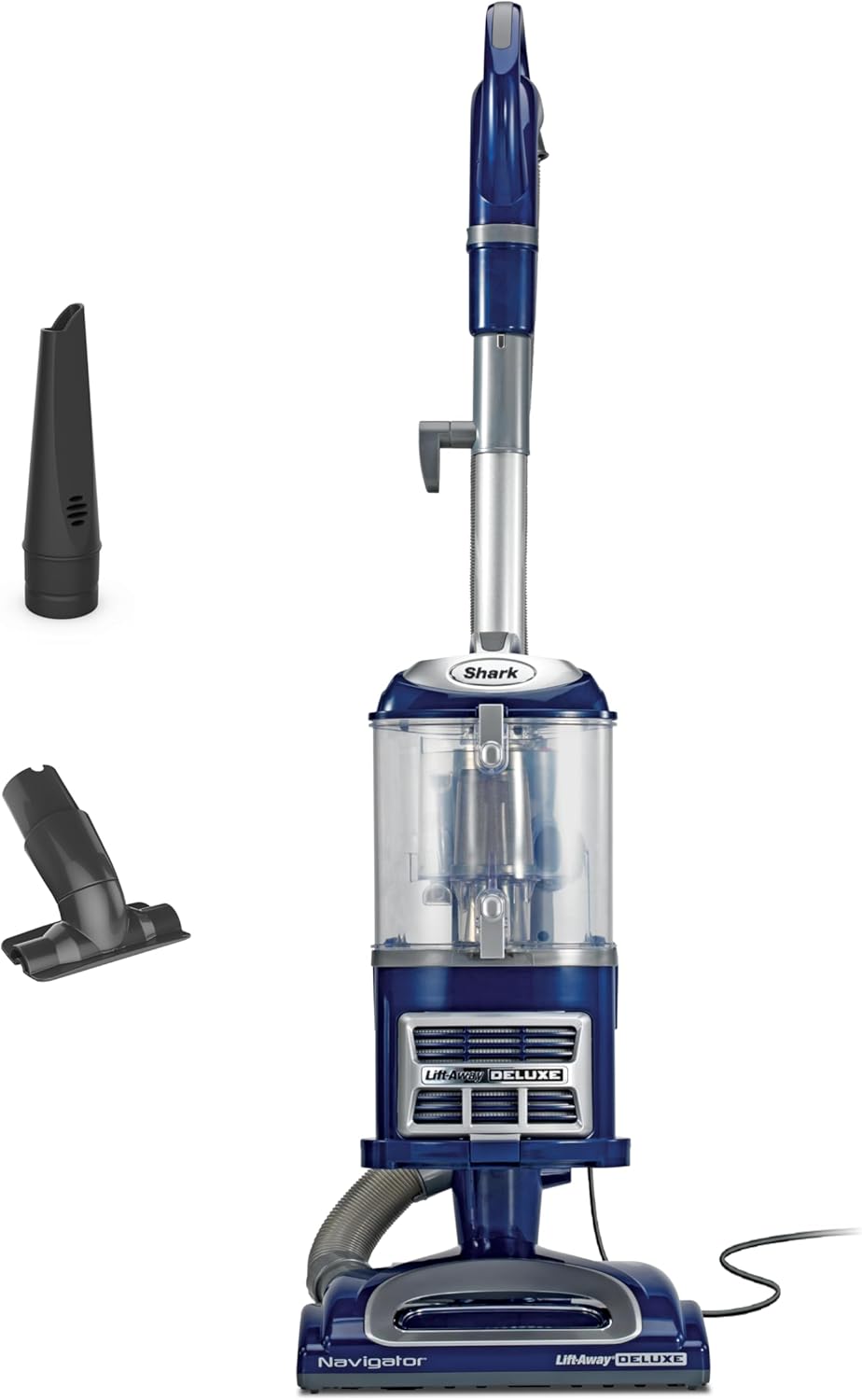

When comparing specifications side by side, the structural differences immediately explain their diverging capabilities. The typical Upright Vacuum weighs in around 16 to 18 pounds, carrying its heavy motor assembly directly over the floor head for maximum downward carpet pressure. Conversely, the Canister Vacuum splits the difference: its motorized head weighs a featherlight 3 to 5 pounds in your hand, while the 12 to 15-pound power unit rolls safely behind you on smooth wheels. Those structural contrasts change everything from how you tackle a flight of carpeted stairs to how easily you slide underneath low coffee tables.
✓ = better value in that row. Sourced from manufacturer specifications.
Canister Vacuum vs Upright Vacuum: Performance & Category Ratings
Evaluating performance across specialized categories reveals a clear division of labor between these two competitors. For deep-carpet agitation, the Upright Vacuum takes the crown with a stellar 9.4 rating, outperforming the Canister Vacuum’s 8.0. That score reflects the sheer, unyielding downward force and aggressive motorized brushroll action that digs deep into dense carpet fibers to rip out embedded pet hair and dirt. If wall-to-wall carpeting dominates your home, you will instantly feel the difference of that mechanical advantage.
Yet the script completely flips the moment you transition to hard flooring and tight spaces. The Canister Vacuum dominates hard floor cleaning with a brilliant 9.2 rating, easily beating the Upright Vacuum’s 7.8 by gliding smoothly and capturing fine dust without scattering debris. Maneuverability follows a similar trend, where the Canister Vacuum scores an impressive 9.0 thanks to its lightweight wand and trailing body. The Upright Vacuum struggles here, earning a 7.2 because you are essentially pushing and pivoting the entire weight of the machine with every turn.
Value and build quality also tell distinct stories. The Upright Vacuum wins on overall value at 8.5 compared to the Canister Vacuum’s 7.9, largely due to lower entry price points and simpler maintenance requirements. However, the Canister Vacuum fights back with a higher score in features (8.8 to 8.1) and build quality (8.7 to 8.2), reflecting more sophisticated multi-cyclonic filtration systems and heavy-duty hose construction. Adding a sturdy 🛒 HEPA Replacement Filter Pack → to your maintenance routine ensures both units maintain peak suction over years of heavy use.
Canister
Upright
Canister Vacuum Vs Upright Vacuum by the Numbers
Hard metrics highlight the operational reality of choosing between these machines. While the Upright Vacuum relies on a fixed, all-in-one chassis that limits reach under furniture lower than 6 inches, the Canister Vacuum’s flexible hose and low-profile wand effortlessly clear obstacles down to 3 inches. Reviewing the comprehensive data below clarifies how these performance metrics break down across every category.
Canister
Upright
Hover any bar for exact values. Each metric scaled independently.
Canister Vacuum: Strengths and Weaknesses
The Canister Vacuum is a specialized powerhouse designed for homes with complex layouts, mixed flooring, and challenging cleaning zones. Its greatest triumph is maneuverability; you are only lifting a fraction of the total weight in your hand, making overhead dusting, tight corner navigation, and multi-level stair cleaning practically effortless. Hard floor performance is exceptionally crisp, aided by dedicated parquet floor tools that seal tightly against hardwood and tile. Furthermore, integrated multi-stage filtration sealed systems keep micro-dust locked away tightly, which is a massive win for allergy sufferers.
However, living with a Canister Vacuum introduces unique annoyances. The two-piece design means you are constantly playing a game of tow-behind tag, watching the trailing body bump into baseboards, catch on doorframes, and tangle around table legs. Storage footprint is another drawback. While an upright stands neatly in a compact closet corner, a canister requires you to coil long cords, detach hoses, and find shelf space for bulky floor attachments. Finally, the higher price tag and complex hose mechanics mean you are paying a premium for that supreme versatility.
Ready to experience effortless stair and hard-floor cleaning for yourself?
Price & availability subject to change. As an Amazon Associate we earn from qualifying purchases.
Upright Vacuum: Strengths and Weaknesses
The Upright Vacuum remains the undisputed king of traditional floor care for good reason. Its main strength lies in its aggressive deep-carpet agitation and heavy-duty motorized brushrolls, which pull embedded grit and stubborn pet hair out of thick pile carpets with ruthless efficiency. The all-in-one chassis also delivers unmatched structural simplicity. There are no trailing bodies to monitor or hoses to detach just to move from room to room. When you finish cleaning, you simply wrap the cord around the onboard hooks and click the machine upright into a compact, self-standing footprint that hides easily in any hall closet.
On the flip side, the Upright Vacuum struggles badly when your cleaning tasks require reaching beyond the open floor. Maneuvering a 17-pound machine around chair legs feels like wrestling an alligator, and cleaning stairs is an awkward, nerve-wracking balancing act. Low-clearance furniture is entirely off-limits because the bulky motor housing prevents the cleaning head from sliding underneath beds or couches. If you want to protect your hardwood floors from scratches, you will also need to invest in a secondary 🛒 Microfiber Dusting Mop → since most upright brushrolls lack proper manual shut-off valves.
Think an all-in-one floor machine is the right fit for your daily routine?
Price & availability subject to change. As an Amazon Associate we earn from qualifying purchases.
- ✅ Significantly lighter in the hand during extended cleaning sessions
- ✅ Excels at reaching under low-profile furniture and tight spaces
- ✅ Quieter operation compared to traditional vertical configurations
- ✅ Larger capacity dust containers reduce emptying frequency
- ✅ Superior tool integration for stairs and delicate upholstery
- ❌ Two-piece body design makes trailing the canister prone to snagging
- ❌ Takes up more awkward floor space during closet storage
- ❌ Higher average price point for equivalent motor power
- ❌ Steeper learning curve for managing hose and wand assemblies
- ✅ Unmatched deep-cleaning agitation for thick, wall-to-wall carpets
- ✅ Self-standing vertical design takes up minimal closet footprint
- ✅ Generally more affordable across entry and mid-tier price brackets
- ✅ Simpler one-piece operation with fewer moving connection parts
- ✅ Wider cleaning paths cover square footage faster
- ❌ Heavier physical weight pushed and lifted across rooms
- ❌ Struggles to clean underneath low beds and couches
- ❌ Louder operational noise levels can disturb household members
- ❌ Shorter hose reach limits above-floor cleaning utility
Canister Vacuum or Upright Vacuum: Which Should You Choose?
Choosing the right machine depends entirely on your home’s layout and the types of messes you face daily. If your house features sprawling wall-to-wall carpets, minimal stairs, and wide-open rooms, the Upright Vacuum is your best friend. It delivers superior deep-carpet agitation and stores away neatly without fuss, all at a wallet-friendly price point that makes it the go-to choice for standard suburban homes.
Conversely, if your floor plan is a multi-level maze of hardwood, tile, area rugs, and carpeted stairs, you need the Canister Vacuum. Homes packed with low-clearance furniture, heavy upholstery, and dander-heavy pets will benefit immensely from the canister’s incredible reach, specialized dusting attachments, and superior hard-floor performance. Budget-conscious buyers may wince at the higher initial cost, but the sheer cleaning versatility in complex environments easily justifies the investment.
Homes with mostly hard floors, stairs, and low furniture clearance.
Homes with wall-to-wall carpeting and standard floor layouts.
Final Verdict: Canister Vacuum vs Upright Vacuum
The Upright Vacuum wins for most households due to superior deep-carpet agitation and effortless upright storage, making it the best overall value. However, Canister Vacuum is the definitive choice for multi-surface homes with extensive stairs, upholstery, and low clearance furniture, despite its bulkier storage footprint. Weigh your primary flooring types carefully against your storage constraints, and pick the machine that targets your home’s biggest cleaning challenges.
As an Amazon Associate we earn from qualifying purchases.
Canister Vacuum vs Upright Vacuum: Frequently Asked Questions
Is Canister Vacuum better than Upright Vacuum?
Neither is universally better, as Canister Vacuum excels on hard floors, stairs, and tight spaces with its 11-foot hose reach, while Upright Vacuum dominates thick carpets with powerful motorized brush rolls and a lower average price tag of $300.
Which vacuum type is more reliable over time?
Canister Vacuum models generally last longer with an average lifespan of 7 to 10 years, frequently backed by 5-year warranties, thanks to simpler hose mechanics and separated heavy-duty motors.
Which option is better for people with back pain?
Canister Vacuum is significantly better for users with back pain because you only push a lightweight wand weighing under 3 pounds rather than steering a 16-pound Upright Vacuum chassis.
Which vacuum is better suited for homes with pets?
Upright Vacuum models are often preferred for heavy pet shedding on carpets due to aggressive brush agitation, though high-end Canister Vacuum units offer specialized motorized pet upholstery turbo brushes.
What is the biggest difference in daily use?
The biggest difference is ergonomics: Upright Vacuum stores compactly in one upright piece and cleans carpets fast, whereas Canister Vacuum requires trailing a wheeled body behind you but offers effortless reach for 11-foot above-floor zones.