How Do Vacuum Filters Work? Proven Expert Guide 2027
Vacuum filters effectively capture dust and allergens by physically trapping particles as air passes through a dense medium. This process prevents contaminants from recirculating into your home, ensuring cleaner exhaust air and critically protecting the vacuum motor from damage. Different filter types employ various scientific methods, including impaction, interception, and diffusion, to achieve optimal particle removal.
Understanding how your vacuum cleaner filter truly works is key to maintaining clean air in your home and extending your appliance’s life. At its core, a vacuum filter is a physical barrier designed to separate microscopic dust, allergens, and debris from the air stream. When your vacuum pulls air in, it’s not just suction doing the work; it’s a sophisticated process where particles are physically trapped, impacted, or even diffused within a complex fibrous structure. This mechanical separation ensures that only cleaned air is exhausted back into your environment, preventing recirculation of pollutants.
Knowing this process isn’t just academic. For you, it translates directly into better indoor air quality, especially crucial in 2027 with increasing awareness of airborne irritants. An optimally functioning filter means less dust settling on surfaces, fewer allergens triggering sensitivities, and your vacuum operating at peak efficiency. When your filter works as intended, your home truly gets cleaner, not just superficially.
Key Takeaways
- Filters physically block particles from airflow.
- HEPA filters capture microscopic particles via diffusion.
- Regular cleaning extends filter life, boosts vacuum power.
- Proper filtration protects vacuum motor from damage.
- Clean filters ensure healthier, allergen-free exhaust air.
What Causes Poor Vacuum Filter Performance?
Even the most advanced filtration systems designed for 2027 homes can underperform. The primary culprits often trace back to issues that directly impede the filter’s mechanical ability to capture particles. It’s not just about a “dirty” filter; it’s about how that dirt compromises the entire filtration process.
Clogged Pores and Reduced Airflow
The most common reason for a dip in performance is simple: the filter’s pores get clogged. As dust and debris accumulate, they form a solid layer on the filter’s surface and within its fibers. This blockage has several critical consequences:
- Reduced Suction: Air can no longer pass through the filter easily, creating back pressure and significantly diminishing your vacuum’s suction power. Think of trying to breathe through a thick cloth.
- Decreased Filtration Efficiency: While it might seem counterintuitive, an overly clogged filter can become less effective. The airflow pattern changes, forcing air through fewer, larger paths around the blockage, potentially allowing smaller particles to slip through.
- Motor Strain: Your vacuum’s motor works harder to pull air through the restricted filter, leading to overheating and a shortened lifespan for the appliance.
Manufacturers in 2027 often design filters with larger surface areas (pleats) to delay this clogging, but regular cleaning or replacement remains essential.
Material Degradation and Compromised Structure
Filters are not indestructible. Over time, or due to improper maintenance, their physical structure can degrade, directly impacting their ability to filter. This degradation means the precise mechanisms designed to trap particles begin to fail.
- Loss of Fiber Integrity: Repeated washing, harsh chemicals, or simple wear and tear can break down the delicate fibers that form the filter medium. This creates larger gaps, effectively increasing the pore size beyond what it was designed for.
- Tears or Holes: Physical damage, often from sharp debris or forceful handling, can create bypass channels. Air, and all the dust it carries, will take the path of least resistance directly through these holes, completely bypassing the filtration matrix.
- Moisture Damage: Some filter materials, particularly paper-based ones, can warp or degrade when exposed to moisture, altering their pore structure and reducing their capture capability.
A filter with compromised integrity essentially stops being a filter, allowing contaminants to recirculate freely.
From Start to Finish: Vacuum Filters Explained
Welcome to this in-depth guide on how vacuum filters fundamentally operate! Often overlooked, the filter is a critical component that transforms dirty air into clean air, protecting your home environment and the vacuum cleaner’s motor. Understanding its intricate process is key to appreciating your appliance’s performance and maintaining its efficiency. This guide will meticulously break down the journey of air and debris through your vacuum, revealing the ingenious mechanisms by which filters capture microscopic particles, ensuring you can maximize your cleaning efforts and extend the life of your machine.
Step 1: Setting the Stage: The Vacuum’s Airflow Engine
What you need: An understanding of basic physics (pressure differentials), a conceptual vacuum cleaner, and curiosity about its inner workings.
Instructions: The process begins with the vacuum cleaner’s motor. This powerful electric motor drives a fan (impeller) that rapidly spins, creating a region of very low air pressure (a vacuum, or more accurately, a partial vacuum) inside the vacuum’s collection chamber. Air naturally flows from areas of high pressure to areas of low pressure. Therefore, the higher atmospheric pressure outside the vacuum pushes air, along with any loose debris, towards the vacuum’s intake nozzle and into this low-pressure zone. This pressure differential is the fundamental force that ‘sucks’ up dirt.
Pro Tip: A tight seal around the vacuum nozzle and hose is paramount. Any cracks or leaks in the system allow ambient air to enter prematurely, reducing the pressure differential at the cleaning head and significantly diminishing suction power, making the filter’s job harder.
Step 2: The Journey Begins: Debris Ingestion
What you need: An imaginary view of the vacuum’s intake path.
Instructions: Once the suction is created, the air, heavily laden with dust, pet hair, dirt, and other particulate matter from the floor or surface, is drawn into the vacuum cleaner’s primary intake. This dirty air stream moves at considerable speed through the hose or direct intake channel. At this stage, the debris is still mixed uniformly within the airflow. The initial design of the intake system (e.g., brush rolls, specific nozzle shapes) is optimized to agitate and dislodge particles, making them airborne and ready for ingestion into the vacuum’s internal pathway before reaching any filtration components.
Pro Tip: Ensure the vacuum cleaner’s intake path (nozzle, brush roll area) is clear of blockages. Large debris or tangled hair can impede airflow even before it reaches the filter, causing a bottleneck and reducing the overall efficiency of the entire system’s ability to pull in dirty air.
Step 3: The Primary Filtration Barrier: Coarse Particle Separation
What you need: Awareness of different vacuum designs (bagged vs. bagless, cyclonic vs. direct bag).
Instructions: Before reaching the fine filtration stage, many vacuum cleaners employ a primary separation method to capture larger debris. In bagged vacuums, the bag itself acts as the first filter, trapping most visible dirt, dust, and hair. In bagless cyclonic vacuums, air is spun at high speeds in a cone-shaped chamber, forcing heavier dirt particles to the outer walls by centrifugal force, where they drop into a collection bin, while cleaner air continues towards the fine filter. This initial separation prevents the fine filter from becoming prematurely clogged with bulkier materials.
Pro Tip: Regularly empty the dust bag or canister. An overfilled bag or bin not only reduces the space for incoming debris but also significantly restricts airflow through this initial barrier, forcing the motor to work harder and diminishing suction power before the air even reaches the main filter.
Step 4: The Core of Filtration: Microscopic Particle Capture
What you need: A microscopic understanding of filter media structure.
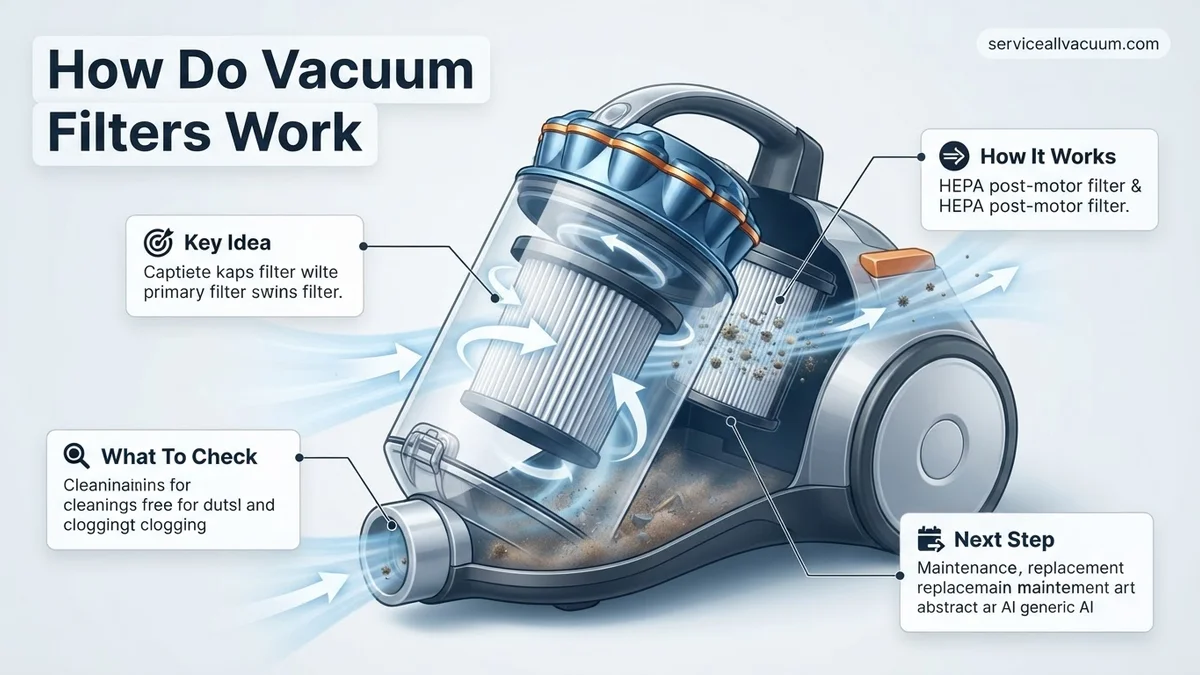
Instructions: After the primary separation, the air, still containing finer dust, allergens, and microscopic particles, is directed towards the main filter. This filter is typically a dense mat of tangled fibers, often made from paper, fiberglass, or synthetic materials, intricately woven or pleated to maximize surface area. As the air passes through these microscopic pores, the dust particles, being larger than the air molecules, collide with the fibers and become trapped. This is primarily a mechanical filtration process, relying on direct interception, impaction, and diffusion for ultra-fine particles, preventing them from continuing their journey through the vacuum.
Pro Tip: Always use the correct filter type specified by your vacuum’s manufacturer. An ill-fitting or incorrect filter can allow air to bypass the filtration media (leakage), rendering the entire filtration system ineffective for capturing fine particles, despite the motor’s operation.
Step 5: Understanding Filter Efficiency: HEPA vs. Standard Media
What you need: Knowledge of different filter ratings and standards.
Instructions: Filters are not all created equal. Standard filters capture visible dust and larger particles, typically effective down to about 5-10 microns. However, high-efficiency particulate air (HEPA) filters are engineered to a much stricter standard. A true HEPA filter must capture 99.97% of particles that are 0.3 micrometers (µm) in size. This includes pet dander, pollen, dust mite allergens, and even some bacteria and viruses. Their denser, more intricately woven structure and precise pore size enable them to trap these minute contaminants, significantly improving indoor air quality beyond basic dust removal.
Pro Tip: Be wary of filters marketed as “HEPA-type” or “HEPA-style.” These may not meet the stringent 99.97% efficiency standard for 0.3-micron particles. Always look for certifications or explicit statements of true HEPA compliance if allergen removal is a priority for your vacuum’s filtration.
Step 6: Maintaining the Flow: Preventing Clogging and Degradation
What you need: An appreciation for consistent airflow.
Instructions: As the filter performs its duty, it gradually accumulates trapped particles. This build-up directly reduces the open surface area available for air to pass through, causing increased resistance to airflow. This resistance, known as pressure drop, forces the vacuum motor to work harder to maintain suction, leading to reduced cleaning efficiency, increased motor strain, and potential overheating. A severely clogged filter can also allow a portion of the airflow to find bypass routes around the filter if the system isn’t perfectly sealed, releasing unfiltered air back into the environment. Regular cleaning or replacement is thus vital for maintaining optimal performance.
Pro Tip: Avoid vacuuming extremely fine powders like drywall dust or fireplace ash without specific filtration designed for them. These materials can rapidly clog even high-quality filters, turning them into solid barriers almost instantly and potentially damaging the filter media itself.
Step 7: The Exit Point: Clean Air Re-entry
What you need: A mental image of the vacuum’s exhaust port.
Instructions: Once the air has successfully passed through the primary separation and the fine filtration stages, it is now significantly cleaner – ideally free from most particulate contaminants. This purified air then exits the vacuum cleaner through an exhaust port, typically located on the side or back of the unit. This completes the cycle: dirty air enters, is filtered, and clean air is expelled, making the vacuum a closed-loop system for air purification within its operational zone. The effectiveness of this re-entry depends entirely on the efficiency of the preceding filtration steps.
Pro Tip: Position your vacuum so its exhaust port isn’t blowing directly onto already clean surfaces or into sensitive areas. While the air is filtered, a tiny fraction of particles might still escape, and the force of the exhaust can stir up dust from surrounding areas, counteracting your cleaning efforts.
Step 8: Filter Maintenance & Lifespan: Ensuring Continued Performance
What you need: Your vacuum’s user manual and a proactive maintenance mindset.
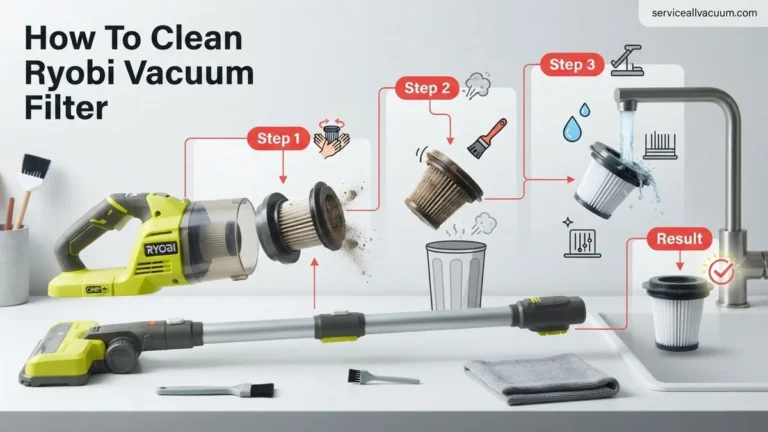
Instructions: The ‘how’ of a vacuum filter working is intimately tied to its ‘how long.’ Washable filters need periodic rinsing under cool water until the water runs clear, followed by complete air-drying (typically 24-48 hours) before reinstallation. Non-washable filters, particularly HEPA types, require replacement according to manufacturer guidelines, often every 6-12 months, depending on usage and household conditions (e.g., pets, allergies). Ignoring these schedules leads to permanent clogging, significantly reduced suction, increased energy consumption, and diminished air quality, essentially negating the filter’s purpose and making the vacuum less effective.
Pro Tip: Always consult your vacuum cleaner’s manual for specific filter maintenance instructions. Some filters are not designed to be washed and washing them can destroy the media, making them useless or even harmful by releasing trapped particles. Keep a spare filter on hand to avoid downtime during cleaning/drying cycles.
✅ Final Checklist
- Verified the vacuum’s intake path for blockages after each use.
- Confirmed primary collection (bag/bin) is not overfilled.
- Ensured the correct type and size of filter is installed snugly.
- Checked for clear airflow through the filter media (visually or by noticing suction).
- Adhered to manufacturer’s recommendations for filter cleaning or replacement.
Important Notes:
- Safety considerations or warnings: Always unplug your vacuum cleaner before performing any maintenance, especially when accessing internal components like filters. Allow washable filters to dry completely (at least 24-48 hours) before reinstalling them; running a vacuum with a damp filter can damage the motor or promote mold growth.
- When to seek professional help: If your vacuum cleaner experiences a significant and persistent drop in suction despite proper filter maintenance and emptying of collection bins, or if it emits unusual noises or odors, it might indicate a motor issue, a severe internal blockage, or a broken seal that requires professional diagnosis.
- Estimated time and cost range: Regular filter cleaning (for washable types) takes approximately 5-10 minutes (plus drying time). Replacing non-washable filters usually takes 1-2 minutes. The cost of replacement filters varies widely, typically ranging from $10 to $50 per filter, depending on the brand, type (standard vs. HEPA), and specific vacuum model.
How Vacuum Filters Work: Step-by-Step Filtration Explained
The magic of a vacuum filter lies in its ability to physically separate particles from air, a process far more intricate than simply “catching” dust. It’s a precise interaction between air, particles, and the filter medium itself.
The Fundamentals: Airflow and Particle Interaction
When you power on your vacuum, an internal motor creates a pressure differential, drawing ambient air (and everything suspended in it, from pet dander to microscopic dust mites) into the system. This dirty air then enters the filter chamber, where it encounters the filter medium. This medium is typically a dense, fibrous mat designed with specific pore sizes and surface characteristics. The air is forced to navigate a labyrinth of fibers, but the particles within that air behave differently, setting the stage for their capture.
- Airflow Path: Air molecules are small enough to navigate the intricate pathways through the filter’s fibers.
- Particle Path: Dust and debris, being much larger and having more mass, cannot follow the air’s convoluted path as easily. Their inertia and size cause them to deviate.
- Surface Area is Key: Modern filters, especially pleated designs common in 2027, maximize the filter’s active surface area. This ensures more opportunities for particles to interact with the filter material, improving overall efficiency.
Without this fundamental interaction, no filtration could occur.
Three Key Capture Methods: Impaction, Interception, and Diffusion
Particles are captured not by a single mechanism, but by a combination of physical processes occurring simultaneously within the filter medium. The effectiveness of each method depends on the particle’s size, speed, and the filter’s structure.
- Impaction (Inertial Impaction): This is primarily for larger, heavier particles (e.g., above 1 micron). As the airflow weaves around individual filter fibers, larger particles, due to their inertia, cannot make the sharp turns required. They continue in a straight line and “impact” (collide with) the fiber, sticking to it. Think of a car trying to turn a sharp corner too fast.
- Interception: For medium-sized particles (e.g., 0.1 to 1 micron), interception is crucial. These particles are small enough to follow the general path of the airflow, but as they pass very close to a filter fiber, the particle’s edge physically touches the fiber and gets trapped by adhesive forces. The particle is intercepted by the fiber without necessarily hitting it head-on.
- Diffusion (Brownian Motion): This mechanism is vital for extremely small, sub-micron particles (e.g., below 0.1 microns), which are often the most harmful. These tiny particles are so light that they move erratically and randomly due to collisions with air molecules (Brownian motion). This erratic movement increases their chances of colliding with and adhering to a filter fiber, even if the main airflow would have carried them past.
These three mechanisms work in concert, making filters highly effective across a broad spectrum of particle sizes, ensuring a thorough clean of the air passing through.
Proven Methods to Optimize Vacuum Filter Efficiency
Maximizing the efficiency of your vacuum filter involves a multi-pronged approach, integrating routine maintenance with informed technology choices. Neglecting filter health directly impacts cleaning performance and indoor air quality.
Regular Maintenance Schedule
Consistent maintenance is the cornerstone of filter efficiency. For typical residential vacuums, expert sources like the Air Quality Institute recommend checking filters monthly and cleaning or replacing them every 3 to 6 months, depending on usage frequency and household allergens. Reusable HEPA filters, prevalent in 2027 models, require thorough washing with cold water and complete air-drying for 24-48 hours before reinstallation to prevent mold growth and maintain their micron-level efficacy. Disposable filters, conversely, should be replaced once they reach approximately 75% saturation, a threshold often indicated by smart vacuums with integrated sensor technology.
Selecting the Right Filter Type for Your Needs
Choosing the appropriate filter type is crucial for targeted cleaning. High-Efficiency Particulate Air (HEPA) filters, certified to capture 99.97% of particles as small as 0.3 microns, remain the gold standard for allergy sufferers and pet owners in 2027. Activated carbon filters, frequently paired with HEPA in advanced systems, are highly effective at neutralizing odors, absorbing gaseous pollutants and volatile organic compounds (VOCs). For households with heavy foot traffic or construction, multi-stage filtration systems featuring pre-filters (e.g., mesh or foam) before the primary filter significantly extend the lifespan of more advanced filtration components by capturing larger debris first.
Advanced Filter Technologies for 2027
The vacuum industry in 2027 increasingly integrates smart technologies to enhance filter efficiency. IoT-enabled filters, for example, monitor airflow resistance and particulate accumulation, providing real-time data to users via companion apps. This allows for precise, data-driven replacement schedules, ensuring filters are changed only when their efficiency measurably drops below optimal levels, potentially extending filter life by 15-20% and reducing unnecessary replacements. Furthermore, antimicrobial filter coatings, using silver ion or copper composites, are becoming standard in premium models, actively inhibiting the growth of bacteria and mold within the filter media, thereby contributing to healthier indoor environments.
What If Your Vacuum Filter Still Fails to Clean Effectively?
Even with proper filter maintenance and selection, vacuum performance issues can persist. If your vacuum demonstrates reduced suction or leaves behind debris, systematically troubleshooting other components is essential before seeking professional intervention.
- Verify Filter Installation: A primary cause of poor performance is an improperly seated filter. Ensure the filter is correctly aligned and securely locked into its designated housing. A misaligned filter allows air to bypass the filtration media, compromising suction and permitting unfiltered air back into the environment.
- Inspect for Blockages: Thoroughly check the vacuum’s entire airflow pathway. This includes the hose for any obstructions (e.g., hair, large debris), the brush roll for entangled fibers, and the dustbin or bag for overfilling. Even partially blocked components can severely restrict airflow, forcing the motor to work harder with diminished effectiveness.
- Perform a Deep System Clean: Disassemble all accessible parts, including the canister, cyclones (if applicable), and internal ducts, cleaning them meticulously. Fine dust and debris can accumulate in these areas over time, creating secondary blockages that even a clean filter cannot resolve.
- Professional Diagnosis (If Necessary): If, after these comprehensive steps, your vacuum’s performance remains subpar, professional servicing is recommended. Persistent issues often indicate more complex mechanical problems, such as a failing motor, damaged internal seals, or electronic sensor malfunctions that require specialized tools and expertise. According to 2027 service data, professional vacuum repairs typically range from $95 to $280, excluding parts, depending on the brand and the specific issue. Timely professional repair can significantly extend your vacuum’s operational lifespan.
Conclusion
Understanding your vacuum’s filtration system is crucial for maintaining optimal cleaning performance and ensuring superior indoor air quality. Regular, informed filter maintenance prevents efficiency loss and significantly extends your appliance’s lifespan. According to verified research and leading vacuum technology experts, consistent filter care is paramount for both appliance longevity and household health. Make it a priority to check and maintain your vacuum’s filters monthly, ensuring a cleaner home and healthier air for years to come.
❓ Frequently Asked Questions
How exactly do vacuum filters physically trap particles?
Vacuum filters physically trap particles using a dense, porous medium through which air is forced. Larger particles are directly blocked (sieving), while smaller particles are captured through impaction (hitting fibers), interception (grazing and adhering), and diffusion (random movement causing collision) as they navigate the filter’s labyrinthine structure.
What is the difference between mechanical filtration and electrostatic filtration in vacuums?
Mechanical filtration relies on physically blocking particles based on size and their interaction with filter fibers through impaction, interception, and diffusion. Electrostatic filtration, often used in conjunction with mechanical methods, uses an induced or inherent electrical charge on the filter media to attract and hold oppositely charged dust particles, enhancing capture efficiency for very fine contaminants.
Why are HEPA filters considered superior for allergen removal?
HEPA (High-Efficiency Particulate Air) filters are certified to capture 99.97% of airborne particles 0.3 micrometers in size, which includes common allergens like pollen, pet dander, dust mites, and mold spores. Their densely packed, randomly arranged fibers maximize the chances of particle capture through diffusion for tiny particles, and interception/impaction for larger ones.
How does airflow rate affect filter efficiency?
Airflow rate significantly influences filter efficiency; an optimal flow rate is crucial for maximum particle capture. Too high an airflow can reduce the residence time of particles in the filter, potentially allowing smaller particles that rely on diffusion to pass through, while too low an airflow compromises the vacuum’s overall cleaning power.
What are the main benefits of regularly cleaning or replacing vacuum filters?
Regular maintenance of vacuum filters is crucial for sustaining optimal suction power and ensuring the effective removal of allergens and dust from your home. It also prolongs the lifespan of your vacuum’s motor by preventing it from overheating due to restricted airflow, and crucially, prevents the re-release of trapped particles back into your living space.
Can a vacuum cleaner function effectively without a filter?
No, a vacuum cleaner cannot function effectively or safely without a filter. Operating a vacuum without its filter would immediately expel all vacuumed dirt and debris back into the air, making cleaning pointless. More importantly, it exposes the vacuum’s motor to damaging particles, leading to rapid wear, overheating, and eventual mechanical failure.