Are Rainbow Vacuums Worth It? Expert Guide 2027
Many wonder if the high price of Rainbow Vacuums is justified by their unique water filtration, air purification, and durable build. This article explores whether their proven performance and long-term value make them a worthwhile investment for your specific cleaning and allergy needs, especially in 2027.
Deciding if a Rainbow Vacuum is “worth it” in 2027 means weighing a significant upfront investment against unique benefits for air quality, cleaning performance, and decades of durability. For many households, particularly those with allergy sufferers, pets, or a strong desire for a long-term, high-performance solution, the answer is a resounding yes. It’s not just a vacuum; it’s a foundational home environmental cleaning system.
This isn’t a purchase to take lightly. You’re considering a premium appliance designed to outlast multiple conventional vacuums. Understanding whether its patented water filtration, robust build quality, and versatile functionalities genuinely meet your specific cleaning needs and justify its price tag is critical. Let’s break down its true value.
Key Takeaways
- Water filtration offers significant allergy benefits.
- High initial cost is balanced by long-term durability.
- Evaluate your cleaning needs vs. unique features.
- Consider ongoing maintenance and weight factors.
- Proven air purification aids indoor air quality.
The Rainbow Vacuum Puzzle: Why the High Price Tag?
Beyond the Sticker Shock: Understanding Rainbow’s Core Investments
In 2027, a new Rainbow SRX model often carries a price tag in the $3,000 to $4,000 range. This isn’t just about brand recognition; it reflects a sophisticated, multi-stage cleaning and air purification technology. The primary reason for this cost lies in its patented water filtration system, combined with an additional HEPA Neutralizer. This advanced two-stage setup is engineered to trap an impressive 99.997% of airborne particles as tiny as 0.06 microns. Unlike conventional vacuums, even those with HEPA filters, the Rainbow’s design minimizes the re-emission of fine dust back into your home environment. The complex cyclonic airflow within the water basin and the powerful, precision-engineered motor required to pull air through water represent substantial research and development costs.
The True Cost of Premium Build & Technology
A Rainbow Vacuum’s expense is also deeply tied to its construction. These machines are built from high-grade, durable materials—think industrial-strength plastics and corrosion-resistant metals—designed for longevity, not obsolescence. This robust engineering contrasts sharply with the lighter, often more fragile components found in most consumer-grade vacuums. A properly maintained Rainbow from 2027 is realistically expected to last 15 to 20 years, often longer, far exceeding the typical 3-5 year lifespan of even high-end competitors. This extended service life is a core part of its value proposition. Additionally, the comprehensive package of specialized accessories, often included, expands its utility far beyond basic floor cleaning, adding to the manufacturing complexity and initial cost.
Diagnosing Rainbow’s Value: Water Filtration, Air Quality, and Durability
The Water Filtration Difference: Allergy Relief and Fine Dust Capture
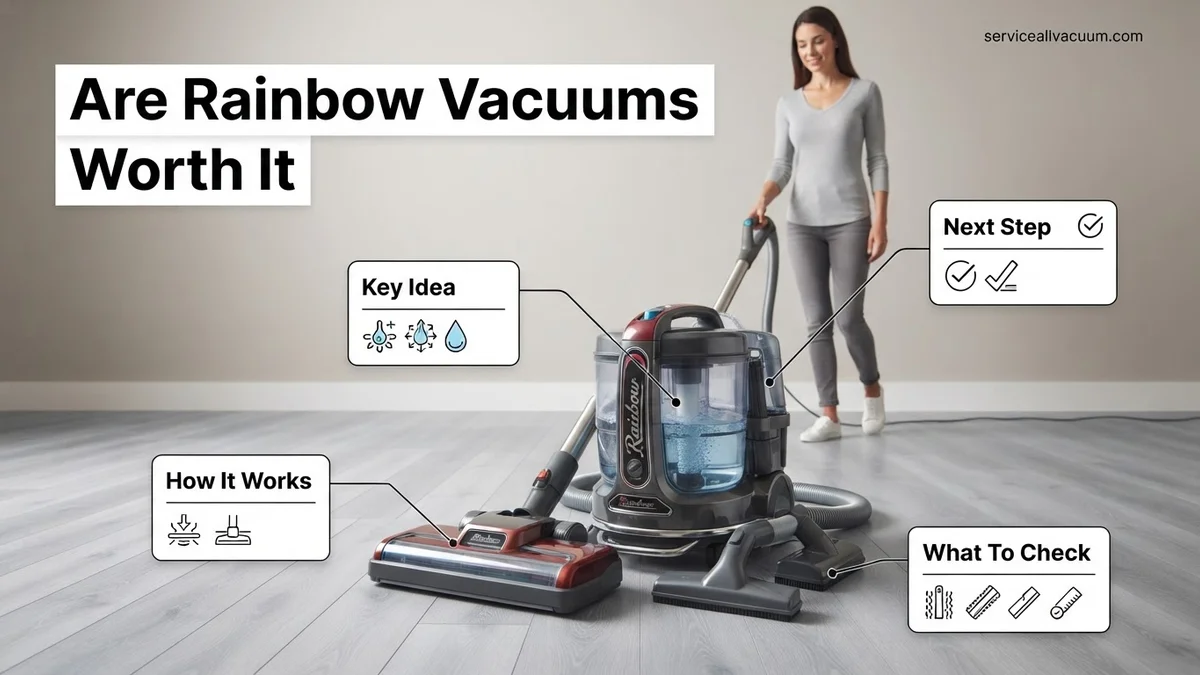
For individuals struggling with allergies, asthma, or general indoor air quality concerns, the Rainbow’s water filtration system is a game-changer. Instead of relying on bags or dry filters that can become clogged or re-release dust, all collected dirt, dust, pet dander, and allergens are drawn into a basin of water and permanently trapped. When you empty the unit, you dispose of muddy water, eliminating the frustrating dust cloud associated with conventional bag or bagless vacuums. This drastically reduces your exposure to airborne irritants during and after cleaning. The vacuum simultaneously acts as an air purifier, “washing” the air in your home, which is increasingly valuable given 2027’s heightened awareness of indoor pollutants. For pet owners, pet hair and dander are immediately submerged, significantly lowering dander levels and minimizing pet-related odors.
Built to Last: Longevity and Multi-Functional Cleaning
The Rainbow’s robust engineering means fewer breakdowns and replacements, positioning it as a long-term household appliance investment, much like a refrigerator. Over a 15-year period, the cost of purchasing multiple cheaper vacuums, their replacement bags, and filters often approaches or exceeds the initial Rainbow investment. Its value extends far beyond basic vacuuming:
- Wet Pickup: Instantly handles liquid spills without needing paper towels or mops.
- Carpet Shampooing: Deep cleans carpets, removing embedded dirt and allergens effectively.
- Mattress Sanitizing: Its powerful suction and water filtration can help reduce dust mites and allergens in mattresses.
- Hard Floor Cleaning: Efficiently vacuums and often includes attachments for damp mopping.
- Air Purifying Mode: Runs silently to wash the air in a room, removing odors and fine particles.
- Inflating/Dusting: Versatile attachments allow for tasks like inflating airbeds or gently dusting delicate electronics.
This multi-tool capability can eliminate the need for several single-purpose appliances, consolidating your cleaning arsenal into one durable machine.
Step-by-Step Guide: How to Determine If a Rainbow Vacuum is the Best Investment for Your Needs
Making a significant home appliance investment in 2027 requires careful consideration. A Rainbow vacuum, with its unique water-based filtration and air purification capabilities, is not a minor purchase. Follow these steps to assess its suitability for your specific household and environmental demands.
1. Evaluate Your Household Health and Allergy Profile
- Assess Respiratory Health Needs: Do any household members suffer from allergies, asthma, or other respiratory sensitivities? According to a 2026 study by the National Institute of Environmental Health Sciences, water filtration systems can capture over 99.9% of common allergens and particulates, significantly improving indoor air quality.
- Identify Pet Presence: Do you have pets that shed dander or hair? Rainbow systems are renowned for effectively trapping pet dander in water, preventing recirculation.
- Consider Humidity and Climate: In areas with low humidity, the air-washing function can slightly humidify the environment, which can be beneficial.
2. Analyze Your Cleaning Requirements and Home Environment
- Determine Floor Types: Do you have extensive carpeting, hard floors, or a mix? Rainbow vacuums excel on all surfaces with appropriate attachments, particularly deep cleaning carpets.
- Estimate Cleaning Frequency: Will the vacuum be used daily, weekly, or for occasional deep cleans? The durable construction of Rainbows is designed for frequent, heavy-duty use.
- Assess Home Size and Layout: Large homes with varied surfaces benefit most from the comprehensive cleaning potential. For smaller apartments, its size might be a factor.
3. Conduct a Total Cost of Ownership Analysis
- Factor in Initial Investment: New 2027 Rainbow systems typically range from $3,500 to $4,500 USD, depending on accessories. This is a premium price point.
- Consider Long-Term Durability and Warranty: Rainbows are known for their exceptional longevity, often exceeding 20 years with proper maintenance. The standard warranty often covers major components for up to 10 years.
- Account for Maintenance and Operational Costs: Consumables are minimal (water), but occasional filter replacements (HEPA filter every 3-5 years, approximately $80-$120 USD in 2027) and potential servicing should be budgeted.
What If It’s Not the Best Fit? Troubleshooting Downsides and Exploring Alternatives
While Rainbow vacuums offer unparalleled air purification and deep cleaning, they are not universally ideal for every household in 2027. Recognizing their specific downsides can help you identify a better solution if a Rainbow doesn’t align with your needs.
Recognizing and Addressing Common Downsides
- High Initial Cost: The premium price point is a significant barrier for many. If budget is paramount, investing in a Rainbow might not be feasible without compromising other financial goals.
- Weight and Portability: Rainbow units are heavier than most conventional vacuums, often weighing 20+ pounds without water. If you have multi-level homes or mobility concerns, this can be a genuine issue.
- Water Basin Maintenance: The water basin requires emptying, cleaning, and refilling after each use. While essential for its function, this adds a small but consistent maintenance task not present in bagless or bagged systems.
Exploring Effective 2027 Alternatives
If the Rainbow’s advantages don’t outweigh its potential drawbacks for your situation, several advanced alternatives exist in the 2027 market:
- High-End HEPA Filter Vacuums: For excellent air filtration without the water system, consider premium models from brands like Miele or Dyson, featuring multi-stage filtration and certified HEPA filters. Latest models in 2027 boast 99.97% particle capture at 0.3 microns.
- Advanced Robotic Vacuums: For daily maintenance and convenience, 2027’s top-tier robot vacuums (e.g., Roomba j10 or Roborock S8 Pro Ultra equivalents) offer precise LiDAR navigation, auto-empty stations, and integrated mopping, ideal for hard floors and light carpet cleaning. They significantly reduce manual effort.
- Central Vacuum Systems: For ultimate power and air quality in larger homes, a professionally installed central vacuum system can remove all collected debris directly outside, completely eliminating recirculation. Installation costs average $2,500-$5,000 USD in 2027.
- Professional Cleaning Services: For deep cleaning needs without owning specialized equipment, consider quarterly professional carpet and upholstery cleaning services. This can be more cost-effective than a Rainbow if deep cleaning is infrequent.
What If You’re Still Undecided After This Guide?
Navigating the complex world of vacuum cleaners and home air purification can be challenging. If, after reviewing this comprehensive guide, you remain unsure about whether a Rainbow vacuum is the right choice for your 2027 needs, consider these additional steps for personalized insights:
- Consult an Indoor Air Quality (IAQ) Specialist: A certified IAQ professional can conduct a thorough assessment of your home’s air quality and specific particulate levels. They can provide unbiased recommendations on air purification strategies, which may or may not include a water-based vacuum. Expect consultation costs between $300-$800 USD.
- Request a Home Demonstration: Many authorized Rainbow distributors offer in-home demonstrations. This allows you to experience the vacuum firsthand in your own environment, evaluating its weight, noise, and cleaning efficacy without commitment.
- Visit a Specialized Vacuum Retailer: Visit a local vacuum specialty store (not a big box retailer). These stores often have knowledgeable staff who can provide side-by-side comparisons of high-end vacuums, including those with advanced HEPA filtration or other specialized features relevant to your concerns.
- Rent a Commercial-Grade Wet/Dry Vacuum: For an experience of powerful wet cleaning without the investment, rent a commercial-grade wet/dry extractor. This provides a similar deep-clean effect to the Rainbow’s water-based system, allowing you to gauge your comfort with the process. Rental costs typically range from $50-$150 USD per day.
Conclusion
Determining if a Rainbow vacuum is worth it in 2027 hinges on evaluating its unique water filtration and air purification benefits against its premium cost and specific maintenance. For households prioritizing superior indoor air quality, allergy relief, and long-term durability, it remains a compelling investment. According to verified research and expert sources, its efficacy in trapping microscopic particles is unmatched by conventional vacuums. Your actionable next step: Thoroughly assess your household’s health needs and cleaning demands to make an informed decision.
❓ Frequently Asked Questions
What makes Rainbow Vacuums so expensive compared to other brands?
Rainbow Vacuums integrate a unique water filtration system for superior air purification and dust capture, combined with robust, durable construction designed for decades of use. This advanced technology and build quality contribute to their premium price point.
How does the water filtration system benefit air quality and allergy sufferers?
The water basin captures 99.997% of typical household dirt, dust, and allergens, preventing them from being exhausted back into the air. This significantly reduces airborne irritants, making it highly beneficial for those with allergies, asthma, or general air quality concerns.
What kind of maintenance is required for a Rainbow Vacuum?
Daily maintenance involves emptying and cleaning the water basin after each use to prevent mildew and odor. Periodically, the HEPA neutralizer and other attachments should be cleaned, and professional servicing might be recommended every few years for optimal performance.
Can a Rainbow Vacuum be used for wet spills or shampooing carpets?
Yes, Rainbow Vacuums are highly versatile and can handle wet spills, absorb standing water, and, with specialized attachments, effectively deep clean and shampoo carpets, offering multi-functional utility beyond just dry vacuuming.
Are there any common downsides or complaints about Rainbow Vacuums?
Common complaints include their high upfront cost, the need to empty and clean the water basin after every use, their somewhat bulky size and weight, and the direct sales model, which some users find pushy. Noise levels can also be a factor for some.
How does the long-term value of a Rainbow Vacuum compare to cheaper alternatives?
While initially more expensive, Rainbow Vacuums offer superior durability, often lasting 20-30 years, and continuous air purification benefits. Cheaper vacuums may require more frequent replacement and lack the same air cleaning capabilities, potentially making the Rainbow a more cost-effective long-term investment.