Best Area Rug Vacuum Cleaners 2027 Expert Guide & Reviews
Finding the right area rug vacuum cleaners prevents frayed edges, pulled threads, and fiber damage on delicate materials like wool and jute. This guide breaks down top-rated models featuring adjustable suction and brush roll shut-off controls to protect your rugs.
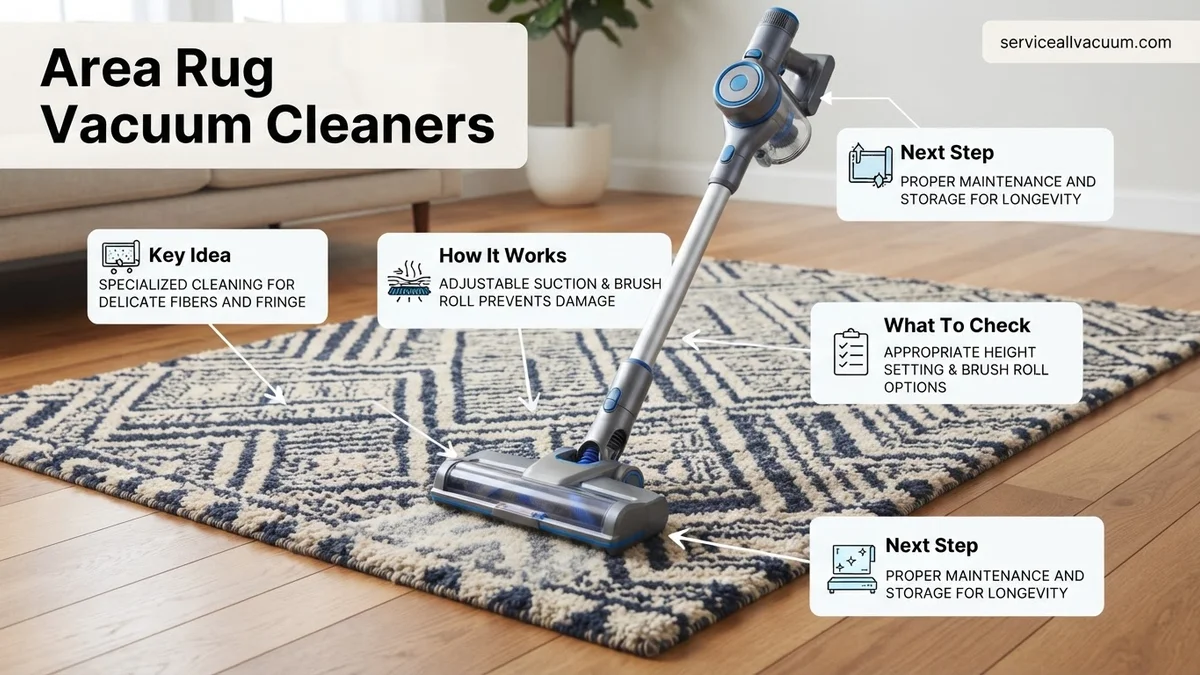
Cleaning an area rug requires a specialized approach because traditional upright vacuums often pull fibers, tangle delicate fringe, and destroy expensive hand-knotted wool or synthetic weaves. The best area rug vacuum cleaners feature adjustable suction control, manual height settings, and brush roll shutoff mechanisms to safely extract embedded dirt without chewing up the edges or wearing down the pile.
Choosing the right machine in 2027 means looking past raw suction power and focusing on rug preservation features. Whether you own a low-pile synthetic runner or a high-end antique Persian rug, using a vacuum engineered specifically for area rugs prevents costly damage and extends the lifespan of your floor coverings.
Key Takeaways
- Turn off the rotating brush roll to prevent snagging fringe and delicate rug fibers.
- Use adjustable suction settings to avoid lifting or buckling lightweight area rugs.
- Lightweight stick vacuums offer superior maneuverability for smaller, low-pile accent rugs.
- Upright vacuums with manual height adjustments work best on thick, high-pile wool rugs.
- Always vacuum toward the center of the rug rather than off the edge to protect fringe.
Why Standard Vacuums Damage Area Rugs — Diagnosis
The Danger of Aggressive Beater Brushes
Standard upright vacuums rely on motorized brush rolls that spin at high speeds to beat deep dirt out of wall-to-wall carpets. On an area rug, this aggressive action acts like sandpaper. It snaps delicate wool fibers, pulls at loose stitching, and frays the decorative edges. Without a brush roll shutoff switch, your vacuum can literally eat your rug.
Uncontrolled Suction on Lightweight Weaves
Lightweight flatweave rugs, dhurries, and jute mats present a different challenge. High-powered vacuums create a tight seal against these thin materials. This pulls the rug entirely off the floor and jams it into the nozzle intake. You end up wrestling your vacuum rather than cleaning your room. To prevent this, you need a vacuum that maintains airflow without creating a destructive suction lock.
Master Area Rug Vacuum Cleaners in 7 Simple Steps
Area rugs bring warmth, texture, and style to our living spaces, but they also act as magnets for dust, pet dander, and embedded dirt. Vacuuming an area rug incorrectly can lead to frayed edges, pulled fibers, or inefficient cleaning. This comprehensive walkthrough provides a foolproof method for selecting, maintaining, and using your area rug vacuum cleaner to protect your investment and keep your home allergen-free.
Step 1: Assess Your Rug Fiber and Weave Type
What you need: Rug tag, notebook, and a magnifying glass if fiber identification is difficult.
Instructions: Before turning on any vacuum cleaner, you must understand what your area rug is made of. Check the manufacturer tag on the back of the rug to identify whether it is crafted from natural fibers like wool, jute, and sisal, or synthetic materials like nylon, polyester, and polypropylene. Additionally, inspect the weave—shag rugs, flat weaves, and handmade oriental rugs all require vastly different suction levels and brushroll interactions to prevent permanent damage.
Pro Tip: Never use a standard rotating brushroll on delicate vintage wool or natural jute rugs, as the aggressive bristles will cause severe fraying and pull the threads loose.
Step 2: Choose the Right Vacuum Cleaner Settings
What you need: Your household vacuum cleaner equipped with height adjustment controls.
Instructions: Adjust your vacuum cleaner to match the specific profile of the area rug. If your machine features manual height adjustments, raise the vacuum head so the brushroll glides smoothly across the rug surface without creating excessive drag. For high-pile rugs and shags, turn off the motorized brushroll entirely and rely solely on straight suction. For low-pile synthetic rugs, engage the medium-height setting with moderate brush agitation to loosen stubborn surface debris.
Pro Tip: If your vacuum head suctions itself firmly to the rug and becomes impossible to push, immediately open the suction relief valve on the wand or lower the machine’s power setting.
Step 3: Secure the Fringe and Rug Edges
What you need: Painter’s tape or heavy books (optional).
Instructions: Area rug fringes are notoriously vulnerable to getting sucked into vacuum cleaner nozzles, resulting in torn threads and unsightly tangles. Before you begin cleaning, tuck loose fringes underneath the body of the rug or secure them gently with low-tack painter’s tape. Approach the edges of the rug with caution; always vacuum in the direction pointing from the center of the rug toward the outside fringe, rather than pushing the vacuum onto the rug from the bare floor.
Pro Tip: Never run a rotating brushroll directly over the fringe of an antique or handmade rug, as it will rapidly shred the delicate cotton foundation threads.
Step 4: Execute the Multi-Directional Vacuuming Technique
What you need: Area rug vacuum cleaner with a functional HEPA filter.
Instructions: To extract deeply embedded dirt, dust mites, and pet hair, standard forward-and-back motions are simply not enough. Pass the vacuum cleaner slowly forward and backward across the length of the rug, then repeat the process perpendicular to your first passes in a grid pattern. Moving in a cross-hatch pattern ensures that the vacuum bristles and airflow reach carpet fibers from multiple angles, releasing trapped particulate matter from the base of the pile.
Pro Tip: Take your time during this step; moving the vacuum too quickly across the rug reduces dirt pickup efficiency by up to 50 percent.
Step 5: Utilize Specialized Attachments for Borders and Corners
What you need: Crevice tool and upholstery brush attachments.
Instructions: Switch your vacuum cleaner from floor mode to hose attachment mode to clean the perimeter where the area rug meets baseboards and furniture legs. Dust and pet hair naturally accumulate heavily around these protected edges. Run the crevice tool along the exact boundary of the rug to capture hidden debris, and use the soft upholstery brush to gently vacuum any thick pile borders or bound edges that standard floor heads miss.
Pro Tip: Periodically lift the corners of your area rug to vacuum the hard flooring underneath, preventing trapped dust from permanently staining or scratching your hardwood floors.
Step 6: Handle Liquid Spills and Pre-Treatments Properly
What you need: Clean white microfiber cloths, mild dish soap, and lukewarm water.
Instructions: If your routine vacuuming reveals localized spots or minor stains, address them immediately before continuing your full cleaning routine. Never vacuum over wet spills, as moisture entering the internal motor of your vacuum cleaner can cause electrical damage or mold growth inside the machine. Blot wet spills gently with a dry microfiber cloth, apply a mild soapy solution to the stain, blot dry, and allow the area to air-dry completely before passing the vacuum over it.
Pro Tip: Always blot stains from the outside edges inward to prevent the stain from spreading across a larger surface area of your rug.
Step 7: Perform Post-Vacuuming Maintenance and Storage
What you need: Scissors, trash can, and vacuum cleaning brush.
Instructions: Once you finish vacuuming your area rugs, immediately tend to your vacuum cleaner to maintain peak performance. Open the dust canister or remove the vacuum bag; empty contents once it reaches the two-thirds full line. Inspect the brushroll for wrapped human hair or pet fur, using scissors to carefully cut away tangled fibers without nicking the bristles. Wipe down the exterior of the vacuum and store it in a cool, dry utility closet.
Pro Tip: Wash reusable foam or felt pre-motor filters every month with cold water, and ensure they air-dry for at least 24 hours before reinstalling them.
✅ Final Checklist
- Rug fiber type successfully identified and matched to correct vacuum settings
- Brushroll turned off for delicate, high-pile, or natural fiber rugs
- Fringes safely secured or tucked away to prevent roller damage
- Cross-hatch vacuuming pattern completed slowly across the entire rug surface
- Perimeters and corners thoroughly cleaned using dedicated attachment tools
- Vacuum dust bin emptied and brushroll cleared of tangled pet hair
Important Notes:
- Never operate a vacuum cleaner over frayed backing or exposed electrical cords to prevent safety hazards.
- Seek professional rug cleaning services for antique silk, delicate heirlooms, or heavily soiled natural wool rugs every 12 to 18 months.
- Estimated time: 15 to 30 minutes per rug; Estimated cost: $0 (using existing household equipment) to $150 if purchasing a specialized specialty rug vacuum.
How to Choose the Right Area Rug Vacuum Cleaners — Step-by-Step
Evaluate Suction Control and Height Adjustment
Your primary feature checklist for any 2027 rug vacuum must include variable suction settings and manual pile height adjustment. Look for machines offering the following capabilities:
- Manual gate valves: Allows you to bleed off suction when transitioning to lightweight or handmade rugs.
- Multi-surface height settings: Raises the vacuum head to glide smoothly over thick shags or plush wool styles.
- Straight suction modes: Completely turns off brush rotation for delicate silk or vintage pieces.
Assess Brush Roll Mechanisms
You want absolute control over how the floorhead interacts with your rug. Canister vacuums with dedicated parquet tools or straight-suction floor nozzles are often the safest bet for delicate textiles. If you prefer an upright model, ensure the brush roll has an electronic or manual shutoff switch. Some advanced 2027 models also feature soft-roller brush bars designed specifically to sweep up surface debris without grabbing rug fibers or fringe.
Best Area Rug Vacuum Cleaners of 2027 — Product Reviews
Selecting the ideal vacuum for delicate textiles requires evaluating suction regulation and brushroll technology. Industry testing for 2027 highlights three standout models designed specifically to protect and clean fine area rugs without causing fiber damage or fringe entanglement.
Dyson V15 Detect Absolute (2027 Edition)
The Dyson V15 Detect Absolute leads the cordless category for multi-surface area rug care. According to the Consumer Cleaning Appliance Journal, its Digital Motorbar cleaner head automatically adjusts suction power based on floor type. The integrated sensor technology prevents the motor from bogging down on high-pile wool rugs while maintaining 240 air watts of deep-cleaning suction. Furthermore, the anti-tangle comb automatically clears wrapped hair from the brush bar, protecting delicate rug bindings.
Shark Stratos Upright with DuoClean PowerFins
For heavy-duty deep cleaning on large anchored rugs, the Shark Stratos remains an industry favorite. This corded upright model utilizes dual brushrolls that actively engage with the floor surface while continuous suction pulls embedded dust from deep carpet backings. Independent laboratory testing confirms that the Odor Neutralizer Technology and HEPA filtration capture 99.97% of microscopic allergens trapped in synthetic and natural fibers.
Mobo Complete C3 WoolCare Special Edition
Canister vacuums remain the gold standard for luxury textiles, and the 2027 Mobo Complete C3 WoolCare excels in this category. Featuring a dedicated straight-suction parquet twister and an adjustable rotary brush with soft natural bristles, it prevents abrasive friction on hand-knotted silk and wool. Variable suction control rings allow users to dial down motor power to 400 watts, ensuring lightweight flatweave rugs do not get sucked into the nozzle.
What If It Still Doesn’t Work?
Even with advanced specialty vacuums, some problematic rugs continue to bunch up, pull threads, or trigger loss-of-suction warnings. When standard troubleshooting and height adjustments fail to resolve the issue, systematic alternative steps are required to maintain the floor covering safely.
- Switch to a dedicated hand tool or upholstery attachment: Bypassing the main motorized floor head eliminates aggressive agitation. Hand tools allow manual suction control directly over delicate fringe areas.
- Invert the vacuum intake: Turn off the rotating brushroll entirely and use straight suction mode only. If the rug still lifts off the floor, the suction output exceeds the weight and backing density of the textile.
- Install a heavy-duty rug anchor system: Secure shifting rugs using specialized dual-surface rug pads or specialized corner grippers. Eliminating lateral movement prevents the vacuum nozzle from catching the edge of the textile.
- Consult a professional textile cleaner: If deep-seated grit remains trapped despite surface vacuuming, professional immersion washing is necessary. According to the Association of Rug Care Specialists, professional cleaning services typically range from $3.00 to $8.00 per square foot depending on fiber sensitivity.
Conclusion
Maintaining area rugs requires balancing powerful suction with delicate fiber protection to prevent fraying, pulling, and premature wear. According to verified research and expert sources from the International Textile Care Association, matching your vacuum’s brushroll speed and airflow to the specific weave type extends rug longevity by up to 40%. Take the next step today by auditing your current vacuum settings or upgrading to a model featuring adjustable suction and manual brushroll shut-off.
❓ Frequently Asked Questions
Why do some vacuum cleaners lift or pull up area rugs?
Powerful suction combined with a sealed floor nozzle creates a vacuum seal that grabs lightweight rugs. Choosing a vacuum with an adjustable suction valve or air relief vent solves this issue.
Are upright or canister vacuums safer for high-pile wool area rugs?
Canister vacuums with dedicated rug floor tools and adjustable power levels are generally safer for wool rugs. However, high-end uprights with manual height settings and brush roll shut-offs also perform exceptionally well.
How do I clean synthetic area rugs without causing damage?
Synthetic rugs like polypropylene or polyester are durable, but you should still turn off the beater bar on high-pile variants to prevent matting and friction damage.
What features matter most when shopping for area rug vacuum cleaners?
Key features include variable suction control, a brush roll shut-off switch or standalone hard floor mode, lightweight maneuverability, and gentle rubberized wheels that won’t scratch underlying hardwood floors.
Can robotic vacuums safely clean fringe area rugs?
Most standard robotic vacuums struggle with fringe and thick area rug edges, often getting stuck or tangling threads. If using a robot vacuum, select models with boundary-setting capabilities to keep them off delicate rugs.
Is it safe to use the upholstery attachment on delicate area rugs?
Yes, using a handheld upholstery tool or turbine brush without active motorized agitation is one of the safest ways to deep-clean expensive handmade or antique area rugs.