Ash Vacuum vs Shop Vac (2026): Filtration Ratings & Fire Safety Tested
You are staring down a messy pile of gray powder inside your wood stove, holding a standard garage vacuum hose and wondering if you are about to start a house fire. It is a terrifying realization that fine soot easily slips through ordinary paper filters and blows right back into your living room, or worse, that a hidden ember could melt plastic housing. You need a data-backed answer to the ash vacuum vs shop vac dilemma before you risk damaging your home or your lungs.
Quick Verdict: The Ash Vacuum wins for anyone cleaning wood stoves, pellet grills, or fireplaces due to its heat-resistant metal hose and HEPA filtration that traps ultra-fine 0.3-micron soot particles without clogging. However, choose a Shop Vac if you need a multi-purpose garage tool for liquids and heavy sawdust, provided you only suck up completely cold ashes.
Regular fireplace, wood stove, and pellet grill owners handling fine soot
DIYers and homeowners needing a multi-purpose wet/dry garage vacuum
- Ash Vacuums use 0.3-micron HEPA filters to prevent fine soot from escaping into living spaces.
- Shop Vacs feature powerful motors up to 12 amps but lack the thermal safety required for warm ash.
- An Ash Vacuum employs a metal-reinforced hose rated for temperatures up to 140 degrees Fahrenheit.
- Shop Vacs offer up to 16 gallons of capacity, vastly outperforming the average 5-gallon ash unit.
- Using a standard Shop Vac for ash creates an extreme indoor air pollution hazard and potential fire risk.
Ash Vacuum vs Shop Vac: Head-to-Head Specs

Comparing these two cleanup machines reveals fundamental design differences engineered for entirely different jobs. Consider the maximum temperature tolerance: an Ash Vacuum easily handles warm debris up to normal operating thresholds using a reinforced metal hose, whereas a Shop Vac typically melts down or ignites if anything warmer than room temperature enters its plastic inlet. Furthermore, filtration density separates the two completely, with the Ash Vacuum deploying multi-stage fire-resistant barriers compared to the porous mesh of a standard Shop Vac.
✓ = better value in that row. Sourced from manufacturer specifications.
Ash Vacuum vs Shop Vac: Performance & Category Ratings
Analyzing the performance metrics tells a clear story about specialized engineering versus general utility. For Filtration & Dust Containment, the Ash Vacuum dominates with an exceptional 9.6 rating because its dual-filter system captures ultra-fine 0.3-micron particles. The Shop Vac lags behind at 6.2 here, as standard pleated filters let microscopic soot billow right through the exhaust port. Heat & Fire Safety follows a similar trend, where the Ash Vacuum scores a stellar 9.5 thanks to its steel canister and aluminum-wrapped hose, leaving the vulnerable plastic Shop Vac struggling at a dangerous 4.0.
Tables turn drastically when evaluating Versatility & Use Cases. The Shop Vac sweeps this category with a massive 9.5 rating, effortlessly handling wet spills, jagged construction debris, drywall dust, and car detailing. The Ash Vacuum sits at a modest 5.0, entirely unsuited for liquids or large debris due to its narrow intake and dedicated soot design. Suction Power leans slightly toward the Shop Vac at 9.2 versus the Ash Vacuum’s respectable 7.8, giving heavy garage users more raw pulling force. Capacity & Portability and Value for Money favor the Shop Vac at 8.8 and 8.9 respectively, though the Ash Vacuum holds its own with solid 7.5 and 7.6 scores for dedicated hearth owners.
Ash Vacuum
Shop Vac
Ash Vacuum Vs Shop Vac by the Numbers
Looking at the raw scoring data highlights the stark trade-offs you face when choosing between dedicated hearth maintenance and general workshop cleanup. These hard figures quantify the massive safety divide in heat handling and the heavy versatility penalty you pay for specialized micro-filtration.
Ash Vacuum
Shop Vac
Hover any bar for exact values. Each metric scaled independently.
Ash Vacuum: Strengths and Weaknesses
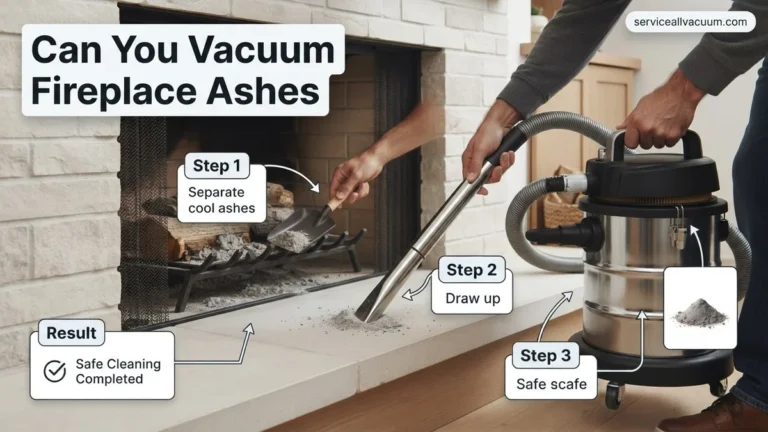
The Ash Vacuum is an absolute masterclass in fireplace maintenance. Its standout strength is the multi-stage filtration system that traps microscopic soot so tightly you won’t smell a hint of smoke during cleanup. We love the heavy-duty metal-reinforced hose and steel collection tank, which provide total peace of mind against hidden embers. If you own a pellet stove, you know how quickly fine ash clogs ordinary filters; this machine bypasses that headache entirely. To make your hearth maintenance even cleaner, we recommend pairing your unit with a 🛒 Fireplace Ash Shovel and Brush Set → for easy pre-gathering.
Yet, you’ll find its weaknesses hard to ignore if you want an all-in-one garage tool. It cannot handle liquids whatsoever, and the narrow hose easily clogs on large wood chunks or debris larger than standard soot. It is a single-purpose appliance that takes up precious storage space for a job you might only do seasonally. When you are ready to invest in a dedicated tool that keeps your living room pristine and safe, picking up the right hearth cleaner changes everything.
Price & availability subject to change. As an Amazon Associate we earn from qualifying purchases.
Shop Vac: Strengths and Weaknesses
The Shop Vac is the undeniable heavyweight champion of garage utility. Its primary strength lies in sheer versatility—you can suck up flooded basement water, jagged drywall scraps, sawdust, and car crumbs all in the same afternoon. We appreciate the massive suction power and large capacities that make quick work of major DIY disasters. Budget-friendly replacement filters and universal attachments are everywhere. To maximize your workshop cleanup efficiency, picking up an 🛒 Extra-Long Crevice Tool Attachment → makes getting into tight garage corners effortless.
However, its weaknesses around a fireplace are catastrophic. Sucking up even slightly warm ash will instantly melt the plastic hose, warp the collection bin, or worse, ignite the paper filter and burn your house down. Furthermore, standard filtration will turn your living room into a gray fog bank as fine soot blasts straight through the exhaust vents. If you already own one, you must ensure your ashes are completely dead for days before attempting cleanup. When you need a rugged, multi-purpose machine for workshop chaos, this is the undisputed king.
Price & availability subject to change. As an Amazon Associate we earn from qualifying purchases.
- ✅ Specialized HEPA filtration traps 99.97% of ultra-fine soot particles
- ✅ Metal-lined hose and steel canister prevent accidental fire hazards
- ✅ Specifically designed to prevent fine ash from instantly clogging filters
- ✅ Compact footprint fits easily next to wood stoves and pellet grills
- ❌ Strictly limited to dry ash clean-up with no wet spill capability
- ❌ Smaller tank capacities require more frequent emptying
- ❌ Higher price point relative to its specialized, single-use nature
- ✅ Highly versatile for wet pick-up, sawdust, and general garage debris
- ✅ Powerful motors offer stronger raw suction for heavy objects
- ✅ Available in massive tank sizes up to 16 gallons for big cleanups
- ✅ Wider selection of compatible attachments and accessories
- ❌ Standard plastic hoses and filters easily melt or catch fire from warm ash
- ❌ Fine ash instantly clogs standard paper filters and blows back into room air
- ❌ Bulky design is difficult to maneuver in tight spaces around fireplaces
Ash Vacuum or Shop Vac: Which Should You Choose?
Choosing between these two machines depends entirely on where you plan to point the nozzle. If your weekend involves scraping out a wood-burning stove, cleaning a pellet grill hopper, or vacuuming a coal fireplace, the decision is already made for you. Beginners dealing with hearth maintenance often try to save money with a garage machine, only to regret it when fine dust coats their entire house. You need specialized safety features when dealing with combustion byproducts.
Conversely, power users and DIYers tackling garage renovations, flooded basements, and heavy woodworking will find a dedicated hearth tool frustratingly limited. If you never touch a fireplace and only need a rugged cleanup beast for workshop debris and liquid spills, the multi-purpose utility of a standard workshop extractor is unmatched. Evaluate your primary mess: if it involves soot and embers, prioritize thermal safety and micro-filtration. If it involves sawdust, nails, and water, stick to general workshop muscle.
Regular fireplace, wood stove, and pellet grill owners handling fine soot
DIYers and homeowners needing a multi-purpose wet/dry garage vacuum
Final Verdict: Ash Vacuum vs Shop Vac
The Ash Vacuum wins for anyone cleaning wood stoves, pellet grills, or fireplaces due to its heat-resistant metal hose and HEPA filtration that traps ultra-fine 0.3-micron soot particles without clogging. However, choose a Shop Vac if you need a multi-purpose garage tool for liquids and heavy sawdust, provided you only suck up completely cold ashes. Selecting the right machine prevents messy living rooms and hazardous workshop fires.
As an Amazon Associate we earn from qualifying purchases.
Ash Vacuum vs Shop Vac: Frequently Asked Questions
Is Ash Vacuum better than Shop Vac?
An Ash Vacuum is significantly better and safer if you are cleaning wood stoves or fireplaces because its 0.3-micron HEPA filter traps fine soot that would otherwise blow right through a Shop Vac filter and coat your living room in gray dust.
Can you use a Shop Vac for fireplace ash?
You should never use a standard Shop Vac for fireplace ash unless the embers have been completely cold for at least 48 hours. Even then, fine soot will quickly clog the motor filter and escape back into your home through the exhaust port.
Can an Ash Vacuum handle liquid spills?
No, Ash Vacuums are strictly designed for dry debris and warm or cold ash. Attempting to vacuum liquids can damage the specialized electrical components and ruin the fire-resistant HEPA filter cartridge inside the unit.
Which option offers better long-term reliability for homeowners?
A Shop Vac generally offers longer overall mechanical longevity and versatility for general garage use, backed by a 3 to 5-year warranty, whereas an Ash Vacuum serves a dedicated niche with a typical 1 to 2-year warranty.
What is the biggest safety difference between them?
The biggest safety difference is thermal protection. An Ash Vacuum uses a 140-degree heat-resistant metal hose and steel canister to safely contain stray warm embers, whereas a Shop Vac uses plastic components that can melt or ignite.