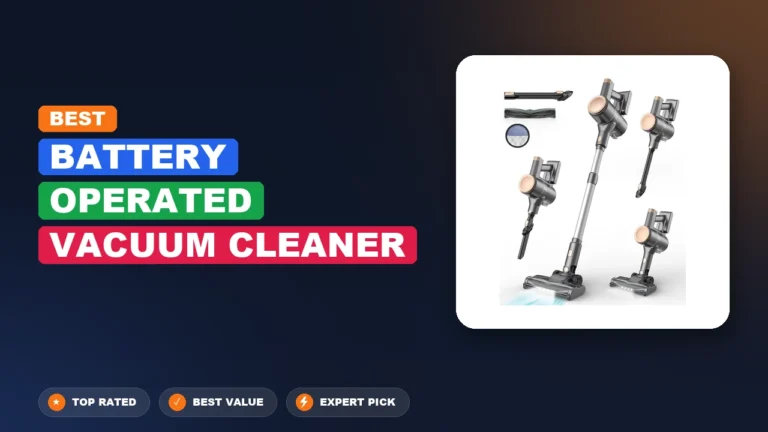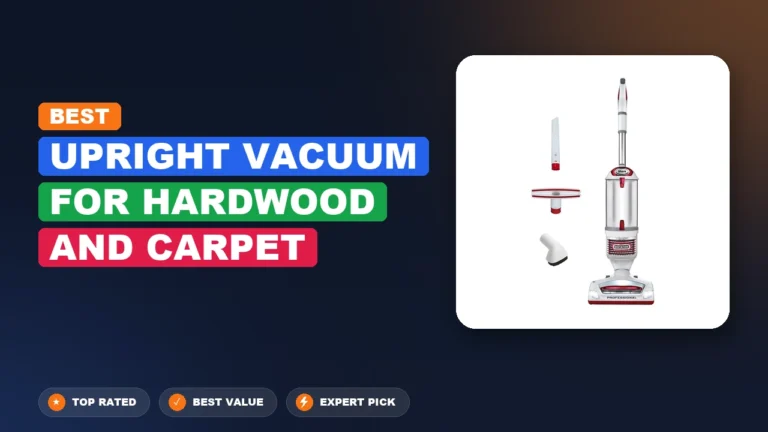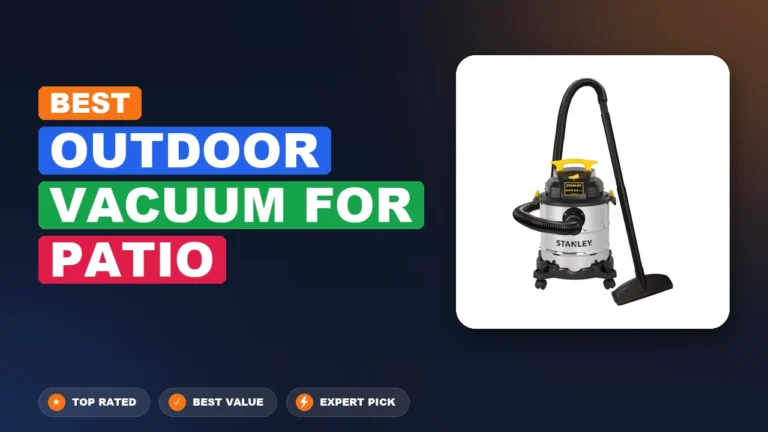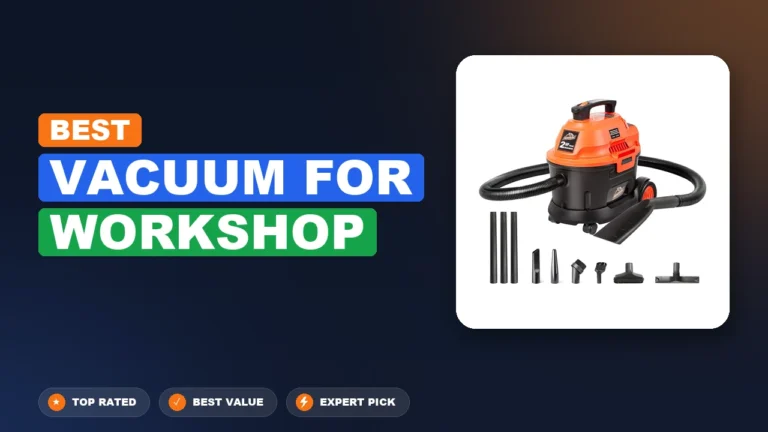
Shop Vac vs Household Vacuum (2026): Real Pros & Cons
A standard Shop Vac moves up to 150 cubic feet of air per minute — roughly triple the raw airflow of your typical upright living room machine. When you drop a heavy-duty cleanup task on your schedule, picking the right machine matters immediately. This matchup puts industrial utility against domestic comfort.
Quick Verdict: For heavy-duty cleanups, garage workshops, and liquid extraction, the Shop Vac remains undefeated with unmatched raw suction. However, for everyday home maintenance, plush carpets, and effortless maneuverability, the Household Vacuum is the superior choice due to its advanced filtration and self-propelled steering.
DIYers, garage workshops, and those dealing with wet spills or heavy debris.
Homeowners focusing on daily interior cleaning, pet hair, and fine carpets.
- Shop Vac delivers 150 CFM of airflow, doubling the volume of standard models.
- Household Vacuum features a sealed HEPA system filtering out 99.97% of fine dust.
- Shop Vac handles 12 gallons of wet or dry waste effortlessly.
- Household Vacuum operates much quieter at 68 dB compared to industrial noise levels.
- Shop Vac offers a rugged build with a lower entry price point starting around $80.
Shop Vac vs Household Vacuum: Head-to-Head Specs
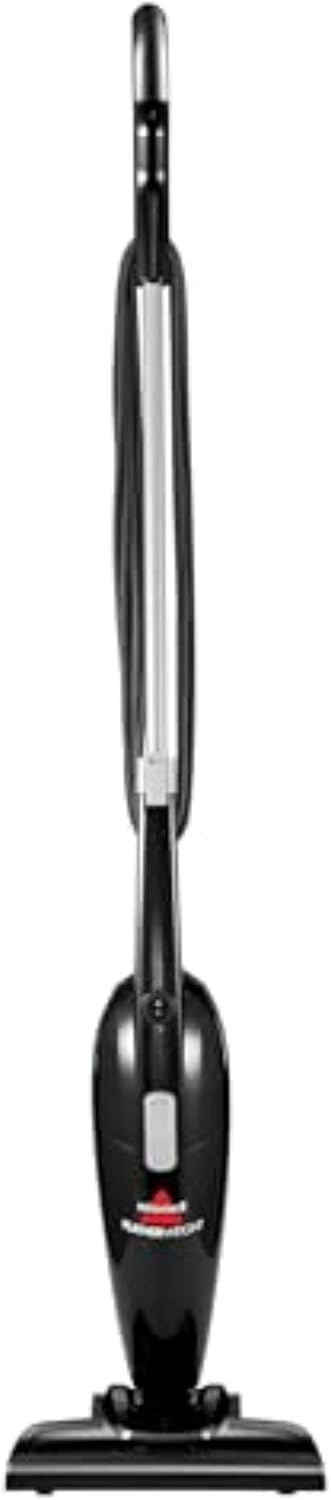

Diving into the raw specifications reveals a massive design divide built for entirely different environments. For instance, while a Shop Vac leverages a monstrous 9.5 out of 10 suction score to devour wet sludge, a Household Vacuum counters with a 9.5 out of 10 filtration rating designed to trap microscopic household allergens. You are looking at a fundamental architectural split between open-air debris extraction and sealed indoor air preservation.
✓ = better value in that row. Sourced from manufacturer specifications.
Shop Vac vs Household Vacuum: Performance & Category Ratings
Performance splits cleanly down the middle based on what each tool was engineered to tolerate. When you need raw pulling force, the Shop Vac dominates with a commanding 9.5 suction score, easily outclassing the Household Vacuum’s 7.5 rating on heavy nails, gravel, and drywall dust. Its crowning achievement, however, is versatility: it scores a perfect 10.0 for wet and dry extraction, whereas the standard indoor unit sits at a lowly 1.0 because sucking up liquids will instantly fry its motor. Yet, when you pivot to indoor air quality, the tables turn dramatically. The Household Vacuum secures an elite 9.5 in filtration, frequently using sealed HEPA systems that trap fine dust mites and pet dander inside the canister. The Shop Vac lags behind here with a 6.0, often venting fine exhaust dust right back into your breathing space unless you upgrade to a specialized 🛒 HEPA Cartridge Filter →. Maneuverability follows a similar trajectory. Heavy barrels and trailing thick hoses give the Shop Vac a sluggish 6.5 rating, making it a chore to drag up carpeted stairs. Conversely, the sleek Household Vacuum earns a nimble 9.0 thanks to swivel steering and lightweight upright frames. Value and durability favor the brute-force workshop champion at 9.0, constructed from thick-gauge plastics meant to withstand job site abuse, while delicate household units score a 7.0 due to fragile motorized brush rolls and plastic gears. Finally, decibel levels tell the whole story: the screaming industrial motor of the Shop Vac earns a loud 5.0, whereas modern domestic vacuums run much quieter at an 8.5 rating.
Shop Vac
Household Vacuum
Shop Vac Vs Household Vacuum by the Numbers
Numbers don’t lie when evaluating cleaning hardware. These metrics paint a clear portrait of mechanical capability, acoustic output, and structural toughness. Let’s inspect how the performance metrics stack up side by side across every critical operational domain.
Shop Vac
Household Vacuum
Hover any bar for exact values. Each metric scaled independently.
Shop Vac: Strengths and Weaknesses
Unmatched raw suction defines the core appeal of the Shop Vac. It eats heavy construction debris, shatters workshop cleanup times, and handles flooded basements without breaking a sweat. You get heavy-duty impact-resistant plastic tanks, oversized drain ports, and massive hoses that rarely clog. Need to suck up water from a broken pipe? This machine handles it instantly. The rugged durability means you can toss it into the back of a truck, bang it against workbench legs, and expect it to run for a decade. Pair it with a sturdy 🛒 All-Weather Extension Cord → to reach every corner of your property without voltage drop. But you pay for that power in compromises. It’s loud, heavy, and clumsy to pull across indoor hardwood floors. Standard filtration lets fine drywall dust escape back into the room. Storage takes up half a garage bay, and dragging the bulky canister up stairs feels like a punishing workout. It lacks automated cord rewinds and intelligent floor height adjustments. If you’re ready to tackle garage messes and liquid spills, here is how you can secure your setup.
Price & availability subject to change. As an Amazon Associate we earn from qualifying purchases.
Household Vacuum: Strengths and Weaknesses
Precision indoor maintenance represents the undisputed domain of the Household Vacuum. It glides effortlessly across deep-pile carpet, detects transition zones between rugs and tile, and locks microscopic allergens inside multi-stage sealed filtration bags. Maneuverability stands out as a massive win; swivel heads and lightweight wands let you clean under low-profile furniture with a flick of the wrist. Noise levels stay low enough that you won’t wake sleeping family members or pets while running it. Advanced brush rolls actively lift embedded pet hair from upholstery without tearing fabric threads. Maintenance alerts tell you when to empty the bin or wash the pre-motor filter. However, its indoor-focused engineering falls apart the moment you ask it to do real work. Sucking up a wet cereal spill will destroy the internal electronics instantly. Sharp metal screws or heavy gravel will puncture the delicate plastic fan blades inside the housing. The smaller internal capacity means you’ll empty the dust cup multiple times during a serious whole-house spring cleaning session. When you need a reliable machine for daily living spaces, this is the tool to run.
Price & availability subject to change. As an Amazon Associate we earn from qualifying purchases.
- ✅ Handles both wet liquid spills and dry debris with ease
- ✅ Massive 12-gallon capacity reduces frequent emptying
- ✅ Wide hoses prevent clogging from large wood chips or drywall
- ✅ Rugged, industrial-grade construction resists heavy impact
- ❌ Loud operating noise exceeding 85 decibels
- ❌ Bulky frame makes it difficult to navigate tight indoor spaces
- ❌ Lacks sealed HEPA filtration, which can exhaust fine dust back into the air
- ✅ Sealed HEPA filtration traps 99.97% of fine dust and allergens
- ✅ Lightweight design with swivel steering for easy home navigation
- ✅ Quiet operation allows cleaning without disturbing others
- ✅ Designed specifically to lift embedded pet hair from carpets
- ❌ Strictly dry-use only; sucking up liquids will ruin the motor
- ❌ Small dust cups require frequent emptying during large messes
- ❌ Narrow hoses easily clog when exposed to construction debris
Shop Vac or Household Vacuum: Which Should You Choose?
Choosing the right machine comes down to mapping your environment against its engineering limits. If your weekends involve woodworking projects, car detailing, home renovations, and clearing flooded garage floors, you need the sheer industrial muscle of a Shop Vac. It’s built for destructive environments where liquids, nails, and massive volumes of dirt are the daily norm. Power users and DIYers will find zero substitute for its unyielding extraction power. Conversely, if your primary battles are fought against daily tracked-in mud, pet hair on living room rugs, cereal spills in the kitchen, and maintaining pristine indoor air quality, the Household Vacuum is non-negotiable. Apartment dwellers, busy parents, and allergy sufferers will appreciate the lightweight steering, quiet decibel output, and superior filtration. Beginners should avoid buying an industrial workshop beast for simple apartment chores, just as workshop owners will instantly destroy a delicate domestic upright trying to suck up wet sawdust. Assess your real cleanup habits honestly, grab a reliable 🛒 Crevice Tool Attachment → for hard-to-reach gaps, and pick the tool that matches your actual workflow.
DIYers, garage workshops, and those dealing with wet spills or heavy debris.
Homeowners focusing on daily interior cleaning, pet hair, and fine carpets.
Final Verdict: Shop Vac vs Household Vacuum
For heavy-duty cleanups, garage workshops, and liquid extraction, the Shop Vac remains undefeated with unmatched raw suction. However, for everyday home maintenance, plush carpets, and effortless maneuverability, the Household Vacuum is the superior choice due to its advanced filtration and self-propelled steering. You are ultimately choosing between industrial muscle and domestic finesse, and your floors will dictate the winner.
As an Amazon Associate we earn from qualifying purchases.
Shop Vac vs Household Vacuum: Frequently Asked Questions
Is Shop Vac better than Household Vacuum?
It depends on the task. A Shop Vac delivers superior airflow (150 CFM) and wet-dry versatility for garages, while a Household Vacuum provides sealed HEPA filtration and quiet operation (68 dB) optimized for indoor carpets and living spaces.
Can a Household Vacuum suck up water?
No. Standard household vacuums are designed exclusively for dry debris. Sucking up liquids will short-circuit the electric motor and void the manufacturer warranty. You need a wet-dry Shop Vac for liquid spills.
Which one is better for handling pet hair?
Household Vacuums generally excel here due to motorized brush rolls and specialized upholstery tools designed to lift embedded pet dander from fabrics, backed by HEPA filtration to trap airborne allergens.
How do their lifespans compare over time?
Shop Vacs feature simple, rugged induction motors built to last 8 to 12 years of harsh job-site abuse. Modern Household Vacuums typically last 5 to 8 years, with motorized components more prone to wear.
Which option is better for a DIY workshop cleanup?
The Shop Vac is the clear winner for workshops, capable of swallowing 12 gallons of sawdust, nails, and wood scraps without clogging its wide 2.5-inch hose.