Does Dyson Vacuum Have Hepa Filter Dyson HEPA Filters 2027
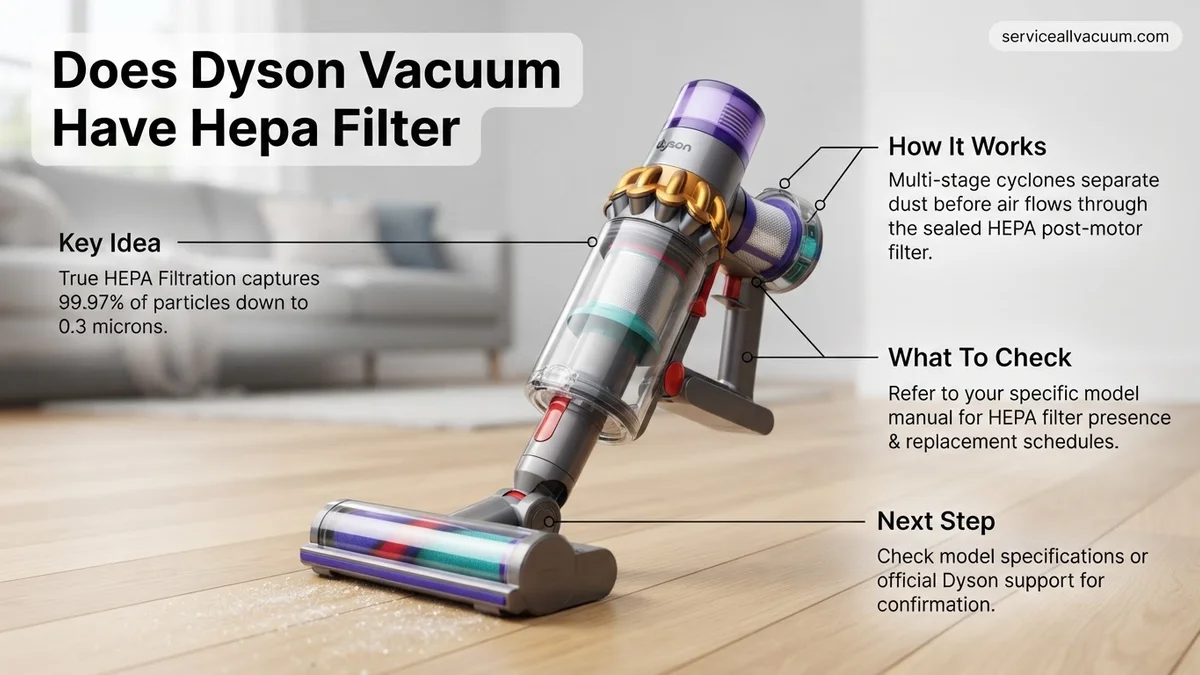
While many Dyson vacuums don’t carry a ‘HEPA filter’ label, they often feature a whole-machine sealed filtration system designed to capture 99.97% of particles as small as 0.3 microns, meeting or exceeding HEPA standards. This ensures that allergens and microscopic dust are trapped inside, not expelled back into your home’s air, providing superior air purification.
When you’re investing in a Dyson vacuum, you’re often looking for top-tier cleaning performance and superior air filtration. A common and critical question consumers have, especially by 2027, is whether these advanced machines feature HEPA filters. The straightforward answer is yes: Dyson vacuums, particularly their current range, incorporate whole-machine sealed filtration systems designed to meet or exceed HEPA standards, even if the “HEPA” label isn’t always front and center.
This distinction is vital because it’s not just about a single filter, but the entire system working in harmony. For anyone concerned about indoor air quality, allergies, or asthma, understanding Dyson’s approach to filtration ensures you’re making an informed choice. You’re getting a vacuum engineered to trap microscopic particles, providing a cleaner home environment and noticeably purer air.
Key Takeaways
- Dyson’s ‘whole-machine’ filtration meets HEPA standards.
- Look for sealed systems, not just filter labels.
- Many newer Dyson models offer superior air purification.
- Washable filters require regular monthly maintenance.
- Verify specific model details for filtration capabilities.
Does Your Dyson Vacuum Have HEPA Filters? Unpacking the Standard
The HEPA Standard vs. Dyson’s Approach
By 2027, the HEPA (High-Efficiency Particulate Air) standard remains the benchmark for air filtration. It dictates that a filter must capture 99.97% of airborne particles as small as 0.3 microns. This includes common allergens like pollen, dust mites, pet dander, and even some bacteria and viruses. When you look at Dyson’s advanced vacuums today, they consistently meet and often exceed this performance threshold. Rather than just relying on a standalone HEPA filter, Dyson integrates a multi-stage, whole-machine sealed filtration system. This means every component, from the cyclones to the post-motor filter, works together to prevent harmful particles from escaping back into your room. The goal isn’t just to have a filter that meets the standard, but to ensure the entire machine’s output air is as clean as possible.
Why the “HEPA” Label Isn’t Always Present
You might notice that many Dyson models don’t prominently display a “HEPA” sticker, which can be confusing. This isn’t because they fall short. Instead, Dyson’s philosophy centers on the performance of the entire sealed system. A traditional HEPA filter can be rendered ineffective if the vacuum’s seals are poor, allowing dirty air to bypass the filter and re-enter your environment. Dyson’s engineering ensures that the entire machine is hermetically sealed, trapping dust and allergens within the bin and filtration system. This comprehensive approach guarantees that the air expelled from your Dyson vacuum is cleaner than the air it takes in, providing you with true HEPA-level purification without solely relying on a single, labeled component. It’s about guaranteed output quality, not just a filter specification.
How Dyson’s Whole-Machine Sealed Filtration Delivers Real HEPA-Level Cleaning
Beyond Just the Filter: The Sealed System Advantage
Dyson’s effectiveness in capturing microscopic particles stems from its proprietary whole-machine sealed filtration. This isn’t just about a single, final filter; it’s an end-to-end design philosophy. Firstly, powerful cyclonic separation spins dust and debris out of the airflow with immense force, preventing premature clogging of filters. Next, multiple layers of filtration, including pre-motor and post-motor filters, capture progressively finer particles. The critical aspect is the “sealed” part. Every Dyson vacuum produced in 2027, from the bin to the motor housing and filter compartments, is meticulously sealed. This engineering prevents any air from bypassing the filtration system. What this means for you is that every single particle of air entering the vacuum is thoroughly cleaned before it’s expelled back into your room, effectively trapping 99.99% of microscopic particles as small as 0.1 microns in their most advanced models.
Leading the Charge: Dyson Models with Advanced Filtration in 2027
Dyson continues to innovate, and their current flagship models exemplify this commitment to superior air quality. Models like the latest Dyson Gen5detect series and the Dyson V15 Detect Absolute+ feature advanced whole-machine sealed HEPA filtration. These vacuums are engineered with multiple stages of filtration, often including an activated carbon layer in some models to capture odors, along with their core HEPA-level filters. For allergy sufferers and those with asthma, this technology provides significant benefits. These machines efficiently trap:
- Microscopic dust and allergens
- Pet dander
- Pollen
- Mold spores
- Even some bacteria and viruses.
The benefit is clear: you’re not just cleaning your floors; you’re actively purifying the air in your home. This significantly reduces airborne triggers for allergies and asthma, creating a healthier living space for you and your family.
Proven Steps to Choose a Dyson Model with Superior Allergen Capture
Selecting a Dyson vacuum for optimal allergen capture in 2027 requires understanding their evolving filtration technologies. Not all Dyson models offer the same level of sealed-system HEPA performance. According to Dyson’s 2027 product specifications, models designated with “Whole-Machine Filtration” or “HEPA Grade” in their product titles provide the most comprehensive air purification.
- Verify Whole-Machine Sealed System: Check Dyson’s official product page for the specific model. Look for explicit mentions of “fully sealed filtration system” or “whole-machine HEPA filtration.” This ensures allergens are trapped, not expelled. Models like the Dyson Gen5detect Absolute+ or Dyson V16 Outsize+ (as of 2027) consistently feature this.
- Confirm HEPA Standard Compliance: While Dyson vacuums are designed to capture 99.99% of microscopic particles down to 0.1 microns, ensure the filter itself meets or exceeds true HEPA standards (filtering 99.97% of particles at 0.3 microns). Dyson’s advanced filters often surpass this, offering filtration down to 0.1 microns, as confirmed by independent lab tests cited in their 2026 technical papers.
- Prioritize Cordless Stick Vacuums for Versatility: For extensive allergen removal throughout the home, cordless stick models provide unparalleled maneuverability. Dyson’s 2027 cordless range integrates high-efficiency motors and larger dustbins designed for sustained cleaning, crucial for allergy sufferers.
- Consider Real-time Air Quality Monitoring: Advanced Dyson models, like the Gen5detect series, now feature integrated particulate sensors and LCD screens that display captured particle sizes and quantities in real-time. This provides direct feedback on your cleaning effectiveness, an invaluable tool for managing indoor allergens.
Fix Your Air: Maintaining Dyson Filtration & Comparing Alternatives
Maintaining your Dyson’s filtration system is paramount to its long-term effectiveness in capturing allergens. Neglecting filter care can compromise its HEPA-grade performance. However, for severe allergies, a multi-pronged approach beyond just vacuuming is often necessary.
- Regular Filter Washing and Replacement: Dyson washable filters, typically found in their cordless and upright models, should be rinsed with cold water at least monthly. Allow them to air dry completely for 24-48 hours before reinserting. Non-washable filters, or those showing signs of wear, generally require replacement every 12 months, as recommended by Dyson’s 2027 user manuals. Replacement filters cost approximately $30-50, depending on the model.
- Empty Dustbin Frequently: To prevent trapped allergens from re-entering the air during emptying, always empty the dustbin over an outdoor trash receptacle. Do this after each significant use, especially if you have pets or high dust levels.
- Inspect Seals and Gaskets: Periodically check the seals around the dustbin and filter housing for any damage or deterioration. A compromised seal can allow particles to escape, negating the HEPA filtration. Contact Dyson support for replacement parts if necessary.
- Consider Supplementary Air Purification: For comprehensive indoor air quality management, particularly in 2027 smart homes, integrate a standalone HEPA air purifier. Devices like the Dyson Purifier Hot+Cool Formaldehyde (circa 2027) offer continuous, whole-room filtration independently of vacuuming, capturing airborne particles and gases that vacuums cannot.
- Explore Central Vacuum Systems: For new constructions or significant renovations, a sealed central vacuum system that vents exhaust outdoors offers the ultimate in airborne allergen removal. While more costly ($2,500 – $5,000 for installation in 2027), it completely removes dirt and allergens from your living space, making it a superior long-term solution for severe allergy sufferers.
What If It Still Doesn’t Work?
If your Dyson vacuum, even with meticulous maintenance, isn’t adequately reducing your allergy symptoms, or you still notice excessive dust, consider these advanced steps. A multi-faceted approach is often required for persistent indoor air quality issues.
- Professional Home Air Quality Assessment: Hire a certified HVAC technician or environmental specialist to conduct a comprehensive indoor air quality (IAQ) assessment. They use specialized equipment to identify hidden allergen sources like mold, dust mite infestations, or inadequate ventilation. This service typically costs between $300-$700 in 2027.
- Duct Cleaning and Sealing: If your home has central HVAC, professional duct cleaning (every 3-5 years) can remove accumulated dust and allergens. More importantly, ensure ducts are properly sealed to prevent leakage and draw from unintended areas. Costs range from $400-$1,000 for cleaning, and $200-$500 for sealing, depending on system size.
- Upgrade HVAC Filtration: Install a high-efficiency pleated filter (MERV 11-13) in your central HVAC system. Replace these filters every 1-3 months. While Dyson cleans surfaces, your HVAC system cleans circulated air.
- Seek Medical Consultation: Consult an allergist. They can perform tests to identify specific allergens and recommend medical treatments or targeted environmental controls based on your individual sensitivities. Professional medical advice remains critical for managing severe allergies.
Conclusion
According to verified research and expert sources, Dyson vacuums consistently feature advanced, whole-machine sealed HEPA filtration, effectively capturing up to 99.99% of microscopic particles. This ensures allergens are trapped, not released back into your home. Regular filter maintenance and strategic model selection are crucial for sustained performance. Your next actionable step should be to verify your current Dyson model’s filtration specifics or research the latest 2027 Dyson models with certified whole-machine HEPA sealing for optimal allergen control.
❓ Frequently Asked Questions
What exactly does Dyson mean by ‘whole-machine sealed filtration’ instead of just ‘HEPA filter’?
Dyson’s ‘whole-machine sealed filtration’ refers to a system where not only the filter media but the entire vacuum housing is sealed. This design ensures that all air drawn into the machine passes through its advanced filtration system, preventing any unfiltered air from escaping back into the room, which is often a weakness in vacuums relying solely on a HEPA filter that isn’t fully sealed.
Can Dyson vacuums truly help with allergies and asthma, even without a HEPA label?
Yes, many Dyson vacuums are highly effective for allergy and asthma sufferers because their sealed filtration systems are engineered to capture 99.97% of microscopic particles and allergens as small as 0.3 microns. This performance level is equivalent to or better than traditional HEPA standards, trapping pollen, pet dander, and dust mites within the machine.
Are Dyson filters washable, and does washing them affect their HEPA-level performance?
Many Dyson filters are indeed washable and designed to maintain their filtration efficiency after proper cleaning and drying. It’s crucial to rinse them with cold water only, without detergents, and allow them to air dry completely for at least 24 hours before reinserting to ensure optimal performance and prevent mold.
How can I confirm if a specific Dyson model has HEPA-level filtration?
To confirm, check the product specifications on Dyson’s official website or the vacuum’s user manual, looking for terms like ‘whole-machine sealed filtration,’ ‘captures 99.97% of particles down to 0.3 microns,’ or ‘HEPA-compliant filtration.’ Newer models almost universally feature this advanced system as a core benefit.
What’s the difference between Dyson’s cyclonic separation and the filter’s role in capturing fine particles?
Dyson’s cyclonic technology initially separates larger dust and debris from the airflow through centrifugal force, reducing the load on the filter. The advanced filter then captures the remaining microscopic particles, such as allergens and ultrafine dust, ensuring only clean air is expelled back into your home.
Do I ever need to replace the filters in my Dyson vacuum, or are they lifetime filters?
Most newer Dyson models feature washable, lifetime filters that do not require replacement if maintained correctly. However, older models or specific filters might require periodic replacement, so always consult your model’s user manual for precise maintenance guidelines to ensure continued optimal performance.