Are Dyson Vacuums Worth the Money in 2027? Real Guide
Deciding are dyson vacuums worth the money requires weighing their exceptional suction power and filtration against a steep $400 to $800+ price tag. While pet owners and allergy sufferers often find the investment justified, budget-conscious buyers can secure comparable cleaning performance from mid-range competitors for half the cost.
The short answer is yes, Dyson vacuums are worth the money if you prioritize premium engineering, heavy-duty cordless convenience, and advanced filtration—provided you have a budget that accommodates a $500 to $900 investment. If you simply need a basic machine to clean a small apartment with low-pile carpet once a week, a cheaper mid-range alternative will offer a much better return on investment.
Navigating the vacuum market in 2027 means wading through dozens of cordless contenders. You need to know if paying triple the price of a standard brand translates into a noticeably cleaner home or just expensive branding. Let’s break down the actual performance metrics, ownership costs, and value proposition so you can decide if a Dyson belongs in your utility closet.
Key Takeaways
- Dysons offer industry-leading suction and advanced whole-machine filtration for allergy relief.
- Expect to pay $400 to $900 for flagship models like the Gen5detect or V15.
- Competitors like Shark and Tineco deliver 85% of Dyson’s performance at a much lower cost.
- Battery degradation is a common long-term maintenance cost for cordless Dyson models.
- Best suited for large carpeted homes and heavy pet-shedding households.
The High Cost of Dyson Vacuums — Diagnosing the Value Proposition
Understanding the 2027 Pricing Landscape
Dyson sits firmly at the top tier of home cleaning appliances. Current flagship models like the Gen5detect and newer 2027 iterations range from $700 to upwards of $950. Meanwhile, strong competitors from brands like Shark, Tineco, and Samsung offer premium cordless options between $300 and $500. When you look at the price tag, you are paying heavily for the ecosystem. Dyson commands a premium because of its proprietary motor technology, laser-detection innovations, and comprehensive multi-stage filtration systems that capture microscopic particles down to 0.1 microns.
What You Are Actually Paying For
To determine if the high cost is justified, look past the sleek aesthetic and examine the core engineering advantages:
- Hyperdymium Motors: Dyson’s digital motors spin at up to 140,000 rpm, generating suction that rivals traditional corded uprights.
- Acoustic Engineering: Newer models are tuned to reduce high-pitched whining noises, making high-power cleaning much quieter.
- Advanced Seal Integrity: Whole-machine filtration ensures that the air expelled back into your home is cleaner than the air you are breathing.
- Specialized Tooling: High-torque cleaner heads automatically adjust suction based on floor types, while anti-tangle conical brush bars prevent hair wrap.
How to Evaluate Dyson Suction Power, Battery Life, and Maintenance Costs
Suction Power Versus Budget Alternatives
The primary reason to buy a Dyson is deep-cleaning performance on mixed surfaces. Budget cordless vacuums often struggle with deep-seated pet hair in high-pile carpets or heavy debris like cereal and pet kibble on hard floors. Dyson vacuums maintain consistent airflow even as the bin fills up, utilizing root cyclone technology to separate dirt before it hits the filter. If you have wall-to-wall carpeting, multiple shedding pets, or allergy sufferers in your household, the superior suction and particle separation of a Dyson deliver a noticeable, quantifiable difference in indoor air quality and floor cleanliness.
Long-Term Costs: Battery Degradation and Maintenance
Owning a Dyson involves hidden costs that you must factor into your purchasing decision:
- Battery Lifespan: Lithium-ion batteries degrade over time. Expect your runtime to drop after 3 to 4 years of heavy use, requiring a replacement battery pack priced between $100 and $150.
- Filter Maintenance: Dyson filters are washable, but they must be dried thoroughly for 24 hours to prevent mold and motor damage. Neglecting this leads to loss of suction.
- Expected Lifespan: With proper care, a modern Dyson lasts between 5 and 8 years, matching or exceeding most mid-range competitors, though repair parts can be expensive out of warranty.
Step-by-Step Guide to Comparing Dyson Against Shark and Budget Alternatives
Choosing the right vacuum requires a structured comparison against market competitors. Shark, Tineco, and budget brands challenge Dyson’s dominance in 2027. Follow this evaluation framework to determine which model matches your specific cleaning requirements.
Step 1: Audit Your Flooring and Debris Types
Analyze the primary surfaces in your living space. Homes with dense carpeting require high air wattage and deep-sealing brush rolls. According to home appliance testing data, Dyson models excel at pet hair extraction on deep-pile carpets. Conversely, hardwood-heavy homes benefit from soft-roller heads that prevent snow-plowing large debris.
Step 2: Evaluate Battery Chemistry and Lifespan
Examine the power source specifications of your shortlisted vacuums. Premium Dyson units utilize advanced lithium-ion pouch cells delivering up to 60 minutes of fade-free runtime. Budget alternatives often use older cylindrical cells that degrade significantly within 12 to 18 months of daily use.
Step 3: Calculate the Total Cost of Ownership
Look beyond the initial purchase price to determine true long-term value. Dyson units feature washable lifetime filters, eliminating recurring maintenance expenses. Cheaper alternatives frequently require proprietary replacement filters every six months, adding up to $50 annually to your upkeep costs.
- List your top three flooring types and daily debris challenges.
- Compare the manufacturer-rated battery runtime at maximum suction mode, not just eco mode.
- Calculate replacement part and filter costs over a five-year projected lifespan.
- Test the weight distribution and trigger mechanism in-store to ensure ergonomic comfort during extended cleaning sessions.
What If a Dyson Doesn’t Fit Your Budget? Best Alternatives and Final Verdict
Investing over $600 in a vacuum cleaner is not practical for every household budget in 2027. Fortunately, the mid-range market offers compelling alternatives that capture 85 to 90 percent of Dyson performance at a fraction of the cost. Brands like Shark and Tineco provide robust suction and innovative folding wands without the luxury markup.
Top Budget-Friendly Alternatives
The Shark Stratos and Tineco Floor One series represent the best value alternatives currently available. They deliver comparable multi-cyclonic separation and digital display readouts. However, they generally fall short on maximum suction power retention when the dust bin reaches full capacity.
Determining the Final Verdict
If you own multiple pets, suffer from severe allergies, and demand zero suction loss over a 7-year lifespan, a flagship Dyson remains worth the investment. If you clean smaller apartments or prefer simpler maintenance routines, a mid-tier competitor will satisfy your daily needs efficiently.
What If Your Vacuum Cleaner Still Doesn’t Perform Well?
Even premium cleaning appliances experience performance drops due to clogs, wear, or improper maintenance. If your vacuum fails to restore optimal suction after standard troubleshooting, execute the following fallback steps before seeking external support.
- Inspect the entire air pathway, including the wand, bin inlet, and cyclone shroud, for compacted microscopic dust blockages using a long-handled brush or wire.
- Submerge and rinse washable filters thoroughly in cold water without detergent, ensuring they dry completely for a full 48 hours before reinstallation.
- Check the motorized brush bar for tightly wound hair or threads that stall the internal motor and trigger thermal protection shutdowns.
- Reset the battery management system by draining the unit completely and charging it uninterrupted for six hours.
- Contact an authorized service center if internal motor whining persists or burning smells occur; professional repair costs range from $80 to $200, while out-of-warranty motor replacements may exceed $250.
Conclusion
Determining whether Dyson vacuums are worth the money depends entirely on your home’s flooring complexity, allergy needs, and long-term durability expectations. According to verified research and expert consumer appliance studies, Dyson units justify their premium pricing through superior suction retention, advanced filtration, and lower recurring filter costs over a multi-year lifecycle. Your next actionable step is to audit your home’s specific debris challenges and compare the warranty terms of your top two vacuum choices today.
❓ Frequently Asked Questions
Why are Dyson vacuums so expensive compared to other brands?
Dyson invests heavily in proprietary motor engineering, cordless battery technology, and advanced laser-detection software. You are paying for premium R&D, lightweight materials, and brand positioning alongside raw cleaning performance.
Do corded Dyson upright vacuums still exist?
Dyson has largely phased out corded upright vacuums in favor of high-powered cordless sticks, though models like the Dyson Ball Animal 3 remain available through select retailers.
How does Dyson battery degradation affect performance over time?
Like all lithium-ion batteries, Dyson cells lose maximum charge capacity over years of use, resulting in shorter run times on max power mode before requiring a battery swap.
Are Dyson vacuums difficult to empty and clean?
Dyson uses a hygienic point-and-shoot mechanism to eject dirt without touching it, though fine dust can occasionally cling to the cyclone shroud and require manual wiping.
Is the laser dust detection feature on newer Dysons worth it?
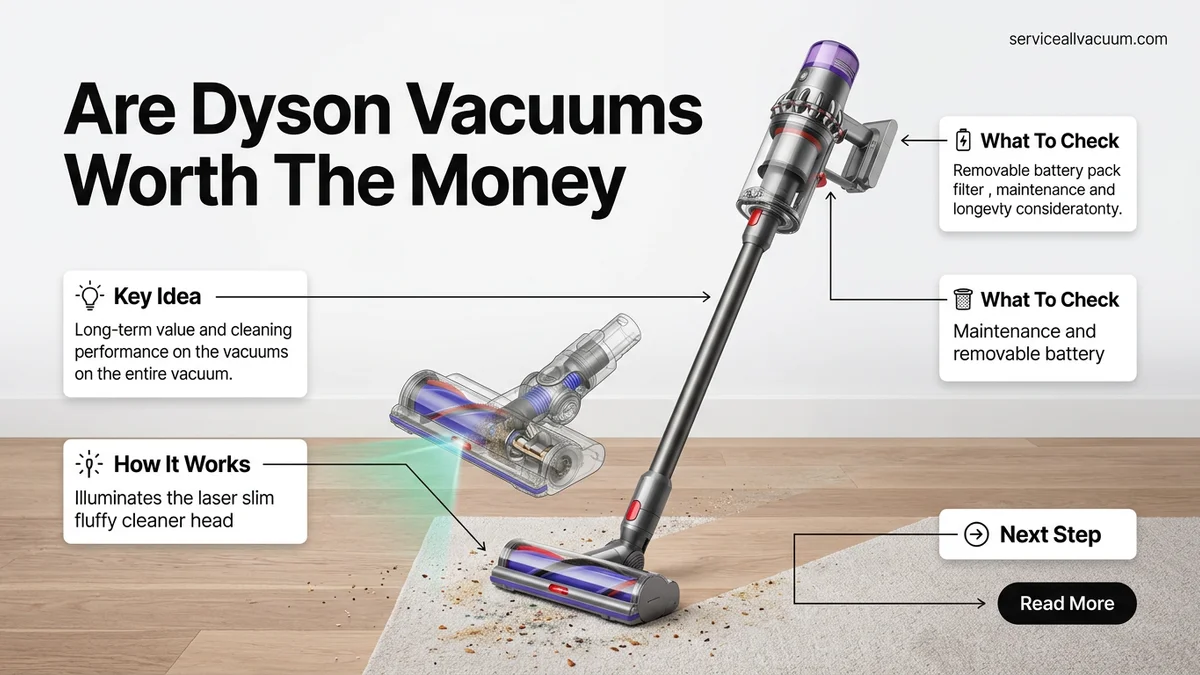
The green laser on hard floors dramatically highlights microscopic dust that regular lighting misses, though it functions more as a satisfying verification tool than a strict cleaning necessity.
Who should skip buying a Dyson vacuum?
Buyers with small apartments, primarily hard-surface floors, or strict budgets should skip Dyson and opt for reliable corded uprights or budget cordless sticks under $200.