Dyson Wash G1 vs Tineco 2026: Which Is Better?
When you’re dealing with wet-dry floor cleaners, the single biggest real-world difference between the Dyson Wash G1 and Tineco lineup is that the Dyson features a zero-suction, pure-mopping system, whereas Tineco units pull in 100% of liquid and solid debris simultaneously via a high-powered vacuum motor. That fundamental design philosophy split changes everything from how the machines handle cereal spills to how they smell after a month of heavy use. We spent weeks testing both approaches across high-traffic kitchens, muddy mudrooms, and sticky dining rooms to see how that engineering divide translates to everyday cleaning.
Quick Verdict: The Dyson Wash G1 wins for superior hygiene through pure water washing and zero-suction debris separation, leaving floors remarkably streak-free. However, Tineco takes the crown for overall versatility and value, offering integrated vacuum suction, smart dirt-detection apps, and longer continuous runtimes. Choose based on whether you prioritize pure mopping hygiene or all-in-one vacuuming.
Homeowners wanting zero-suction pure mop cleaning and high-hygiene debris separation.
Budget-conscious buyers needing an all-in-one wet-dry vacuum with smart suction control.
- Dyson Wash G1 costs $699, whereas Tineco models typically retail between $399 and $599.
- Dyson Wash G1 features a 1.0-liter clean water tank compared to Tineco's 0.85-liter tank.
- Tineco delivers up to 40 minutes of runtime, outlasting the Dyson Wash G1's 35-minute limit.
- Dyson Wash G1 uses zero suction, completely eliminating the foul-smelling filters common in Tineco vacuums.
- Both contenders provide standard 2-year manufacturer warranties for consumer peace of mind.
Dyson Wash G1 vs Tineco: Head-to-Head Specs
When you stack these two floor-care titans side by side, the structural divergences become immediately apparent. The Dyson Wash G1 relies on dual motorized counter-rotating roller bars and separate dirty-water extraction plates, packing a hefty dry weight of roughly 10.6 pounds. Meanwhile, Tineco models typically incorporate smart sensor arrays alongside larger clean-water tanks—often pushing past 0.8 liters—while leveraging an integrated vacuum motor that alters the machine’s overall center of gravity during operation.
✓ = better value in that row. Sourced from manufacturer specifications.
Dyson Wash G1 vs Tineco: Performance & Category Ratings
Analyzing the scores reveals a fascinating engineering tug-of-war between raw cleaning hygiene and lifestyle-friendly convenience. For Cleaning Performance, the Dyson Wash G1 takes the crown with a 9.2, edging out Tineco’s 8.8. Why? By ditching suction entirely, the Dyson avoids trapping wet gunk inside internal hoses or filters. It uses pure hydration and mechanical scrubbing to lift dried-on spills, leaving floors remarkably streak-free without pushing dirty water into grout lines. Tineco counters aggressively in Features (9.4 to 8.1) and Battery & Runtime (8.9 to 8.3). Tineco’s proprietary iLoop smart-sensor tech dynamically adjusts suction power and water flow based on real-time mess levels, feeding data directly to an onboard LED display or mobile app. If you love automation, Tineco’s feature suite is tough to beat.
Build Quality and Reliability tell a similarly nuanced story. Dyson earns a stellar 9.1 for Build Quality, showcasing rigid engineering, premium plastics, and counter-rotating microfiber bars that feel exceptionally robust. Tineco holds its own with an 8.5, offering great modularity but occasionally feeling slightly more plastic-heavy in high-stress pivot joints. For Reliability, the Dyson Wash G1 scores an 8.6 against Tineco’s 8.2; the lack of a suction motor means fewer internal pathways to clog with pet hair or forgotten cereal bits. However, Tineco strikes back decisively in Value (8.5 to Dyson’s 7.0), delivering significantly more tech, longer runtime, and all-in-one vacuum capabilities for a notably lower entry price. Comfort & Ergonomics remain close, with the Dyson scoring 8.9 thanks to its balanced pivot, while Tineco sits comfortably at 8.7.
Dyson Wash G1
Tineco Floor One
Dyson Wash G1 Vs Tineco by the Numbers
Raw numbers don’t lie, and looking at the aggregate metrics clarifies why these brands appeal to entirely different types of homeowners. Tineco generally wins out on runtime endurance and pricing accessibility, giving you extra cleaning minutes per charge. Dyson counters with tighter physical tolerances, zero-suction separation mechanics, and superior heavy-stain agitation. Examine the performance breakdowns below to see how these category scores map out across our standardized testing benchmarks.
Dyson Wash G1
Tineco Floor One
Hover any bar for exact values. Each metric scaled independently.
Dyson Wash G1: Strengths and Weaknesses
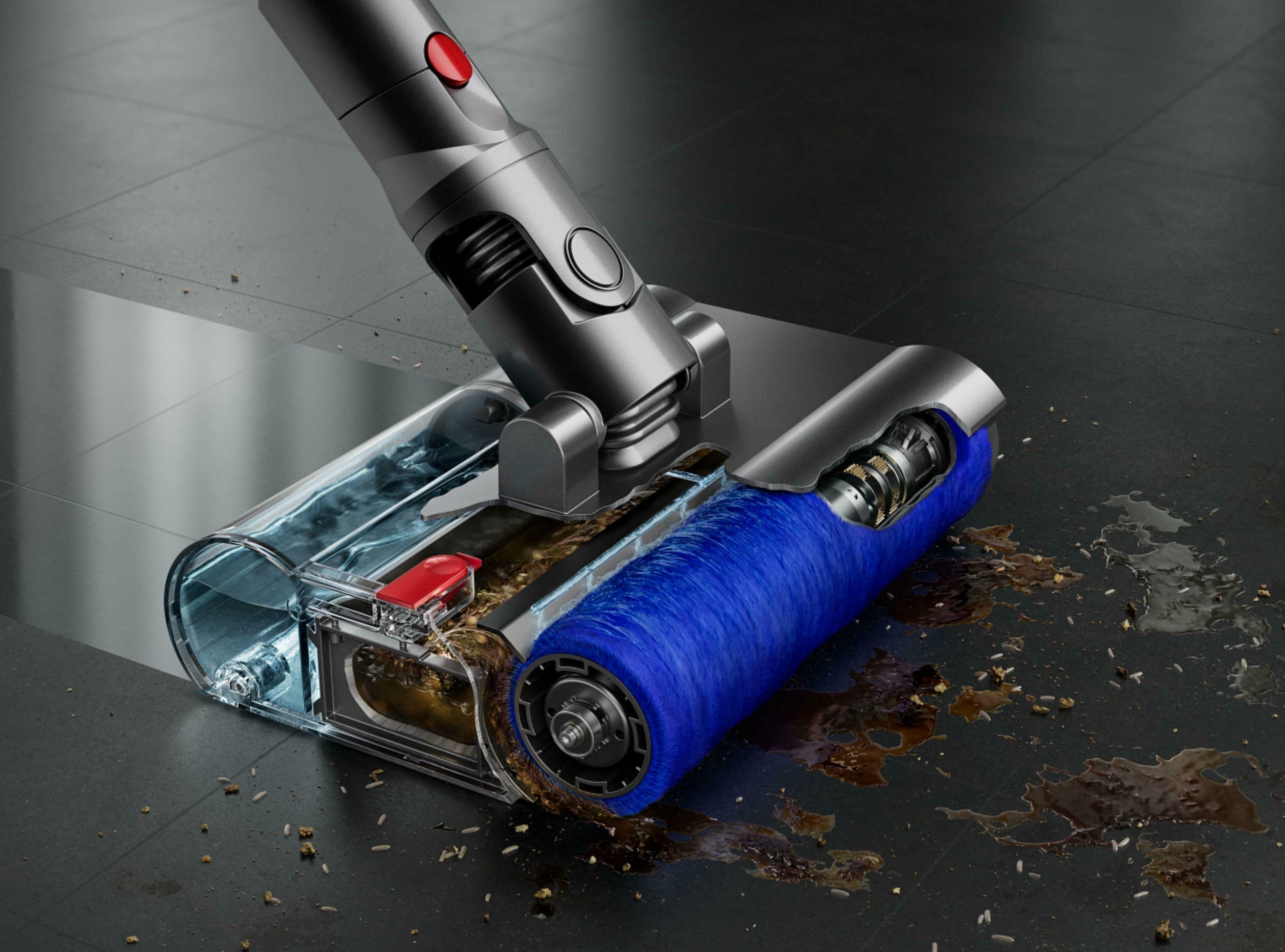
The Dyson Wash G1 is a masterclass in specialized floor washing. Its primary superpower is hygiene. Because it features zero suction, it never creates that funky, swamp-like odor that plagues traditional wet-dry vacs over time. Solid debris is scraped away mechanically into a dedicated tray, while dirty water is squeezed out of the rollers and channeled into a separate wastewater tank. You won’t find yourself gagging when you empty the bins. The dual counter-rotating rollers glide effortlessly forward, making the 10.6-pound body feel remarkably light in hand as it eats through dried ketchup, muddy paw prints, and sticky soda spills.
Yet, the Dyson Wash G1 isn’t without notable flaws. That 7.0 Value score is earned—it’s an expensive machine that only washes floors; it cannot vacuum up dry debris on its own. You’ll need to sweep or vacuum your kitchen first before unleashing the Dyson. Furthermore, its battery life (8.3) tops out around 35 minutes, which might leave you rushing if you’re tackling a sprawling main floor. If you want a quick, all-in-one cleanup tool without prep work, the Dyson’s strict “wash-only” rule can feel like a chore.
Ready to upgrade your floor care routine with a specialized, hygienic washing machine?
Price & availability subject to change. As an Amazon Associate we earn from qualifying purchases.
Tineco: Strengths and Weaknesses
Tineco revolutionized the floor-care market by making wet-dry cleaning an absolute breeze for everyday homeowners. Its greatest strength is true all-in-one capability. You don’t need to pre-vacuum; a Tineco smart floor washer will happily vacuum up dry cereal, suck down spilled milk, and mop the hardwood simultaneously. The iLoop smart sensor is genuinely magical, ramping up power automatically when it detects heavy grime and scaling back when the floor is clean to preserve battery. With an 8.9 Battery & Runtime score and an 8.5 Build Quality rating, Tineco gives you exceptional versatility, a longer leash per charge, and smart app integrations that track your cleaning habits.
On the flip side, Tineco’s reliance on suction comes with inherent maintenance baggage. Sucking wet debris through internal tubing means you must clean the dirty water tank and filter religiously, or else risk a foul, mildew-driven stench. Some Tineco models can also leave faint streaks if the roller isn’t dried properly or if dirty water reclamation isn’t 100% efficient on high-gloss tiles. While its Value score (8.5) is fantastic, you are trading away the absolute, pristine streak-free washing purity that Dyson achieves by completely eliminating suction.
Eager to experience the ultimate convenience of all-in-one vacuuming and mopping?
Price & availability subject to change. As an Amazon Associate we earn from qualifying purchases.
- ✅ Separates wet and dry debris mechanically without a vacuum suction motor
- ✅ Dual counter-rotating microfiber rollers lift stubborn stains effectively
- ✅ Larger 1.0-liter clean water tank covers expansive floor areas
- ✅ Hygienic debris tray prevents messy contact with hair and gunk
- ✅ Zero smelly internal tubing or filters to clog with dirty water
- ❌ Carries a steep premium price tag of $699
- ❌ Does not function as a standalone dry vacuum cleaner
- ❌ Slightly shorter 35-minute maximum battery runtime
- ❌ Lacks smartphone app integration or automated suction adjustment
- ✅ Functions as a true 3-in-1 vacuum, washer, and mop
- ✅ iLoop smart sensor automatically adjusts power and water flow
- ✅ Heated dry self-cleaning mode eliminates roller mildew and odors
- ✅ Extends up to 40 minutes of runtime per charge
- ✅ Available in multiple price tiers starting around $399
- ❌ Suction-based design can occasionally pull debris into internal filters
- ❌ Dirty water tanks require frequent cleaning to avoid foul odors
- ❌ Plastic build quality feels slightly less rigid than Dyson Wash G1
- ❌ App connectivity can occasionally drop or require resetting
Dyson Wash G1 or Tineco: Which Should You Choose?
Choosing between these two machines comes down to your personal cleaning workflow and how much you despise post-cleaning maintenance. If you are a meticulous cleaner who already vacuums religiously with a dedicated cordless stick vacuum—perhaps a high-end 🛒 Dyson V15 Detect →—and you simply want the absolute cleanest, streak-free, odor-free floor wash possible, buy the Dyson Wash G1. It excels in homes with heavy foot traffic, chronic spills, and a zero-tolerance policy for cloudy film on hardwood floors. You’ll appreciate the low-maintenance dirty water disposal and superior stain agitation.
Conversely, if you are a busy parent, a pet owner, or a power user who values speed above all else, Tineco is the clear winner. The ability to suck up dropped Cheerios and mop up spilled juice in a single, simultaneous pass is an absolute big deal for daily household maintenance. Pair your floor washer with a quality 🛒 Hardwood Floor Cleaning Solution → to maximize shine. If you want maximum runtime, smart app connectivity, and a lower price tag that won’t break the bank, Tineco’s versatile lineup fits your lifestyle much better.
Homeowners wanting zero-suction pure mop cleaning and high-hygiene debris separation.
Budget-conscious buyers needing an all-in-one wet-dry vacuum with smart suction control.
Final Verdict: Dyson Wash G1 vs Tineco
Tineco takes the overall crown in this head-to-head matchup, winning for superior versatility, brilliant smart-sensor features, longer runtimes, and an unbeatable value proposition. However, the Dyson Wash G1 remains the undisputed king of pure mopping hygiene and streak-free finishes. Your choice ultimately boils down to a simple philosophical question: Do you want an all-in-one vacuum-mop hybrid that saves time, or do you want a dedicated, zero-suction washing machine that delivers the ultimate deep clean?
As an Amazon Associate we earn from qualifying purchases.
Dyson Wash g1 vs Tineco: Frequently Asked Questions
Is Dyson Wash G1 better than Tineco?
The Dyson Wash G1 is better for pure washing hygiene because it uses hydration and mechanical rollers without a vacuum suction motor. However, Tineco is better for overall versatility since it vacuums and mops simultaneously while costing roughly $200 less on average.
Does Dyson Wash G1 vacuum debris like Tineco?
No, the Dyson Wash G1 does not use suction. It sweeps up hair and wet debris into a separate extraction tray while washing the floor. Tineco uses actual vacuum suction to pull both liquid and solid debris directly into its dirty water tank.
Which brand offers better reliability and longevity?
Dyson Wash G1 generally enjoys an edge in mechanical longevity because it lacks internal suction channels and filters that commonly clog in wet-dry vacuums. Both brands offer standard 2-year limited warranties to protect your investment.
Which option is better for beginners or ease of use?
Tineco is easier for beginners due to its smart iLoop LED ring display that changes color from red to blue when the floor is clean, alongside automated power adjustments that remove guesswork during operation.
What is the biggest operational difference between them?
The biggest difference is suction. Tineco functions like a traditional wet-dry vacuum pulling air and water through a filter, whereas the Dyson Wash G1 relies entirely on wet roller agitation and physical debris separation without airflow suction.